
Remember those movie posters that made you buy a ticket on impulse? You feel that pull with illustrated covers, too — they hit you visually, fast, and with personality. I’ll admit I’m biased, but when a cover uses color, texture, and a clever little sketch, you already know the book’s mood, voice, and promise; it’s like meeting someone who wears confidence and a weird hat. Want to see how that actually sells books?
Key Takeaways
- Illustrated covers create immediate emotional connections, grabbing attention faster than text-heavy or photographic designs.
- Bold, simplified imagery reads well as thumbnails, boosting discoverability on digital platforms and social feeds.
- Illustration allows unique visual branding that distinguishes books in crowded genres and builds series recognition.
- Custom artwork communicates tone and narrative promise at a glance, increasing impulse purchases and shareability.
- New printing, AR, and cross-media trends let illustrated covers deliver immersive, collectible experiences for readers.
The Visual First Impression: Why Covers Matter More Than Ever
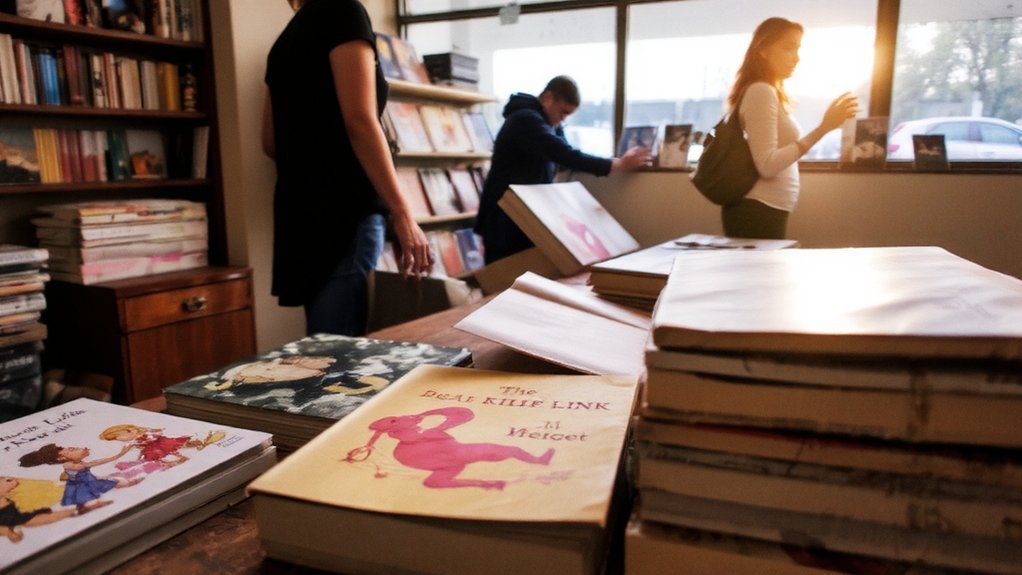
Ever judged a book by its cover and then grinned when the inside matched the promise? You notice covers first — the tilt of a line, the hiss of color — and you decide fast.
Ever judged a book by its cover — then smiled when the inside kept the promise?
I’ll bet you’ve picked a book because the illustration told a story before a page did. That’s visual storytelling doing heavy lifting, nudging your fingers to open the spine. You react, you buy, you brag about the find.
Cover psychology isn’t mystical; it’s strategy, sensory cues, a wink that sells. I point out contrasts, textured inks, small surprises that make you pause, laugh, reach.
You’ll start seeing covers as invitations, not just packaging, and that changes how you scout, shelve, and shout about new work.
Crafting Tone Through Illustration and Color

You’ll see how a single wash of teal can make you breathe slower, or how jagged ink lines can make a character twitch before you’ve read a page.
I point to color for mood, line for personality, and type as the book’s speaking voice—think warm, clipped, or sly—then watch them argue on the cover.
Trust me, once you start mixing those elements, you’ll hear the book before you open it.
Mood With Color
When I pick up a cover, I don’t just see color—I hear it, taste it, feel it under my fingertips; a single wash of blue can hush a room, while a slash of neon yells for attention and won’t take no for an answer.
You learn fast that color psychology isn’t fluff; it’s a toolkit, it nudges readers before they read a line. You’ll use hue to whisper, tone to shout, contrast to intrigue. That emotional impact is business and mischief.
- Cool blues calm, steady pace, late-night tea.
- Warm ambers invite, hold hands, promise warmth.
- High-contrast neons provoke, dare, disrupt sleep schedules.
I joke, I test, you tweak, and the mood lands—precise, alive.
Character Through Line
Because lines carry personality, they do more than outline shapes—they gossip. I watch a swoop suggest mischief, a jagged stroke hint at tension, and you, reader, feel a character before a word hits the page.
You map character development in ink: a delicate curl whispers vulnerability, a bold anchor stroke declares stubbornness. Your eye drinks texture, anticipates movement, reads a life story in a single gesture.
This is visual storytelling that’s nimble, clever, immediate. You’ll nudge hue and edge to tweak tone, sketch a thumb, a glance, a stance that says everything.
I’ll admit, I’m hooked on tiny marks — they do the heavy lifting, they wink, they lie, they tell the truth, and you get the character instantly.
Typography as Voice
Lines tell you who a character is; type tells you how they speak. You’ll notice the cover’s voice before you read, thanks to typography styles and color, and you’ll react physically — squint, smile, tilt the book. I like that. You’ll pick up tone like a scent.
- Big, bold serif for authority — stomping boots on the page.
- Handwritten scripts for intimacy — a whispered secret.
- Minimal sans for modern calm — a cool breeze, uncluttered.
You’ll use visual hierarchy to make certain words shout, others murmur. Pair fonts with illustration strokes and palette, test at arm’s length, imagine a reader’s thumb covering half the title.
You’ll iterate, cuss, refine, then grin when voice and art finally sing together.
Building Identity: Illustrations as Branding Tools

If you pick up a book and its cover seems to wink at you, that’s not accident — it’s branding doing a little dance. You and I both know a good cover sells a mood, a promise, a tribe.
I watch colors, line work, and iconography team up, whispering branding strategies that make you nod, remember, and reach for more. Illustrations let you own a look, a voice, a shortcut to recognition. They tell little scenes, tactile textures, and character hints—visual storytelling that builds loyalty.
You’ll spot repeated motifs across series, feel a designer’s wink, and trust the book before the first page. It’s clever, tactile, and oddly intimate—like a handshake that smells faintly of ink.
Scrolling-Optimized Designs for Social Discovery
You want covers that punch through the scroll, so I say make your thumbnail unapologetically bold, with colors that snap like a neon sign at midnight.
Think vertical-first layouts, stacked elements that read fast on a thumb, and little animated previews that wink at people as they fly by — yes, a tasteful GIF can flirt and sell.
I’ll admit I’m a bit obsessed with thumbnails, but trust me, tweak the crop, crank the contrast, and you’ll hear the double-tap.
Bold Thumbnail Impact
When your thumb scrolls past hundreds of images, only the loudest cover gets a second look, so I design thumbnails that punch through the noise like a neon sign in a dim subway.
You’ll feel the pull, because I use bold color and striking imagery to grab attention in a blink. I talk, I test, I trim. You’ll see the idea instantly, even at tiny sizes. Think instant recognition, not mystery.
- High-contrast palette that reads on-screen.
- Simplified focal shape, no tiny text.
- Iconic motif that repeats across posts.
You’ll want your cover to stop thumbs, invite taps, and play nicely in feeds.
I mess up fast, learn faster, and keep what works.
Vertical-First Composition
Because vertical feeds rule our attention, I design covers that feel like they were born to scroll, not squeezed into a square; I’m talking tall, confident layouts that lead the eye down the screen like a hand guiding yours.
You’ll notice vertical composition everywhere, long bands of color, stacked typography, scenes that unfurl as you glide. I sketch with illustrated storytelling in mind, so characters peek, gestures unfold, and textures invite a thumb tap — not literally, I promise, I don’t live for taps.
You get covers that read like short films, tight beats and clear pauses. I arrange focal points top-to-bottom, pace narrative breaths, and use color to pull you onward.
It’s bold, efficient, playful — made for discovery, made for you.
Animated Preview Friendly
Although I’m obsessed with how a single frame reads, I’m even more excited about how it moves — and that’s where animated-preview friendly covers come in.
You’ll want covers that snap into life as people scroll; you’ll lean in, tap, then grin. Animated storytelling turns a thumbnail into a mini-movie, and visual engagement hooks attention in under a second.
- Loop a brief motion, draw an eyebrow, reveal a title cut.
- Use bold silhouettes, high-contrast color pops, quick camera shifts.
- Sync micro-sounds or caption cues for instant context.
I speak like a tinkerer who’s tried and failed, then nailed it, and you’ll get that thrill—cover as tease, cover as promise.
Design for thumb-scrollers, make discovery joyful.
Emotional Resonance: How Art Sparks Reader Connection
Connection is weirdly tactile, like you can almost feel the paint under your fingertips. You see a cover and, boom, emotional connection happens—little shock, big curiosity.
I watch you pause, tilt the book, trace a line, and that’s reader engagement: a tiny ritual that turns strangers into believers. You want fresh ideas, bold visuals, and covers that whisper plot promises, not shout spoilers.
You laugh at the clever motif, wince at a sad smear, then decide to buy, borrow, or recommend. I’ll admit, sometimes I pick books for the jacket alone—guilty, and proud.
This is the new currency: art that reaches out, tugs at memory, makes you stay a beat longer, and actually opens the cover.
From Concept to Shelf: The Collaboration Behind Illustrated Covers
When I say the cover’s birth is a group project, I mean it—every illustrated jacket you notice started as a messy, caffeinated conversation. You watch art directors sketch, authors squint at thumbnails, and illustrators mutter about color while stirring their coffee.
That collaborative process stitches together narrative promise and market smarts, all driven by a clear artistic vision.
- Brief: author mood, editorial goals, target reader.
- Sketch phase: roughs, color tests, tactile paper samples.
- Final: type lockup, printer checks, proofs you touch.
You get lively back-and-forth, playful compromises, and ah-ha moments. You smell ink, see tiny corrections, and, if you’re lucky, hear a delighted exhale when everything clicks.
This is teamwork, with guts and genius.
Market Performance: Sales, Shareability, and Visibility
If a cover can make you stop mid-aisle, you’ve already won half the battle — and I’ll say it straight: illustrated jackets are built for moments like that.
You notice texture, color, a wink of detail, and you reach out. I watch that hand, I grin, because those instinctive touches drive real sales growth, plain and simple.
They get photographed, tagged, passed along — shareability on social feeds turns a pretty jacket into momentum. You want visibility? Illustrations cut through scrolls, they sparkle in thumbnail form.
Publishers see this, they nudge budgets, they claim more market share. I’m not bragging, just reporting: when you design to seduce, readers respond, wallets open, and word spreads fast.
Trends Shaping the Future of Illustrated Book Design
You saw how a gorgeous jacket stops a shopper cold, how it gets photographed, shared, and turns into real sales — now let me show you where that power’s heading next.
You’re watching illustration styles mutate, go bold, then get subtle, all in a scroll. You taste color, feel paper, hear the gasp when a cover clicks.
- Hyper-local motifs meet global trends, cultural influences remixing folk art with neon minimalism.
- AR overlays and tactile inks invite touch, motion, and small moments of delight.
- Cross-media tie-ins, artist collaborations, and serialized visuals make shelves feel like stages.
I talk fast, I nod to risk, I laugh at my own predictions, but you can already see it: covers are becoming experiences.
Leave a Reply