
Remember when Maya stayed up all night re-transcribing the Atlas’s marginalia to prove a point—yeah, that’s the mood. You’ll want books that whisper in candlelight and slap you with clever cruelty, so I picked ten that serve scheming friendships, slow-burn magical cleverness, and moral messes you’ll argue about at 2 a.m.; I’ll guide you through each, tell you which ones bite hardest, and which are soft enough to tuck under your pillow—but first, let me show you the one that surprises everyone.
Key Takeaways
- Recommend dark academia and occult-rich novels that blend elite conspiracies, academic settings, and morally ambiguous ensembles.
- Highlight books with unreliable narrators, slow-burn tension, and psychological manipulation similar to The Atlas Six.
- Suggest titles featuring inheritance, magical legacies, or house/political dynamics where power is familial and strategic.
- Include fast-paced, witty novels with necromancy or supernatural school politics for readers who enjoy sharp dialogue and high stakes.
- Prioritize immersive, character-driven mysteries that reward patience, small details, and shifting alliances.
The Secret History by Donna Tartt

If you haven’t read The Secret History yet, do yourself a favor and fix that—soon. I promise it’s worth the small moral chaos.
You’ll feel literary influence in every clever, slow-burn sentence, the kind that rearranges how you see ambition. You watch, you learn, you squirm as character dynamics tighten—friends become conspirators, classrooms turn into pressure cookers.
I tell you this like a guilty accomplice, because Tartt sneaks up on you with scent of old books, wine-stained hands, snow that hushes crimes.
Dialogue snaps, scenes linger, and you keep scanning for the moment everything tips. Read it to study structure, to admire dark charm, to steal mood for your own daring projects.
Trust me, it fuels bold storytelling.
Black Chalk by Christopher J. Yates

You’ll feel the narrator sliding under your skin, whispering versions of the truth, and you’ll squint at every memory like it’s a secret note stuck to the back of a textbook.
The game the characters play is surgical and savage, full of wagers that turn friends into wolves, and the pacing tightens so slowly you’ll forget to breathe until you snort coffee through your nose—sorry, that was me.
Read it if you want tension that hums in your teeth, surprises that sting, and the kind of psychological chess that rewards picking at old scars.
Unreliable Narrator Tension
Though I’ll admit I felt smug about spotting unreliable narrators, Black Chalk sucker-punched that smugness into next week.
You’ll follow a narrator who whispers secrets, then grins and rewrites them, and you’ll love being fooled.
I point, you squint, we trade accusations over cheap coffee, the room smells of chalk and rain.
Unreliable perspectives slide under your skin, they rearrange furniture in your head, then demand explanations.
Narrative twists land like a hand on your shoulder — firm, disconcerting, intimate.
You keep asking who’s honest, while I keep lying about the answer with a wink.
It’s playful, sharp, unsettling.
Read it when you want stories that tinker with trust, and laugh when your certainties implode.
High-Stakes Psychological Games
When a harmless party game mutates into a slow-rolling war, I grin and admit I helped build the detonator. You watch friends trade dares, feel the room tighten, smell cheap wine and fear.
Black Chalk teaches you how charm hides psychological manipulation, and how choices taste like metal. I narrate, I prod, I wink, then I push.
- Twisty rules that trap you, like velvet ropes tightening.
- Small acts that echo, becoming moral ambiguity you can’t scrub off.
- Intimate betrayals, whispered in corridors, vivid as a cold hand.
- One-liners that land, then bruise; clever, cruel, and oddly funny.
You’ll learn to design games that reveal people, and yourself.
Pacing That Escalates
If you want a lesson in slow, delicious escalation, I’ll take you through Black Chalk like a tour with flashing lights and a smirk; I point at the first harmless rules, then watch them curdle.
You follow, curious, and I narrate each crease and whisper, you smell burnt coffee, hear footsteps, feel skin prickle.
The escalating tension builds like a drumbeat, patient, relentless, clever. I toss in crisp dialogue, short scenes that snap, then stretch a moment until it hurts.
You learn the players, watch character development peel back layers, ugly and brilliant. I joke, then wince, then push you forward.
It’s inventive, sharp, intimate; you’ll finish shaking, smiling, already scheming your own rules.
Ninth House by Leigh Bardugo
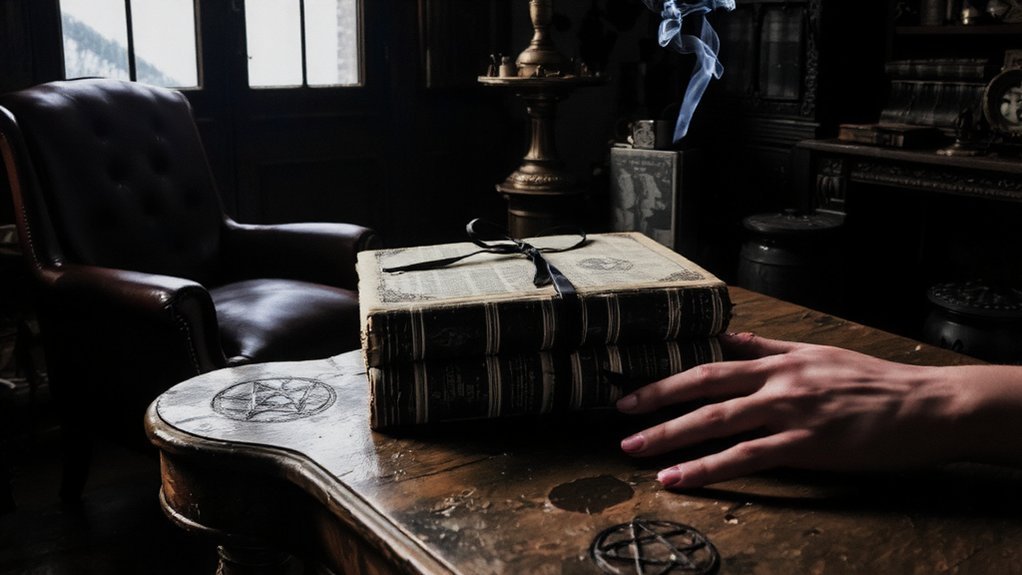
Leigh Bardugo’s Ninth House hits like a midnight ritual — I read it with a mug of coffee gone cold, jacket half-on, because I couldn’t stop, and I don’t even like secret societies… usually.
You’ll find a gritty, inventive take on dark academia, drenched in grime and neon, where supernatural elements sneak under ivy. I narrate this like a friend daring you to peek through a keyhole.
- Gritty campus noir that retools classics.
- Magic feels forensic, tactile, dangerous.
- Antihero voice that’s sharp, funny, wounded.
- Worldbuilding that rewards clever readers.
You’ll want innovation, and Bardugo gives puzzles, ritual, and moral messiness.
Read it for the tension, stay for the weird, and yes, you’ll love getting lost.
The Magicians by Lev Grossman
While you’re flipping through The Magicians, I’ll warn you: you’ll think it’s Hogwarts for grown-ups, and then Grossman will happily punch that idea in the face.
You join Quentin, you sit in dingy classrooms, you taste chalk and coffee, but the magic here smells of late nights and bad decisions, not polished halls. It mixes magical realism with gritty adulthood, so spells feel earned, and wonder comes with hangovers.
You’ll laugh, wince, and nod when personal growth arrives messy and reluctant. I’ll joke about my therapy bills, you’ll roll your eyes, we’ll both learn.
The book teaches you how power corrodes, how friends save you, and how being a mage is mostly being human, stubbornly alive.
Gideon the Ninth by Tamsyn Muir
You’ll recognize Gideon the Ninth’s necromantic house politics the moment you step into its clanking corridors, smell cold stone and iron, and hear whispered alliances sharpening like knives.
I’ll warn you: the tone’s darkly comic, so you’ll laugh at a cadaver joke and then feel guilty, in the best possible way.
Stick with the duology, I promise the banter, betrayals, and bone-chilling reveals keep ratcheting up.
Necromantic House Politics
If you like your magic laced with bone and bitter humor, then Gideon the Ninth feels like being shoved into a rose–thorned elevator with a necromancer who tells terrible jokes.
You walk corridors that smell faintly of iron and old candles, you listen as power struggles grind like gears. I nudge you toward its pulses: moral ambiguity, loyalty tests, hidden agendas—every corridor echoes betrayal arcs and alliance shifts.
- Twisted loyalties that sting.
- Ambition conflicts played like chess.
- Dark secrets revealed in hushed halls.
- Strategic manipulation, sharp as bone.
You’ll laugh, you’ll flinch, you’ll root for flawed heroes. It’s clever, raw, inventive, and it rewards readers who love clever danger and wickedly human plans.
Darkly Comic Duology
Because I fell in love with snarky necromancers, Gideon the Ninth hooked me on sentence one and then kept punching my feelings in the best possible way.
You’ll skate into a world where bones click like shinty sticks, musk and machine oil mingle, and the narration winks at you.
You get dark humor that lands, then lingers, and character dynamics that crackle — enemies, reluctant friends, messy loyalty.
You’ll laugh, you’ll clutch your chest, you’ll love a line so much you read it twice.
The duology’s pacing jolts you through corridors, duels, and confessionals, voice sharp as a scalpel.
I’m biased, sure, but if you want innovation with bite, grab Gideon, buckle up, and prepare to be delighted and bruised.
The Likeness by Tana French
When I first stepped into Tana French’s The Likeness, I felt like I’d walked into a fogged-up room where everyone knew a secret and only I’d to pretend I didn’t.
You follow a detective who breathes her case, who slips into another woman’s life to solve a murder, and you notice character motivations like fingerprints, raw and telling.
The book hums with psychological depth, it’s intimate and unnerving, and it rewards curiosity.
- Immersive atmosphere that teaches you to trust small details.
- A cast whose loyalties shift, keep your pulse up.
- Language that’s sharp, experimental without being precious.
- Pacing that sneaks up, then hits with real emotional clarity.
You’ll love the smart risks, and the moral blur.
The Bellwether by Aliette De Bodard
I’ll bet you’ll notice how family runs like a current through The Bellwether, pulling loyalties and grudges into every quiet gesture, and you’ll smell the incense and hear low-voiced bargaining at the breakfast table.
You’ll watch power handed down like heirlooms, not always pretty, and feel the weight of magic passed along in secret, a cold coin pressed into a palm.
If you like schemes that taste like old tea and inheritance that smells faintly of smoke, this one’ll sit beside The Atlas Six on your shelf, smug and dangerous.
Family and Power
If you like your family drama folded into political intrigue like silk into a pocket, Aliette de Bodard’s The Bellwether will feel deliciously familiar.
I talk to you because you want smart heat, you want sharp edges. You’ll taste sibling rivalry, feel the chill of whispered deals, and watch family dynamics collide with raw power struggles. I won’t lie, it’s both elegant and brutal.
- Intense alliances that shift like quicksilver.
- Quiet betrayals that land with a sting.
- Domestic scenes that double as strategy sessions.
- Moral choices that echo through hallways.
You’ll move through rooms, catch a furtive glance, and grin when plans unfold, because this book rewards readers who love clever, risky stakes.
Magic as Inheritance
You loved the family power games, didn’t you? I do too, and The Bellwether flips that hunger into something older, smellier, and richer—dusty altars, cooking oil, incense, the hush before a secret is told.
You’ll track inheritance themes as if they were fingerprints: who gets names, rites, grudges. I point, you nod. Magical legacies crawl through kitchens and ledger books here, they’re practical, stubborn, tied to bread and blame.
Scenes snap: a heated argument, a whispered bargain, a slammed door. I joke, then I get serious. You feel the weight of ancestors like a well-worn coat, it fits and it chafes.
If you crave innovation in family-magic fiction, this book hands you a scalpel, not a wand.
Jonathan Strange & Mr Norrell by Susanna Clarke
Magic, like an old, dusty book that suddenly flutters its pages, shows up in Susanna Clarke’s Jonathan Strange & Mr Norrell and refuses to be polite about it.
You’ll feel the grit of Regency streets, smell lamp oil and ink, and watch polite society crackle as magic, presented as magical realism and historical fantasy, reasserts itself.
I’ll be blunt: it’s clever, sly, and barbed, and you’ll love its slow-burning weirdness.
- Rich, archival prose that rewards patience.
- Wry humor, delivered like a scholar’s whisper.
- Strange folklore that skulks under tea tables.
- Moral grayness that keeps you guessing.
Dive in, you’ll tinker with rules, and come away smarter, slightly bruised, delighted.
The Rook by Daniel O’Malley
One thing I’ll tell you straight away: The Rook grabs you by the lapels and doesn’t apologize.
You’ll love its brisk, strange energy, and I’ll admit I laughed aloud at the first bureaucratic monster report.
You move through London with a protagonist who wakes with no memories, and you watch Rook’s powers unfold like sticky notes on a crime board.
O’Malley’s narrative snaps you between dossier entries, shadow fights, and sharp, absurd office politics, so you never get comfortable.
I guide you through scenes that smell of rain, ink, and burnt toast, and I tease you with witty banter that lands.
If you crave inventive plotting, this book rewards curiosity, then winks and hands you another mystery.
The Idiot by Elif Batuman
Picture a campus lawn dusted with late summer light, and there I am—awkward, curious, and chronically overthinking—wandering into Elif Batuman’s The Idiot like it’s a slightly confusing party I’m determined to enjoy.
You follow my misread emails, small triumphs, and quiet embarrassments, and you’ll get sharp character exploration and sly cultural commentary packed into every page. You’ll laugh, wince, and nod.
- Witty first-person voice that feels like a friend.
- Precise observations, sensory details, and small, strange moments.
- Slow-burn plot, big emotional payoffs, intellectual playfulness.
- Perfect for readers craving smart, innovative narratives.
I poke fun at myself, you smirk, and together we discover why small things can feel huge.
Leave a Reply