Tag: writing tips

  • How to Write a Captivating Blog Post About a Book

    How to Write a Captivating Blog Post About a Book

    You want your post to grab a stranger by the lapels and make them care, so start like you mean it—drop a striking fact, a cozy scene, or a tiny confession about why the book hit you at 2 a.m., then sketch the plot and characters without giving the twist away; I’ll show you how to mix vivid quotes, sensory details, and a dash of blunt critique, keep the tone warm and witty, and finish with a call that actually matters—but first, let’s talk about your opening line.

    Key Takeaways

    • Open with a surprising sensory detail or brief scene that hooks readers and poses a compelling question about the book.
    • Provide essential context—setting, tone, opening hook, main complication—without revealing the ending.
    • Focus on emotional resonance: describe the feelings the book evokes with concrete examples or memorable lines.
    • Use short, striking quotes and tiny scenes to illustrate points, then connect them to your personal response.
    • Offer constructive critique and actionable suggestions, ending with a clear call to action for readers.

    Hook Readers From the First Sentence

    engaging openings sensory details

    How do you grab someone before they’ve even read the first line? You grab them with an engaging openings mindset, a bold image, a scent of rain on asphalt, the snap of a paperback spine.

    I’ll nudge you to start loud, then tighten. Lead with a surprising twist—an odd fact, a dare, a tiny confession—that makes the reader twitch, curious.

    You’ll drop concrete sensory details, short punches, then a softer line that hooks emotion. Don’t lecture, tease; don’t summarize, stage.

    I’ll show rather than tell, set a micro-scene, let dialogue crack like glass, then close the first beat with a question that pulls.

    You’ll practice, fail fast, then write a first sentence that won’t let go.

    Provide Essential Context Without Spoilers
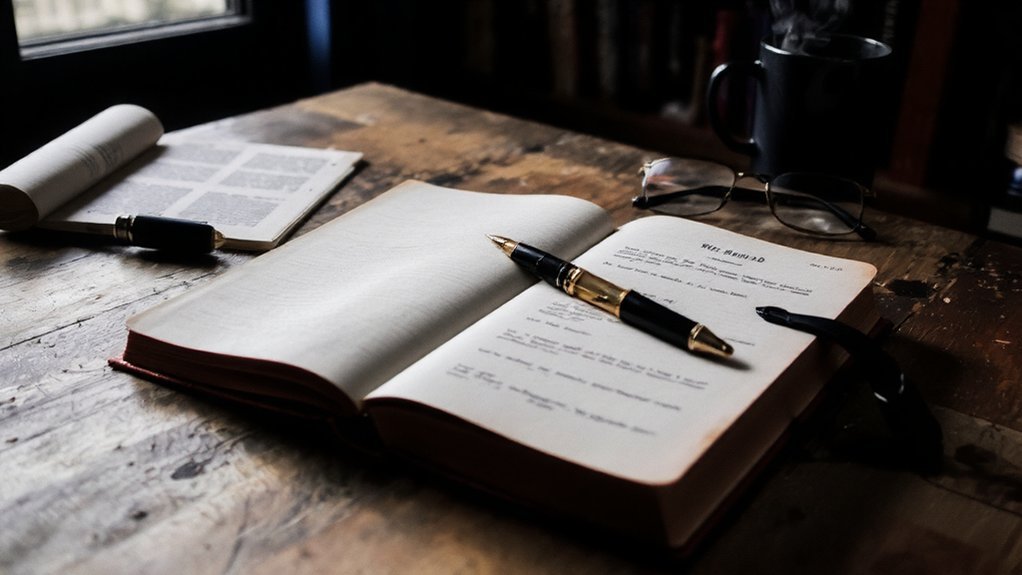
    engaging plot vivid setting

    You don’t need to spoil the ending to make readers care, so I’ll sketch the key plot beats in broad strokes—who’s pushed into change, what obstacle stalks them, and the stakes, without naming the final twist.

    I’ll paint the setting and tone too, the rainy city streets you can hear in the first chapter, the dry, sarcastic voice that makes you smirk, so folks know what mood to expect.

    Keep it tight, I’ll be blunt and playful, and you’ll get enough texture to decide if you want to turn the page.

    Key Plot Beats

    While I won’t spoil the ending, let me walk you through the book’s key plot beats so you know what to expect: the opening hook that smells like rain and danger, the complication that flips the protagonist’s world like a tossed deck of cards, and the midgame choice that makes you squirm in your seat—physically, like you might drop your coffee.

    You’ll map the inciting incident, rising stakes, and the turning point without revealing plot twists, so readers sense surprises are coming. Note the character arcs, who changes and why, not how.

    Point out tempo shifts, a tense confrontation, and a bold dilemma that forces decisions. Keep it crisp, sensory, and inventive, and let curiosity do the heavy lifting.

    Setting and Tone

    If the setting were a person, I’d introduce it with a handshake and maybe a flashlight so you can see the freckles—this place hits all your senses, and it tells you what kind of story you’re in before the first line of dialogue.

    I want you to notice atmospheric details that do more than decorate, they set mood, hint stakes, and whisper history. Point out scent, light, temperature, and the odd object that refuses to be ignored.

    Describe the emotional landscape too, without spilling spoilers: is the world tense, lush, brittle? Say how characters move through it, what they touch, what they avoid.

    Keep it crisp, playful, and useful. You’re guiding readers to feel the scene, not summarizing the plot, and that’s your real power.

    Describe What Resonated With You

    emotional resonance through personal connection

    Because a book hits you in a strange, specific place — the gut, the tiny bones behind your ribs, the part of your brain that rewrites your grocery list — I like to start by naming that place and what it felt like, right down to the temperature of the room and the mug in my hand.

    You tell readers why the book mattered to you, lean into that personal connection, and admit when it surprised you.

    Say what stuck — a thought, a line, a feeling — and why it changed your day or work.

    Keep it tangible: the squeeze in your chest, the laugh you couldn’t help, the idea that rerouted your plans.

    Be honest, curious, inventive; let your emotional impact guide the reader.

    Use Vivid Quotes and Concrete Examples

    Quotations are your secret weapons, so don’t be shy — wield them. You pull a line that snaps the scene into focus, you show vivid imagery, and readers feel the book’s pulse.

    Pick short, striking quotes, place them like spotlight beams, then translate: tell the reader the smell of rain on the page, the scrape of a chair, the exact line that made you blink. Concrete examples make abstract praise believable.

    Don’t just say “beautiful,” quote the cadence, the metaphor, the moment a character flinches. Use impactful language to bridge quote and context, then narrate a tiny scene—your coffee, your scribbled margin note—and watch curiosity spike.

    I’ll admit, I sometimes overquote; I try to resist.

    Balance Critique With Constructive Insight

    You’ll want to point out what the book does well, crisp scenes, sharp ideas, or that character voice that stuck in your head like gum on a shoe.

    Then, gently offer concrete fixes—specific scenes to tighten, pacing to smooth, or clearer stakes—so the author (and your reader) can picture the change.

    I’ll keep it honest, a little cheeky, and useful, because praise without a roadmap is just applause in an empty theater.

    Highlight Strengths Clearly

    When I’m praising a book, I don’t just trot out vague compliments like “well-written” and call it a day; I point to specifics—an image that stuck in my throat, a chapter that made me laugh aloud in public, a line of dialogue that felt like a slap and a hug at once.

    You’ll do a strengths analysis that reads like evidence, not fan mail. Pinpoint scenes, sensory beats, crisp pacing, and character development that surprises, then describe how they land on you.

    Say what worked, why it hummed, and give a short quote or moment to prove it. Be playful, humble, confident—admit when you’re biased, wink, and let the reader taste the book’s best parts.

    Offer Actionable Suggestions

    Although pointing out what didn’t work can feel a little mean, I treat critique like handing someone a well-lit map — clear, practical, and not a personal attack.

    I’ll point out specific moments where reader engagement dipped, and then give concrete fixes you can try right away. Swap slow exposition for a sensory scene, cut a paragraph, add a line of dialogue, or tighten a POV shift.

    Suggest alternate narrative techniques, show a quick before-and-after sentence, and invite the author to run a short reader test. You’ll sound bolder, and you’ll keep curiosity alive.

    Be kind, but be useful. Tell them what to tweak, how to test it, and when to trust their instincts — with a wink, not a critique-shaped guilt trip.

    End With a Clear Call to Action

    Since every great ending deserves an encore, I make the close of a book post work like a tiny stage cue: bright, clear, and impossible to miss.

    You’ll pick one crisp action, nail audience targeting, and pair it with bold engagement techniques that feel modern, not gimmicky.

    Tell readers exactly what to do next — buy, comment, share a line that moved them — and show the sensory payoff: a warm cup waiting, a dog-eared page, a new idea buzzing.

    I’ll write the CTA as if I’m tapping your shoulder, playful but firm, with a little self-deprecating wink: “Try it, you’ll thank me later.”

    End with a link, a deadline, and a tiny reward, and watch that curtain call turn into real momentum.

  • How to Write a Book Review That Actually Gets Noticed

    How to Write a Book Review That Actually Gets Noticed

    You want your review to snag attention like a neon sign, so start sharp, cut the clichés, and tell people what matters in one brisk breath; I’ll show you how to open with a scene, land a bold claim, sprinkle exact quotes, and finish with a zing that makes them care—no fluff, just craft, sensory detail, and a wink—stick around and I’ll hand you the tools that make editors call back.

    Key Takeaways

    • Lead with a bold, sensory first sentence that hooks readers and sets the review’s central claim.
    • State a clear thesis about the book and support it with one or two specific, spoiler-free examples.
    • Vary paragraph length and pace; structure as promise (hook), evidence, and a decisive verdict.
    • Situate the book in its conversation—compare peers, note audiences, and highlight the questions it raises.
    • Craft a 15-word pitch and share short, quotable snippets for social platforms to increase discoverability.

    Hook Readers With a Sharp First Sentence

    grab attention with imagery

    Why does the first line matter? I tell you straight: it’s your one-shot to stun. You’ll grab attention with sharp imagery, a scent of coffee, a cracked spine, a whisper in a crowded room.

    You’ll toss in compelling questions that twitch curiosity—what if the hero lied? who pays for truth?—and watch readers lean in. I coach you to keep it short, bold, tactile: smell, sound, a quick motion.

    You don’t promise the whole plot, you spark it. Use rhythm, a little swagger, and a tiny self-mock: yes, I love dramatic openings, guilty as charged.

    Then slide into the next line, calm and clever, ready to prove the first sentence earned its keep.

    Define Your Central Argument or Claim

    clear thesis with evidence

    You need one clear thesis, a single sharp claim that your whole review hangs on, and I’ll bet you can say it in a sentence that snaps.

    Back it with concrete evidence — quote a scene, name a device, point to a pattern — and show, don’t just tell, why it matters.

    Then play devil’s advocate for a line or two, admit what the book does well, and explain why your claim still holds.

    State One Clear Thesis

    When I sit down to write a review, I decide on one clear claim and cling to it like it’s the last umbrella in a rainstorm — you want readers to leave dry, not drenched in indecision.

    I tell you, up front, my thesis statement, crisp and stubborn. You get one chief idea, a clear argument that orients every sentence, nothing fuzzy, nothing wishy-washy. Say it loud, say it early, then let your voice riff around it.

    • Lead with the thesis statement, no hunting for it.
    • Keep the clear argument short, bold, repeatable.
    • Let every paragraph nod back to that claim.
    • Trim anything that doesn’t serve the central idea.

    You’ll seem smarter, sharper, and oddly more generous.

    Tie Claim to Evidence

    Okay, so you’ve declared your bold thesis and nailed it to the page like a poster on a dorm wall — bravo.

    Now tie that claim to evidence, fast and clean. I tell you, don’t let your claim types float like helium balloons; anchor each with specific evidence sources — passages, interviews, stats, even design choices.

    Point to the exact sentence, turn the page, quote the line, show the moment. Describe texture, tone, the smack of an image or the hush of a line.

    Mix a plot example with a sharp quote, cite an author’s note, drop a number if it matters. You’ll look rigorous, imaginative, and honest.

    I promise, readers and editors will nod, then keep reading.

    Address Counterarguments

    If you want your review to earn respect instead of shrugs, don’t pretend objections don’t exist — invite them in, sit them down, and then show why your claim still holds.

    You’ll admit the tidy counterpoints, then pick one to unpack, like flipping a light switch in a dim room. Use clear counterargument techniques, name the doubt, and then deliver crisp rebuttal strategies that feel inevitable, not defensive.

    • Acknowledge the strongest opposing view, briefly, honestly.
    • Show where evidence bends, not breaks, under scrutiny.
    • Offer a small experiment or scene to test the claim.
    • Close with a precise, sensory line that re-centers your thesis.

    You’ll sound fair, inventive, and unshakable — because you prepared for the shake.

    Balance Spoiler-Free Overview With Specific Evidence

    tease quote explain intrigue

    You’ll tease the plot enough to get readers curious, not so much that you rob them of the punch.

    I’ll show you how to point to one sharp scene or a telling line, quote it briefly, and explain why it matters to your argument.

    Think of it as scenting the cake, not slicing it—aroma, a crumb on your finger, and a wink.

    Hint at Plot

    When I hint at a plot, I want you to feel the story without getting the ending dropped in your lap; think of it as tapping the surface of a pond—ripples, a flash of fish scales, not the whole catch.

    I’ll give a tight plot summary, but I’ll also hand you character insights that tease motive and change, without detonating surprises. You’ll taste stakes, smell rain on the page, hear a slammed door.

    • Keep stakes crisp, don’t narrate the finale.
    • Name an emotional pivot, avoid outcomes.
    • Show a sensory moment, skip the resolution.
    • Quote a line that hints, not explains.

    You’ll stay curious, not cheated. That’s how reviewers make readers lean in, not run away.

    Cite Concrete Examples

    Think of a single, stubborn paragraph—one you can point to in the book—and use it like a flashlight: I want you to show readers proof, not promises.

    Pick that slice, quote a line or paraphrase a sentence, then tell us what it does—how it smells of rain, how it snaps the plot into focus, how language turns clever into sly.

    You’ll balance spoiler-free overview with specific evidence by zooming on detail, not revealing endings.

    Say why that passage matters, suggest practical applications for writers or curious readers, and link it to the book’s bigger claim.

    Be playful, I’ll wink and admit my bias, but keep it concrete: concrete examples make your praise credible, and your review useful.

    Situate the Book in Its Context and Conversation

    Because no book lives in a vacuum, I start by parking it next to its neighbors on the shelf—other books, big ideas, the messy history it’s replying to—and I take a good look.

    You’ll map its contextual relevance, note who it argues with, and hear the conversation it crashes. Lay out the stakes fast, show where it nudges the literary landscape, and let readers see why this book matters now.

    Try a quick checklist to grab attention:

    • Who’s it answering, and why does that matter?
    • What older ideas does it accept or explode?
    • Which communities will cheer or scoff?
    • What new questions does it fling into the room?

    You point, you compare, you make the debate vivid.

    Decide on Tone, Audience, and Point of View

    If you want your review to land like a friendly shove rather than a sleepy lecture, decide your tone, audience, and point of view before you type a single sentence; I pick a voice like I’m choosing shoes—something that fits, looks intentional, and won’t pinch after a chapter.

    You’ll do a quick audience analysis, imagine that ideal reader, then speak to them. Lean into tone consideration: playful, razor-smart, earnest, whatever matches the book and your guts.

    Pick first person if you want intimacy, third if you want distance. Say “I” when you’re owning opinion, drop in a sensory detail—how the prose smells like wet paint, or sounds like subway chatter—and let a wry line cut through.

    Keep it bold, useful, and human.

    Use Structure and Pacing to Guide the Reader

    You’ve picked your voice and sized up your audience, now you’ve got to shepherd them through the review so they don’t get lost or bored.

    I’ll walk you through crisp structure techniques and pacing strategies that keep readers hooked, yeah, like guiding someone through a neon gallery at midnight.

    • Open with a clear hook, a pulse, a scent of mystery.
    • Map the review: promise, evidence, verdict — no wandering.
    • Vary paragraph length to sprint, then breathe; use pauses like drums.
    • Close with a tidy, memorable exit that echoes the opening.

    You’ll play conductor, cutting clutter, cueing surprises, and timing reveals so the review feels alive.

    It’s smart, efficient design, with a wink — readers will thank you, or at least stop skimming.

    Choose Quotations and Examples That Pack a Punch

    A good quote is like a photograph you can stick on the fridge — vivid, telling, and impossible to ignore. You pick lines that carry powerful imagery, phrases that zap the brain and linger.

    I tell you, don’t overquote; choose one or two gems, set them up, then riff. Show, don’t summarize. Drop a short dialogue beat, a sensory phrase, then explain why it matters to readers, not just to you.

    Use impactful phrases as hooks, let them breathe on the page, and watch attention stick. You’ll sound sharp, confident, humane.

    I’ll admit, I sometimes steal a line for dramatic effect — guilty as charged — but if it lands, the review does more than inform, it persuades, it delights.

    Optimize for Platforms: Pitch, Blog, and Social Media

    Those electric lines you just quoted? I use them to hook editors, bloggers, and scrollers.

    You’ll tailor tone and length for pitch, blog, and social media, aiming for platform engagement and easy social sharing. I’ll show you how, with bold microcopy and crisp visuals, so your review leaps off the screen.

    • Lead with a 15-word pitch, punchy, specific.
    • For blogs, add a vivid scene, smell of ink, tactile quotes.
    • On social, chop into shareable bites, GIFs, and clear CTAs.
    • Tag reviewers, publishers, and niche communities to boost reach.

    You’ll test headlines, swap images, track metrics, and iterate. I’ll cheerlead, and groan when analytics lie, but we’ll get noticed.

    Revise, Proofread, and Prepare to Promote

    Revision is where the book review stops being a rough sketch and starts looking like something people will actually want to read — I’ll show you how to polish it until it sings.

    Revision turns a rough sketch into a readable gem — polish it until every line sings.

    You’ll run through sensible editing techniques, trim deadweight, tighten scenes, and listen for rhythm like you’re tuning a guitar.

    Read aloud, you’ll hear clunky beats. Get feedback, you’ll spot blind spots. Then proofread, slow, with eyes on punctuation and factual nails, don’t rush.

    Prepare to promote by mapping marketing strategies, choosing platforms, and writing punchy hooks that smell like fresh coffee.

    I’ll jab at your ego, in the nicest way, and we’ll craft snippets, images, and a launch plan that actually gets noticed.

  • How To” & Guide Style Titles

    How To” & Guide Style Titles

    You want clicks, not vague promises, so I’ll show you how to write “how to” titles that actually deliver—clear verbs, a sensory hook, and a tiny deadline to spark action. Picture a headline that smells like fresh coffee and feels like a helpful nudge; say it fast, make it useful, and don’t waste words. I’ll walk you through structure, power words, templates, and the sneaky tweaks that lift CTRs—but first, let’s fix the most common headline sin.

    Key Takeaways

    • Start with a clear action verb and a specific outcome (e.g., “Build a 7‑day email welcome sequence”).
    • Promise a tiny, measurable payoff or timeframe to boost relevance and clicks.
    • Keep titles 6–12 words, front-load important keywords, and avoid filler words.
    • Use vivid, sensory verbs or persuasive adjectives to add personality without sounding clickbaity.
    • A/B test two strong variants, track CTR and engagement, then iterate quickly based on results.

    Why “How To” and Guide Titles Drive Clicks

    effective titles drive engagement

    One quick truth: people click when they think they’re about to learn something useful, fast.

    You want results, and “How To” or guide titles promise a roadmap, a smell of coffee and clear steps on the table.

    I’ll tell you bluntly: that promise lifts click through rates, because your reader expects action, not prefab hype.

    You get them reading, and user engagement rises as they follow tangible cues—headlines like a compass, bullets like breadcrumbs.

    You’ll feel clever nudging curiosity, and I’ll chuckle when a plain verb outperforms a flashy adjective.

    Use sensory verbs, tight directions, and a wink of personality; readers will click, stick around, and thank you.

    It’s simple craft, executed with curious, relentless care.

    Matching Title Structure to Search Intent

    craft titles for intent

    You’ve got the promise part nailed—“How To” makes readers lean in—but now you’ve got to match that promise to what they actually want when they type a query.

    You’ll study search behavior like a detective, listening for verbs, urgency, and intent—are they learning, buying, or troubleshooting?

    Then you’ll shape title relevance to fit: teach, fix, compare, or inspire. Picture users tapping screens, squinting at results, breathing relief when they spot your clear offer.

    Shape titles to teach, fix, compare, or inspire — make users pause, click, and feel instantly understood.

    I’ll admit, I obsess over tiny words — they steer clicks. Use specific outcomes, timeframes, and audience cues; cut fluff.

    Match tone too, whether casual or clinical. Do this, and your “How To” becomes the obvious click, not a guess.

    Elements of an Effective “How To” Headline

    engaging clear actionable headlines

    Three tiny ingredients turn a bland “How To” into a headline people actually click: clarity, consequence, and a pinch of personality.

    I’ll show you how to blend them, so your titles pop off the page, smell like fresh ideas, and promise real results.

    Keep your effective phrasing tight, use engaging verbs that move readers toward action, and paint one crisp outcome.

    Don’t waffle, don’t hide the payoff. Imagine a neon sign flashing benefit, you reach for it.

    Swap passive fluff for verbs that pull—build, fix, transform—then add a human twist, a wink, a little audacity.

    You’ll write headlines that feel clever, useful, and urgent, ones you’d click at 2 a.m., when inspiration bites and coffee still helps.

    Power Words and Phrasing That Boost Engagement

    boost engagement with words

    A little vocabulary tweak can flip a sleepy headline into something that practically tugs readers through the screen, and I’m going to show you which words do the heavy lifting.

    You’ll swap bland phrasing for engaging verbs and persuasive adjectives that snap, sizzling with clarity.

    I talk like a coworker over coffee, pointing at the screen, nudging you to try bold verbs, crisp descriptors, sensory hooks, and tiny surprises that pull attention.

    • Use visceral verbs: ignite, slice, morph.
    • Pick persuasive adjectives: effortless, jaw-dropping, essential.
    • Lead with action: show, build, transform.
    • Add a sensory detail: hear, taste, feel.
    • Insert a tiny promise: faster, safer, smarter.

    Try one tweak, watch clicks rise, grin when it works.

    Optimizing Length, Keywords, and Readability

    title optimization techniques explained

    You want titles that hit the sweet spot — long enough to tell a story, short enough to read in a glance, and juicy where it counts.

    I’ll show you where to tuck keywords so search engines and real people both nod, and we’ll trim excess words until the title snaps.

    Picture me under a desk, scissors in hand, cutting clutter while I whisper the perfect 50-70 character secret.

    Optimal Title Length

    Let’s cut to the chase: I don’t pad titles for fun, and neither should you—shorter feels sharper, reads faster, and grabs attention like a neon sign in fog.

    You want an ideal word count that balances punch with clarity, and you care about title readability so people actually click. I’ll tell you what works, why it sings, and how to trim without losing meaning.

    Picture a headline that snaps, not snores — you can smell the coffee, hear the tap of keys, and see the link light up.

    • Aim for 6–12 words, tight and focused.
    • Use concrete verbs, ditch fluff.
    • Keep important words up front.
    • Test variants, read aloud.
    • Respect context: platform matters.

    Keyword Placement Strategies

    Think of keyword placement like seasoning—too little and the title’s bland, too much and you choke. I want you to place primary terms up front, so readers and algorithms sniff them first.

    You’ll tuck supporting words later, keeping rhythm and readability, while practicing tasteful keyword integration that feels natural. Say the main benefit early, sprinkle modifiers after, and avoid awkward stuffing that makes you cringe.

    I’ll admit, I’ve bungled titles, but I learned: clarity wins clicks. Test variants, read them aloud, notice cadence, trim clunky bits.

    Aim for search visibility without sounding robotic; think human ears, not just bots. You’ll craft titles that pop, lure curiosity, and still rank — sleek, clever, and useful.

    Templates for Different Content Types and Audiences

    content templates for audiences

    You’ll want a handful of go-to templates — short how-to lines for blog posts, punchy listicle starters for quick reads, and formal guide frames for whitepapers — so you’re not guessing mid-write.

    I’ll show you how to tweak tone and word choice for each audience, swapping slang and bright verbs for clearer, calmer phrasing when you need to talk to executives, or adding playful beats for casual readers.

    Picture me handing you a recipe card, we riff on it, you try it, and we tweak until the title smells just right.

    Template Types by Format

    Templates are your backstage pass — a tidy blueprint that turns chaos into something you can actually finish before lunch.

    I’ll show you how template variations and format differences steer your work, so you pick the right one fast. You’ll see layouts that sing on screen, print, or in a slide deck, and you’ll feel the difference when things click.

    • One-page cheat sheet, quick skim, instant action
    • Long-form guide, thorough explorations, tactile footnotes
    • Slide deck layout, punchy visuals, tight pacing
    • Social post template, bold hooks, snackable beats
    • Email sequence format, sequenced touches, measurable nudges

    You’ll touch, tweak, ship. I’ll wink, you’ll win, repeat.

    Audience-Specific Language

    Who are you really writing for — the tired intern racing the clock, the skeptical C-suite exec who drinks coffee like a dare, or the parent scrolling between PTA posts and bedtime stories?

    I tell you this because audience personas shape everything; they dictate your language tone, the jokes you risk, the examples you use.

    Picture the intern: fast verbs, snackable bullets, a neon-highlighted takeaway.

    Imagine the exec: crisp numbers, bold headers, a confident one-liner that lands.

    See the parent: empathetic as a hug, practical steps you can do between chores.

    You’ll switch templates, like changing lenses, to match attention span and stakes.

    I joke, I test, I tweak until the template sings — clear, bold, and oddly human.

    A/B Testing and Measuring Headline Performance

    a b testing for headlines

    Ever wonder which headline actually grabs attention — the clever one, the clear one, or the weird one that makes people blink? You’ll run A/B testing like a curious scientist, toss two headlines into the ring, and watch clicks, scrolls, and time-on-page tell the tale.

    Track performance metrics, don’t guess. I’ll cheerlead, and nudge you to test boldly, iterate fast, and savor surprising winners.

    • Test small changes first, like verbs or punctuation.
    • Measure CTR, bounce rate, engagement, and conversion.
    • Rotate variants to avoid audience fatigue.
    • Segment by device, source, and audience persona.
    • Use statistical significance, but don’t let it paralyze action.

    You’ll learn quickly, tweak smarter, and headline like a pro.

    Common Mistakes and Quick Fixes

    revise headlines for clarity

    If you’ve ever watched your headline flop like a pancake off a spatula, don’t worry — I’ve burned breakfast plenty of times, too.

    You’ll spot common title mistakes fast if you listen: vagueness, jargon, clickbait that smells cheap. I’ll show quick fixes you can do in minutes. Trim words, add a promise, swap a boring verb for a vivid one, test numbers and benefits.

    Watch for phrasing pitfalls—awkward order, passive voice, stuffed keywords—and yank them out like weeds. Rewrite aloud, taste the rhythm, cut what drags.

    Sniff out awkward phrasing and passive voice—speak headlines aloud, trim the dead weight, let rhythm lead.

    Try A/B pairs, measure clicks, then repeat. You’ll learn to craft bold, nimble headlines that pop, pull readers in, and don’t pretend to be something they’re not.

  • Best Books About Writing for Aspiring Authors

    Best Books About Writing for Aspiring Authors

    You probably don’t know that most bestselling writers keep a tiny ritual—mine’s a chipped mug and ten minutes of nonsense—before they write, and that habit changes everything. You’ll get blunt craft notes from King, warm permission from Lamott, tough discipline from Pressfield, and scene maps that actually work; I’ll point you to the ones I trust, show the shortcuts I stole, and admit where I’m still learning, so stick around for the good parts.

    Key Takeaways

    • Read a book that teaches craft basics (grammar, sentence economy, structure) like The Elements of Style for clear, concise prose.
    • Choose a writer-focused guide (King, Lamott) that blends craft with mindset to overcome resistance and embrace messy first drafts.
    • Use beat-sheet or plotting books (Save the Cat! Writes a Novel) to map scenes, pacing, and plot milestones for stronger structure.
    • Select character-and-motivation texts (McKee, King) to deepen arcs, stakes, and believable internal drives.
    • Practice with exercise-driven books (Goldberg, Cameron) offering prompts, freewriting, and daily habits to build consistency and voice.

    On Writing by Stephen King

    practical writing tips revealed

    Book in hand, I’ll tell you straight: Stephen King’s On Writing feels like a coffee chat with a friend who happens to have written a hundred things that scared the pants off people.

    I point at your notebook, you grin, we dig into craft like tinkerers. You’ll get hard-won tips on plot development, pacing, and the small moves that make scenes click.

    King’s voice is blunt, generous, and oddly tender, he shares accidents, edits, triumphant saves. You’ll learn to hunt down honest character motivation, to cut flab, and to trust the work when it’s yawning and stubborn.

    Blunt, generous, oddly tender—King shows the messy craft: find true motives, cut the fat, and trust the stubborn work.

    Read this book when you want practical tools, a kick in the pants, and companionship from a writer who’s been through the fire.

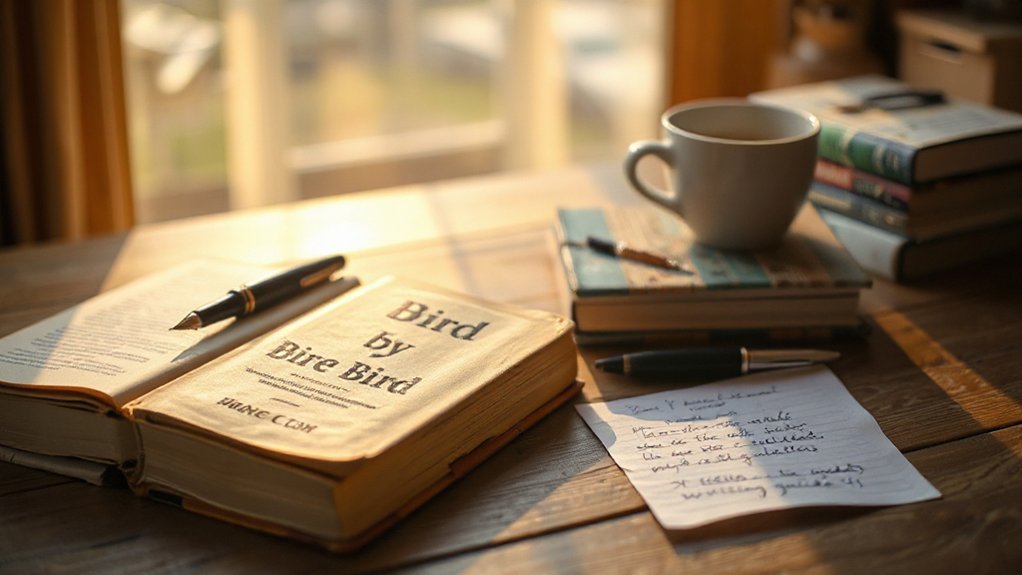
    Bird by Bird by Anne Lamott

    messy iterative writing process

    If King gave you a shove and a flashlight for the dark parts of writing, Anne Lamott shows you how to sit down with the mess, brew tea, and name the monsters one by one.

    I talk to you like a friend who’s spilled ink on the table, I point at the tiny, brave steps — the famed “shitty first draft,” the funny, painful personal anecdotes — and you feel permission to begin.

    You’ll learn a writing process that’s messy, iterative, vivid, and oddly freeing.

    Lamott’s voice smells like hot tea and wet paper, it pricks you with truth, then hands you a pencil.

    You’ll laugh, wince, and write again, more daring than before, more human, less precious.

    The Elements of Style by William Strunk Jr. and E.B. White

    grammar rules for clarity

    You’re holding a tiny, battered book that smells faintly of library dust and authority, and I’ll bet it’s got rules you can actually use.

    It shows you core grammar rules, teaches you to cut bloated phrases until prose snaps, and warns about common usage pitfalls that trip even smart people.

    Read it aloud, mark it up with a red pen, and watch your sentences stop wobbling and start marching.

    Core Grammar Rules

    When grammar starts feeling like a stern schoolmarm tapping her ruler, I remind myself that rules are actually tools—sharp, useful, and kind of satisfying when you use them right.

    You’ll find Strunk and White hand you grammar essentials like punctuation rules and syntax structure, all laid out so you can fix common mistakes before they bite.

    I show you how sentence variety brightens prose, when to pick active voice over passive voice, and why subject agreement matters—no one likes a wobbling sentence.

    Parallel structure sings, commas and periods snap, and editing tips help you trim the fat.

    I’ll poke fun at my own comma crimes, toss you practical examples, then hand you small, bold exercises so you can hear your writing click.

    Concise Writing Habits

    Because cutting words is like polishing a dirty mirror, I plunge in with a grin and a kitchen timer—set for fifteen minutes—and dare you to watch the shine appear.

    You’ll learn to carve sentences down, feel the scrape of excess on your fingertips, hear the slice of useless phrases hitting the floor.

    The Elements of Style shows you clarity techniques that snap prose into focus, it hands you editing strategies that let you toss clutter without guilt.

    I coach you to prefer verbs, not adjectives, to trim preambles, to read aloud until rhythm reveals bloat.

    You’ll workshop lines, swap drafts, laugh at your past purple prose, then sigh with relief as the sentence finally sings.

    Try it, you’ll like the sound.

    Common Usage Pitfalls

    If you’re willing to look like an enthusiastic amateur for a minute, I’ll show you the tiny slips that make prose trip and blush.

    You’ll spot misused adjectives dragging scenes down, unnecessary adverbs begging for mercy, and mixed metaphors that smell like coffee and sink at once.

    I poke at dangling modifiers, correct incorrect verb tenses, and snip overused phrases with a satisfied click.

    You’ll hear me mock common clichés, then confess I used one last week, sheepish grin and all.

    I point to ambiguous pronouns, watch you follow a vague “they,” and hand you a clear noun instead.

    Lean in, try the fixes, feel the text breathe, and enjoy how clean, strange, inventive writing tastes when you let these traps go.

    Writing Down the Bones by Natalie Goldberg

    freewriting exercises for mindfulness

    A skinny paperback sat on my kitchen table and dared me to write, so I opened Natalie Goldberg’s Writing Down the Bones like someone cracking a secret code.

    I tell you, you’ll grab a pen, feel the paper, and surprise yourself — it’s full of freewriting exercises and mindfulness techniques that strip away your inner critic, fast.

    You’ll write messy, loud, steady lines, then pause, breathe, notice the room, the kettle’s hiss, the cat’s tail flick.

    Goldberg talks like a coach, not a lecturer, and you’ll obey.

    • Start with five minutes, no judgment.
    • Use objects in the room as prompts.
    • Treat mistakes as ink maps.
    • Read your lines aloud, listen for truth.

    It’s playful, radical, and oddly tender.

    The War of Art by Steven Pressfield

    creative resistance confronts artists

    Several chapters feel like a shove. You’ll read it in one gulp, then come back like it was a shot of espresso for your brain.

    I tell you up front, Pressfield names the foe: creative resistance, that sly, soggy thing that keeps you scrolling and snoozing. He makes artistic motivation feel simple, almost rude in its honesty.

    Pressfield calls out the enemy — creative resistance — that sneaky drag keeping you scrolling instead of making.

    You’ll get practical commands, daily rituals, and stern pep talks that sting nicely. I bet you’ll laugh, wince, then set a timer and start.

    I scribble in margins, cup warm coffee, hear my keyboard clack — tiny victories. He talks like a coach who once lost his job and made masterpieces out of the loss, and you’ll want that same stubborn, steady work.

    Story by Robert McKee

    story structure and development

    Pressfield wakes up your work ethic; McKee will beat your scenes into shape with a ruler and a smile.

    I tell you straight: Story drills you in story structure, then hands you a scalpel for character development. You’ll sit in his room, feel the chalk dust, hear the tap of his pen. He forces choices, shows beats, makes stakes jagged. You’ll wince, then laugh, then rewrite.

    • Learn scene goals that snap into place.
    • Diagnose weak arcs, sharpen motivations.
    • Turn passive pages into sensory, tactile moments.
    • Apply crisis logic to lift dull middles.

    I’m blunt but kind, I point out blind spots, I give tools you can use tonight.

    You get ruthless clarity, a practical map, and fierce craft that rewards risk.

    The Artist’s Way by Julia Cameron

    creative recovery through writing

    When you’re stuck, bleary-eyed at midnight with a blank page and a guilty tub of ice cream, Julia Cameron will hand you a cup of tea and say, “Write.”

    I mean that literally—she wants you to sit down every morning and dump your head into three pages of stream-of-consciousness, no edits, no excuses, like emptying a clogged sink so the good stuff can flow.

    You’ll practice morning pages, face the inner critic, and learn creative recovery as a daily habit.

    She nudges you through artistic block, fingers sticky with doubt, toward playfulness practice and new inspiration sources.

    It’s part workbook, part spiritual connection, part tough love.

    You’ll stumble, laugh, then find your voice again, surprisingly brave.

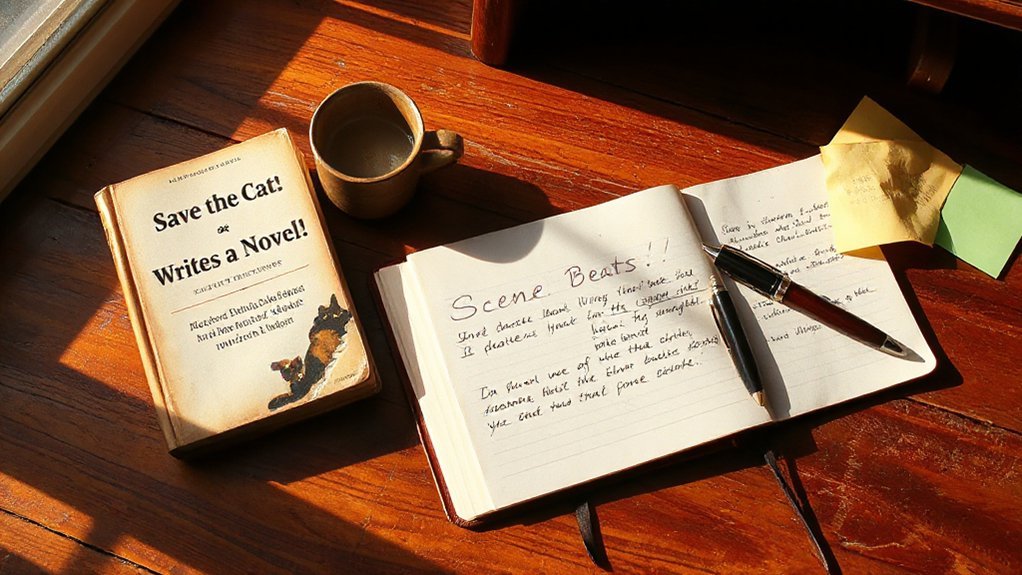
    Save the Cat! Writes a Novel by Jessica Brody

    plot structure made simple

    You snag Jessica Brody’s Save the Cat! Writes a Novel, open it, and your plot finally stops feeling like a tangled headphone cord.

    You’ll get a crisp beat sheet to map each scene’s heartbeat, and a clear way to trace your character’s arc so emotions rise, shift, and land where readers care.

    Trust me, it’s like installing a roadmap in your brain—less guesswork, more “aha,” and yes, you’ll laugh at your own plot holes.

    Beat Sheet Basics

    One neat little chart can change the whole novel, and I mean that literally—I’ve watched messy drafts straighten up like laundry gone through the spin cycle.

    I show you a beat sheet structure that pins down essential plot points, guides narrative pacing, and sharpens character motivation, so your scenes snap into place like puzzle pieces.

    You’ll map scene development, theme exploration, and conflict resolution with an act breakdown that hums. Emotional beats pop, story arcs align, and you actually feel the draft breathe.

    I talk fast, I joke, I spill coffee on drafts, but you’ll leave with tools that respect invention and disruption.

    • Pin key emotional beats early
    • Label essential plot points clearly
    • Pace with act breakdowns
    • Tie scenes to theme exploration

    Character Arc Mapping

    Because character change is the secret engine under every satisfying plot, I make you stare at your protagonist until they spill their true self onto the page.

    I walk you through character arc mapping like a lab tech, you sketch beats, you trace flaws, you mark transformational moments with a neon pen.

    You’ll map character development onto narrative structure, see cause and effect, feel the emotional journey in tactile, stop-start scenes.

    I ask you to touch the room, taste the coffee, listen to that lie, then flip it.

    You’ll write scenes that shove the hero, wrench their habits, sculpt change.

    It’s playful, relentless work, and yes, you’ll cry — or laugh — but your story will finally move.