Tag: reading tips

  • The Problem With Book Hype – and How to Navigate It

    The Problem With Book Hype – and How to Navigate It

    You’re dangled the perfect cover, everyone’s whispering it’s “the next big thing,” and you feel that itch to join the crowd; I get it, I’ve fallen for glossy blurbs too—tastes twitch, disappointment stings, and the book that was supposed to change your life sometimes just changes your shelf. Smell the ink, flip a random page, trust your gut more than the hype machine, and I’ll show you how to spot the smoke before you buy the ticket.

    Key Takeaways

    • Recognize manufactured hype: publicity machines amplify certain books for visibility, not necessarily quality.
    • Reset expectations: avoid assuming hype equals perfection and focus on what you personally value in a book.
    • Sample before committing: read excerpts or reviews from diverse sources to gauge fit and tone.
    • Diversify discovery: follow indie reviewers, book clubs, and recommendations beyond bestseller lists.
    • Practice mindful reading: prioritize consistent, guilt-free habits that favor long-term enjoyment over trends.

    How Book Hype Is Manufactured
    manufactured book marketing hype

    If you think a bestselling book pops onto the scene like a comet, I’ll let you in on a secret: it’s usually been scaffolded, shined, and launched.

    You watch blurbs bloom, see curated covers gleam under studio lights, feel the hum of a campaign moving like a small army.

    Blurbs blossom under studio lights, covers gleam, and a campaign marches like a tidy, tireless small army.

    I’ll point out the manufactured narratives, the whisper lists, the staged blurbs, the timing that’s as choreographed as a flash mob.

    You’ll notice promotional tactics that scent the air—early reviews, influencer teasers, ARCs sent with glossy notes.

    I’m not bitter, just amused, and I want you to sniff out the setup, pull back the curtain, and decide if you want the magic, or the mechanics that made it sparkle.

    Why Hype Skews Reader Expectations
    expectation management enhances enjoyment

    Expectation is a tricky spice—you sprinkle too much, and the dish tastes of showbiz instead of substance. You walk into a bookstore buzzing like a beehive, eyes wide, and you want the big reveal.

    Hype hijacks reader psychology, it primes you for spectacles, for moments that jump off the page like fireworks. When the book settles into calmer rhythm, you feel cheated, even if it’s brilliant in its own way.

    I tell you this because expectation management is a design problem. Tame the fanfare, read a sample, ask for context, lower the volume so you can hear the author’s true voice.

    You’ll find subtler pleasures, surprises that don’t need neon signs, and a steadier, smarter enjoyment.

    The Hidden Costs for Writers and Publishers
    marketing s fleeting returns pressure

    You feel the fizz of publicity, then it’s gone—short-lived cycles that leave you holding a lukewarm cup of attention.

    You’re funneling time, money, and late-night emails into marketing that eats resources faster than a cat at a laser pointer, and you know the sales graph often looks hopeful for a week and then flatlines.

    I’ll say it plainly: those spikes raise expectations, pressure your team, and leave both writers and publishers scrambling to justify the climb.

    Short-Lived Publicity Cycles

    When the media circus finally lands, it feels like a confetti cannon—bright, loud, and over in two heartbeats, and I’m left picking glitter out of my coffee.

    You ride the surge, you taste the adrenaline, but short term trends and fleeting attention mean the buzz vanishes before your email cools.

    You’re left with echoes, and a backlog of promises to readers and to yourself.

    • You feel thrilled, then hollow, like applause from another room.
    • You scramble to convert clicks into real readers, teeth clenched, coffee gone cold.
    • You worry your next book will be judged by a single viral day.
    • You dream of sustainable reach, but get trapped in one-shot fame.

    You adapt, iterate, and keep writing anyway.

    Resource-Draining Marketing

    All that glitter from the viral day looks great on camera, but the cleanup eats your time and money like a raccoon in a pantry.

    You’ll hustle on socials, tweak ads, and answer a swarm of messages, while your inbox smells faintly of burnt toast and ambition.

    I watch budgets vanish, you tighten the purse, we both sigh.

    Marketing fatigue creeps in, dulling creativity, making launch tasks feel like molasses.

    Budget constraints force choices: paid reach or sustained craft?

    You learn to hack costs, barter with allies, reuse assets, and ditch shiny distractions.

    I joke, “trend-chasing is cardio,” but you know it’s true.

    Smart experiments beat frantic splurges.

    Pivot, measure, iterate—small bets, big lessons, less burnout.

    Skewed Sales Expectations

    Expectation is a slippery thing, and it smells faintly of burnt toast too—burned hopes, not breakfast.

    You’ve tracked sales projections with the zeal of a scientist, but hype skews the data, and you end up forecasting fireworks where there’s a damp sparkler. You taste metal anxiety, you tighten your jaw, you rework budgets, while market saturation quietly waits in the wings.

    • You promised agents a moonshot, then landed on a damp porch.
    • You poured cash into ads, smelled smoke, saw few embers.
    • You watched early charts spike, then flatline like tired applause.
    • You apologized to your team, learned a sharper metric, vowed smarter bets.

    I’ll say it plainly: pivot, iterate, and measure differently.

    How Hype Narrows Literary Diversity

    Because buzz spreads fast, you’ve probably stood in a bookstore and felt it—the electric hum that makes a single cover take over a whole table, as if the room’s oxygen went to that one title.

    That electric hum of a single cover swallowing a whole table, as if the room’s air belonged to one book

    You watch other books gather dust, you sigh, and you blame the algorithm and literary gatekeeping. Hype funnels attention, it makes publishers chase trends, it boxes writers into genre limitations so they can be marketed easily.

    You lose odd hybrids, messy experiments, voices that don’t fit a neat shelf label.

    I poke at the display, I pull a neglected spine, I smell ink and leather, and I imagine a shelf that breathes.

    It’s simple: more attention diversity equals richer reading, less boredom, more surprise.

    Strategies for Reading Beyond the Buzz

    You can skip the hype cycle—walk past the glossy covers, turn down the noise, and actually pick books that whisper instead of roar.

    I’ll show you how I hunt for voices off the bestseller train, tap into book clubs, indie reviews, and friends who read weird stuff, and you’ll learn to trust what feels surprising and true.

    Try it once, you might find a shelf of quietly brilliant reads that smell faintly of tea and old paper, and I’ll be smugly pleased.

    Skip the Hype Cycle

    If a book’s been on every podcast and shelf, I slow down and sniff the paper like a suspicious raccoon—there’s a lot you can learn from the smell of hype.

    You’ll notice hype fatigue, and authenticity concerns, and you’ll breathe less enthusiastic and more curious. I tell you: don’t swallow the launch buzz whole. Wait. Read a chapter, then another later. Let your brain catch up.

    • You feel the fizz, then the letdown, a hollow sugar rush.
    • You resist the crowd, taste your own judgment, it’s oddly sweet.
    • You hear polished praise, you touch rough pages, reality wins.
    • You laugh at your impulse buys, you learn to savor true surprises.

    Seek Diverse Perspectives

    When the launch noise dies down, I start hunting opinions like a raccoon in a library—nose to the shelves, ears perked for anything that smells different.

    You should do the same, poking past bestseller lists, trolling forums, and tapping into podcasts where creators talk messy truth.

    Seek diverse voices, hunt translations, scan indie press catalogs, follow critics from different cultures. You’ll catch inclusive narratives that mainstream buzz missed, the small reveals that change how a book lands.

    Ask friends who don’t read your usual feed, trade notes, and don’t be shy about saying, “Tell me what I’m missing.”

    You’ll read smarter, not louder. And yes, sometimes you’ll look wrong — that’s the price of curiosity, and it’s worth every awkward margin note.

    Building a Sustainable Personal Reading Practice

    Although my shelves look like a literary crime scene—stacks teetering, bookmarks like little flags of surrender—I’ve learned that building a sustainable reading practice isn’t about heroic binges or pretending you’re an insomniac book fairy; it’s about tiny, reliable moves you can actually stick to.

    You’ll shape reading habits around your life, not the internet’s hype, and you’ll honor personal preferences without guilt. Make sustainable choices that feel like treats, not chores.

    Practice mindful consumption: sniff the paper, skim a chapter, close a book that isn’t right. I talk to myself like a coach, sometimes a jerk, mostly a friend.

    You’ll innovate your ritual, tweak it, and keep it human—quiet, curious, surprisingly joyful.

    • Feel the cover, decide.
    • Read one page, then two.
    • Ditch guilt, keep curiosity.
    • Swap noisy lists for slow joy.

  • How to Read Multiple Books at Once Without Getting Confused

    How to Read Multiple Books at Once Without Getting Confused

    You can juggle three books without turning your brain into mush, I promise — but you’ll need rules. Pick different genres so plots don’t collide, set a tiny goal for each (one chapter, ten minutes), and mark them with a smell or a mug so your mind snaps into gear; I use a cinnamon candle for fiction and a green mug for non‑fiction, because apparently I’m dramatic. Switch at fixed times, jot one-line summaries, and you’ll keep characters straight — now picture the scene where it all goes wrong, and you’ll see why you want a plan…

    Key Takeaways

    • Pick books with distinct genres, tones, or purposes to reduce overlap and mental interference.
    • Assign a clear goal for each book (one-sentence purpose and a measurable milestone).
    • Schedule fixed time blocks and sensory cues for switching between books.
    • Keep quick tracking notes or mini-profiles (characters, themes, last page) for fast context-refreshing.
    • Use varied formats (audiobook, paperback, essays) and revisit notes regularly to reinforce separation.

    Choose Complementary Books and Formats

    complementary book formats strategy

    If you want to glide through three books without turning into a frantic, bookmark-juggling octopus, start by picking titles that actually get along.

    You’ll match book themes like flavors, so sweet memoir, bright design manual, and sharp sci‑fi mingle without clashing.

    Try genre pairing that contrasts form, not tone — a dense theory book, a light novel, and an audiobook for walks.

    I tell you, sensing texture matters: paperweight, narration cadence, the smell of ink, the tap of keys on a phone.

    Switch formats to reset your brain, and you’ll keep momentum.

    Read one in morning light, listen on your commute, skim another before bed.

    It’s tactical, playful, and oddly elegant — like arranging snacks for a brilliant, readable party.

    Set Clear Goals and Reading Intentions for Each Book

    set clear reading goals

    A good goal feels like a tiny compass you can actually follow, so decide what you want from each book before you immerse yourself. I’ll nudge you: name the purpose, jot it down, and stick a sticky note on the spine. Say “sketch ideas,” “learn the recipe,” or “escape for thirty minutes.”

    Those reading intentions act like scent trails, pulling you back when attention wanders.

    For goal setting, pick one clear outcome per book. Read for insight, for fun, or for skill. Describe it in one sentence, add a metric — a chapter, a concept, a scene — then test it.

    If it’s fuzzy, tighten it. You’ll stay curious, focused, and weirdly proud of your tiny, useful victories.

    Build a Simple Reading Schedule and Switch Strategy

    timed reading with cues

    You set aside clear time blocks—15 minutes for essays, 30 for novels, maybe a brisk 10 for poems—and you’ll actually finish more than you think.

    I’ll tell you when to switch: a bell, a bookmarked page, or that goofy mental drumroll I use when my focus naps, and you’ll train your brain to hop tracks without face-planting.

    Keep it simple, sensory, and a little silly—tea steam, page rustle, soft chair creak—so the cues stick and reading stays fun.

    Set Clear Time Blocks

    Because your brain likes rules even when it pretends it doesn’t, set clear time blocks for each book and watch your reading life snap into focus.

    I tell you, this is pure time management magic. Pick chunks—25, 45, 90 minutes—label them: fiction, work, learning.

    You’ll feel the shift, like swapping playlists. Sit down, smell paper or tap the screen, and commit. No guilt, just a timer and a promise.

    You’ll boost reading efficiency, you’ll keep momentum, and you’ll stop doom-scrolling during “study” time.

    Switch rooms, change mugs, stand up, take a breath, then dive back in. It’s simple, inventively boring in the best way.

    Try it for a week, report back, I’ll pretend to be surprised.

    Use Consistent Switching Cues

    If you want your brain to stop giving you the “which book am I in?” cold stare, set up a tiny ritual to flip between reads and stick to it like gum on a sneaker.

    I tap the spine, inhale the paper, and say a one-line prompt out loud — it’s silly, but it works.

    You’ll invent switching techniques that feel futuristic, but simple: a song clip for fiction, a notebook flip for nonfiction.

    Those sensory mental cues — the smell, the sound, the motion — anchor context fast.

    Stick to a schedule, yes, but more importantly, honor the cue.

    When the tune plays, you switch. When you close the notebook, you pivot.

    It’s decisive, playful, and oddly calming.

    Use Quick Tracking Tools to Keep Details Separate

    quick tracking tools simplify details

    Grab a sticky note, a tiny notebook, or the notes app on your phone and let’s pretend you’re a librarian with commitment issues. You’ll love tracking tools that let you jot a line, tag a mood, or timestamp a quote, fast.

    Carry a sticky or notes app like a flaky librarian: quick tags, tiny sketches, and instant book-memory.

    I tap, I scribble, I glance back — no fuss. Detail management means each book gets its own mini-profile: character names, odd facts, the chapter where something clicks.

    Use colors, initials, or tiny sketches, whatever sparks you. When you switch, you scan your note for three seconds and you’re back in. It’s tactile, visual, immediate, and oddly satisfying.

    I promise it keeps threads separate, saves brain space, and makes hopping between books feel like play, not chaos.

    Anchor Each Book With a Sensory or Contextual Cue

    sensory cues enhance memory

    Think of a smell, a song, or a silly mental snapshot and stick it to each book like a Post-it for your brain — I call this cueing, and you’ll thank me when your brain isn’t doing cartwheels.

    I want you to pick bold sensory associations: citrus for a business book, rain for a novel, tinny synth for a how-to.

    Say the cue out loud, hum the riff, sniff a matching candle, whatever feels weirdly effective.

    Use small contextual reminders too — a colored bookmark, a corner fold, a line in your notebook that ties to a setting or theme.

    These gestures anchor meaning fast, they reduce crossover, and they make switching playful.

    Trust the ritual; it’s low-effort, high-return, and oddly satisfying.

    Review and Reinforce What You’Ve Read Regularly

    regularly review and summarize

    You’ll want to jot quick daily summaries—two lines on a sticky, or a voice memo while you’re boiling coffee—so the plots and facts stay fresh.

    Then, use spaced recall: quiz yourself after a day, a week, a month, like a tiny, merciless librarian who won’t let you forget.

    Finally, tie new notes to what you’ve already read, make mental bridges between books, and watch ideas light up like bulbs in a dim room.

    Quick Daily Summaries

    A few minutes every night will change how much of a book actually sticks with you—trust me, I learned this the hard way, with three half-finished paperbacks and a guilty conscience.

    You’ll jot a tiny summary, and suddenly ideas that felt slippery stay put. Use simple summary techniques, and build a habit of daily reflections that’s playful, bold, and oddly satisfying.

    • One-sentence takeaway: distill the chapter to its spine.
    • Two-minute sensory note: what sounded, smelled, or felt vivid tonight.
    • Actionable spark: one thing you’ll try tomorrow.

    I talk like a friend who trips over bookmarks, but I mean business.

    Do this nightly, you’ll keep momentum, curiosity, and creative fuel humming.

    Spaced Recall Practice

    You’ve done the tiny nightly summaries, maybe scrawled one-sentence takeaways on a sticky note that now lives under your coffee cup.

    I want you to treat that note like a seed. Every few days, pull it out, say the main idea aloud, then test yourself — no peeking.

    Use spaced repetition, stretch the interval: tomorrow, three days, a week. It’s simple, brutal, effective.

    I’ll admit I forget; so I set phone nudges, tiny rituals — a coffee steam breath, a window click — to cue recall.

    This habit turns random lines into neural paths, gives your brain permission to strengthen, then rest.

    That’s memory enhancement in action: lightweight, reliable, and oddly satisfying when you surprise yourself remembering something you thought gone.

    Connect to Prior Reading

    When you tuck a new book under your arm, don’t treat it like a stranger — introduce it to the ones you already know. I poke around, smelling paper, flipping to favorite passages, and I map prior themes onto new pages.

    You’ll spot thematic connections, character arcs that echo, and narrative threads that braid across genres.

    • Note quick links between genre similarities and author styles, jot a one-line riff.
    • Revisit scenes tactilely, say them aloud, test how they change your sense of character arcs.
    • Create a tiny visual map, wire the narrative threads, color code for fun.

    Do this often, you’ll reinforce memory, spark inventive comparisons, and make reading feel like remixing — messy, thrilling, and smart.

  • How to Find the Best Book Recommendations Online

    How to Find the Best Book Recommendations Online

    You might think you don’t have time to sift through endless lists, but you do have five minutes and a device—use them. I’ll walk you through spotting books that actually fit your tastes, not just whatever’s trending; you’ll learn to analyze what you liked and hated, test smart recommendation engines, and tap into lively reader communities that spill the best secrets, plus quick tricks to judge a book from a single chapter—stick around, because the next step makes everything faster.

    Key Takeaways

    • Combine algorithmic engines with human curation (reviewers, librarians, book-club picks) to balance quantity and quality.
    • Read sample chapters and a few full reviews to judge voice, pacing, and whether a book matches emotional preferences.
    • Follow trusted critics, festival shortlists, and award lists for vetted, craft-focused recommendations.
    • Use diverse social sources—indie presses, niche readers, forums, and swaps—to surface unexpected or under-the-radar titles.
    • Build a simple pipeline: filter by genre/length, test with samples, track favorites and dislikes to refine future suggestions.

    Why Knowing Your Reading Preferences Matters

    know your reading preferences

    Maybe you think reading is just about picking up whatever looks shiny on a bookstore table—been there, bought the mug.

    I tell you to map your reading genres, align them with personal interests, and call out favorite authors so algorithms don’t guess wrong.

    Smell paper, feel a cover, decide emotional themes you crave, note literary styles and time periods that spark you.

    Watch how character development and narrative voice make you linger, or slam a book shut.

    Try different book formats, audio for commutes, ebooks for midnight highlights.

    Picture your target audience—yourself, oddly specific, picky, hungry for novelty.

    I joke, I’m blunt, but you’ll get sharper picks, fewer misses, and more books that feel like home.

    Analyze Books You’ve Loved and Hated

    analyze favorite and disliked books

    Once you’ve read enough books to wage a small, tasteful war against bad plotting, start pulling them apart like a curious mechanic. I’ll show you how to tinker.

    Lay favorites on the table, note favorite genres, underline scenes that made you twitch with joy, smell the sentences—okay, not literally—but pay attention to cadence and texture.

    Then toss in the ones you hated, list disliked themes, pinpoint why they jarred you. Say, “This pacing felt clunky,” or, “That character smelled like a prop.”

    Be ruthless, but playful. Track specifics: openings, voice, stakes, emotional beats.

    You’ll build a map of what fuels you, and what fizzles. Use that map to seek bold, surprising reads, not safe reruns.

    Use Recommendation Engines Wisely

    explore diverse recommendation engines

    You’ll want to treat recommendation engines like helpful, slightly quirky shopkeepers, not gospel.

    Use a couple of different engines, tweak your likes and dislikes, and you’ll hear more honest, surprising suggestions instead of the same safe titles on repeat.

    I’ll nudge you to test filters, change genres, and taste a handful of recs before you commit—think of it as sniffing books for the one that actually smells like you.

    Understand Algorithm Limits

    If algorithms were human, they’d be the friend who always orders the same dish and insists it’s “objectively perfect,” and you’d laugh until you realize you’re stuck with their taste for three hours—so let’s agree they’re useful, but not infallible.

    You’ll notice algorithm biases fast: subtle repeats, genre blind spots, and that smug avoidance of the weird stuff you secretly love.

    Trust the engine, but question it, poke it, nudge it. Scan recommendations for freshness, listen for patterns, add a wild card now and then.

    Smell the virtual pages, click a preview, judge by voice not cover. You’ll get better picks when you demand recommendation diversity, and when you treat algorithms like tools, not oracles.

    Combine Multiple Engines

    Algorithms are great at echoing your past, but I like to double- and triple-check their work, so I mix engines the way I’d mix coffee — a strong base, a surprising splash, then taste.

    You’ll use search engines for broad scans, then tuck into niche sites for texture, because algorithm diversity keeps recommendations alive.

    I riff between bestseller feeds, indie forums, and a recommendation engine or two, sniffing out books that don’t just mirror your past reads.

    Keep an eye on genre preferences, sure, but don’t let that be a straightjacket; nudge the mix toward unfamiliar rhythms.

    Pull from diverse sources, compare lists, bookmark surprises, and savor the oddball picks.

    You’ll build a smarter, tastier stack — and I’ll brag about your great reads.

    Personalize via Preferences

    How do you make a recommendation engine actually work for you, and not just loudly remind you of books you already loved? You tweak it, aggressively and lovingly.

    Start by setting clear genre preferences, then star a few favorite authors, but don’t stop there. Tell the system when you liked pacing, voice, or a twist — click the little buttons, type a blunt note, whisper sweet nothings to the algorithm.

    I’ll confess, I once trained one with snack choices; it learned my taste faster than my book club.

    Swap profiles for moods, create a “curious” queue, prune the repeats. Smell new covers on your screen, sample first chapters, and give feedback.

    You’ll shape better, bolder picks, and laugh when it finally surprises you.

    Tap Into Reader Communities and Book Clubs

    join vibrant book communities

    Ever wandered into a forum at midnight and felt like you’d stumbled into a secret book party? You’ll find that buzz in online forums and book swaps, where people trade spine-chills and guilty-pleasure confessions.

    I poke around threads, skim recommendations, then toss in a hot take to bait a debate. Join a book club with daring readers, hit a virtual meetup, or swap a paperback that smells like someone else’s summer.

    You’ll hear quick pitches, honest rants, and unexpected gems, all served with GIFs and strong opinions. Try themed swaps to stretch your taste, host a micro-club to prototype picks, and always ask “what surprised you?”

    You’ll leave smarter, oddly comforted, and with a new stack to devour.

    Follow Trustworthy Reviewers and Critics

    build a trusted reviewer network

    You should start by spotting critics who know their stuff, the ones whose takes ring true when you read a sentence and can almost hear their tone.

    I’ll show you how to track reviewers with solid reputations, follow their feeds, and bookmark the ones who actually make you laugh or think — no fluff.

    Think of it as building a small, reliable reading radar, one trusted voice at a time.

    Identify Trusted Critics

    Since you’ve spent too many nights trusting a flashy headline and ending up halfway through a clunker, let me steer you toward critics who actually earn their stripes: people who read widely, explain why a book works (or doesn’t), and don’t hide behind trend-chasing applause.

    I want you to spot critic credibility fast, feel the texture of their prose, and trust their takes without swallowing hype. Check reviewer background, ask where they learned to judge, and notice if they explain craft, not just plot.

    I’ll whisper the quick checklist, like a librarian passing a secret note:

    • Look for diverse reading history, not one-genre echo chambers.
    • Read a few deep reviews, skip fluff.
    • Prefer critics who name influences, methods.
    • Value clear, actionable criticism.

    Track Reputable Reviewers

    Alright—now that you can sniff out a thoughtful critic from a clickbait blurb, let’s make following them stupidly easy.

    You’ll pick a handful of voices that pass reviewer credibility tests, then wire them into your daily feed.

    I’ll show you shortcuts: bookmark their pages, follow on social, enable notifications, and add RSS so headlines pop like coffee.

    Read expert opinions, but don’t worship them; test claims on sample chapters, taste the prose, feel the cadence.

    Jot quick notes, star favorites, drop a one-line reply — be human, be curious.

    Switch platforms if a voice goes stale, and archive past gems.

    You’ll build a living list, agile and tuned, that keeps your shelf smart and surprising.

    Explore Curated Lists and Award Winners

    curated lists and awards

    If I’m hunting for a great read and want to skip the guesswork, curated lists and award winners are my cheat codes, plain and simple.

    You’ll feel the buzz when a list lands, like crisp paper turning, and you’ll spot titles vetted by experts who love smart risks. Immerse yourself in curated collections from indie bookstores, libraries, and literary festivals, they’re small labs of daring picks.

    Check award ceremonies for trend-setting winners, they’re loud signals of quality.

    • Browse indie bookstore staff picks, tactile notes and all.
    • Scan library seasonal lists, quietly brilliant finds.
    • Follow festival curations, where fresh voices meet bold rules.
    • Track prize shortlists, the backstage whisper of next favorites.

    Leverage Social Media for Discovery

    social media book exploration

    You loved the curated lists—so did I—but the moment I started scrolling, my reading world got louder, brighter, and weirder.

    You tap into social media like it’s a flea market for ideas, smell of coffee and neon book covers.

    I show you quick tricks: follow indie presses, niche readers, librarians with strong opinions, and a few clever bots that sniff trends.

    Watch short videos, feel the thumb-swipe velocity, pause on a page reveal, jot the title before you forget.

    Join tight threads, ask for offbeat recs, trade one-liners and GIFs.

    You’ll build a personalized feed that nudges your taste into new terrain, messy and thrilling.

    Don’t fear noise — that’s where serendipity and bold book discovery live.

    Combine Ratings With In-Depth Reviews

    ratings and reviews synthesis

    Because star counts tell you what’s popular but rarely why, I pair quick ratings with full-throated reviews the way I pair coffee with a pastry—one gives the buzz, the other explains the crumbs.

    You’ll run ratings analysis for a rapid filter, then explore review synthesis to hear voices, spot patterns, and sniff out gassy hype versus real charm.

    I guide you, you skim stars, then you linger on layered takes.

    • Scan overall scores, spot outliers, flag extremes.
    • Read long-form reviews, note themes, emotional beats.
    • Compare expert takes with reader reactions, weigh credibility.
    • Tag recurring praise or complaints, map to your taste.

    This combo feels like tasting, thinking, then buying. Smart, fast, delightful.

    Try Sample Chapters and Metrics-Based Filters

    sample chapters for evaluation

    So after eyeballing stars and marinating in reviews, let’s put the book in your mouth—figuratively, via a sample chapter. You flip pages, you taste voice, texture, pacing; sample chapter benefits hit fast: tone checks, plot hooks, and whether the prose scratches your brain the right way.

    Don’t guess. Scan for sentences that sing or limp. Then layer in metrics filter techniques — read length, completion rates, average chapter scores — like a magnifying glass.

    I poke, you decide. Try a three-minute skim, note cadence, mark a killer line, shrug at clichés. Mix instinct with numbers, let data back your gut. It’s playful science, low risk, high reward.

    I promise, you’ll ditch duds and keep the delicious ones.

    Build a Personalized Reading Pipeline

    personalized reading habits pipeline

    If you want books to stop feeling like random lottery tickets, build a reading pipeline that treats your shelf like a well-oiled espresso machine—intentional, fast, and reliably delicious.

    You’ll map your reading habits, set micro-goals, then automate choices so you taste-test widely without chaos. I’ll coach you, nudge you, and mock your old “maybe” pile.

    • Queue: a short active list, one-click next, zero guilt.
    • Rotate: scheduled genre exploration blocks, spicy and safe.
    • Trial: 10–20 page samplers, quick pivots, instant discard.
    • Review: tiny notes, 2-minute verdicts, smarter future picks.

    You’ll hear pages, not shuffling. You’ll sip, not gulp. It’s efficient pleasure, with a wink.

  • How to Annotate Books Without Ruining Them

    How to Annotate Books Without Ruining Them

    You want to mark a book without turning it into an archaeological artifact, and I get it — you like your pages neat, but your brain loves chaos. Grab a soft pencil, sticky flags, and a tiny bit of nerve; trace echoes of sentences, tap the margins with shorthand, peel a note when the mood changes. It feels tactile, almost naughty, like whispering to the author — and I’ll show you how to do it without wrecking the spine

    Key Takeaways

    • Use removable tools: sticky tabs, page flags, and adhesive notes to mark passages without writing on pages.
    • Reserve pencil for tentative underlines or marginalia so you can erase and refine later.
    • Develop a simple symbol/color key and use it consistently to make quick, noninvasive annotations.
    • Summarize each chapter on a single note or index card instead of crowding page margins.
    • Protect books physically: clean hands, acid-free bookmarks, and avoid folding or heavy pressure on the spine.

    Why Thoughtful Annotation Matters

    active engagement enhances understanding

    Even if you’ve skimmed a book before, you haven’t really met it until you’ve got a pen in your hand and a margin full of notes—trust me, it changes everything.

    Put a pen to the page and watch the book stop being a relic and start being a conversation.

    You lean in, feel the paper, hear the scratch, and suddenly the importance of comprehension isn’t an abstract goal, it’s a tactile mission. You jot questions, arrow connections, underline punchlines, and you’re actively enhancing retention, because action cements ideas.

    I nudge you to treat pages like collaborators, not relics. You’ll make the text work for you, reveal hidden patterns, and laugh at your past timid self.

    Small marks spark big insights, and later, when you flip back, memories bloom—clear, bright, usable.

    Choosing the Right Tools for the Job

    tools enhance reading experience

    When you pick up a book with a pen already in your hand, you’re signaling intent — and the right tools make that intent sing.

    I like gear that feels alive: slick annotation tools, slim writing instruments, they slide and whisper across paper. You want control, not drama. Reach for pens that dry fast, pencils that bite just enough, and sticky tabs that peek without shouting.

    I test textures, weight, balance, the little satisfying click or whisper of a cap. Try a fine-tip for tiny notes, a soft pencil for sketching margins, and a bright tab for jumping back.

    You’ll learn what suits your rhythm, what keeps pages readable, and what turns reading into active, joyful work.

    Marking Without Permanent Damage

    mark books without damage

    You’ll want to mark books without wrecking them, so I’ll show you two low-risk tricks that feel almost naughty.

    Stick on removable page flags for quick notes and color-coding, they peel off clean and snap against the paper with a satisfying little click.

    If you do underline, use pencil first — it lets you press, erase, and refine your thoughts without committing ink to eternity.

    Removable Page Flags

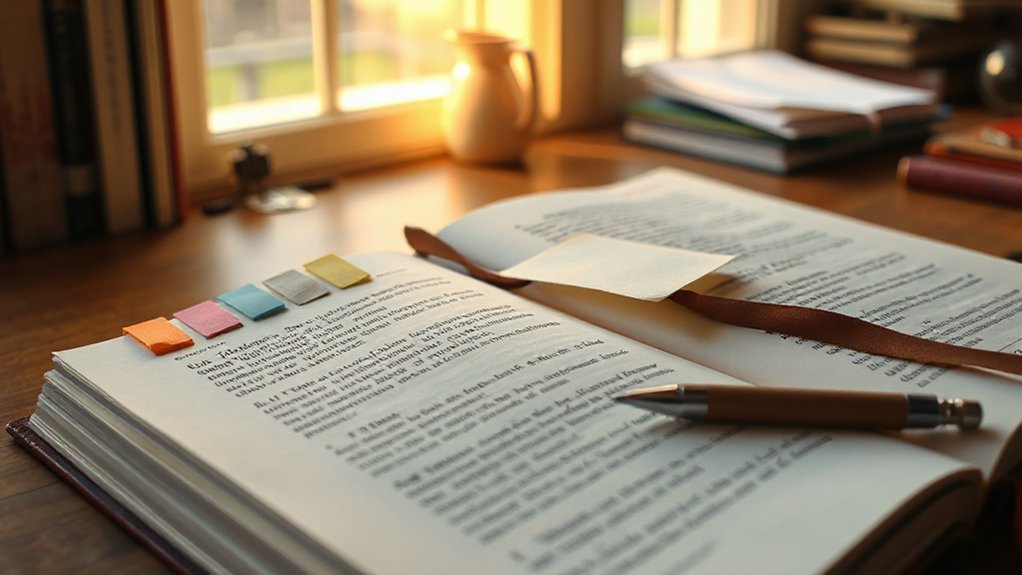
    I love those neon tabs—tiny rectangles of bravery that scream, “I’ll be back,” without wrecking the book; slap one on a page and you’ve got a bookmark, a flag, and a tiny piece of organization that peeks out like a confident eyebrow.

    You grab a pad of removable flags, stick them where ideas zing, and move them later, no guilt. They’re removable flags, temporary markers, and your brain’s best friend when you’re testing thoughts.

    • color-code themes, it’s visual shorthand
    • write a tiny note on the tab for quick recall
    • peel and reposition as your thinking evolves

    I narrate my experiments like a lab report, but with snacks and sarcasm, letting innovation play without wrecking the paper.

    Pencil-First Underlining

    Grab a soft pencil and some courage, then hover it over the page like a respectful tattoo artist—gentle pressure, steady hand.

    I tell you, the pencil advantages are real: erasable, subtle, forgiving. You’ll trace sentences, not scar them.

    Try short underlines first, breathe, then connect thoughts with light shading, that’s one underlining technique that keeps pages readable.

    I like the click of the pencil, the graphite smear on my finger, it feels intentional.

    Say a line aloud, underline, wink at the margin. If you change your mind, erase without guilt.

    Switch hardness for texture, softer for warmth, harder for crispness. You’re innovating, not vandalizing.

    Keep it honest, keep it light, and enjoy leaving marks that play well with the book.

    Using Sticky Notes and Flags Effectively

    sticky notes enhance organization

    When a page throws you a brilliant line or an infuriating contradiction, sticky notes and flags let you trap that moment before it slips away; think of them as tiny neon lifeboats for your thoughts.

    I like to riff on sticky note strategies, and I show you simple flag placement techniques that keep ideas tidy, visible, and ready to deploy. You’ll feel clever, tactile, slightly obsessive — good signs.

    • Color-code by mood or project, keep it bold.
    • Use short verbs or symbols, save space.
    • Fold flags to peek without opening, protect margins.

    Stick, scribble, peel. You’ll hear the paper sigh, you’ll see the neon pop, and you’ll know where your brain landed.

    It’s nimble, reversible, and kind to the book.

    Lightweight Writing Techniques for Different Formats

    visual organization for writing

    You’ll start by sketching quick margin symbols and icons — a star for gems, a lightbulb for ideas, a tiny trash can for shrug-worthy bits — and I’ll admit, my first attempts looked like a toddler’s treasure map.

    Then you’ll add restrained color-coding, a wash of one or two hues so pages hum instead of scream, and you’ll feel smarter just looking at the neat visual rhythm.

    Finally, layer sticky notes like tacos: one thin note for a summary, another for a question, a final tab for an action item, and together they give you a tidy, touchable roadmap through the book.

    Margin Symbols and Icons

    Think of margin symbols as your book’s secret emoji language — quick, neat, and a little smug.

    I show you a tiny toolkit, so you’ll annotate fast, stay tidy, and feel clever without wrecking the page. Use consistent margin icons, jot a key, and let symbol meanings do the heavy lifting. You’ll tap, glance, and move on.

    • *★* for aha moments — bright, small, impossible to miss.
    • *→* for follow-ups — a gentle nudge toward action or cross-reference.
    • *! * for challenges — sharp, useful, slightly accusatory.

    You’ll hear the paper, feel the pen, see neat glyphs crowd the side like smart friends.

    It’s playful, restrained, and oddly satisfying — like organizing rebellion.

    Color-Coding With Restraint

    If you use color like a sober painter, you’ll get clean, fast cues instead of a confetti disaster. I want you to pick a tight palette, test it on one page, then commit.

    Use color significance — one hue for claims, another for questions, a third for evidence. Don’t overdo it, resist rainbow pride; restraint sharpens meaning.

    Establish a color hierarchy: strongest ideas get the boldest shade, minor as a pale tint. I’ll admit I once turned a novel into a disco, learned quickly.

    Touch the paper, see the ink, breathe, adjust. In digital notes, copy the same scheme for muscle memory.

    This is practical aesthetic, the minimalist toolbox that keeps your annotations readable, usable, and a little bit stylish.

    Sticky-Note Layering System

    Color taught you restraint; sticky notes teach you how to break the rules, a little.

    I show you a Sticky-Note Layering System that keeps pages pristine, while letting you riff, argue, and doodle in color. You’ll pick sticky note styles, stack ideas, and read the book without guilt.

    Try this trio:

    • bright flags for quotes, slim, quick, obvious
    • square notes for thoughts, layered, movable, expandable
    • translucent tabs for questions, subtle, peek-through, persistent

    You peel, press, and layer; the book stays intact, your thoughts get depth.

    I encourage playful experiments, layered colors that sing together, little stacks you can shuffle. It’s lightweight, reversible, and oddly satisfying—like making a sandwich for ideas, then eating only the crumbs.

    Organizing Notes for Easy Review

    organized note taking system

    Okay—let’s make your notes work like a little library that actually helps you.

    Make your notes into a tiny, helpful library—organized, charming, and actually easy to use.

    You’ll build a compact system for note organization, tags and tabs that smell faintly of fresh paper and possibility. I’ll show you how to group highlights by theme, clip key phrases, and leave tiny marginal summaries that sing when you flip pages.

    For review strategies, set a quick-scan ritual: two minutes per chapter, a thirty-second peek at each tag, and one bold sentence to stick in your memory.

    You’ll use color sparingly, icons for mood, and one central index card that breathes. It’s playful, efficient, and a little nerdy — exactly the kind of method you’ll actually use, not abandon.

    Digital and Hybrid Annotation Strategies

    digital and tactile synergy

    You’ve built a tiny library on paper that sings; now we’ll make it hum on screen. You’ll mix digital tools with tactile joy, scan margins, sync highlights, and watch your notes come alive.

    I’ll confess, I love the click of an app and the smell of ink — you’ll keep both.

    • Use cloud-based highlights to link quotes, images, quick tags.
    • Snap photos of marginalia, OCR them, add searchable comments.
    • Pair physical sticky notes with short QR links to expanded drafts.

    You’ll toggle between devices, hear a satisfying ping, scroll a linked thought, then return to the dog-eared page, grinning.

    Hybrid methods let you experiment fast, iterate, and keep the book’s soul intact, while the screen stores your wildest insights.

    Preserving Value and Appearance Over Time

    book care for longevity

    If you want your books to look as sharp in ten years as they do today, treat them like guests at a spa—gentle, occasional pampering, no sloppy coffee stains.

    I tell you this because you’ll want preserving aesthetics without sacrificing notes. Handle pages with clean hands, use a soft cloth on covers, and tuck delicate volumes into archival sleeves when humidity’s high.

    Don’t jam them on crowded shelves; let spines breathe. I swear by acid-free bookmarks and light-blocking slipcases, tiny interventions that keep color true and binding strong.

    When transporting, cradle the book, not toss it. These moves feel fussy, I know, but they keep your annotations legible, your margins tidy, and your collection maintaining integrity over time.

    Developing a Personal Annotation System

    personalized annotation system development

    When you decide to make your marginalia more than random squiggles and dramatic exclamation points, you’re starting to build a system—your system—and that’s the fun part.

    I want you to treat notes like a designer treats a sketchbook: tactile, intentional, and slightly rebellious. Choose personal symbols, color cues, and a short legend, then stick to them. Annotation consistency is the secret sauce; it turns chaos into a map you can actually follow.

    • Quick symbol key: !surprise, ? question, ★ insight
    • Tools: pencil for timid edits, pen for commitments, highlighter for heat
    • Rhythm: note on first read, refine on reread, archive in a digital note

    Play, test, iterate, and enjoy the evidence of your thinking.

  • How to Track the Books You Read (And Remember Them)

    How to Track the Books You Read (And Remember Them)

    You want to keep the books you finish from turning into a blur, and you’re tired of vague notes and abandoned notebooks gathering dust; I’ll show you a tiny system that fits your pockets and your brain, so each title leaves a crisp takeaway and a memory you can actually use. We’ll pick what to record, where to put it, and a few playful tricks to lock insights in—plus a habit hack that won’t make you feel like a chore—and then you’ll want to try it out.

    Key Takeaways

    • Pick one simple system (app, spreadsheet, or notebook) and use it consistently for every book entry.
    • Log minimal bibliographic details (title, author, date) plus a one-line takeaway immediately after finishing.
    • Capture one vivid quote or image and one concrete action to cement memory and future use.
    • Tag entries by theme, project, or mood, and review tags quarterly to rediscover patterns.
    • Keep entries tiny and habit-friendly: two–three fields, quick rating, and occasional full reviews.

    Why Tracking Your Reading Matters

    track reading for retention

    Because you’ll forget most of what you read unless you do something about it, tracking isn’t optional if you want reading to actually stick.

    You’ll notice the benefits of tracking instantly: a quick log turns vague impressions into sharp notes, and you’ll feel the impact on retention when concepts pop back into mind like familiar songs.

    I’ll admit, I used to rely on good intentions — bad idea.

    Now I jot a line, add a quote, tactile, pen-on-page or a slick app tap, and the book stays with me.

    You build a memory trail, then follow it. It’s practical, a little nerdy, and oddly satisfying.

    Try it, you’ll be surprised, I promise — you’ll actually remember.

    Choosing a Simple Logging System

    simple consistent logging system

    Pick a format you’ll actually use—phone app, spreadsheet, or a battered paper notebook that smells like coffee—because I’ll bet you won’t stick with anything fancier.

    Keep each entry tiny: title, author, date, one quick thought, nothing that feels like homework.

    Use the same simple fields every time, so your log looks neat and your brain doesn’t have to work overtime.

    Decide Format: Digital or Paper

    Which side are you leaning toward: the tactile comfort of paper, or the slick convenience of digital?

    You’ll feel the digital advantages immediately — search, sync, tags that bend to your brain — and I’ll admit, I love the instant zap of finding a quote.

    Paper preferences matter too: the weight of a page, the scratch of a pen, notes that smell like coffee and commitment.

    Pick what sparks you. If you want speed and analytics, go digital; if you crave ritual and sensory cues, go paper.

    Try both, briefly. Carry one in your bag, one on your phone, see which sticks.

    No sacred rules, just tests. Decide fast, iterate faster, and keep delight at the center.

    Keep Entries Minimal

    1 quick rule: less is more. I tell you this because you’ll thank me later, promise.

    Adopt a minimalist approach, pick two or three fields, and log only what sparks memory — title, one-line takeaway, a quick feeling. You’ll feel lighter, like clearing a cluttered desk, and you’ll actually keep up with it.

    Make concise entries, fast to write, fun to scan. I scribble a scent of coffee, a pulpy page creak, a fade-in quote, and that’s enough to replay whole scenes. You won’t need perfection, just consistency.

    If you crave innovation, think of your log as a pocket-sized lab notebook, experiment boldly, toss what fails. Minimal wins. Your future self will high-five you, grinning, for making reading effortless.

    Use Consistent, Simple Fields

    You liked the minimalist rule, and good — keep that energy.

    I want you to pick a tiny template, one page or one line per book, and treat it like a lab notebook. Use consistent formats for dates, ratings, and tags — ISO dates, five-star or numeric, single-word tags.

    Simple fields win: title, author, date, one-sentence takeaway, one action line. Write them fast, like tapping a voice memo, then breathe.

    I’ll joke, I’m lazy too, but structure frees you to experiment. Color-code if it delights you, or plug into a spreadsheet that hums with formulas.

    When you flip back, your brain will thank you — crisp entries, sensory notes, clear steps. You’ll remember more, and look cooler doing it.

    What to Capture for Each Book

    book details and insights

    You’ll want to note the basics first — title, author, edition, and anything else that helps you find the book again, like ISBN or where you picked it up.

    Then jot the core ideas and the takeaways that hit you, the stuff you’ll actually quote or argue with later; I’m talking the spine-tingle lines and the “aha” points, not every paragraph.

    Keep it quick, tactile — fingers on the spine, a sniff of paper, a one-line verdict — and you’ll thank yourself when you need that memory.

    Key Bibliographic Details

    Think of this as your book’s ID card—small, honest, and suspiciously useful. I want you to grab the basics, in modern, flexible bibliographic formats, those essential details that let you find, cite, and revisit a book without drama.

    Jot them down like you’re labeling jars in a future lab: clear, fast, proud. You’ll thank me when you search.

    • Title, subtitle, and edition — the full name, please, not your shorthand.
    • Author(s) and contributor roles — voice, editor, translator, whoever mattered.
    • Publisher, publication year, ISBN/ASIN — the serial fingerprints, crisp.
    • Format, page count, language, and cover image link — tactile, visual cues that stick.

    Core Ideas & Takeaways

    Ideas matter more than metadata. You’ll jot the central thesis, the argument arc, and the one sentence that made you sit up and spill your coffee.

    I tell you, capture personal insights, the aha moments, and the parts that tugged at your gut. Note practical steps, experiments to try, and warnings you’ll thank yourself for later.

    Use quick memory techniques—mnemonics, vivid images, a sticky phrase—and sketch a tiny scene where the idea applies, smell, sound, and all.

    I’ll nudge you to write a one-line action, a follow-up date, and a rating that actually means something.

    Keep it compact, tactile, slightly witty. You’ll remember more, apply faster, and look smarter in meetings—no cape required.

    Quick Methods for Recording Reading Progress

    quick fun reading tracking

    If you want to catch your reading streak without turning it into a spreadsheet obsession, start with tiny habits that feel more like snacks than a full meal.

    I’ll show you quick, quirky ways to track books, because your reading habits deserve simplicity, not bureaucracy.

    Tap, jot, or snap — do what feels fun. Keep it tactile, make it visible, and let novelty stick.

    • note the page or chapter on a sticky, like a Post-it breadcrumb
    • take a 5-second photo of your spot in the book, store in a “reads” folder
    • log titles with one-word emojis in a notes app, for instant mood tracking
    • set a daily 5-minute timer, mark a check when you finish it

    These tracking techniques keep momentum, and they’re delightfully low-effort.

    Techniques to Extract and Preserve Key Takeaways

    extract and preserve takeaways

    You want the meat, not the crumbs, so start by spotting and capturing the core ideas as you read—underline a line, snap a photo, or whisper the takeaway to yourself like it’s a guilty secret.

    Then turn those sparks into durable notes: make a one-sentence summary, add a single example, and file it where you’ll actually find it later.

    I’ll show you tricks that keep the good stuff from evaporating, so your future self won’t think you were reading hieroglyphs.

    Capture Core Ideas

    Because your brain won’t happily babysit every clever line, you need a system that grabs the good stuff before it evaporates—so let’s catch it like a butterfly, not a soap bubble.

    I want you to snag core concepts and memorable quotes as soon as they land, feel them between your fingers, and pin them down with a quick label.

    Read with a pen, whisper a one-line summary, snap a photo if you must. Turn each capture into a tiny artifact: raw, vivid, usable.

    • write a one-sentence essence, bold and tiny
    • note where it sits, scene and page, sensory detail
    • copy crisp memorable quotes, attribution, context
    • tag by theme, problem, and next experiment

    Do it fast, do it playfully, make capture a ritual.

    Create Durable Notes

    Nice captures — now let’s make them last. I’ll show you how to turn fleeting insights into durable notes, with smart note taking strategies that actually survive your next caffeine crash.

    First, extract one clear takeaway per note, write it bold and short, then add a 1–2 sentence context: who said it, why it matters, one real-world use.

    Use durable formats: plain text files, indexed cards, or searchable markdown, anything that won’t vanish with an app update. Tag aggressively, link ideas, and date every entry.

    I talk to my future self in tiny prompts — “Use this when…” — and you should too. It’s low drama, high payoff. Keep it tactile, tidy, and a little cheeky.

    Writing Short, Useful Review Notes

    short effective review techniques

    Grab a pen or tap your phone, because short reviews are tiny experiments in clarity that save you hours later; I’ll show you how to write them so they actually stick.

    You want review techniques that snap into place, note taking methods that don’t bog you down. I’ll walk you through quick rhythms, sensory nudges, and one-line judgments that feel honest.

    • State the core idea in one sentence, like a neon sign, bright and ruthless.
    • Note one vivid image or quote, so memory smells like coffee and rain.
    • List one action you’ll take, practical and oddly thrilling.
    • Rate urgency and usefulness, two tiny knobs that tell future-you what matters.

    Do this after reading, not weeks later, and you’ll actually remember.

    Organizing Your Notes for Easy Retrieval

    organized notes enhance retrieval

    If you want to actually find that brilliant note you scribbled last spring, you’ve got to treat your reading notes like a tiny, organized crime scene—evidence labeled, photos taken, and the single smoking clue highlighted.

    I tell you this because chaos hides ideas. You’ll separate the juicy lines from the filler, stack pages by book and purpose, and scan or snap clear images, so nothing fades.

    Use simple folders, timestamps, and a consistent naming rhythm; it feels nerdy, and yes, it works. I create quick indexes, sticky previews, and one-line summaries you can skim in five seconds.

    Those small rituals are your retrieval strategies, your daily rescue kit. Trust the system, it’ll return favors when inspiration knocks.

    Using Tags, Categories, and Metadata Effectively

    effective tagging and categorization

    When you tag a note, don’t just toss on whatever feels clever in the moment — think like a librarian who also likes tacos. I tell you this because tagging strategies and metadata usage save time, and they make your archive feel alive.

    You’ll name tags with purpose, combine broad categories with micro-tags, and smell the paper — or at least pretend to — as you decide where a thought belongs.

    • Use hierarchical categories for big themes, micro-tags for sharp insights.
    • Apply consistent metadata fields: author, genre, page, mood, takeaway.
    • Limit tags to a functional set, prune monthly, keep it lean.
    • Link tags to projects, so notes become usable, not just sentimental clutter.

    You’ll build a system that sparks discovery, not chaos.

    Reviewing and Revisiting Your Reading Archive

    review revisit reflect rediscover

    Think of your archive like a sun-warmed attic trunk that still smells faintly of ink and dust; I’m going to help you pry it open without sneezing on the good stuff.

    You’ll flip through past notes, skim headlines, and pull up patterns in your reading habits, looking for sparks and blind spots. I’ll nudge you to sample old highlights, recatalog sudden obsessions, and replay memorable lines aloud, because sound wakes fresh angles.

    Use simple archival strategies: set a quarterly ritual, mark revisit-worthy books, and jot a one-sentence update after re-reads.

    You’ll get surprised, groan at trends you’d sworn you’d outgrown, and laugh at the you who thought footnotes were optional.

    It’s curator work, and it’s oddly joyful.

    Tools and Apps That Make Tracking Easier

    helpful reading tracking tools

    You’ve emptied the attic trunk and spread the papers on the kitchen table; now let’s give those memories a home that doesn’t involve sticky notes or a scribbled index card shoved in a paperback.

    I want you to choose reading apps and tracking tools that feel like helpful friends, not needy roommates. You’ll snap a cover photo, tag mood and moment, and the app whispers, “You got this.”

    I’ll admit I once labeled a thriller “probably important” — don’t be me.

    • Use a minimalist reading app for quick logs, star ratings, and short notes.
    • Try a calendar-style tracker to spot rhythms, and gaps.
    • Pick tools with export options for future tinkering.
    • Prefer apps with incremental prompts, not nagging notifications.
  • How to Start Reading Again After Years of Not Picking Up a Book

    How to Start Reading Again After Years of Not Picking Up a Book

    You’ve drifted away from books, and that’s okay — I’ve done it too, more than once, with dust on the spines to prove it; start by stealing five minutes on the couch, make a tiny, cozy corner with a lamp that smells faintly of old paper, pick something short and juicy, and don’t pretend you’ll finish an epic tonight — let the words creep back like a friendly cat, purring in your lap, and I’ll show you how to turn those five minutes into a habit that actually sticks.

    Key Takeaways

    • Start tiny: commit to five minutes or one paragraph daily to remove pressure and build consistency.
    • Choose joy over prestige: sample genres and skip books that don’t hook you in the first pages.
    • Create a cozy, distraction-free reading spot and a simple cue like morning coffee or bedtime light.
    • Use audiobooks and two-page sessions during commutes or breaks to fit reading into busy days.
    • Track tiny wins (minutes or pages) and celebrate progress with small rewards or a reading buddy.

    Why Reading Again Is Easier Than You Think

    reading is forgiving and fun

    Even if it’s been years since you cracked a spine, you can jump back in without ceremony or guilt — really. I’ll tell you straight: reading benefits are immediate, subtle, and delightfully nerdy. You’ll feel pages under your fingers, smell ink and dust, notice your heart slow. Your brain perks up, mental stimulation arrives like strong coffee for thought.

    You don’t need a ritual, a perfect chair, or sacred silence. Start with a sentence that hooks, keep going, pause, come back. I’ll admit, I’ve abandoned trilogies mid-battle, then returned triumphant, slightly ashamed, mostly wiser. It’s forgiving.

    You learn faster when you play, when experiments replace pressure. So test formats, genres, times of day, and celebrate small victories with a smug grin.

    Start Small: Habits That Actually Stick

    start small celebrate wins

    If you want reading to become a habit, start so small it feels almost ridiculous — five minutes, one page, or even a single sentence at bedtime. I promise, you’ll surprise yourself.

    Pick a bright corner, feel the paper, hear the soft flip. Set a tiny alarm, tell a friend, or join micro reading challenges, and watch momentum trickle in.

    Choose a sunny nook, savor the paper and page-turn, set a tiny alarm, and let momentum build.

    Don’t overcommit. Celebrate the tiny wins, with a goofy fist pump if you must. I stash a sticky note on my mug, and that silly cue works.

    Try a mini-book club with one fellow experimenter — quick check-ins, no pressure. Keep adjustments playful, iterate like a startup.

    Habit-building is design work, tactile and strangely joyful, and yes, it really does stick.

    Choosing Books You’ll Finish and Enjoy

    choose books that resonate

    How do you pick a book you’ll actually finish without scrolling five pages of reviews and then crying into your tea? I tell you, you don’t need a PhD in reading.

    Try a brisk experiment: pick two mini samples, sniff the prose like it’s coffee, taste the voice, note whether your chest tightens or your feet tap. Use genre exploration like a lab tool, mix familiar comfort with one wild card.

    List three personal preferences — pace, humor, subject — and toss anything that clashes. Read the first chapter standing, then sitting, see which feels electric.

    If a sentence makes you laugh or reach for a highlighter, it’s a keeper. Quit guilt, not books. Finish the ones that spark you.

    Making Reading Fit Your Daily Life

    reading habits for joy

    You’ve just learned to pick books that don’t make you sigh into your tea, so now let’s make those wins live in your messy, beautiful life.

    I’ll show you quick hacks to sneak pages into real days, no temple-like devotion required.

    Think tiny, inventive moves that respect time management and spark joy.
    Make tiny, playful habits that honor your time and spark joy—reading as a cheerful, doable upgrade to your day.

    1. Morning 10: read one vivid paragraph with coffee steam in your face.
    2. Commute swap: audiobook chapters instead of doomscrolling.
    3. Snack-break ritual: two pages, a playlist, a practiced deep breath.
    4. Bedtime buffer: lights dim, phone off, bookmark waiting.

    You’ll build reading rituals that feel like upgrades.

    You’ll surprise yourself. I promise, future-you thanks current-you with a smug smile.

    Staying Motivated and Measuring Progress

    set goals celebrate victories

    Because wins feel better when you can actually see them, let’s make progress something you can taste, tap, and brag about—quietly, like a responsible adult who still owns a stack of overdue library books.

    I tell you to set crisp reading goals, not vague dreams; pick page counts, minutes, or chapters, then log them on a bright app or a sticky note that gets shoved on your fridge.

    Celebrate small victories with a cup of coffee you really savor, or a five-minute victory dance that embarrasses only you.

    Use accountability partners who text you a weekly check-in, or join a tiny club that cheers when you finish a chapter.

    Track, tweak, repeat — and watch momentum grow, slow-brewed and irresistible.

  • How to Read More Books When You’re Always Busy

    How to Read More Books When You’re Always Busy

    Like a secret pocket in your coat, tiny minutes hide everywhere—use them. You’re juggling meetings, laundry, and a brain that hums podcasts; I get it, I’ve been there, smudged coffee cup in hand. Swap ten scrolling minutes for a page, queue audiobooks for commutes, and stash a slim paperback by the kettle; small wins stack. Stick with books that match your energy, celebrate tiny finishes, and I’ll show you how to turn pockets of time into steady progress—next up: practical tricks.

    Key Takeaways

    • Set tiny, specific reading goals (one page or five minutes) tied to a cue, time, and place to make progress automatic.
    • Replace short phone checks with five-minute micro-reading sessions or a quick chapter to capture spare moments.
    • Match book choice to your energy: pick light, engaging reads when tired and dense books when focused.
    • Use audiobooks on commutes, chores, or workouts and keep an ebook backup for unexpected waits.
    • Track small wins (pages, minutes, chapters) and reward progress to sustain momentum and build habit.

    Rethink Your Reading Goals to Fit Real Life

    rethink realistic reading goals

    If you’re still chasing a 52-books-a-year badge because someone on social media makes it look effortless, stop—seriously, drop the bag of arbitrary pressure and sit down. I tell you this while sipping too-sweet coffee, and I mean it: set realistic expectations, not internet flexes.

    Sketch flexible schedules, carve neat time blocks, and pick manageable chapters so reading feels bite-sized, not brutal. Mix diverse genres and varied formats — audio for commutes, paper for porch pages — to keep curiosity humming.

    Focused reading beats frantic skimming; prioritize enjoyment factor, not page count. Try daily reflections, jot one-sentence takeaways, invite social accountability with a friend who actually shows up. You’ll read more, and you’ll like it.

    Use Micro-Reading Sessions Throughout the Day

    micro reading for progress

    Try five minutes—no, really—because those tiny pockets of time are secret reading gold. You grab your phone, but don’t doom-scroll; open a chapter instead, feel the paper or cool glass under your thumb, inhale a quick story zap.

    I teach micro reading techniques that slice books into bite-sized missions, so you can build pages like pixels. Set alarms, stash a slim paperback by the kettle, whisper a page during a coffee pause. It’s effective time management, turned playful.

    You’ll surprise yourself, closing a chapter between emails, smirking at how manageable progress feels. I promise you’ll read more without rearranging your life, just stealing delightful seconds, savoring sentences, and laughing that you ever thought you needed hours to learn something new.

    Make the Most of Commutes and Waiting Time

    transform commutes into reading

    While the subway coughs and the bus grinds its brakes, you can turn that whole groaning commute into a tiny, sacred library; I do it every morning, earbuds in, paperback tucked like contraband, savoring the way pages whisper under my thumb.

    You scan for pockets of time, choose commute strategies that fit your rhythm — audiobook for noisy rides, pocket novel for standing-room only, an app for five-minute chapters.

    Waiting activities become deliberate: you read a paragraph while the kettle boils, finish a scene in the doctor’s lobby, steal a page at red lights (hands off the wheel, obviously).

    You experiment, adapt, keep a backup ebook for dead-battery days. It feels a little rebellious, and it works.

    Prioritize Books That Match Your Energy Levels

    match books to energy

    Because your brain isn’t a luxury bookstore open 24/7, you shouldn’t force dense tomes on it when it’s running on fumes — I’ve learned that the hard, delightful way.

    You scan your shelf like a DJ reading a crowd, picking bright, upbeat pieces when you’re wired, quiet essays when you’re mellow. Energy alignment matters — match the book to your pulse.

    When your mind buzzes, grab smart, snackable chapters, witty non-fiction, or illustrated essays that feel electric. When you’re soothed, slide into slow fiction, lyrical memoirs, the kind that smell like rain.

    Try mood matching as a tiny experiment: two pages of comedy on a bad morning, ten pages of depth on a calm night. You’ll read more, without martyring joy.
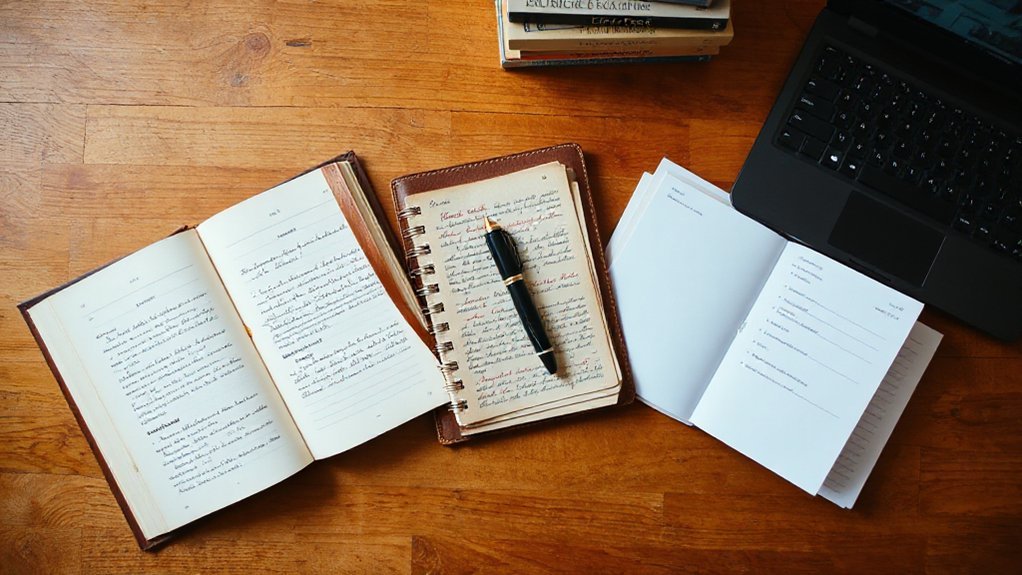
    Turn Audiobooks Into Productive, Hands-Free Reading

    hands free audiobook learning

    Ever find yourself with ten minutes, two hands full of grocery bags, and a nagging impulse to read something other than cereal boxes? I do too, and that’s where audiobook benefits shine.

    Slip on earbuds, hit play, and suddenly you’ve got hands free learning while peeling lettuce, folding shirts, or commuting. You’ll catch crisp narration, scene sounds, even character voices — it’s sensory reading without pages.

    I speed up to 1.25x when I’m enthusiastic, slow down for meatier passages, and bookmark brilliant lines with a tap. Use smart speakers for room-wide listening, queue chapters for bite-size sessions, and mix nonfiction with fiction to stay fresh.

    It’s clever, pragmatic, slightly indulgent, and way more readable than a cereal box.

    Build a Simple Daily or Weekly Reading Habit

    build tiny reading habits

    If you want to actually finish books, don’t wait for motivation to show up like a polite guest — build a tiny habit instead. I tell you this because grand plans stall, but five focused minutes don’t.

    Pick a cue: morning coffee steam, elevator ding, or bedtime lamp click. Make it simple, so you can’t argue with it. Track it, celebrate tiny wins, tweak after a week.

    Your reading routines become scaffolding for better work and bold ideas. Treat daily rituals like lab experiments: measure, iterate, repeat. Read one page, then two, then a chapter.

    I keep a sticky note and a timer, and yes, I bribe myself with a silly sticker once in a while. You’re designing momentum, not heroics.

    Combine Reading With Other Low-Effort Activities

    combine reading with activities

    I’ll bet you can squeeze more books into your life without becoming a hermit, so try listening on your commute—feel the city hum, earbuds in, a plot unfolding while traffic crawls.

    Fold reading into chores, too: pages or audiobooks keep your hands busy with dishes or laundry and your brain happily occupied, like a clever sidekick.

    And for workouts, swap a playlist for an audiobook, let narration time your intervals, and pretend you’re getting smarter while you sweat.

    Listen While Commuting

    Usually you already have reading time hiding in plain sight — your commute. I’ll admit, I used to stare out the window, counting brake lights. Don’t. Swap that dead time for smart listening, and you’ll feel like you’ve hacked the day.

    Pick formats that suit your audio preferences — full audiobooks, narrated summaries, or fiction podcasts. Notice the commuting benefits immediately: less guilt, more ideas, and a calmer morning pulse. I plug in, adjust volume, and let narration paint scenes while the city blurs past.

    If your brain wants rest, choose soothing nonfiction; if it craves sparks, grab a cinematic novel. Test speeds, bookmarks, and quick rewind. You’ll arrive smarter, happier, and odd looks from drivers won’t bother you anymore.

    Read During Chores

    You can sneak pages into dish duty and laundry like a tiny, delightful heist. I tuck a slim paperback by the sink, feel the warm suds, flip a page between rinses, then sprint back to the plot while the kettle hums.

    You’ll invent pockets of time, combine reading multitasking with tidy chores, and feel clever doing it. Let a cookbook or short-story collection ride the dryer, smell of fabric softener grounding you.

    These productive distractions turn folding into focus, sweeping into savoring. Talk aloud to a character when you’re alone—yes, people will judge, but you’ll laugh.

    Start small, stack five-minute sprints, and watch pages add up. It’s simple, slightly sneaky, and oddly revolutionary.

    Audiobooks for Workouts

    Some people sweat it out with music; I let stories do the heavy lifting. You clip in earbuds, start an audiobook playlist, and suddenly your jog has a plot twist. You’ll outrun boredom and keep pace with ideas, not just calories.

    Pick tense narration for sprints, mellow nonfiction for cool-downs, mix chapters like intervals. The voice on your run becomes a trainer and a teacher, boosting workout motivation without a pep talk that smells like a gym.

    I’ll admit, I once laughed so hard mid-stride I startled a dog. Small price to pay. Swap playlists, speed up narration, bookmark scenes to revisit.

    You combine fitness with reading, save time, and actually look forward to lacing up.

    Choose Formats and Tools That Reduce Friction

    choose formats reduce friction

    Pick two formats and ditch the rest — seriously, I’ve learned that the fewer choices I face, the more reading actually happens.

    You’ll pick one tactile and one pocketable: a paperback for slow, focused afternoons, and an e-reader for subway bursts.

    I love e-reader benefits — crisp fonts, no glare, instant page-syncing. Your digital libraries become treasure chests, ready whenever you have two free minutes.

    Keep apps minimal, silence nonessential notifications, and stash one pair of earbuds in every bag.

    Say it out loud: “One book, two ways.”

    I joke, I fail, I reorganize. That’s fine. The point is frictionless access.

    When grabbing a story feels as easy as breathing, you’ll read more, enjoy it more, and actually finish stuff.

    Track Progress and Celebrate Small Wins

    celebrate small victories daily

    You set a tiny, measurable goal—one chapter, ten pages, or twenty minutes—and you’ll surprise yourself by how often you hit it.

    I’ll cheer you on with small rewards, a celebratory coffee, a sticker on a chart, or a smug post-it on your fridge, because winning should taste like something.

    Keep a simple tracker, watch the streak grow, and feel that quiet, satisfying click each time you stack another little victory.

    Set Measurable Mini-Goals

    Set a tiny target, then beat it—and yes, I mean tiny, like “read one page” tiny—because nothing wakes the brain like a quick win.

    I tell you this because goal setting isn’t grand speeches; it’s bite-size experiments. Pick a cue, time, and place: coffee table, five minutes, page one. Track it, note measurable milestones — pages, chapters, minutes — and watch a digital tick or scribbled tally feel like rocket fuel.

    You’ll get momentum fast. I like to imagine the paper scent, hear the soft page flip, feel that smug grin.

    If you miss a day, shrug, recalibrate, shrink the target. Repeat. Tiny wins snowball into habits, and suddenly you’re finishing books you only used to admire.

    Reward Progress Regularly

    Nice work getting those tiny wins—now let’s make sure you notice them. I tell you this because your brain loves reading milestones, it smells progress and sticks with habits.

    Track pages, chapters, or minutes, then celebrate with tiny rituals: a strong coffee, a five-minute stretch, a victory gif. I clap, loudly in my head, when I hit a goal, and you should too.

    Positive reinforcement rewires your routine, makes reading feel delicious, not dutiful. Set a visual tracker, a sticker chart, or a sleek app, watch colors fill in, feel the small rush.

    Say aloud, “I did that,” then reward yourself, sincere and a little smug. Keep it fun, keep it obvious, and you’ll read more, easily.

    Create an Environment That Encourages Consistent Reading

    create a cozy reading nook

    If your reading habit feels like a guilty snack you hide in the pantry, make the pantry actually delightful — I promise it helps.

    You design a reading nook with cozy ambiance, declutter space, add calming colors, and make lighting adjustments that flatter the page.

    I tell you, comfortable seating matters — no one reads slumped like a wilted lettuce.

    Turn it into a distraction free zone: silence the phone, stash chargers, close the door.

    Build a mini personal library within arm’s reach, spine-to-spine comfort, the smell of paper like a low-key perfume.

    I’ll nag you gently: set a ritual, brew something, place a timer.

    Small scenes, big wins. Commit to this lab, experiment boldly, and watch your reading consistency become inevitable.

  • How to Choose the Best Book to Read Next (Without Overthinking)

    How to Choose the Best Book to Read Next (Without Overthinking)

    Like a key you can’t find, choosing a book wastes time until you stop pretending you need a perfect fit; I’ll show you how to pick fast, with a little whim, a shrug, and a plan. You’re tired of indecision, so we’ll match mood to length, pick one goal, and give yourself a painless escape hatch—think tiny rituals, not a dramatic life change—so you actually start, and maybe finish, something worth your time.

    Key Takeaways

    • Pick one reading purpose (escape, learn, feel connected) to narrow choices quickly.
    • Match book length to your available time: short stories for minutes, novels for travel or weekends.
    • Choose by mood bucket (Quick Fun, Thorough Exploration, Cozy Comfort) and let that guide selection.
    • Use a 50-page or three-chapter exit rule and abandon without guilt if it doesn’t engage.
    • Start small: trust one recommendation, set a 3–5 minute decision limit, and read one page to begin.

    Clarify What You Want Right Now

    clarify your reading preferences

    Wondering what you actually want to read right now? You lean back, thumb tapping a bright screen, and I tell you to start small.

    Name your reading preferences out loud, loud enough that you hear the shape of them — brisk plots, dense ideas, or cozy scenes. Pin down personal interests too, the threads that light you up: tech, travel, true crime, or tiny acts of kindness.

    Smell the paper, or imagine the page glow. Ask: do I want escape, skill, or company? Say yes to one, no to the rest.

    I nudge you to pick a page count that feels like a wink, not a chore, and promise you’ll switch if it doesn’t fit, no guilt.

    Match Book Length and Commitment to Your Schedule

    match reading time wisely

    How long do you actually have between meetings, naps, and snacks? I check my calendar, squint, then pick a book length that fits the gaps.

    You’ll stop starting epics when you’ve got ten-minute windows, and you’ll savor a chunkier read when a weekend opens. Match book length to your available time, and be honest about the time commitment you want.

    • Scan chapter lengths, like skimming a menu, pick portions that match your appetite.
    • Try short stories or essays for bite-sized wins, they give momentum and dopamine.
    • Reserve long novels for travel days, lazy mornings, or deliberate commitments.
    • Mix formats: audio for walks, e-books for naps, paper for rituals, keep it playful and intentional.

    Use Three Simple Mood Categories

    sort books by mood

    If you’re juggling mood, time, and the nagging urge to start three books at once, try sorting your options into just three mood buckets — Quick Fun, Thorough Exploration, and Cozy Comfort — and watch decision paralysis evaporate.

    I tell you to scan covers, sniff the new-paper smell, and feel the heft; those are honest mood indicators. Tap into your reading preferences, note if you want fast laughs, in-depth explorations, or a warm lap-by-the-fire read.

    I’ll joke that your inner librarian is a ruthless sorter, but it works: Quick Fun for short bursts, Thorough Exploration when you’ve got brainspace, Cozy Comfort for slow evenings.

    Pick the bucket that matches the room you’re in, and let the book choose you.

    Pick One Goal for This Read

    choose one clear goal

    Which single thing do you want this book to do for you? You pick one reading purpose, and everything gets simpler.

    I want you to choose a clear goal—spark a new idea, learn one skill, feel less alone, or reset your habits. Say it out loud, feel it in your chest, then let the book earn that promise.

    Choose one clear reading goal—spark, learn, belong, or reset. Say it aloud, feel it, and let the book deliver.

    • Spark a wild idea, lightbulb bright, pages smelling like possibility.
    • Learn one skill, hands-on, dog-eared chapters and practice sessions.
    • Feel less alone, characters whispering like old friends beside you.
    • Reset your habits, small exercises, morning pages, tiny rituals.

    You’re after personal growth, not perfection. Commit, start small, judge later.

    You’ll read with purpose, and you’ll actually finish something.

    Narrow Choices With One Quick Rule

    choose based on mood

    You’re staring at a stack of covers, and I’ll be blunt: pick the one that fits your mood right now — upbeat for messy mornings, slow-burn for rainy evenings.

    Then check the stakes on the flap; if the plot hooks you in the first line with clear danger or desire, it’ll carry you through.

    Trust this tiny rule, I promise it’s kinder than indecision and way faster than scrolling forever.

    Align With Current Mood

    Ever feel like your brain is yelling for a cozy blanket of words or a cold shot of adrenaline? I do, and I learned to let mood influences steer my reading preferences, fast.

    Match the book to how you feel, not how you think you should feel. Trust the quick rule: pick the vibe.

    • If you’re tired, grab something gentle, tactile, slow-burning.
    • If you’re wired, choose crisp chapters, sharp dialogue, high stakes.
    • If you want wonder, pick sensory world-building that smells like rain.
    • If you need comfort, pick familiar rhythms, warm humor, small victories.

    I keep it playful, like flipping a switch. One mood, one choice. It’s simple, effective, and saves you from scrolling into paralysis.

    Prioritize Clear Stakes

    Stakes are your reading GPS, and I swear by the tiny mercy of a clear deadline: if the book doesn’t tell me what’s at risk in the first few chapters, I close it like a bored cashier slamming a register.

    You want momentum, so look for stake importance immediately — a ticking clock, a relationship on the line, knowledge you’ll miss if you don’t finish.

    Hold books up to a stakes comparison: which one threatens more loss, promises bigger gain, or forces you to act?

    Say it out loud, compare the gut-punches, feel the tension like a string under your fingertips.

    Pick the one that tightens the chest, not the one that nibbles politely.

    I do this, you’ll thank me later, promise.

    Trust a Single Trusted Recommendation

    trust one solid recommendation

    If you’ve ever stood in a bookstore aisle staring at a sea of spines and felt your palms go clammy, good — that’s the exact moment to trust one solid recommendation.

    I tell you, pick one trusted source, trust your taste, and let recommendation filters do the heavy lifting. You’ll cut noise, feel the weight lift, and actually read something.

    • Choose a person, critic, or algorithm you respect, and commit.
    • Use simple recommendation filters: mood, length, risk level, novelty.
    • Ignore the rest of the shelf chatter, breathe, and reach out like you mean it.
    • Buy, borrow, or download that book, and start turning pages.

    You’ll discover speed breeds clarity, and curiosity rewards bold shortcuts.

    Set a Gentle Time Limit to Decide

    gentle time limit decision making

    Alright, you picked a trusted recommendation and felt the pressure lift — good call, high five — now set a gentle time limit so you don’t stand there like a deer in a bookstore spotlight.

    You picked a trusted rec — high five. Set a short timer, skim a chapter, and decide without drama.

    I give myself, and you can too, three to five minutes to scan covers, skim the blurb, smell the paper if that’s your thing, and feel whether the spine tugs.

    It’s a tiny experiment in time management, an anti-decision fatigue trick disguised as a game. Set a timer, whisper to yourself, “Try it for a chapter,” and commit.

    If your pulse says yes, buy it. If not, move on without melodrama.

    You’ll innovate your instincts, trust your taste faster, and actually get reading — which, admit it, feels pretty great.

    Prepare a No-Guilt Exit Strategy

    no guilt book exit

    I tell you to pick a short trial length—say, 50 pages or two afternoons—so you can feel the book, not be married to it.

    Notice the little exit triggers: boredom, confusion, or that sinking “this isn’t me” feeling, and name them out loud so they stop nagging at the back of your head.

    Then make the goodbye easy—bookmark your place, put the book on a “maybe” shelf, and walk away without the melodrama; you’ll thank me, and so will your reading pile.

    Set a Clear Trial Length

    Because you deserve a fair shot and I don’t want you stuck halfway through a book that makes you frown into your tea, give each new read a clear trial length—say, fifty pages, two chapters, or one long subway commute—and actually write that limit down.

    I tell you this because trial duration matters; it keeps choice nimble and preserves reading consistency, which is code for fewer guilty bookmarks. Decide, jot it in your notes app, then treat it as an experiment.

    • Pick a measurable span you can test in a week.
    • Treat the trial like a prototype, not a commitment.
    • Note sensory cues: is the prose slick, sluggish, or electric?
    • Log feels: excitement, boredom, curiosity, or annoyance.

    You’ll iterate fast, learn your taste, and stop dragging dead weight.

    Define Your Exit Triggers

    You’ve set your little trial, scribbled the page count, waited for the prose to sing or sink — good.

    Now you define exit triggers, a tiny manifesto that keeps guilt out of your nightstand. Say aloud your reading criteria: pace, voice, usefulness, or sheer joy.

    If the narrator’s tone grates for three sessions, if the plot stalls past your cutoff, or if you loathe a scene so much you wince, you bail.

    I’ll admit it: leaving feels dramatic, but it’s smart curation. Mark the moment, jot why, shelve it without ceremony.

    You’ll sleep better. You’ll free cognitive space for experiments. Treat the exit strategy like a lab protocol—clear, unemotional, repeatable—and you’ll read braver, not harder.

    Make Leaving Frictionless

    If a book starts feeling like homework, make the exit so easy you hardly notice you left. I tell you this like a lab hack: build tiny, humane exit strategies into your reading habits, so you can pivot without guilt, or melodrama, or drama-queen regret.

    You’ll thank me when you’d rather sketch instead of slog.

    • Mark a checkpoint, close the cover, breathe; pretend you’re pausing a podcast.
    • Swap formats, try an audiobook, or a thread; change texture, change mood.
    • Set a 50-page rule, no shame, just data; if it’s not clicking, move on.
    • Log quick notes, three words, three feelings; you’ll learn fast, trust the trail.

    You’ll keep experimenting, iterate your taste, and enjoy picking books like a playful craftsman.

    Make Starting Easier With Micro-Habits

    start small build momentum

    Let’s strip away the drama and start small — like painfully small. You set the book on your nightstand, crack one page, and call it a win. I promise I won’t roll my eyes; I’ll cheer.

    Micro habit examples: read one paragraph after breakfast, skim a page during coffee, or flip a single page before bed. Those tiny moves slice resistance, build momentum, and make daily reading feel inevitable, not heroic.

    Read one paragraph after breakfast, skim a page with your coffee, or flip a single page before bed — tiny moves, big momentum.

    Picture the soft lamp, the coffee steam, fingers tracing a sentence—comfort fuels curiosity. I talk to you like a lab partner: experiment, tweak, repeat.

    If one paragraph becomes ten, celebrate. If not, adjust. Small wins compound, your stack of finished books grows, and you quietly become the reader you wanted.

  • Best Books for People Who Say They “Hate Reading

    Best Books for People Who Say They “Hate Reading

    You say you hate books, and yet here you are—curious, bored, slightly guilty; that’s the whole setup. I’ll be blunt: you don’t need doorstop novels or dusty prose. You need sharp hooks, bright pacing, voice that talks back, a plot you can smell and scenes you can feel—stuff you devour in a night and brag about the next day. Stick with me and I’ll point you to the ones that actually change your mind.

    Key Takeaways

    • Start with short, high-energy novels (under 300 pages) that prioritize brisk plots and witty dialogue to hook reluctant readers quickly.
    • Choose high-concept, cinematic page-turners with clear stakes and fast pacing to make reading feel like watching a thrilling movie.
    • Try graphic novels or illustrated books for visual storytelling that lowers the barrier to reading and boosts momentum.
    • Pick humorous, character-driven stories or absurd reads that entertain first and ask for emotional investment later.
    • Use wildly readable nonfiction or practical mini-guides that teach useful skills through lively storytelling and short, actionable chapters.

    Fast, Funny Fiction That Hooks Immediately

    fast paced humorous engaging stories

    If you’re grimacing at the thought of a dusty, 600‑page doorstop, don’t worry — I’ve got your back and your attention.

    You’ll grab a book that snaps open like a soda, fizzing with humorous plots and sharp pace. I point you to stories that hit quick, slap you with a grin, then keep going, because you’re busy and brilliant, and time’s precious.

    Picture bright dialogue, tactile scenes—coffee steam, sticky subway poles—characters you root for, roll your eyes at, then secretly adore.

    Bright dialogue, tactile scenes—coffee steam, sticky subway poles—and characters you root for, roll your eyes at, then secretly adore.

    I’ll nudge you toward books with engaging characters who do stupid things and somehow win. You’ll laugh, lean in, and finish a chapter before you know it.

    Trust me, resistance melts faster than ice cream on a sidewalk.

    Short Novels You Can Finish in a Weekend

    short engaging weekend reads

    You want a book that grabs you by the collar, not a blizzard of footnotes, so I pick short novels with easy-to-finish plots that don’t ask for a PhD.

    Think under 300 pages, crisp pages you can flip through on a Saturday, opening lines that smack you awake like cold coffee.

    I’ll point you to titles with gripping first sentences, quick scenes that smell like rain and takeout, and endings you can actually brag about Monday morning.

    Easy-To-Finish Plots

    One weekend, I promised myself a real book and not the three-paragraph internet scroll I usually call “reading.”

    I go for short novels because they respect my attention span—no cliffhanger marathons, no maps, no glossary—and I like the satisfying thunk of a finished spine on Sunday night.

    You want plots that move, scenes that click, and endings that land. Pick stories with quick satisfaction, effortless engagement; they open, pull you in, and close before your brain files a complaint.

    I read like a hungry person at a buffet, fast bites, bold flavors. You’ll notice crisp pacing, clean stakes, and characters who reveal themselves in gestures, not lectures.

    Finish a book, feel smart, then sleep well. Try it; you’ll surprise yourself.

    Under 300 Pages

    Because short books show up like reliable friends—no drama, no emotional baggage—you can actually finish them before the weekend ghosts you.

    I bet you’ll love the tidy page count, it’s honest, it promises progress. Pick a compact novel, brew strong coffee, let pages smell like rain and ink, and commit an hour blocks.

    I’ll cheer you on, while you use smart reading strategies: skim scene breaks, mark favorite lines, sprint the dull bits. You’ll feel momentum, skin-tingle satisfaction, that “I did it” grin.

    I joke that my attention span has a snooze button, but short novels wake it up. Try one under 300 pages, taste the rush, then pile another on—habit forms fast, and joy follows.

    Gripping Opening Lines

    If a book hooks you in the first line, you’ll forgive the rest—sometimes even the clunky plot turns.

    I want you to grab novels that fling you into a scene, smell rain on pavement, feel a stranger’s laugh, and then don’t let go. You’ll finish them in a weekend, you’ll relish unexpected twists, and you’ll remember the memorable characters like old friends.

    I talk to you like a co-conspirator, I wink, I admit I’ve been tricked by a clever opener too.

    • Short, sharp first lines that demand attention.
    • Vivid sensory scenes, textures you can almost touch.
    • Quick pacing that respects your time, no filler.
    • Surprising reveals that rewire the whole story.

    High-Concept Page-Turners With Big Payoffs

    high stakes gripping narratives

    When you want a story that grabs you by the lapels and won’t let go, these high-concept page-turners are what I hand to friends who swear they “don’t read.”

    Imagine this: a blindfolded heist in a skyscraper, a runaway AI that writes love letters, a time loop with a ticking subway clock — each book sells its wild premise fast, then delivers a punch that makes you forget your phone exists.

    You’ll plunge into high stakes plots that feel cinematic, smell metal and stale coffee, hear heels on tile, and lean forward.

    I’ll toss you one, you read the first chapter, you’re hooked. Expect unexpected twists, breathless pacing, sharp dialogue, and endings that slap you awake.

    Trust me, resistance melts.

    Wildly Entertaining Nonfiction That Reads Like a Story

    engaging nonfiction reads await

    You’re gonna love these nonfiction books, because they read like thrilling movies, with real people, crisp scenes, and ideas that hit you in the gut.

    I’ll show you fast, page‑turning narratives that pack big concepts into short, snackable chapters, and I’ll admit, I sometimes laugh out loud in public trying to sound discreet.

    Grab a mug, get comfy, and let me shepherd you through true stories that feel fictional — vivid, sharp, and impossible to put down.

    True Storytelling Power

    Because some nonfiction reads like a TED talk and others read like a tax form, I’ve learned to sniff out the books that actually grab you by the lapels and tell a story—loud, messy, impossible to ignore.

    You want true storytelling that feels alive, not lessons dressed up as lectures. I point you to writers who use narrative techniques like scene, detail, and character to make facts feel cinematic.

    You’ll smell coffee, hear subway screeches, see a minor hero stumble and then win. I’m the nerd who cheers for the messy bits, because innovation needs grit, not satin.

    • Start with a vivid scene, drop you into motion.
    • Use concrete sensory detail, avoid abstractions.
    • Let characters reveal facts, not footnotes.
    • Pace revelations like beats in a demo.

    Page‑turning Narratives

    I said I love messy storytelling, but now let me confess something: I also love being entertained, hard—books that yank you forward like a grabby subway strap.

    You want nonfiction that reads like a movie, right? You want sharp scenes, tactile details, the smell of spilled coffee in a tense office, footsteps on rain-slick pavement.

    I pull you into chapters with enchanting characters, folks who feel alive, flawed, ridiculous. I drop you into dialogue, then shove an unexpected twist under your jaw.

    You laugh, you frown, you keep turning pages. These books teach by showing, they surprise you, they make complex stuff human, relatable.

    Pick one, plunge in, and let the momentum do the convincing.

    Big Ideas, Fast

    When a book promises a big idea and delivers it like a punchline, I forgive the guilty pleasure of learning while being entertained. You’ll zip through crisp chapters that feel like scenes, tasting neon-bright metaphors, hearing the author’s laugh in your head, and wondering how nonfiction became your new vice.

    These books turn reluctant readers into curious accomplices, they cheat the solemn tone of reluctant genres, and they hand you insights with a wink. You won’t slog, you’ll sprint.

    • Short, kinetic chapters that read like movies, not manuals.
    • Vivid anecdotes that show, don’t preach, innovation in action.
    • Humor that punctures jargon, keeps you grinning and thinking.
    • Takeaways you can use tomorrow, no grad school required.

    Graphic Novels and Illustrated Books for Reluctant Readers

    engaging graphic novels await

    If you’ve ever rolled your eyes at a brick of text and sworn off books forever, graphic novels are your secret back door — and yes, you’ll feel slightly guilty for enjoying them so much.

    I’ll hand you graphic novel recommendations that feel like bingeable shows, panels that pull you in, and pacing that won’t waste a minute. You touch paper, see color, hear a scene in your head.

    Illustrated book suggestions bring design-forward stories, clever layouts, and humor that lands like a wink. You’ll flip pages, laugh out loud, maybe cry, and wonder why you waited.

    Design-forward illustrated books—clever layouts, wink-of-a-humor, pages that make you laugh, cry, and wonder why you waited.

    Try something bold, sensory, and fast. I promise, you’ll call it “reading” by the second chapter, begrudgingly proud.

    Short Story Collections That Let You Bite-Sized Read

    bite sized stories for enjoyment

    You’ll love short story collections because you can finish a whole story on your lunch break, smell the coffee, and feel oddly accomplished.

    I’ll hand you a sampler of quick, complete reads that flip moods and genres like a jukebox, so you can test what sticks without committing to a 400-page epic.

    Trust me, it’s the zero-pressure way to find a voice you actually want to hear, and I promise I won’t make you read anything called “War and War and War.”

    Quick, Complete Reads

    I’ll admit it: I once judged books by their page count, which is how I learned to love short story collections—one sitting, one mood, one satisfying click of a story done.

    You get quick satisfaction, instant gratification, and an easy win, and that changes reading from chore to tiny adventure.

    You can taste different voices, close a story with a smile, and move on, like sampling brilliant bites at a literary buffet.

    I’ll nudge you toward bold, compact work if you want innovation without commitment; you’ll finish, feel clever, and want more.

    • Sharp openings that hook in a sentence or two
    • Scenes that land like punchlines
    • Voices that surprise and stick
    • Endings that feel complete, not clipped

    Story Variety Sampler

    Some evenings I want a whole novel, other nights I want a single, brilliant bite—so I keep a stack of short story collections by my bed like tiny, patient friends.

    You’ll love them if you crave variety, because each piece is a lab for storytelling techniques, a quick taste of different narrative styles, and you can jump from noir grit to surreal sparkle in one night.

    You pick a story, sink into its texture, hear dialogue clack, smell rain on pavement, and you’re satisfied before sleep.

    I’ll admit, I sometimes judge a collection by its opener, then get surprised, delighted, humbled.

    Read one, stop, start another. It’s modular reading, playful, exact — perfect for people who say they “hate” reading.

    Memoirs With Razor-Sharp Voice and Relatable Drama

    vivid honest memoirs await

    If you’re convinced memoirs are just dusty family albums with footnotes, let me shove a brighter, stranger one under your nose—these books don’t politely ask for your attention, they yank it with a grin.

    I’ll tell you straight: you’ll get raw honesty and emotional resilience, scenes that smell like frying onions and wet pavement, voices that snap like fresh elastic. You’ll laugh, wince, and nod because the narrator talks to you, confesses, then dares you to look away.

    • Intimate kitchen-table confessions, immediate and unfiltered.
    • Sharp, comic timing that flips pain into odd beauty.
    • Plainspoken lessons about surviving, then living.
    • Short, vivid chapters that feel like espresso shots.

    Pick one, fold a corner, start now.

    Clever, Fast-Moving Thrillers That Keep You Turning Pages

    clever gripping page turning thrillers

    When the plot grabs you by the collar, you don’t have time to be polite—your heart races, your coffee goes cold, and you read one more chapter because you swore you wouldn’t.

    When the plot grabs you by the collar, you forget sleep, sip cold coffee, and read one more chapter.

    I talk to you like a co-conspirator, nudging you toward thrillers that sprint: sharp chapters, neon pacing, and smart plot twists that don’t insult your intelligence.

    You’ll feel pages slip under your fingers, hear rain on a hotel roof, taste stale gum in a witness’s mouth.

    The characters aren’t props, they evolve—character development shows in tiny habits, in cracked jokes, in choices that hurt.

    I’ll point you to lean prose, punchy dialogue, moments that make you laugh, then gasp.

    Pick one, skip sleep, thank me later.

    Practical, Useful Books You’ll Actually Use

    practical guides for success
    • A compact guide to productivity hacks, with step-by-step routines and quick wins.
    • A hands-on creativity workbook, full of exercises you can do in ten minutes.
    • A clear manual on personal finance, with checklists and real-case scenarios.
    • A field guide to everyday tech, teaching useful tips and shortcuts.

    Pick one, act, and savor the small wins.

    Absurd, Weird, and Delightfully Strange Reads

    delightfully absurd literary adventures

    Curious what happens when you hand a sober person a neon rubber chicken and tell them to take it seriously? I’ll tell you: you grin, you blink, you’re hooked.

    You’ll meet quirky characters who argue with elevators, and you’ll follow unconventional plots that bend like light through a prism.

    Meet eccentric souls who bicker with elevators and ride plots that refract like light through a kaleidoscope

    I guide you into rooms that smell like burnt caramel and wet cardboard, where a narrator whispers stage directions and then throws confetti.

    You’ll read quick scenes, laugh out loud, then pause, thinking—wait, did that mean something?

    I wink at you, confess I don’t always get it either, but that’s the fun.

    These books reward curiosity, risk, and a taste for playful disorder.

    Pick one, jump in, don’t overthink it.

  • Best Books for Beginners Who Want to Start Reading Again

    Best Books for Beginners Who Want to Start Reading Again

    Most people don’t know that five-minute chapter breaks actually boost focus—your brain likes tiny wins. I’ll say this plainly: you’re allowed to start small, hold a book like a phone, and promise yourself one page. I’m with you, leaning on the couch, coffee cooling, muttering, “Okay, one more chapter,” while the dog judges us. Stick around and I’ll point you to short novels, funny memoirs, and tricks that make the habit stick.

    Key Takeaways

    • Choose short, character-driven contemporary fiction with relatable protagonists to build quick emotional investment.
    • Try humorous memoirs for light, conversational stories that make reading feel like chatting with a friend.
    • Use short story collections to enjoy complete narratives in brief sittings and avoid long commitment.
    • Pick accessible nonfiction with bite-sized chapters and practical takeaways to sustain momentum and curiosity.
    • Build a tiny reading routine—start five minutes, add comforts, track small wins to make reading habitual.

    Why Short Books and Short Chapters Make Reading Easier

    short books big motivation

    Sometimes a little goes a long way, and short books prove that in spades. You’ll pick one up, feel the spine, smell the paper, and suddenly reading feels doable again.

    I tell you, that tiny win pumps your reading motivation like espresso. Short chapter length means you can clear a chapter during a coffee break, on a bus stop, or between meetings, and you’ll keep wanting more. You’ll taste progress, and that craving’s addictive in the best way.

    I joke that I’m lazy, but really I’m strategic: small wins build habit. You’ll finish a book, you’ll celebrate, and you’ll look for the next bite-sized adventure—innovation, not intimidation.

    Engaging Contemporary Fiction to Reignite Your Habit

    engaging relatable character driven narratives

    If you’re coming back to reading, contemporary fiction is the caffeine shot you didn’t know you needed—sharp, familiar, and oddly comforting.

    I’ll tell you straight: pick up novels with character driven narratives, and you’ll care fast. You’ll meet relatable protagonists who smell like coffee, bad decisions, and stubborn hope.

    Chapters move with the pulse of real life, scenes that show instead of lecture, dialogue that snaps, and moments that make you grin or wince. Read while you’re waiting for the bus, stir your tea, or sneak a chapter in bed—you’ll feel scenes like a soundtrack, textures, and the clack of keys.

    I promise, these books respect your time, nudge you back in, then hand you joy, plain and simple.

    Funny and Relatable Memoirs for Light, Comforting Reads

    comforting humorous memoirs await

    Pick up one of these memoirs and you’ll feel like you’ve been invited to a kitchen table for tea, cake, and confessions — only the cake’s slightly burnt and the storyteller keeps interrupting themselves with hilarious, mortifying side notes.

    I talk to you like a friend, I point to pages where you’ll laugh out loud, where a scene smells of coffee, burnt toast, and old paperback glue.

    You’ll find humorous anecdotes that land like warm hugs and sharp elbows, and relatable experiences that make you nod, then grin.

    I share quick dialogue bites, a clumsy bus exit, a wink of self-sabotage, moments that sting and soothe.

    Read one chapter, then another, you’ll feel lighter, curious, enthusiastic, ready to turn the page.

    Short Story Collections That Fit Into Busy Schedules

    short stories for busy schedules

    You’ll love short story collections when you only have ten minutes and a cup of coffee, because each tale lands like a tiny, complete world you can finish before the kettle boils.

    I’ll point out picks with varied lengths, so you can grab a flash piece on the train or a longer story for a quiet night, and each one still hits you with the same surprise or warmth.

    Trust me, it’s the perfect trick for busy people who still want to feel moved, amused, or oddly wiser between errands.

    Quick, Complete Reads

    Because life is loud and spare minutes are sacred, short story collections feel like tiny miracles I can tuck into a coffee break, a subway ride, or the two minutes before bedtime when my brain finally stops scrolling.

    You’ll find quick book recommendations here that don’t demand commitment, just curiosity. Pick a slim volume, flip a page, and finish a whole world before the barista calls your name.

    I’ll give essential reading tips: read aloud sometimes, mark a line that surprises you, stash a paperback by the kitchen sink.

    These stories hit like espresso—compact, bold, and oddly nourishing. You’ll rediscover rhythm, laugh at your own impatience, and leave satisfied, not exhausted.

    Try one tonight, you won’t miss a lifetime.

    Varied Lengths, Same Impact

    If life gives you five minutes, take a story—any length—and treat it like a secret snack. I promise, you’ll savor fiction differently.

    You pick a collection that respects your reading preferences, I’ll pick a timer. You’ll read a tight scene on the bus, smell coffee, feel a page flip.

    Short stories fit time constraints, they land hard and leave room to breathe. I’ll nudge you toward collections that surprise, that experiment, that teach you new habits without demanding marathon focus.

    We’ll trade long commitments for bursts of joy, witty punches, and quiet revelations. Try one story a day, stash it between errands, and watch your reading life reboot—small bites, big payoff, zero guilt.

    Page-Turning Thrillers and Mysteries for Instant Momentum

    thrilling fast paced page turners

    When I want to sprint through a book in a single breath, I reach for a thriller that opens with a slammed door or a phone call at 2 a.m.; the kind of story that hooks your throat and won’t let go.

    You’ll grab momentum fast, because these books give you urgent beats, crisp sensory detail, and smart plot twists that feel earned. You care about people, so character development matters even amid the chase.

    Pick one that respects your curiosity, and you’ll read late, with coffee gone cold.

    • Short chapters that feel like jumps, pulsing with danger.
    • Snappy dialogue, rooms smelled of rain and old paper.
    • Surprising reveals, moral edges that hum.

    Accessible Nonfiction to Spark Curiosity and Focus

    curiosity driven accessible nonfiction

    You want clear, short explanations that cut through the noise, so I’ll point you to books that explain big ideas like they’re spoken across a café table, concrete and bright as sunlight on a mug.

    You’ll meet true stories that grab your sleeve and won’t let go, characters and moments you can smell and taste, and each chapter will hand you usable tips you can try tomorrow, no theory-heavy fog.

    Keep reading, I’ll show you titles that teach you fast, make you laugh at yourself, and actually push you to act.

    Short, Clear Explanations

    Because life’s too short for soggy prose, I pick books that explain things fast and clearly, like a friend handing you the remote and saying, “Trust me.”

    I’ll tell you upfront: I love nonfiction that smells a little of fresh coffee and makes complicated ideas feel as crisp as a new page—short chapters, clear sentences, clever examples, and a joke tucked in the margin.

    You want reading motivation, beginner tips, and zero intimidation. I guide you to titles that respect your time, spark curiosity, and push you to try one idea today.

    • Bite-sized chapters that you can finish between meetings.
    • Plain language that still surprises you with insight.
    • Hands-on examples that make concepts stick.

    Pick one, read one, do one.

    Engaging True Stories

    Though I might nag you about reading more, I’ll pick stories that yank your attention like a cold plunge—bright, human, and impossible to put down.

    I’ll hand you inspiring biographies that feel cinematic, with smells, textures, and nerve‑tight moments. You’ll ride transformative journeys from garages to boardrooms, from dusty labs to quiet kitchens, and you’ll smell oil, hear clapping, taste victory.

    I talk to you like a blunt friend who cares, I wink, I groan at my own bad metaphors, then point to a passage that’ll make you sit up.

    These true stories don’t lecture, they show — vivid scenes, crisp dialogue, and people doing surprising things. Read one, you’ll want another, trust me, you’ll thank me later.

    Practical Actionable Tips

    When I want to actually get something done—like clear one overflowing inbox or finally make that sourdough starter stop sulking—I reach for short, smart books that hand me steps I can try tonight, not theories I’ll forget by morning.

    You want reading goals that wake you up, so pick accessible nonfiction that gives tools, not guilt. I tell you what I do, you try it, we compare war stories over coffee.

    • Scan the table of contents, grab a chapter that feels like a tiny win, and read it with a pencil.
    • Set a 20-minute timer, do the action the author suggests, jot quick notes on results.
    • Make your book selection a project: prototype three, keep the one that sparks curiosity.

    This method makes learning tactile, fast, fun.

    Tips and Gentle Strategies to Build a Lasting Reading Routine

    build a flexible reading routine

    Some people think a reading routine should be dramatic — candles, a wool blanket, an elaborate chair — and I say, cute, but unnecessary.

    Candles and velvet chairs are cute, but habit grows from small, steady comforts — not theatrics.

    You’ll build habit with small tweaks: curate a flexible reading environment, grab light, tactile comforts, ban the phone from arm’s reach, and let your space whisper, not shout.

    Start with five minutes, then ten, reward yourself with coffee steam or a toast pop, savor the texture of pages or crisp e-reader light.

    Time management beats will help: block micro-sessions, treat them like meetings, skip perfection.

    I’ll joke, you’ll roll your eyes, we both win. Track tiny wins, adjust tempo, celebrate momentum.

    Before you know it, reading becomes a durable, joyful part of your day.