Tag: reading habits

  • How to Deal With Reading Slumps in 2025

    How to Deal With Reading Slumps in 2025

    You probably haven’t noticed how dusty your favorite chair got, which is weird because you used to live there with a book. I’ll show you how to clear space, tame your phone, and trick your brain into wanting words again—yes, even with five minutes and an audiobook in your pocket—so stick around while I explain the tiny, silly swaps that actually work.

    Key Takeaways

    • Reset your reading environment: create a device-free nook with warm lighting and minimal digital clutter to reduce distractions.
    • Set micro-goals like five pages or ten minutes daily to rebuild momentum without pressure.
    • Experiment with formats and genres—try audiobooks, graphic novels, or short nonfiction to spark interest.
    • Use AI and mixed recommendation sources to get personalized, short summaries and sensory hooks for new books.
    • Join micro-reading communities or accountability groups for social motivation, micro-challenges, and shared celebrations.

    Understand Why the Slump Happened
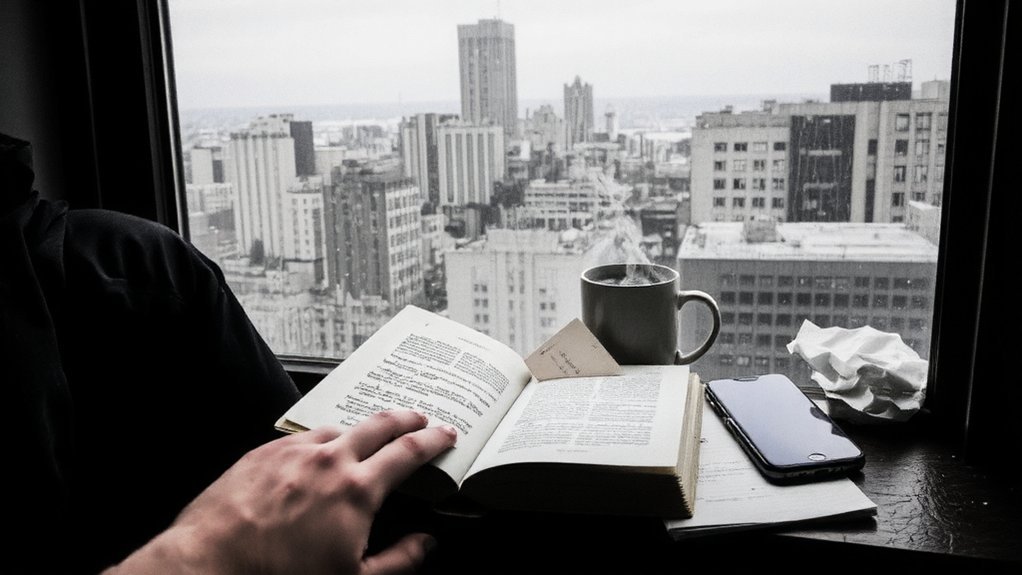
    understanding personal reading slumps

    If you’re suddenly staring at a book like it’s a foreign object, don’t panic—you didn’t lose your brain, you just hit a bump. I’ll say it straight: you’ve shifted, and that’s okay.

    Ask yourself, did your personal interests change, quietly, while you were busy? Maybe your taste nudged toward podcasts, or nonfiction talks to a different part of your brain.

    Or did external distractions creep in—notifications, noisy roommates, a new job that eats evenings?

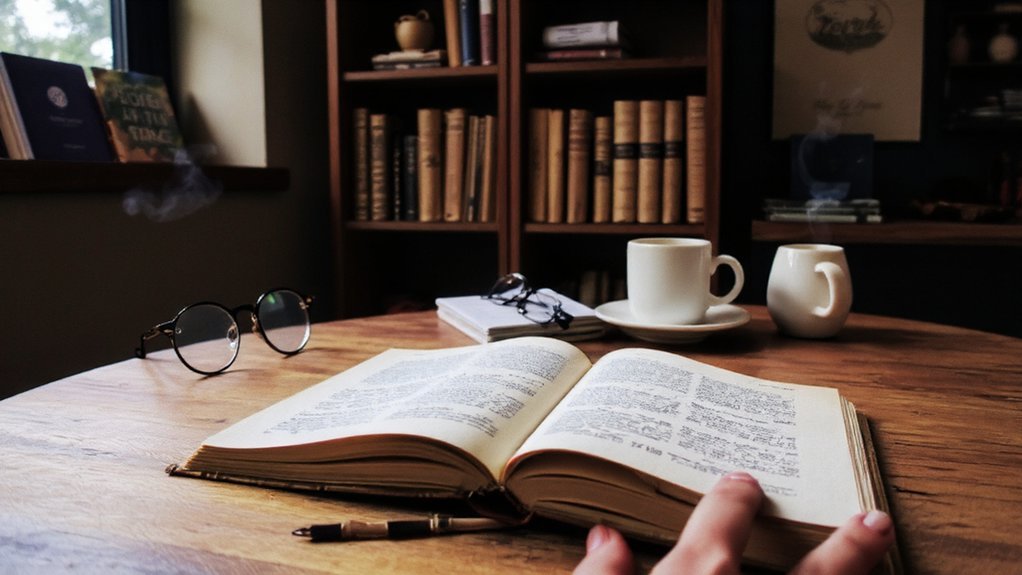
    Picture the book’s spine under your fingers, the paper’s faint scent, and notice how your attention slips. Admit it, tweak your goals, swap a heavy tome for a sharp essay, or schedule a ten-minute reading sprint.

    Small experiments tell you more than guilt ever will.

    Reset Your Reading Environment and Devices
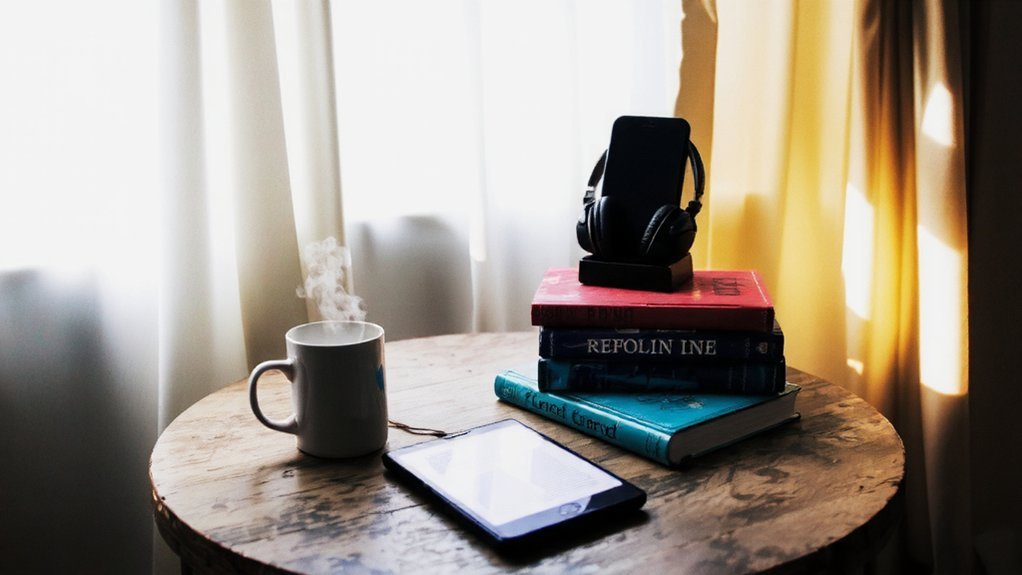
    clear distractions enhance focus

    I’m going to be blunt: clear the digital junk — delete or archive tabs, mute notifications, and toss the apps that scream for attention, so your brain can hear the book.

    Then fix the lighting, tilt a lamp until the page looks like a promise, and notice how warm, focused light makes words taste better.

    Finally, create a device-free nook, a tiny sanctuary where you and the book have a truce, and yes, you’ll feel oddly proud for doing something so simple.

    Clear Digital Clutter

    Three clicks, one deep breath, and your reading nook goes from chaotic to calm. I tell you, digital decluttering strategies are tiny revolutions.

    You close tabs that scream for attention, archive old PDFs that smell like procrastination, and mute notifications until your eyes can wander again. Toss apps you never open, reorganize folders into minimalist reading spaces, and set a single “now reading” shelf on your device.

    You’ll feel the weight lift, like sunlight through clean glass. I make a timer for ten focused minutes, then stretch, sip something warm, and open the book app with a smug grin.

    It’s simple, audacious, effective — and yes, you’ll thank me when pages feel irresistible again.

    Optimize Lighting Setup

    One quick swap can change everything: flip on a warm lamp, close the blackout curtain just enough to keep street glare out, and watch your reading corner go from harsh office to cozy hideaway.

    You’ll tune the room’s ambient lighting to match mood and page density, like a DJ mixing calm. Pick fixtures with adjustable brightness, so you can go bright for dense nonfiction, low for late-night fiction.

    I tinker, you benefit; that’s the trade. Add a soft backlight behind your chair to cut screen contrast, a focused task lamp for margins, and a dimmer that remembers settings—yes, smart bulbs make you look organized.

    Feel the paper, notice color tones, reduce eye fatigue, reclaim your attention. Try it, adjust, read more.

    Designate Device-Free Zones

    When you walk into your favorite reading spot, chances are a phone will buzz, a laptop will blink, or a tablet will whisper for attention — and that’s the exact thing you don’t want.

    I tell you, designate device-free zones: a chair, a corner, even a windowsill. Feel the fabric, smell the book glue, hear pages sigh.

    Put devices in a basket, on silent, or better, in another room. You’ll discover device free benefits fast — deeper focus, calmer breath, real page-turning joy.

    Call it a mini technology detox, call it rebellion against endless pings. I cheat sometimes, sure, but mostly I honor the rule.

    Try it for an hour, then two; reclaim reading as a tiny, brilliant ritual.

    Use Smart Recommendations and AI Tools
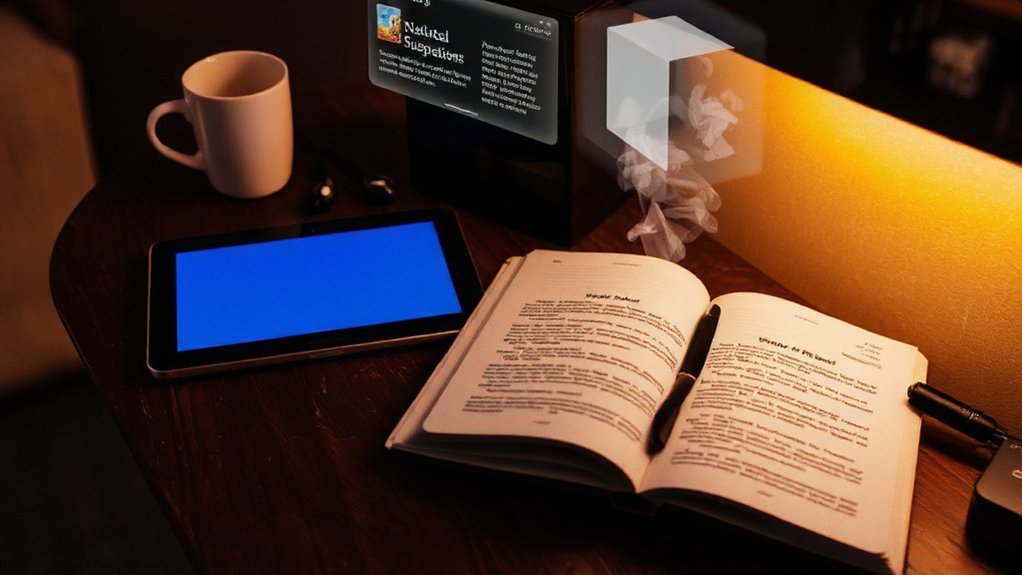
    ai powered personalized reading recommendations

    If you’ve ever scrolled past a recommendation that looked like it was written by a bored robot, don’t worry—I’ve been there, I’ve swiped left, and I’ve learned how to make the tech actually work for me.

    You’ll use AI book recommendations and personalized reading suggestions like a curious scientist, tuning prompts, rejecting bland matches, and rewarding sparks. I narrate experiments, you try tweaks, we laugh at one dud.

    1. Tell the tool genres, moods, and a wild card title.
    2. Ask for short summaries, sensory hooks, and pacing notes.
    3. Feed back what landed, what bored you, fast.
    4. Rotate sources: apps, community models, librarian bots.

    You’ll get sharper, bolder picks, and rediscover reading as discovery.

    Set Micro-Goals and Flexible Reading Routines

    I’ll start simple: set tiny, achievable targets—read five pages, ten minutes, one chapter—and celebrate like you’ve won a small, shame-free medal.

    Block short reading windows in your day, cue them with a kettle hiss or a phone alarm, and if your brain rebels, swap formats—ebook, audiobook, comic—like changing socks.

    You’ll build momentum fast, I promise, and you’ll feel the pages (or earbuds) under your fingers, so let’s make this delightfully easy.

    Tiny, Achievable Targets

    Because tiny wins add up faster than grand intentions, I like to break reading into bite-sized promises you can actually keep — five pages, ten minutes, one scene — and treat them like sacred, low-drama rituals.

    I tell you this because reading motivation flips when goals feel playful, not punitive, and goal setting becomes a creative hack, not a chore.

    Try this compact routine, imagine tactile pages, a warm mug, the hum of a city outside:

    1. Pick one micro-target, write it on a sticky.
    2. Read aloud one paragraph, feel the rhythm.
    3. Celebrate with a tiny sound, a fist pump.
    4. Log completion, then reboot in five minutes.

    You’ll recalibrate, sneak progress in, and outsmart the slump with joyful tiny wins.

    Time-Blocked Reading Windows

    Think of a reading window like a tiny, sacred appointment with yourself — I block fifteen- or thirty-minute slots on purpose, and they turn into little islands of calm amid the chaos.

    You’ll set micro-goals, grab a mug, and sit; the page becomes tactile, like a small, deliberate act of rebellion.

    Use time blocking techniques to carve predictable breathing room, then flex them when life sneaks in. I talk to my timer like it’s a stern but lovable coach.

    You’ll build reading schedules that respect energy, not ego, and swap intensity—slow, immersive minutes, then a quicker skim if your brain protests.

    It’s experimental, forgiving, smart. Try it, fail gently, tweak, and watch momentum quietly return.

    Swap Formats Regularly

    Time-blocked reading windows are great, but when your brain starts yawning at page five, change the scenery. I tell you, swap formats like a DJ mixes tracks; you’ll outrun boredom fast.

    Try these small switches to reboot momentum and hit micro-goals.

    1. Listen: sample audiobook benefits, set a 20-minute chapter, feel narration color, use a reading playlist.
    2. Scan: flip to graphic novels or poetry collections, savor line breaks, see text as texture.
    3. Tap: play with e reader features, change font, breathe with adjustable margins.
    4. Blend: assemble mixed media, genre blending, short essays and images, create immersive experiences.

    You’ll read smarter, not harder, and enjoy the ride.

    Rediscover Genres and Formats That Fit Your Life

    How do you pick a book when your brain insists on scrolling instead? I get it, I’m right there with you, tapping, swiping, hungry for novelty.

    Try genre exploration like a taste test: short sci-fi bites for buzz, cozy mysteries for comfort, lyrical nonfiction for slow savoring.

    Pair that with format experimentation — audio on walks, serialized episodes on commutes, flashy illustrated zines at cafés. Smell the ink, feel the weight, let narration cadence hook you.

    Swap one sensory route when attention wanes. I’ll nudge you: set tiny goals, a chapter or a 10-minute listen, then celebrate with real coffee, not just a like.

    You’ll rediscover what fits your life, and yes, you might actually finish something.

    Join Hybrid Book Communities and Accountability Groups

    Once you invite other readers into your slump—online, in a café corner, or on a rambling group walk—it stops feeling like a private failing and starts feeling like a plot twist.

    I tell you, hybrid communities mix the best of both worlds: tactile paper, glowing screens, and real human weirdness. You’ll join online meetups, try micro reading sprints, and trade hot takes over cold coffee.

    Imagine this:

    1. A parkside meet, someone reading aloud, leaves crunching.
    2. A late-night video call, books piled like guilty pleasures.
    3. A texting thread for micro-reads, gifs included.
    4. A weekend walk-and-discuss, pages fluttering in the wind.

    Jump in, try group challenges, experiment, fail gloriously, then read again with fresh eyes.

    Track Progress and Celebrate Small Wins

    You bring people into your slump, trade complaints and coffee, and suddenly the pile of unread books doesn’t feel like a shame spiral anymore — it feels manageable, even slightly fun.

    You jot down chapters, mark minutes, and treat progress tracking like a little lab experiment. You tap a habit app, stick post-its on the spine, or snap a progress photo that looks annoyingly proud.

    Jot chapters, clock minutes, and treat progress like a tiny experiment — habit apps, spine post-its, proudly smug progress photos.

    Celebrate milestones with tiny rituals: a celebratory cookie after fifty pages, a five-minute dance when you finish a chapter, a sticky note coronation for a completed book.

    You narrate your wins to friends, you laugh at your own dramatics, you keep it tangible, sensory — the crumb of victory, the sticky note flutter — and then keep going.
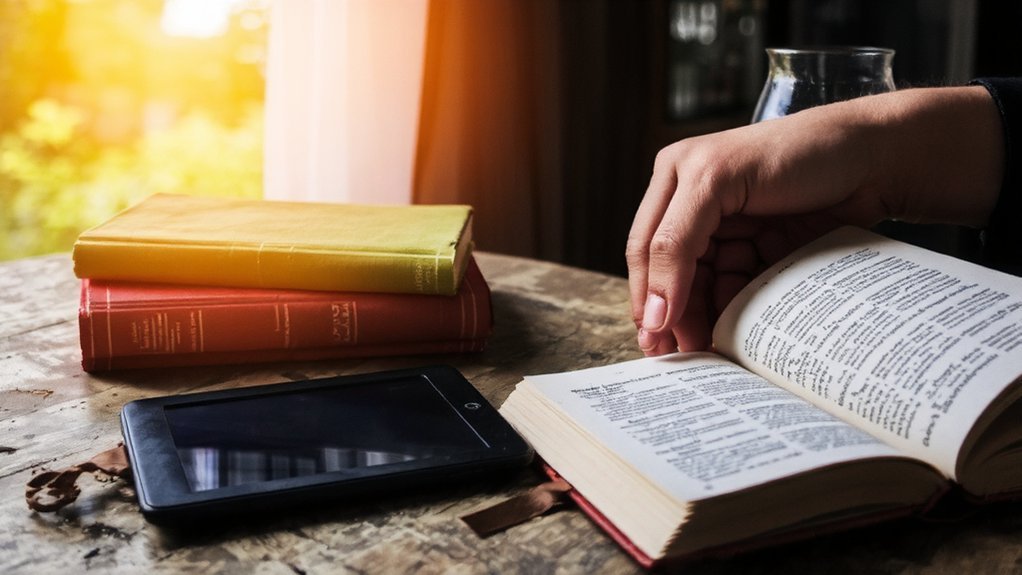
  • Why People Are Ditching Kindle for Paperbacks

    Why People Are Ditching Kindle for Paperbacks

    Remember when you bought that cheap thriller on Kindle and it never left your home screen? You’ve felt the paperback vibe: the soft spine crack, the warm papery smell, fingers marking a favorite line — it slows you down, calms your eyes, and somehow makes the plot stick. You ditch blue light, reclaim shelf space, trade clipped annotations for marginalia that feels like you, and yes, you get to flex a little — but there’s a tougher reason that’ll make you keep turning the page…

    Key Takeaways

    • Physical books offer tactile pleasure — scent, weight, and paper textures make reading feel more mindful and emotionally engaging.
    • Paperbacks reduce screen fatigue and blue-light exposure, improving bedtime routines and sleep quality.
    • Without notifications or apps, printed books enable deeper focus and uninterrupted chapter-long reading.
    • Collecting and displaying paperbacks creates aesthetic satisfaction, personal curation, and easy resale or lending.
    • Tangible ownership avoids DRM/subscription limits and lets readers choose sustainable, reusable editions.

    The Sensory Pleasure of Holding a Physical Book

    tactile joy of reading

    There’s something ridiculous and delightful about the way a paperback fits in your hands—warm, a touch soft at the spine, edges a little rough like it’s been living a good life; I love that feeling, and I bet you’ll too.

    That paperback in your hands—warm spine, rough edges—feels lived-in, nostalgic, and quietly thrilling.

    You notice the scent first, that paper-and-ink perfume, and you grin because it pulls up nostalgic memories, like a mixtape for the brain.

    You flip a page, feel the slight drag, the whisper, tactile engagement that makes reading an act, not a scroll. I’ll admit I once fetishized pixels, until paper reminded me how satisfying simple contact can be.

    You’ll find focus, a steady rhythm, a tiny private ceremony every time you open a cover. It’s charming, practical, and oddly futuristic.

    Reduced Screen Fatigue and Better Sleep

    digital detox for sleep

    Because my eyes were starting to feel like two tired light bulbs, I ditched the backlit glow and grabbed a paperback instead, and honestly it felt like taking sunglasses off inside a movie theater.

    You’ll notice less screen time, fast — no blue light pinging your brain, no subtle eye strain that sneaks up like a rude guest. You turn pages, feel paper, breathe; it’s a small digital detox, and it resets your bedtime routine.

    Try a mindful reading ritual: dim a lamp, cup tea, read for twenty minutes. You’re doing a mindfulness practice, not punishing yourself. Your sleep deepens, dreams don’t get interrupted by notification ghosts, and you wake less gritty.

    It’s practical, modern, and oddly luxurious.

    Deeper Focus and Fewer Digital Distractions

    screen free reading experience

    You’ll notice a paperback’s weight in your hands, the slight crack of the spine, and suddenly your eyes settle, not flitting.

    I read on paper when I want a stretch of screen-free time, no app badges nagging, no accidental taps dragging me away.

    Trust me, it’s oddly thrilling to finish a chapter without your phone staging a coup.

    Tangible Page Presence

    Paper in hand feels different — cool on the spine, the faint papery smell when I turn a page, the small, satisfying snap as a corner folds; you can’t get that from a glow.

    You notice it, don’t you? That physical connection grounds you, tethers attention, makes each paragraph a little still-life you can touch.

    I love that nostalgic experience, not in a dusty way, but as a design choice: tactile cues, dog-eared bookmarks, weight shifting in your palm.

    You read slower, you savor sentences, you fold a page and actually remember where you were — no endless scrolling black hole.

    It’s deliberate, almost rebellious against notifications, yet joyful.

    Try it—hold a scene, don’t just skim it.

    Screen-Free Reading Time

    If you shut off the glow for an hour, you’ll notice how loud your thoughts suddenly are — in a good way. I tell you, one paperback in your hands quiets the house, the fan, the buzzing phone.

    You’ll feel pages, smell ink, count heartbeats between paragraphs. You’ll reclaim time, reduce screen time, and reset reading habits without drama.

    1. Pick a short novel, brew something fragrant, close the tab.
    2. Set a timer, let your mind wander, underline with a pencil.
    3. Read aloud for a minute, smile at the weirdness, keep going.

    You get deeper focus, fewer digital distractions, and a tiny rebellion against endless notifications. It’s simple, tactile, and oddly revolutionary — like sneaking out to think.

    Minimal App Interruptions

    Okay, now let’s make your phone behave. You grab a paperback, feel the paper’s edge, and mute chaos. I tell you to flip Do Not Disturb on, silence app notifications, and tuck the device away like a guilty snack.

    No buzzing, no banner, no reading interruptions dragging you out of the plot. You’ll notice breath, page-creak, story rhythm—details you miss on a backlit screen.

    I nudge you to set a timer, then actually read. When curiosity bites, you resist, wink at yourself, and return. It’s oddly revolutionary, this tiny rebellion.

    You reclaim long arcs, deeper focus, creative sparks. You’ll laugh later about how dramatic your phone was; for now, enjoy uninterrupted pages.

    The Joy of Collecting and Displaying Books

    When I slipped my first battered paperback onto a shelf and stood back, I felt a tiny, ridiculous surge of pride—like I’d just adopted a dozen miniature, silent roommates who knew all my secrets.

    You scan spines, you arrange, you tweak; book aesthetics matter, you realize, and shelf organization becomes a hobby and a manifesto. You can’t help but touch paper, smell glue, see colors catch light.

    1. Curate: pick covers that spark joy, mix textures, stack diagonals for visual rhythm.
    2. Label: discreet tags, genre clusters, a system that’s clever, not obsessive.
    3. Stage: add a plant, a lamp, a quirky object to anchor the display and make it feel alive.

    Easier Sharing, Gifting, and Passing Along Reads

    Shelf styling satisfied, I found another perk I hadn’t planned on: handing a favorite paperback to a friend feels like giving them part of your brain. You’ll feel the paper, smell the ink, notice a worn corner where you laughed out loud. You can scribble notes in the margins, say, “read this bit,” and watch their face light up.

    Paperbacks make book exchanges tactile, social, immediate — not a download, a ceremony. They create small rituals: coffee shop swaps, doorstep surprises, secret-shelf gifts. You’ll spot fresh gift opportunities everywhere, and you’ll grab them.

    It’s friendly, low-tech rebellion against isolation. You pass along stories, not just files, and you build a living network of shared discoveries, one dog-eared page at a time.

    Ownership, Resale, and No Subscription Locks

    Because you actually own a paperback, you can slap a sticker on the back, loan it to your ex, or sell it at a used-book stall without asking anyone’s permission.

    Because a paperback is truly yours — stickered, lent, or sold at will, no permissions required.

    I relish that simple sovereignty: tangible ownership rights, a spine you can crack, paper that smells like possibility. You don’t get DRM nagging, or mysterious vanished titles. You trade a tap for tactile certainty.

    1. Resale value — you can flip a favorite for cash, no middleman, no app terms.
    2. Subscription freedom — you aren’t trapped in rental cycles, you pick books, not plans.
    3. Digital ownership — yes, e-books exist, but owning print feels permanent, yours to mark, mend, memorialize.

    I grin at the thought, and then I bookmark the corner.

    Nicer Typography, Layout, and Annotations

    You can hand someone a paperback and point to a sentence, scribble a funny margin note, or flip back to re-read a passage without fumbling through menus.

    That physical freedom leads straight into something book apps can’t touch: the way print treats words. You notice typographic aesthetics the second your fingers skim a serif, the spacing, the texture of ink; it feels deliberate, like a small design rebellion.

    Your layout preferences start showing—wide margins for doodles, tight gutters for dense thinking. You jot in the margins, underline, dog-ear; your annotation styles become a private code.

    You see a clear visual hierarchy on the page, chapter heads that sing, subheads that whisper. It’s tactile reading, curated for mind and hand, and yes, it’s oddly satisfying.

    Emotional and Ritualistic Reading Habits

    When I want to settle in, I make a tiny ceremony out of it: I brew a mug that smells like late mornings, pull a throw over my knees, and turn a paperback face-up as if introducing a friend.

    You notice the ritual, you lean in, you let pages whisper. Those tactile cues, the spine’s little crack, create nostalgic experiences that anchor stories to moments, and you’ll feel emotional connections form like quick roots.

    You won’t get that same private theater from a glass screen.

    1. Bookmarking with receipts or ticket stubs, because you like artifacts.
    2. Dog-earing chapters, a permission to be messy and human.
    3. Re-reading favorite paragraphs until your finger knows them.

    It’s simple, sensory, defiantly analogue joy.

    Environmental and Practical Considerations

    I savor that mug steam and the spine’s little sigh as much as you do, but let’s talk about what paperbacks ask of the planet and your living room shelf.

    You’ll love that paperbacks let you judge material choices up close, feel recycled paper, notice soy-based inks, and choose editions from publishers practicing sustainable practices. They stack neatly, no charging cables, but they take space, and you’ll need to decide what stays.

    Paperbacks let you feel recycled paper, spot soy inks, pick ethical editions—no cords, just shelf space and choices.

    The ecological impact isn’t theatrical; it’s a trade-off. You can buy used, swap with friends, or patronize small presses that plant trees.

    I’ll admit, I hoard a few gems. Still, you can be stylishly mindful, reduce waste, and curate a physical library that smells like possibility, not guilt.

  • Ebooks Vs Audiobooks: Which Helps You Read More?

    Ebooks Vs Audiobooks: Which Helps You Read More?

    Is it true that one format actually gets you through more books than the other? You’ll want to test that on your commute, or while you’re chopping onions—yes, multitasking counts—because ebooks let you skim, highlight, and speed through pages with your eyes, while audiobooks slide into your ears and free your hands; I’ll show you which wins for focus, for routine, and for the weird moments in between, so pick a device and a snack and let’s see what fits your life.

    Key Takeaways

    • Audiobooks boost reading volume by letting you listen during commuting, chores, and exercise, turning idle time into productive reading.
    • Ebooks speed up reading with skimming, adjustable text, and search, making it easier to consume more material quickly.
    • Choose format by content: narrative audiobooks suit storytelling, while complex nonfiction often benefits from ebook or print for comprehension.
    • Combining formats (switching between ebook and audiobook) increases total reading by fitting content into varied daily routines.
    • Personal habits and engagement matter most: the format you enjoy and can consistently use determines how much you read.

    How Ebooks Make Reading Faster and More Flexible

    ebooks enhance reading efficiency

    If you’ve ever juggled a paperback, a tote bag, and a lukewarm coffee, you’ll appreciate what I’m about to say: ebooks speed up reading and bend to your day like a practiced contortionist.

    You tap, the type shifts, and suddenly you’re skimming at twice the pace, highlighting a sentence with your thumb, zooming in on a diagram, then shrinking text to stash more on screen.

    I’ll admit, I once scrolled so fast I nearly missed a punchline. Digital accessibility features save you time, they read aloud, change contrast, and remix layout to suit your eyes.

    Yes, watch for screen fatigue—adjust brightness, pick serif fonts, take micro-breaks. You’ll read smarter, not just faster, and feel clever doing it.

    The Advantages of Audiobooks for Multitasking and Consistency

    multitasking through audiobook convenience

    One thing I’ll say up front: audiobooks turn your life into a multitasking magic trick, and yes, I still drop things when I’m applauding the narrator.

    You’ll love the audiobook convenience—walks, dishwashing, commuting, workouts, you name it, you’re reading. I narrate aloud in my head, grin at a clever line, and keep chopping onions without crying, except once, dramatic flair.

    Multitasking benefits show up as steady progress; chapters tick by while you cook, fold laundry, or wait in line. You get consistency, a daily rhythm, a habit that sticks because it fits your life.

    Chapters tick by during chores and commutes—steady progress, a rhythm that turns reading into an effortless daily habit

    Try timers, bookmarks, speed tweaks, and a great narrator. It’s efficient, playful, and downright habit-forming.

    What Research Says About Comprehension and Retention

    engagement enhances comprehension retention

    Because your brain doesn’t care which medium whispers the story to it, what matters is how you listen and what you do after, and research gives us a surprisingly pragmatic picture.

    I’ll tell you straight: studies show modest comprehension differences, often favoring print for dense material, while audiobooks can match comprehension for narrative flow. Retention rates depend on engagement, not just format.

    1. For complex ideas, pause, re-read, or replay — comprehension differences appear.
    2. For stories, vivid narration boosts retention rates, you picture scenes, smell rain.
    3. Active note-taking locks facts in, whether you tap or jot.
    4. Repetition and testing beat passive listening every time.

    You’ll innovate your routine, try experiments, and iterate fast.

    How Personal Habits Influence Which Format Helps You Read More

    adapt reading formats wisely

    When you stack your mornings around coffee and commute, your reading life changes — I know, I’ve been there, mug in one hand, earbuds in the other, pretending I’m multitasking like a productivity influencer.

    You’ll find your reading preferences tilt toward formats that fit those beats. If you move, listen, and snack on ideas between stops, audiobooks slot neatly into your daily routines, vibrant soundscapes filling idle pockets.

    If you crave tactile focus, bookmarks, and the smell of paper, ebooks or print serve concentration better.

    I nudge you to map habits: note when attention spikes, where hands are free, what background noise you tolerate.

    Then choose the format that amplifies those moments. Don’t overcomplicate it, adapt, and enjoy reading more.

    Practical Strategies for Combining Ebooks and Audiobooks

    blend ebooks and audiobooks

    If you split your reading between screen and speaker, you’re already halfway to literary greatness — or at least to finishing that intimidating TBR pile.

    I’ll show you how to blend formats so your format preferences and reading schedules actually help, not hinder. You’ll swap scenes, senses, and momentum, and yes, you’ll feel clever.

    1. Alternate formats by chapter, so your commute is audio, your nightstand is ebook.
    2. Match mood to medium: dense theory on screen, feel-good fiction via earbuds.
    3. Sync progress: bookmark digitally, pause audio at cliff edges, so shifts are seamless.
    4. Use speed controls and font tweaks, make pacing your sidekick.

    You’ll tweak, fail, laugh, then finish. Victory tastes like cold coffee and a closed book.

  • Library Vs Buying Books: Which Saves More Money?

    Library Vs Buying Books: Which Saves More Money?

    Last month you borrowed Sally’s stack of summer thrillers from the city library and saved about $80 — but you also waited two weeks for the next Michael Connelly, which tested your patience. I’m telling you this because deciding whether libraries or buying actually saves you money isn’t just math; it’s about how often you crave a new spine, whether you like the smell of paper, and how much you hate fines — stick around and I’ll walk you through the tradeoffs so you can stop guessing.

    Key Takeaways

    • Calculate cost-per-read (purchase price ÷ expected reads) to find when buying becomes cheaper than borrowing.
    • Include hidden library costs (membership, fines, holds, printing) when comparing total expenses.
    • Prefer ebooks/audiobooks or used paperbacks to lower purchase and storage costs.
    • Factor in time, shelf space, and organization effort as part of ownership’s real cost.
    • Use resale value and lending potential to recoup purchase costs and offset buying expenses.

    How to Calculate the True Cost of Buying Books

    calculate true book costs

    If you’re anything like me, you feel a little thrill when a fresh stack of books arrives—paper smell, crisp corners, the promise of quiet evenings—but that joy comes with a price tag you’re probably not adding up.

    You’ll start calculating expenses the smart way: list purchase price, shipping, storage space, and the hours you’ll spend alphabetizing shelves.

    Don’t forget depreciation—some books go from prized to dust-catcher fast. Then you’re comparing prices: new, used, digital, or paperback bargains.

    Remember depreciation—today’s prized find can be tomorrow’s dust-gatherer, so weigh new, used, digital, or paperback options.

    Try a quick spreadsheet, hold the receipt, and sniff the paper like a detective. You’ll spot patterns, cut impulsive buys, and invent better habits.

    You’ll still buy joy, but you’ll buy it strategically, with a grin and less guilt.

    Membership Fees, Fines, and Hidden Library Charges

    library fees and charges

    Wonder what your “free” library actually costs you? You stroll in, inhale paper and polish, smile at the circulation desk, but membership benefits often hide a small fee, tiered access, or partner charges.

    I’ll tell you straight: check the sign-up rates, replacement fees, and card expiration fines, they sneak up. You’ll face late fines on popular titles, printing and reservation fees, even event charges.

    These library costs can trick you into paying when convenience wins. Still, the value’s real—quiet study rooms, digital lending, curator picks—just map the fees against what you use.

    I shrug at bureaucracy, but you shouldn’t. Audit your habits, tally the micro-costs, then decide whether the library’s perks justify the coins.

    Frequency of Reading: When Buying Becomes Cheaper

    buying books saves money

    You read fast, I know that look — when you’re going through three paperbacks a month, borrowing starts to feel like a slow drip.

    Count the titles you reread and the ones you’ll keep on your shelf, tally the cost per read, and you’ll see a tipping point where buying is cheaper and you sleep better knowing the spine’s yours.

    Read Volume Threshold

    Let’s cut to it: I’ll tell you the magic number where buying beats borrowing, because nobody likes endless library trips with a tote bag full of sad, due-soon paperbacks.

    You’ll spot your threshold by tracking reading habits and borrowing patterns, then doing a tiny bit of math. If you read more than X books a year, ownership saves cash and time, and you get that delicious spine-shelf pride.

    • Count your annual reads, note formats, tally late fees, and imagine a bookshelf hum.
    • Factor discounted buys, library wait times, and impulse holds that zap joy.
    • Consider digital loans, audiobook passes, and how quickly you devour genres.
    • Set a pragmatic break-even point, then iterate as your tempo shifts.

    Repeat-Read Value

    If you find yourself sneaking a favorite book back into your hands like a guilty snack, then buying usually makes more sense than borrowing—especially after the second or third re-read.

    I’ve watched my own reading habits mutate into rituals: a midnight flip, the smell of the spine, the crease where I laugh. You know your book preferences, the authors you return to, the scenes you memorize.

    Buying turns repeat pleasure into a small, smart investment. You’ll save library trips, late-return guilt, and the hunt for that exact copy. Plus, you can annotate, dog-ear, and spill coffee without apologizing.

    For innovators who treat books as tools, not trophies, ownership short-circuits friction and keeps your favorite pages instantly accessible.

    Format Matters: Paperbacks, Hardcovers, Ebooks, and Audiobooks

    choose your reading format

    When I crack a spine, I hear a tiny, righteous creak—like an old friend clearing their throat—and I know right away what kind of reading day I’m in.

    I size up paperback preferences, smile at hardcover durability, and admire ebook convenience while nodding to audiobook advantages; you pick the mood, I pick the format, we both win.

    You’ll want formats that match your life, and you’ll want format trends that push smarter, leaner choices.

    • tactile pleasure vs portability, the paper smell and the weight
    • rugged hardcovers for keeps, stylish and stubborn
    • instant ebooks, searchable, perfect for late-night tweaks
    • audiobooks, hands-free immersion, commuting transformed

    You’ll test digital accessibility, and you’ll love varied reading formats.

    Space, Storage, and Decluttering Costs for Owned Books

    costly book storage management

    You think a few shelves are harmless, until you trip over a tower of paperbacks at midnight and swear you’ll sort them tomorrow—been there, I keep the band-aids next to the mysteries.

    Measure your wall, count the spines, then tally the hours you’ll spend deciding which ones to keep, donate, or admit you’ll never reread; it’s less romantic than a bookstore, more like doing taxes with dust jackets.

    If you own books, you’re buying shelf space and weekly decluttering time, so treat storage like a budget line and your future self will thank you.

    Shelf Space Needs

    One stack of paperbacks can feel like nothing, five shelves later it’s a catastrophe—I’ve watched this happen in my own living room. You’ll love the idea of a home library, until shelf organization meets space limitations, then reality bites.

    You measure, rearrange, breathe, and still a novel leans like it’s tired. You want smart solutions, not chaos. You want sleek, scalable systems that look intentional.

    • Use adjustable shelving, modular cubes, minimalist labels, and vertical risers.
    • Rotate collections seasonally, keep high-read items accessible, archive rarities.
    • Consider digital-first for overflow, slim hardcovers, and consolidated series boxes.
    • Map shelf real estate, measure spine widths, estimate future acquisitions, budget space.

    I joke, I measure again, then I buy one more shelf.

    Decluttering Time Costs

    Three hours, a cardboard box, and a guilty look in the mirror—that’s how decluttering your book hoard usually starts for me. You’ll feel the weight of spines, the dust smell, the tug of “maybe someday.”

    I joke, I gripe, then I get tactical. You use decluttering strategies that pair with time management: 25-minute sprints, decision rules, three-pile sorting—keep, donate, digital.

    You touch each cover, snap a photo of the rare ones, and hear the thunk as they hit the donate box. You’ll save shelf space and mental load, but factor the hours spent cataloging and boxing.

    Innovation here means automating lists, using apps, outsourcing pickup. It’s honest work, and yes, oddly satisfying.

    Opportunity Cost: Time Spent Accessing Library Materials

    library time vs efficiency

    If you’re willing to brave the fluorescent hum and the librarian’s polite glare, the time it takes to get a book from the library becomes its own little adventure — or tiny punishment, depending on your mood.

    You’ll navigate stacks, tap at a kiosk, wait for holds, and smell paper like it’s a startup perfume. For an innovator, library accessibility matters, but so does time efficiency; your minutes are currency, and you shouldn’t squander them.

    • Travel and parking, which eats minutes before you even enter.
    • Catalog searches and hold waits, a small roulette of availability.
    • Physical checkout and queuing, tiny frictions that add up.
    • Return trips or fines, hidden taxes on your schedule.

    You’ll calculate whether patience or instant ownership fuels your momentum.

    Resale Value, Gifting, and Lending Benefits of Owned Books

    resale gifting lending benefits

    You’ll notice owned books often keep some resale value, so you can flip a worn paperback for cash at a used bookstore, or trade it for something new that smells like possibility.

    I’ll wager you’ve felt the warm glow of gifting a favorite novel, watching someone’s face light up as if you’d handed over a tiny treasure chest.

    And don’t forget lending—slide a book across a kitchen table, hear the excited “I’ll read it!” and enjoy the social ripple, plus the smug satisfaction of being the friend with the good stories.

    Resale Market Value

    Sometimes a book you loved becomes cash in your hand, and I’m here to tell you how that small miracle happens; I’ve sold boxes in basements, at yard sales under a hot sun, and online with my phone propped against a stack of dust-jacketed survivors.

    You’ll learn resale potential fast, by watching market trends and noting condition factors; crisp pages sell, coffee rings don’t. Collector demand spikes unpredictably, so you’ll price smart. I’ll haggle, you’ll win.

    Old hardcovers, first editions, and niche book formats behave differently, so diversify. Here’s what to test:

    • Scout market trends on apps, note spikes and slow days.
    • Inspect condition factors: spine, jacket, annotations.
    • Research collector demand for editions, signatures, print runs.
    • Apply pricing strategies: start high, allow offers, bundle slow movers.

    Gifting and Generosity

    When I hand someone a book, it’s practically a small ceremony—paper smell, the soft thump as it hits their palm, that tiny look they give that says, “You get me.”

    I’ve gifted dog-eared mysteries to nervous neighbors, cookbooks to flustered new parents, and a beat-up poetry collection to someone who needed a quiet night; each exchange feels deliberate, like passing along a tiny, useful treasure.

    You’ll find buying lets you curate gifts, tag them with notes, and spark delight in ways libraries can’t.

    You can build a rotation for gift exchanges, keep classics to give later, or funnel duplicates into charitable donations with pride.

    It’s frictionless generosity, plus a resale safety net if plans change.

    Lending and Sharing Benefits

    That little ritual of passing a paperback—smell of ink, the soft slap as it lands in someone’s hands—does more than make you look thoughtful; it opens up practical perks that libraries can’t match.

    You hold resale value, you can gift a dog-eared favorite, and you get to start lending networks that actually feel human.

    I’ll admit, I love the attention; I also love recouping cash, swapping titles at dinner, and watching friends’ faces light up.

    You’ll build community sharing habits, tap into local swaps, and create micro-economies of paperbacks. It’s efficient, tactile, and slightly rebellious.

    • You resell, recover money, repeat.
    • You gift, create memories, connect.
    • You lend, track conversations, expand taste.
    • You host swaps, seed lending networks, grow community sharing.

    Access to Rare, Academic, and Specialty Titles at Libraries

    access to rare knowledge

    If you love the smell of old paper and the thrill of a title you can’t find online, you’re in the right place — I live for this stuff.

    You wander stacks, fingers tracing spines, and stumble into rare collections that make you whisper. Libraries give academic resources you can’t buy at a store, and they catalog specialty acquisitions with librarian pride.

    You request an exclusive title, they fetch it, you read like a thief of knowledge — legally. I point, you marvel, we both grin at marginalia and brittle endpapers.

    For innovators, that’s gold: access, experimentation, and serendipity without bank-rupturing purchases. You’re saving money, sure, but more importantly, you’re accessing ideas that spark new projects, fast and free(ish).

    Environmental and Ethical Considerations of Buying Vs Borrowing

    sustainability versus ethical purchasing

    Because you care about the planet more than your impulse buys, let’s talk about what a single book actually costs the Earth — and your conscience — before you swipe your card.

    Because you care more than impulse buys, let’s weigh what one book costs the Earth — and your conscience.

    You’ll weigh sustainability impact, and I’ll poke you a bit, because progress loves a nudge. Borrowing cuts production emissions, saves paper, and keeps shelves moving. Buying can support ethical sourcing, small presses, and authors directly, but it stacks up, literally and carbon-wise.

    • Choose libraries to lower carbon footprints, reuse resources, and reduce waste.
    • Buy from publishers with transparent ethical sourcing, fair pay, and recycled materials.
    • Consider used books as a hybrid win, tactile and lower-impact.
    • Share swaps or digital loans for quick, low-footprint reads.

    Building a Personal Library: Investment Vs Hobby

    books as investment hobby

    One shelf, one splinter, one spine at a time — you start collecting books and suddenly your living room has opinions.

    I watch you decide: is this a financial strategy or a charming hobby? You trace cloth covers, inhale paper, tally receipts on a napkin.

    You’ll blend personal preferences with cold math, keep first editions for future value, donate duplicates, negotiate with used-book sellers like a seasoned trader.

    Sometimes you read for joy, sometimes you flip covers like a speculator. You laugh at yourself when a stack becomes a fortress.

    I nudge you toward hybrid moves: borrow for breadth, buy for depth. You’ll build a library that reflects taste and returns, sneakers on the carpet, coffee ring as proof.