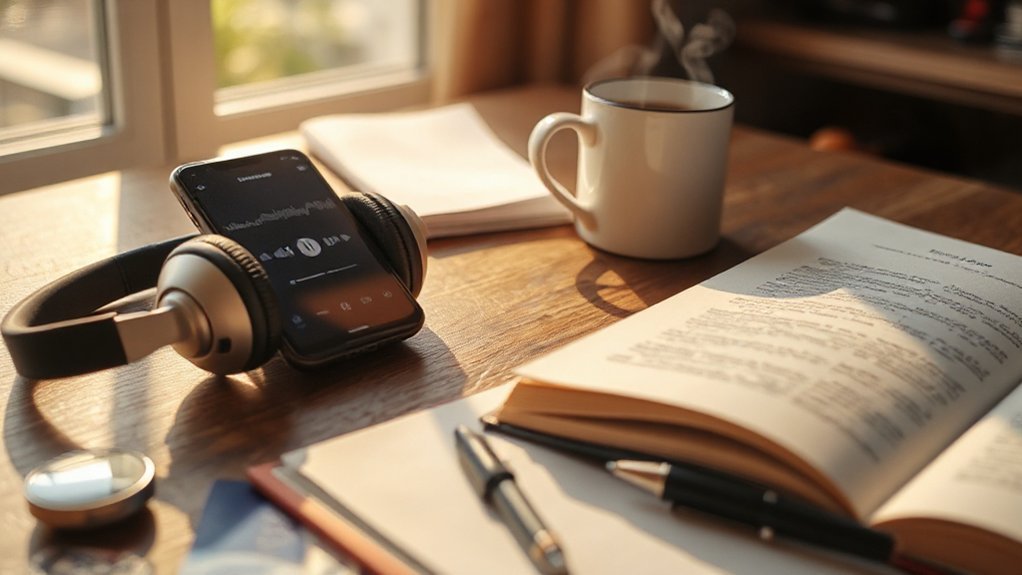
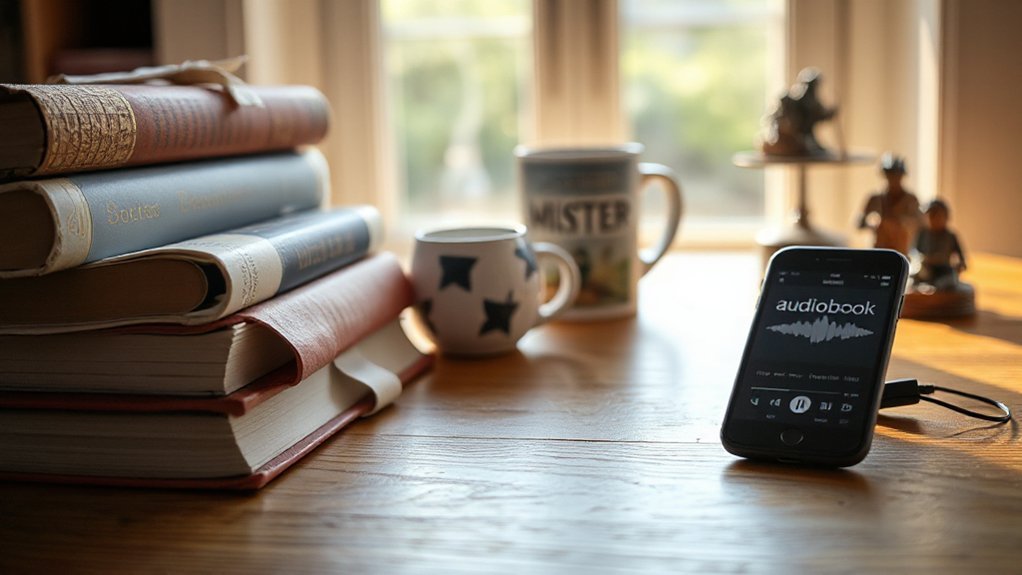
You like stories, but your life is noisy — earbuds in, laundry tumbling, or a book on the bedside table begging for your attention; I get it, I live in both worlds too, and I’ll tell you straight: audiobooks let you steal minutes, physical books make you slow down and remember. You’ll hear me pick favorites, argue about focus, and hand you practical rules to try — stay with me, because the best choice might surprise you.
Key Takeaways
- Choose audiobooks for multitasking and convenience—listen during commutes, workouts, or chores to reclaim otherwise idle time.
- Prefer physical books for dense nonfiction or study, where highlighting, note-taking, and slow rereading improve comprehension and retention.
- Pick audiobooks for immersive storytelling and emotional nuance when narration, tone, and pacing enhance the experience.
- Consider costs, ownership, and accessibility: subscriptions and rentals suit casual listeners; physical copies provide permanent access and tactile satisfaction.
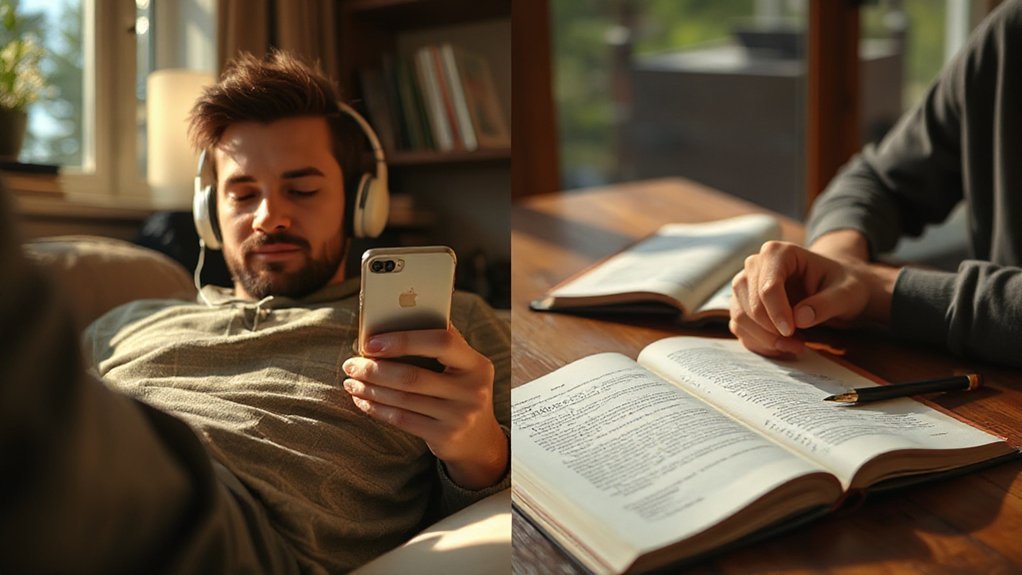
- Combine formats strategically—listen for overview, switch to print for deep study, or use synced apps to get the benefits of both.
Comparing Comprehension and Retention
Even though you can’t smell a page through your headphones, you’ll still catch the plot—sometimes faster, sometimes not. You’ll test reading speed with audiobook chapters, note how auditory learning boosts your information absorption while you commute, and wonder if visual processing in print helps deeper thinking.
I tell you straight: cognitive load shifts with format, so you’ll need memory techniques to anchor scenes you heard, not just skim. Your focus levels wobble; one minute razor-sharp, the next distracted.
Try retention strategies—pause, rewind, jot a line—use tactile notes after listening, or subvocalize while reading. You’ll experiment, mix methods, and find what sticks. I’ll cheer you on, snort included.
Accessibility and Convenience
When you’ve got a ten-dollar audiobook and a dead subway train, you’re suddenly the world’s most resourceful reader; I’ve been there, earbuds in, narrators soothing me through delays while the person next to me snores like a foghorn.
Ten bucks for an audiobook and a dead subway = instant calm: earbuds in, narrator on, delays suddenly bearable.
You’ll love how digital accessibility turns your phone into a library, instant search, adjustable speed, chapter jumps, captions if you need them.
You can listen while you cook, run, or fold laundry, and that on the go convenience feels downright revolutionary.
I poke fun at myself for preferring voice acting over silence, but it saves time, and sanity.
Still, you’ll want backup power, good earbuds, and a quiet mode for shared spaces.
Try both, mix formats, and let practicality lead.
Sensory Experience and Engagement
Although you’ll get the plot either way, the way a story hits your senses changes the whole experience, and I’m still team tactile for the drama it brings. You touch paper, feel the spine’s give, smell ink and travel—little rituals that anchor memory, make moments vivid.
But don’t dismiss immersive storytelling via earbuds; a narrator’s cadence, sound effects, and pauses can move you, make scenes cinematic while you walk, cook, or stare out a window pretending to think deep thoughts.
You learn differently too—auditory learning shines when tone clarifies sarcasm, when voice sells emotion you’d miss on the page.
I love both, honestly, like choosing between coffee styles: sometimes you need texture, sometimes you need a perfect pour.
Note-Taking and Study Usefulness
You’ll notice your memory behaves differently with audiobooks versus physical books, sometimes fuzzy after a long walk and other times sharp when you’ve written a margin note.
You can’t highlight an audio whisper or scribble a halo of thoughts on a podcast, but you can pause, type timestamps, and fold paper corners until they sigh.
Retention and Recall
Because I actually take notes, I’ll tell you straight: retention changes depending on whether words live on a page or in your ears.
You’ll notice, when you flip pages, your eyes create anchors, tactile cues that help memory techniques click — spatial maps, little dog-eared corners, that satisfying paper rustle.
Listening, you get tone, cadence, emotion; it’s immersive, but it raises cognitive load if you’re multitasking, so details slip unless you pause and replay.
Try mixing both: listen for flow, switch to text for dense facts, speak answers aloud, sketch quick diagrams.
That combo reduces overload, boosts recall, and makes study feel smart instead of sloggy.
I mess up sometimes, but this hybrid trick actually sticks.
Annotating and Highlighting
So you liked the hybrid trick for remembering stuff? You’ll love annotating and highlighting next. I nudge you to touch pages, tap screens, and speak notes aloud, because active contact sticks.
With highlighting techniques, pick color moves that mean something—yellow for facts, pink for questions, green for ideas you’ll steal later. Don’t go wild; restraint reads smarter.
Use annotation tools on apps, or a pocket notebook, and write one-line reactions, tiny sketches, or a rude arrow. I joke, but I mean it: mess up the margin, it’s yours.
Audiobooks let you bookmark timestamps, physical books let you smell ink and bend corners—both let you claim knowledge.
Try mixing methods, keep it joyful, and make your notes actually useful.
Study Workflow Integration
When I stitch books into your study routine, you get a system that actually remembers stuff instead of begging you for mercy at exam time.
I show you how audiobooks and physical pages plug into study habits, so you stop hoarding notes and start using them. You’ll listen while commuting, mark timestamps, pause, type a crisp summary, then switch to a paper edition for tactile review—like juggling, but smarter.
My workflow strategies blend voice, touch, and color-coded notes, and yes, you’ll feel oddly proud. I narrate quick check-ins, you quiz aloud, we high-five over a successful recall.
It’s practical, a little quirky, and built to survive deadlines, boredom, and your future self’s forgetful mood.
Cost, Ownership, and Library Access
If you care about your wallet, you’ll want to hear this: audiobooks and physical books hit your pocket in very different ways, and I’ve got receipts.
I’ll walk you through a quick cost comparison — downloads and subscription services often feel cheap per title, but you’re renting a library of voices, not owning a permanent object.
Physical copies give you ownership rights, the paper smell, the spine creak, and the comfort of shelf pride.
Libraries bridge both worlds: library availability now includes digital loans, hold queues, and app checkouts, so you can swipe and listen or borrow a hardcover.
You’ll choose flexibility with subscriptions, or permanence with purchases — your budget, your shelf, your rules.
Multitasking and Time Management
Because I like to multitask like it’s a competitive sport, I’ve tested audiobooks in the wild — on runs, in the kitchen, and once while trying to quietly fold laundry at 7 a.m. and failing spectacularly — and here’s what I learned: audio frees your hands and stretches your reading time, but it also asks for different attention muscles than a paper book.
You’ll carve faster time allocation pockets into your day, swapping commute minutes for chapters, or dishwashing for dense nonfiction, and you’ll learn task prioritization by pairing low-focus chores with high-engagement narratives.
You don’t binge both at once. You design workflows: slow the narrator when you need depth, speed up when repeat info bores you. It’s efficient, playful, and oddly liberating.
Choosing by Genre and Reading Goals
You should pick your format like you pick a snack — what you want matters more than what’s trendy, so I’ll say it: choose audio for plot-driven thrillers you want to zip through, pick paper for dense ideas you need to underline and chew on.
Listen-heavy genres (mystery, rom-com banter, memoirs read by the author) ride audio’s rhythm well, while philosophy, textbooks, and anything you’ll cite cry out for a page you can flip and mark.
Trust your goal: if you’re aiming for speed, mood, or multitasking, go audio; if you want retention, slow reading and notes win — I’ve failed the first way enough to be blunt.
When I pick a book, I think like a picky chef choosing an ingredient — some dishes need a crisp crunch, others demand slow-simmered comfort — and the format should match the recipe.
You’ll choose by purpose: learning, escape, multitasking, or savoring. If you’re studying, you’ll want text you can highlight, flip back to, scribble in the margins; your reading habits and personal preferences steer you there.
If you’re commuting, hands-free audio lets you absorb ideas while you move, like brewing coffee on the go. Want immersion? Physical pages offer scent and weight, a tactile ritual.
Want speed? Audiobooks can race you forward, voice acting as a fast-forward button. Match format to goal, and your next read will taste right.
Genre Listening Suitability
Ever wonder why some books beg to be heard while others demand your hands-on attention? I’ll say it straight: your genre preferences shape the whole experiment.
If you love fast-paced thrillers, you’ll thrive on crisp narration while jogging, the narrator’s tempo like a metronome, heartbeats syncing. For dense nonfiction, you might prefer pausing, underlining, touching paper—yet some smart audiobooks add interviews, soundscapes, aha moments.
Romance glows in earphones, voices warm like tea, while sprawling fantasy often wants maps and margins. Think about your listening habits, when you commute, cook, or unwind, then match format to goal.
I fumble with poetry on audio, honestly—words need space. So play, test, and let genre guide your medium.
Retention and Comprehension
Although audio can make a story feel alive, your brain doesn’t always hold onto it the same way paper does. I tell you this because audiobook retention often leans on listening skills and rhythm, while physical book retention benefits tactile cues and slower reading speed.
You’ll notice comprehension differences by genre and goal — fiction’s immersion suits audio, dense nonfiction rewards page-turning absorption techniques.
- Try a science book: pause, highlight, repeat aloud, test memory recall with notes.
- For thrillers: ride narration, but skim the paperback later to cement plot beats.
- For how-tos: read paper for practice, use audio for review and spaced repetition.
I keep it practical, witty, and a touch experimental — try both, refine your cognitive engagement.
Tips for Combining Audiobooks and Physical Books
If you want to get more stories into your life without turning into a walking bookshelf, try pairing audiobooks and physical books like a productivity tag team—I’ve done it, and my commute suddenly went from dead time to plot time.
You’ll love audiobook syncing apps that remember your spot, so you pause on the subway, pick up the page later, and it all clicks.
Use physical bookmarking, a sticky note, or a tactile ribbon to mark where audio and print diverge; it feels oddly satisfying.
Listen while jogging, skim the printed chapters at night. Say aloud a line that made you laugh. Swap formats for hard scenes.
You stay flexible, curious, and oddly smug about winning back your hours.