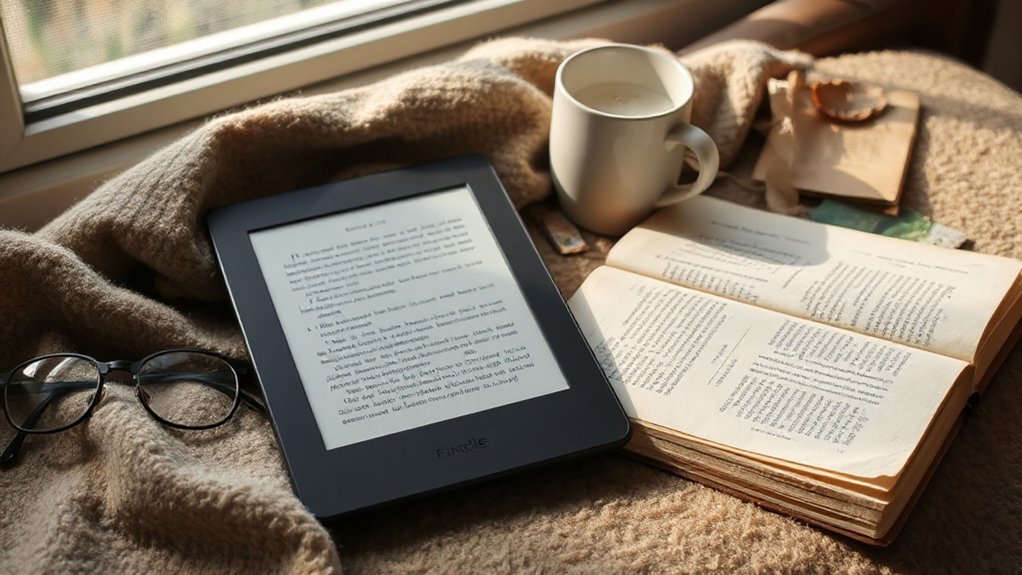
I once smuggled a paperback onto a plane and the pages whispered like guilty secrets; you’ll know that thrill, or you’ll prefer a Kindle that fits a carry‑on pocket and never creaks. I’ll say this plainly: you want warmth and paper-scent nostalgia sometimes, convenience and instant sync other times, and I’ll help you figure which wins for your commute, bedside, or suitcase—so pick a side, or don’t, because choices matter.
Key Takeaways
- Choose a Kindle for portability, instant access to large libraries, and adaptable screens for varied lighting conditions.
- Pick a paperback for tactile pleasure, spine and paper grain, and easy sharing or resale without digital restrictions.
- Prefer Kindle for commuting, adjustable fonts, instant definitions/translations, and longer modern battery life.
- Prefer paperback for uninterrupted outdoor reading, nostalgia, and physical annotation or giftability.
- Balance formats: use Kindle for convenience and paperbacks for comfort, sustainability, or special editions.
How E‑readers Have Evolved by 2025
Even though I swore I’d never get hooked on another gadget, here I am, fingers stained with coffee and thumb swiping through a bookshelf that fits in my jacket pocket.
You watch screens get softer, text crisper, and you grin like a kid with a new toy. By 2025 e reader advancements mean pages adapt to light, batteries last days longer, and waterproofing saves your commute.
You tap for instant definitions, translate lines mid-sentence, and stash notes that feel as neat as handwriting. Enhanced features pile on: braille displays, audiobooks that sound human, and cloud libraries that obey your whims.
I joke that I’ve betrayed paper, but you’ll admit, innovation tastes pretty good.
The Sensory and Comfort Differences Between Kindle and Paperback
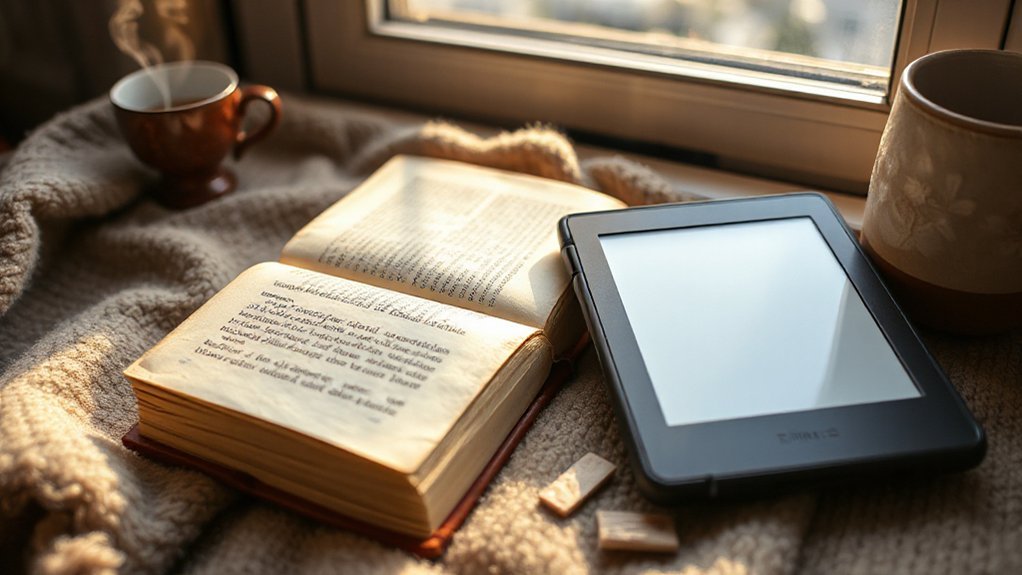
Paperweight, talisman, or portable cathedral—books still hit different, and I can tell you why just by how they sit in my hands. You feel the spine, the paper grain, the tiny give when you thumb a page; that tactile experience anchors you, makes sentences taste like paper and coffee.
Paperweight, talisman, portable cathedral—books sit in your hands, spine and paper-grain anchoring sentences like coffee-scented memory.
A paperback breathes, creases, sighs. A Kindle, by contrast, is cool, minimal, obedient — it disappears into focus, you tap, adjust light, and the words hold steady.
Your reading ambiance shifts: paper warms the room, invites pauses; e-readers streamline flow, cut clutter. You’ll choose ritual or refinement, memory or efficiency.
I’ll admit I’m biased: I miss that paper smell, but I also love a device that obeys my eyes.
Practical Trade‑offs: Portability, Battery, and Durability
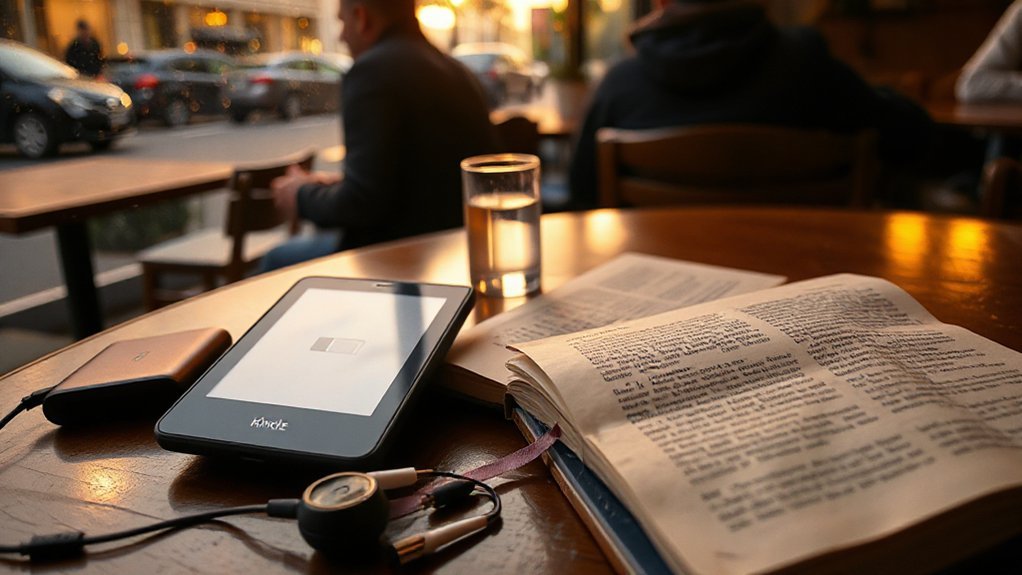
You can wax poetic about the smell of glue and ink all you want, but when you’re packing for a trip the argument turns practical fast — so let’s talk real-world compromises.
I’ll be blunt: tech seduces, paper comforts.
- Portability advantages — a slim Kindle slips into a jacket, you pack entire libraries, you travel lighter; paper still wins for hands-on joy.
- Battery limitations — you’ll love weeks between charges, but don’t expect magic; long flights make you plan charging, curse airlines.
- Durability concerns — screens scratch, spines bend; you’ll zip a sleeve, buy a case, accept trade-offs.
- Weight differences — one device versus stacks of books; your back, and your posture, will thank you.
You experiment, you choose, you still read.
Ownership, Resale, and Environmental Impact

How much of “owning” a book matters to you? You feel the spine, you smell paper, but you also love instant access.
I tell you, I’m torn too—digital ownership feels futuristic, yet it’s often gated, with resale restrictions that sting.
Paperbacks let you trade, shelf-brag, pass a dog‑eared copy to a friend. Kindles give convenience, small triumphs of tech, but you can’t really resell a file.
Consider environmental costs: trees, ink, shipping versus batteries, e‑waste, and server farms humming in distant rooms.
You can act: buy used, choose responsible publishers, recycle devices, and push platforms toward sustainable practices.
I wink, hand you a checklist, and say: innovate responsibly, read boldly, own thoughtfully.
Which Format Suits Common Reading Habits and Situations
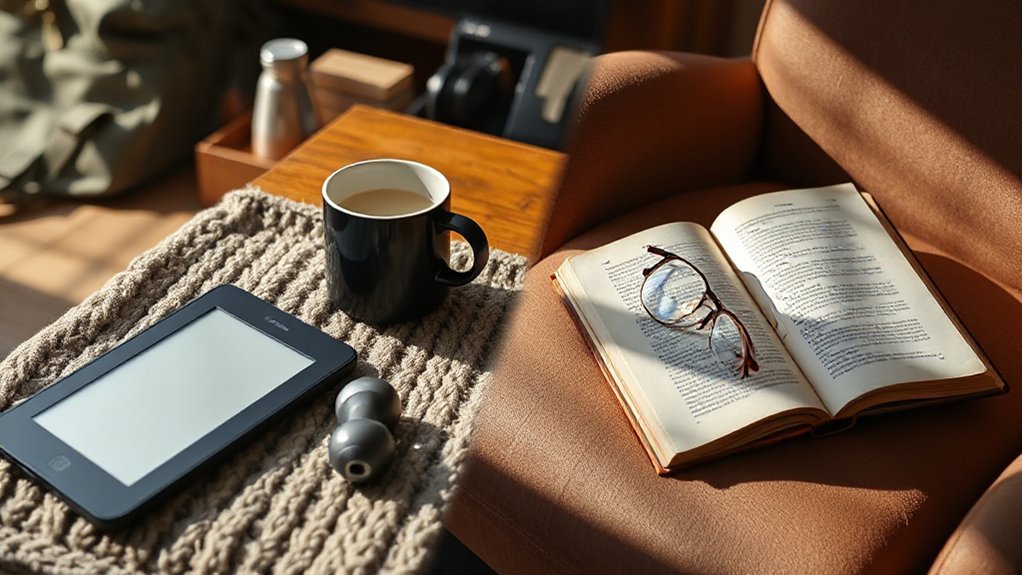
Where do you read most—commuting, sunning on the porch, or hunkered under a blanket at midnight?
I ask because your reading preferences steer the decision, and I’m here to nudge you toward smart, slightly rebellious choices.
You want convenience, or tactile joy? You value digital literacy, or the smell of paper? I’ve tested both, spilled coffee on one, and sworn at tiny fonts on the other.
- Commuting: Kindle wins for weight, backlight, and instant library swaps.
- Outdoors: Paperback soaks sunlight and breeze, but glare-free e-ink is close.
- Bedtime: Kindle’s warm night mode soothes; paper feels ritualistic and slow.
- Sharing & notes: Paper leaves marks; Kindle syncs, searches, and scales.
Pick habit over hype, and mix formats like a pro.