
Tag: literary criticism

  • Why Book Influencers Are the New Critics

    Why Book Influencers Are the New Critics

    You scroll past glossy blurbs and trust the person who gushes about slow-burn romances at 2 a.m., because they feel like your friend, not a gatekeeper. I’ll show you how short videos, plated-up aesthetics, and fierce niche loyalty turn sincere enthusiasm into real buying power, how quick takes start cultural conversations, and why publishers listen when communities speak — but first, notice how a single clip can make a backlist title roar back to life.

    Key Takeaways

    • They shape reading choices through relatable, emotionally charged recommendations that feel more personal than traditional reviews.
    • Short-form visuals act as compelling trailers, quickly conveying tone and selling books to scrolling audiences.
    • Niche expertise and visible reading rituals build authenticity and trust, making influence feel earned and persuasive.
    • Viral endorsements can immediately spike sales and alter publishers’ marketing and print decisions.
    • Real-time engagement and comment-driven debates turn audience reactions into a new form of cultural criticism.

    The Rise of Community-Driven Recommendations
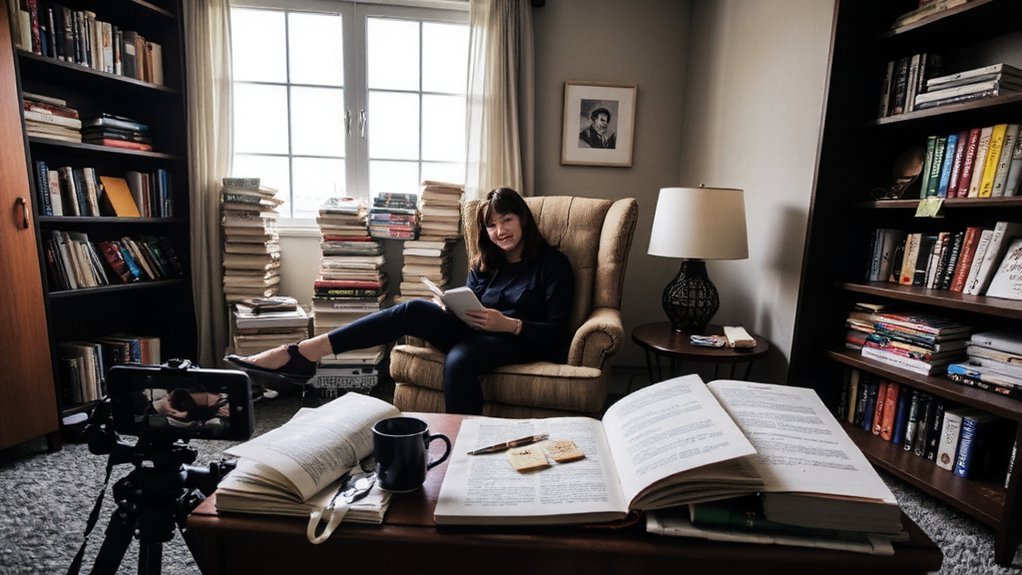
    community driven literary recommendations

    When I first wandered into a book group chat at midnight—half-asleep, mug sweating, thumbs typing nonsense—I found a living map of taste that beat any bestseller list.

    I stumbled into a midnight book chat—half-asleep, mug warm—and found a noisy, brilliant map of taste.

    You watch strangers trade barbs and blurbs, dish spoilers with a wink, and suddenly you’ve got a stack of real recs, not cold recommendation algorithms.

    You lean in, you ask, you test a wild tip, and the group cheers or roasts you.

    That community engagement matters, it shapes what you reach for, faster than any curated feed.

    You feel the texture of a recommendation, the sound of a voice insisting it mattered.

    You’ll still scroll lists, sure, but you’ll prefer the human chorus, messy and brilliant, nudging you toward risk.

    Visual Storytelling and the Power of Short-Form Content

    visual engagement through brevity

    Because a picture hooks faster than a blurb, I started watching book reels like they were tiny trailers—and got hooked. You watch colors flip, hear pages whisper, you lean in.

    I show quick cuts, a coffee cup steam, a thumb tracing a line, and you feel the plot snap into focus. Visual engagement hits fast, it’s instinctive, and you don’t need a paragraph to get excited.

    With content brevity, every second counts, so you trim the fluff, pick the perfect shot, and then sell a mood. You’ll learn pacing, framing, and that a single close-up can say more than a five-star review.

    Trust me, you’ll never scroll the same way again — and you’ll love it.

    Authenticity, Niche Passion, and Trust

    authenticity in niche expertise

    You felt that reel in your bones — the steam, the thumb, the snap — and now you want to know who’s behind the camera, not just what they filmed.

    I tell you, you trust people who smell like the books they love; you see margins, dog-ears, a coffee ring, and you believe their taste. Their authentic engagement shows in tiny rituals, in late-night raves about obscure lines, in crisp recs that hit like a friend’s text.

    You crave niche expertise — someone who lives in a corner of fiction, nonfiction, queer lit, or sci-fi lore — because depth beats breadth every time. You lean in, you nod, you bookmark, and you follow that voice, because it feels real and earned.

    If a single reel can make you sprint to your cart, imagine what an army of trusted bookfluencers can do — I’ve watched shelf lists turn into overnight bestsellers, seen tiny presses skyrocket after one earnest 60-second rave.

    You feel it in real time: a spike in clicks, carts filling, bookstores calling. I point, you buy, publishers take notes. Those micro-moments map new sales trends, quickening cycles, shifting print runs.

    You feel it live: clicks surge, carts fill, bookstores call — my nod rewires sales, and publishers listen.

    You watch algorithms echo enthusiasm, and agents pivot on a single viral clip. The publishing impact is tangible: advances recalibrated, backlists reissued, marketing budgets redirected toward creators who actually move readers.

    I’m still surprised when my casual praise becomes someone’s next midnight purchase, but I’ll gladly take the credit.

    New Forms of Criticism and Cultural Conversation

    You’ve watched a thirty-second clip send a book to the top of a list, and now notice the conversation changing shape right in front of you. I point at the screen, you lean in, we trade a laugh, and the rules of criticism bend.

    You don’t wait for a review in print; you tap, comment, duet, and join a chorus where reader engagement is the metric, not just the byline. Bright thumbnails, candid takes, quick quotes — they spark threads that stitch into a broader cultural dialogue.

    You smell coffee, scroll, react, and sometimes start a debate. Critics used to sit in armchairs; now they stand in comment streams, riffing, endorsing, and remixing opinion into shared discovery.

    It’s noisy, joyful, and alive.

  • The Most Overhyped Books of 2025 – Honest Take

    The Most Overhyped Books of 2025 – Honest Take

    You’ve probably seen the stack of glossy covers everywhere, all promise and celebrity blurbs—don’t buy the sizzle for the steak. I’ll walk you through memoirs that trade feeling for image, prize novels that feel manufactured, and genre books sold with vague, shiny copy; I’ll point out what’s real and what’s hype, smell the cheap perfume, and tell you where to actually spend your attention—if you stick with me.

    Key Takeaways

    • Many 2025 bestsellers trade spectacle and marketing for thin prose and recycled plot beats.
    • Celebrity memoirs often prioritize image management and glossy anecdotes over revealing, messy inner work.
    • Prize-winning novels sometimes feel engineered for critics, prioritizing polish and themes over surprise and emotional risk.
    • Trend-driven genre titles exaggerate blurrier crossovers, promising novelty but delivering familiar, safe formulas.
    • Essay collections frequently favor tidy arcs and likability instead of radical honesty, structural risk, or genuine vulnerability.

    Books That Rely More on Hype Than Craft

    hype over substance in literature

    Call it smoke and mirrors, if you like—I’ll call it a party where the hors d’oeuvres are louder than the music.

    You watch covers gleam, watch blurbs by celebrity authors parade across feeds, and you feel the buzz before you feel the book.

    I tell you, don’t confuse noise with craft. You flip pages, you smell glossy paper, you shrug at plots that purr but don’t bite.

    Social media hypes a moment, not a manuscript, and you’re nudged toward dopamine, not depth.

    I nudge you back toward screws and sentences, toward quiet revision.

    You want innovation, you want work that earns applause; don’t settle for clever branding.

    Read for risk, for surprise, for sentences that sing, not just for the spotlight.

    Memoirs Built on Image, Not Insight

    grit over gloss please

    When a memoir reads like a carefully curated Instagram grid, you should squint at it—because glossy snapshots don’t make an interior life.

    You flip pages, smell new-paper and lacquer, and you expect honesty, not PR polish.

    I tell you straight: these celebrity narratives trade grit for glam, pose for profundity, and leave you holding a pretty object that won’t bruise or bleed.

    You want invention, a fresh angle, not recycled sound bites.

    You’ll spot superficial storytelling in staged scenes, name-dropping, and sigh-inducing lines meant for headlines.

    Call me picky, call me hopeful, I still want a pulse under the polish.

    Put the selfie down, please, and show me a real bruise, a messy morning, a stubborn truth.

    Prize-Winning Novels That Feel Engineered

    engineered literary award winners

    Though the trophies shine, you’ll notice the seams if you look close enough; I’ve held prize lists like cocktail menus and found many of the novels taste-tested to death.

    Though prizes glitter, the seams show — many award-chased novels are polished to perfection and hollowed of surprise.

    You flip pages, sniff glue of glossy jackets, and sense an assembly-line cleverness. I tell you, some books chase literary awards like runners chase medals, polishing every sentence until the voice hums but the heart’s gone quiet.

    You’ll applaud the craft, accept the critical acclaim, and still feel cheated, like someone handed you a perfect dessert with no flavor.

    I point out plot scaffolding, characters built to impress juries, lines placed for sound bites. You want work that surprises, not one that’s engineered to win.

    Trust your taste, not the trophies.

    Genre Titles Oversold by Blurry Marketing

    If a book cover promises “blends elements of sci‑fi, romance, and culinary noir” and the blurb smells like a perfume counter, you’ve been hoodwinked—and I’m here to point out the trick.

    You flip pages, taste recipes that never cook, fall for faux chemistry scenes, and then shrug. I say no more.

    Publishers ride genre trends like carnival rides, slap vague hooks on jackets, and call it innovation. You want novelty, not mashed-up marketing.

    Watch how marketing strategies blur genre lines to chase clicks, then deliver sameness. I poke the fluff, pull down the curtain, and laugh at my own gullibility when I bought the hype.

    You’ll learn to sniff sincerity, demand sharper promises, and buy books that actually do what they claim.

    Essay Collections That Say Less Than They Promise

    Because you picked up an essay collection that promised “radical honesty” and got polished anecdotes instead, I feel your disappointment in my molasses-sticky fingertips when I flip a page.

    You wanted edges, experiments, sparks; you got glossy summaries, shallow reflections, and comfortable self-pity.

    I sniff the coffee stain on page three, smirk, and tell you, bluntly, this book prefers neat arcs to real mess.

    You keep hoping for rupture, for missed connections to be exposed, not skirted.

    I lean in, lower my voice, and say try harder authors, demand risk.

    Here’s what those essays quietly trade away, and what you’ll miss when you close the cover.

    • curated vulnerability over real rupture
    • tidy punchlines that mute disruption
    • recycled metaphors, less invention
    • conversational tone, no structural daring
    • safe endings that dodge risk