The city smells like smoke and metal, and you wander its cracked streets with a pocket full of grudges; I’ll walk you through the books that scratch the same itch as The Hunger Games. You’ll meet faction tests and brutal arenas, clever escapes and bitter rulers, characters who make hard choices while you chew your nails, and a few quieter tales that sting just as much — stay with me, you’ll want to know which one to start tonight.
Key Takeaways
- Read The Maze Runner for claustrophobic survival, clever puzzles, and a tight group dynamic similar to arenas and alliances.
- Try Red Rising for brutal class stratification, violent trials, and a revenge-driven protagonist who ups the stakes politically and physically.
- Pick up Divergent for faction-driven identity conflicts, daring initiations, and a heroine balancing loyalty and rebellion.
- Choose Battle Royale for raw, chaotic survival games that foreground panic, dark humor, and human brutality.
- Explore The Handmaid’s Tale for atmospheric oppression, intimate resistance, and stark political commentary on control and gender.
The Handmaid’s Tale

Think of a house that’s lost its furniture and soul. You step inside, and I tell you, it smells like damp paper and rules.
You’ll follow Offred’s quiet breaths, watch her count, touch fabric, taste fear. This book slaps you with gender oppression, then rearranges your expectations about resistance, intimacy, and language.
Follow Offred’s quiet breaths — count, touch, taste fear — a spare, searing portrait of oppression and resistant intimacy.
You’ll feel the cloth against skin, the hush of corridors, the weight of looks that aren’t yours. It’s clever, spare, bold—innovative in its slow-burning revolt.
I’ll joke to soften it, I’ll wince with you, and we’ll both learn how control can be both blunt and bureaucratic, societal control in plain sentences.
Read it if you want a sharp, humane mirror.
Divergent
You’ll step into a city sliced into factions, each one smelling faintly of sterilized gym lockers or old libraries, and you’ll watch them pick who they’re like it’s wardrobe day.
I follow Tris, who’s brave, bruised, and annoyingly human, and I’ll bet you’ll root for her the minute she flinches and then fights.
Trust me, it’s sharp, sweaty, and oddly hopeful — the kind of story that hooks you with a fist and makes you laugh when it hurts.
Faction-based Society
If society could be sliced like a pie, ours would be cut into neat, labeled wedges, and you’d be handed a fork before you even knew what you liked.
I watch you pick at the crust, curious, because faction dynamics shape everything, they whisper rules into your ear, and societal control tastes like stale coffee and bright uniforms.
You learn to trade identity for safety, quick smiles for approval.
- You’ll map loyalties, test edges, learn the code.
- You’ll feel the clamp of order, the small joys of rebellion.
- You’ll notice the textures: uniforms, badges, rehearsed laughter.
- You’ll weigh risks, choose a wedge, or pretend you did.
Come on, try a bite — I’ll warn you if it’s poison.
Strong Female Protagonist
There’s a pulse to her—quick, deliberate, like fingers drumming a secret code—and I watch it tighten the air.
You meet Tris not as marble statue, but as someone who breathes, bleeds, and decides to break rules with a grin.
I point out empowerment themes without sermonizing; you feel them in her clenched fists, the careful way she learns to trust pain and joy.
Character development here isn’t tidy, it’s messy, startling. You ride her missteps, laugh at her stubbornness, wince when she pays for courage.
I narrate small scenes — a training room, rain on concrete, a whispered dare — and you see growth, not just slogans.
It’s bold, human, and it makes you want to act, now.
The Maze Runner

When I first cracked open The Maze Runner, I felt the same jolt you get when someone flips on a bare bulb in a pitch-black room — sudden, a little panicked, and strangely electric.
You step into a broken world, you touch maze dynamics with your hands, you taste dust and metal, and you learn that runner challenges aren’t just physical, they’re moral.
I narrate, I tease, I admit I’m hooked.
- You’ll love the pulse of constant discovery.
- You’ll admire clever, brutal problem-solving.
- You’ll feel the claustrophobia and the cool risk of each run.
- You’ll savor small, human victories amid bleak design.
You’ll finish ready to innovate, not just escape.
Legend
Envision this: you’re shoved into a city where sirens carve the sky and the air tastes faintly of smoke and sweat, and you learn real fast that survival isn’t glamorous — it’s arithmetic.
You follow Day and June through alleys that sting with metal and market grease, you taste their fear and grit.
I tell you straight: Legend rewires the classic contest tale, it swaps spectacle for strategy, and it gives you legendary heroes who aren’t flawless — they bleed, curse, and improvise.
You’ll love the tight plotting, the snap dialogue, the way hope gets hacked into small, stubborn acts.
It’s clever, visceral, sometimes brutal, often humane.
If you want innovation with heart, this book hands you a blueprint, and a broken compass.
Red Rising

I want you to smell the metal and sweat of a society built on color and cruelty, where the Golds stomp and the rest are crushed underfoot.
You’ll watch a scarred hero claw his way up through bloody trials and clever violence, then plot with sparks in his eyes and knives behind his back.
Stay ready—his revolution is brilliant, messy, and full of betrayals that will make you grit your teeth and cheer at the same time.
Class-Based Brutality
Because society in Red Rising carves people into colors like you’d slice a cake, you’re slapped with a role before you even learn your own name, and that stings.
I tell you this because the book makes class struggle tactile, you can taste metal and dust in the pits where lower colors toil, and you feel the pinch of societal oppression like a gauntlet. You’ll see, hear, smell hierarchy.
- You touch rusted tools, you learn endurance.
- You hear orders barked, you count breaths.
- You taste thin rations, you sharpen will.
- You notice glints of gold above, cold and distant.
I nudge you toward its clever cruelty, it teaches innovation under pressure, and it refuses easy sympathy.
Protagonist’s Violent Ascent
Meet Darrow, and don’t feel bad if you root for him even when he’s doing things you’d swear you’d never do — I certainly do.
You step into boots caked with Mars dust, taste iron and grit, hear fists on metal. He climbs through blood and steel, inventing himself as a weapon. You cheer the violent rebellion because it crackles with urgency, it smells like ozone before lightning, but you also squirm — there’s moral ambiguity under every victory.
I’ll admit I like the rush, that guilty grin you can’t erase. Darrow’s ascent isn’t neat. It’s loud, risky, messy, clever. You feel the thrill, the cost, the pulse of change, and you keep turning pages, complicit and curious.
Revolutionary Strategy and Betrayal
When you watch Darrow build a revolution, it’s less chess and more wildfire—planned sparks that hop fences and eat the night.
I talk to you like a conspirator, honest and impatient, because you want tactics that hum. You feel the grit, the scorch of betrayal tactics, the sharp click of plans folding and unfolding.
He crafts revolutionary alliances, then gut-checks them with lies and loyalty tests. You smell metal, you hear boots on steel, you grin at the audacity.
Here’s what’ll hook you, fast:
- Improvised strategy that feels inevitable, even when it’s chaotic.
- Small betrayals that fracture kingdoms, not just hearts.
- Alliances formed in basements, on rooftops, over bad coffee.
- Calculated risks that sing, then burn.
The Giver
I still remember the first time I smelled the snow in The Giver—clean, sharp, a tiny slap to the face that made my eyes water and my heart go, oh.
You step into a world that looks tidy, efficient, even kind, but then you feel the chill of memory manipulation under the skin, a slow, clever theft.
You watch a boy learn color, pain, love, and you, reading, start to squirm because societal control isn’t abstract here, it’s quiet, domestic, intimate.
I tell you this not to spoil, but to invite: you’ll want to map the mechanics, test the edges, poke the soft spots.
It’s brisk, uncanny, full of small shocks, and you’ll keep turning pages, because curiosity’s hard to kill.
Station Eleven

You’ll watch actors in powdered makeup perform Shakespeare by firelight, and you’ll smell wood smoke and old paper like it’s a character in the story.
I’ll point out how the book stitches together art, memory, survival, and the strange comfort of community, while people trade canned peaches and stories to keep hope breathing.
It’s bleak and oddly tender, and you’ll find yourself rooting for their makeshift family even when you’d rather be practical and hoard the batteries.
Post-Apocalyptic Art and Memory
Even after society collapses, people make art — stubborn, ridiculous, beautiful art — and that’s exactly what keeps Station Eleven from feeling like a long funeral dirge.
I tell you this while tracing a faded playbill, sensing memory preservation in creases, art expression on a scavenged stage, cultural identity stitched into costumes.
You’ll see trauma representation reframed as ritual, collective memory passed in songs, visual storytelling in graffiti and portraits, post apocalyptic aesthetics that somehow feel tender.
Artistic resilience hums beneath ruins, it’s loud and sly. You watch actors rehearse, taste dust and applause, and you grin because hope looks like stubborn creativity.
Quick list to savor:
- Scenes that repair memory
- Costumes as identity maps
- Portraits that hold trauma
- Performances that reclaim history
Survival, Community, and Hope
Art keeps people alive in Station Eleven, but people keep each other alive too — messy, stubborn, kind of miraculous.
You watch a traveling troupe rehearse under a cracked marquee, smell woodsmoke and sweat, hear a violin stitch a quiet courage into the dark.
I tell you, you’d learn survival tactics faster from a stagehand than a survivalist, because they trade skills and stories, food and jokes.
You patch fences, patch wounds, trade songs for soup.
Community resilience shows up in small gestures, in shared blankets, in a joke that breaks a panic.
You laugh, you shiver, you keep walking.
That’s hope: practical, gritty, contagious, and oddly beautiful — like applause after a long silence.
1984
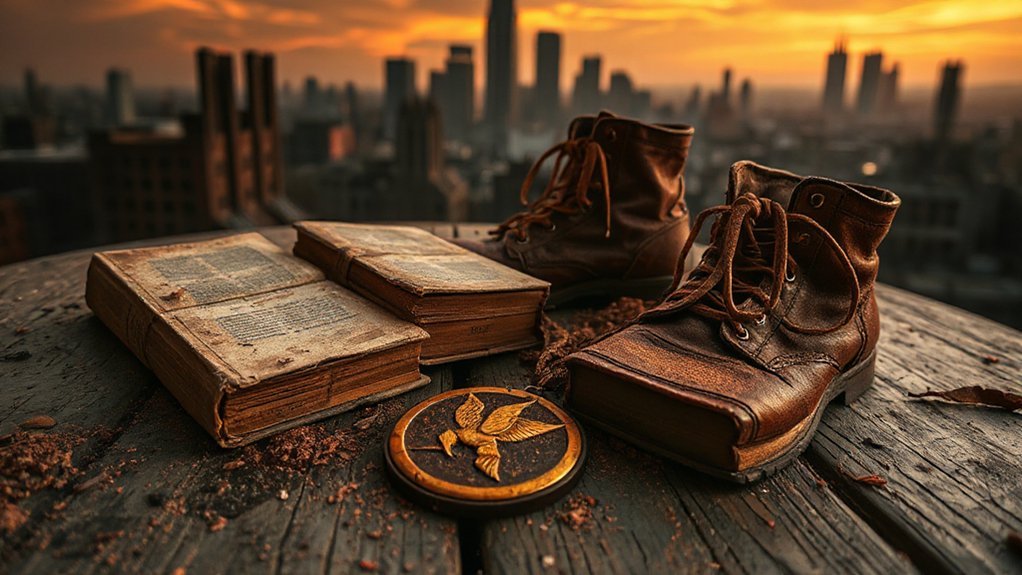
If you liked the teeth-clenching tension of The Hunger Games, get ready to meet a world that’s colder in tone but no less ruthless; I’ll walk you through a book that hooks you from the first page and doesn’t let go.
You’ll feel grit under your nails, hear boots on cracked pavement, and learn sharp survival tactics as society frays. I’ll be blunt, I love the clever nastiness here, and you’ll too.
- Tight, inventive plotting that keeps you breathless.
- Characters who improvise, fail, adapt — real survival lessons.
- A chilling portrait of societal collapse, rendered in vivid detail.
- Smart, speculative tech that feels eerily possible.
The Children of Men
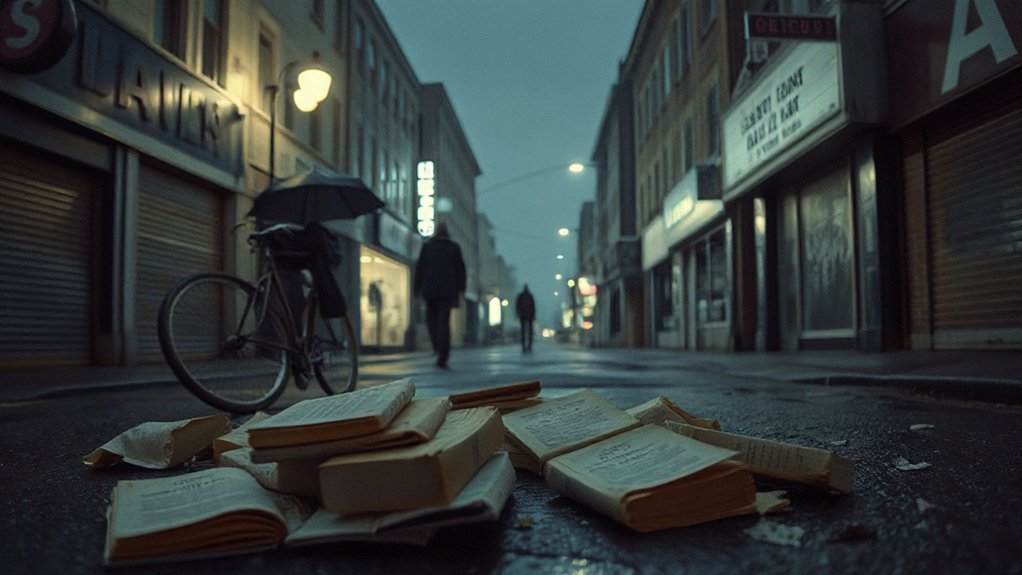
Walk with me into a London that’s lost its future, and you’ll smell diesel, rain, and something older—rotting hope with a faint tang of dust; I promise it’s as bleak as it sounds, but it’s sharp, funny, and oddly human.
You watch Theo navigate ruined streets, you listen as people trade rumors like currency, and you feel the itch of a world on pause. This is a study in societal collapse, but it’s also a lesson in human resilience.
I nudge you toward the book’s small rebellions: quiet kindness, clever plans, messy grief. You’ll laugh at dark jokes, wince at blunt truth, and keep turning pages because the characters feel real, stubborn, alive.
It’s grim, clever, and utterly necessary.
Battle Royale
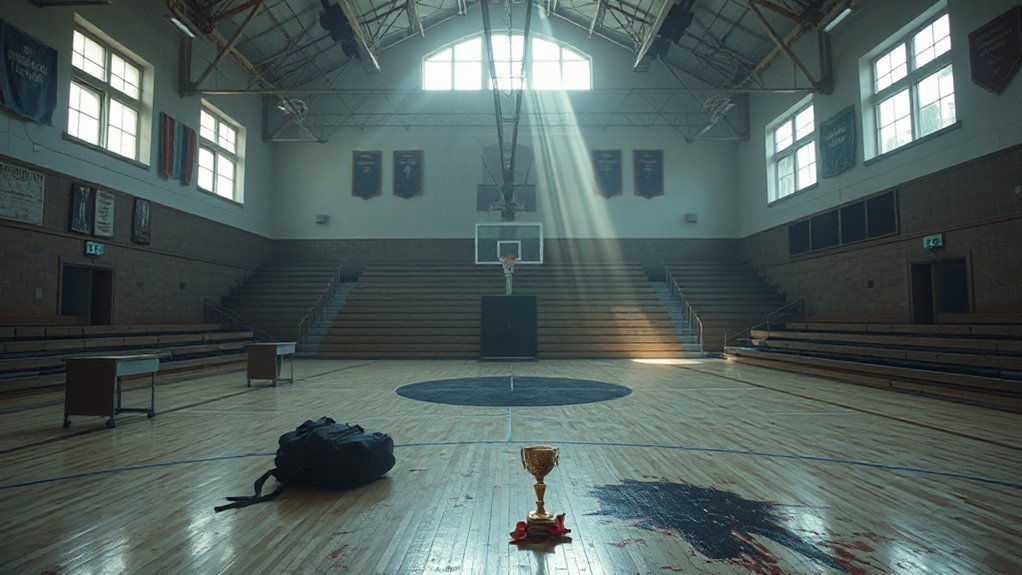
Think of a classroom that turns into a killing field, and you’ll get the blunt, savage thrust of Battle Royale; I promise it’s not subtle, nor does it pretend to be.
I talk to you like a fellow contrarian, you squirm, you grin, and you keep reading because the premise bites. You enter survival games that are loud, bloody, and strangely human, a short, hot rush of panic and strategy.
- You feel the gravel underfoot, the metallic clang of collars.
- You meet kids who joke, then don’t, and you learn quick.
- You watch order shatter, see societal collapse up close.
- You savor the raw invention, the ruthless social lab.
I nudge you, I warn you, you’ll love the thrill.