
The city smells like salt and diesel, and you’ll want to run toward it. I tell you this as someone who’s spent too many late nights turning pages and pretending I’m not crying, because these climate novels aren’t just bleak forecasts — they’re mapmakers for living differently, with streets that hiss, gardens that sting of lime, and people trading jokes like rationed bread. Stick around, I’ll point you to the ones that sting, soothe, and make you useful.
Key Takeaways
- Curated 2025 list: include recent standout climate fiction novels covering displacement, fire-driven collapse, generational rebuilding, ice-memory, and near-future adaptation.
- Look for books balancing human stories and ecological detail, emphasizing community resilience and design thinking.
- Prioritize titles that feature practical adaptation strategies: rooftop gardens, permeable paths, modular habitats, and habitat restoration.
- Seek authors exploring social dynamics: neighbor networks, seed-swapping, hoarding tensions, unlikely alliances, and intergenerational skill exchange.
- Favor books praised for hopeful, action-oriented endings that celebrate small wins, prototyping, and grassroots community reclamation.
The Water Will Come: Stories of Rising Seas and Displaced Cities
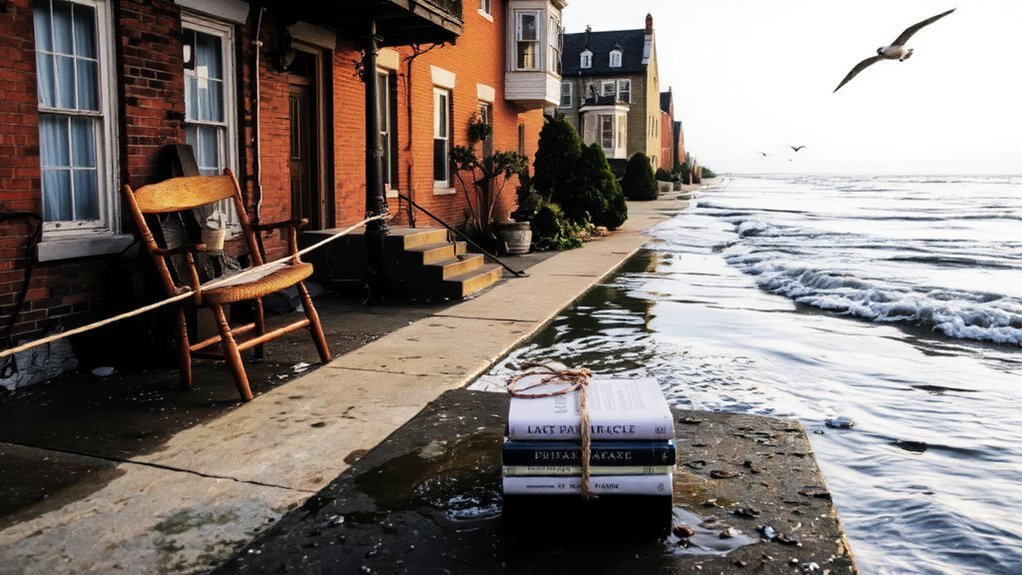
If you’ve ever stood ankle-deep on a beach and wondered when the ocean would stop playing nice, you’re already primed for this book.
You’ll flick pages like you’re testing tide lines, feel salt on your tongue, hear gulls cursing progress.
I tell you bluntly: this collection maps rising tides with surgical calm, and it makes urban displacement feel like someone rearranged your city while you slept.
You’ll meet neighborhoods that leak, mayors who bargain with physics, families packing heirlooms into rusty trucks.
The prose is clever, urgent, accessible; it nudges you toward solutions without sermonizing.
Read it on a commute, laugh, gasp, then start sketching where you’d relocate—because innovation begins with asking, what if?
Emberlands: Fire, Politics, and Survival in a Warmed World
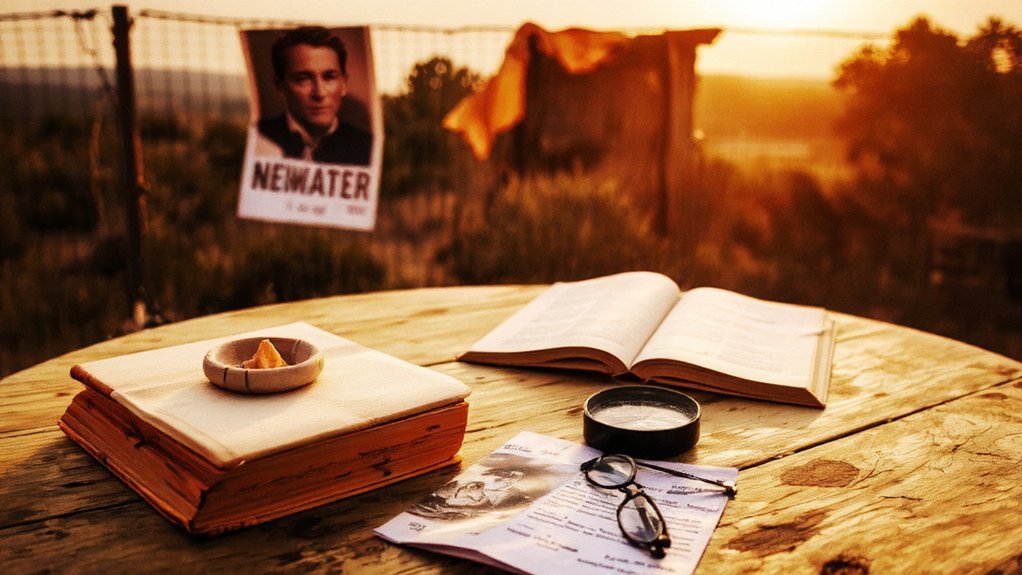
You’re walking through a town rimmed in ash. I’m squinting against heat shimmer and pointing to the burned-out grocery, and we both know the lights won’t stay on.
Emberlands throws you into fire-driven social collapse, showing how rules fray when water’s hoarded and neighbors trade trust for survival.
It’s political theater in scorched boots, and you’ll find yourself rooting for unlikely alliances while grimacing at the small, human betrayals that save — and ruin — lives.
Fire-Driven Social Collapse
How do you imagine a city when the sky itself seems to be on fire? You walk streets scented with smoke and citrus, feel ash on your tongue, and notice how fire ecology shapes every choice.
I’ll admit I grin nervously, because this isn’t just spectacle, it’s design challenge. You watch neighbors jury-rig sprinklers, swap shade fabrics, build berms of sand and memory.
You learn to read wind like a friend and enemy, to favor societal resilience over flashy fixes. I point out small triumphs: a rooftop orchard that cools, a kids’ brigade training with buckets and song.
It’s grim, sure, but also inventive, stubborn, human — and yes, occasionally ridiculous, in the best way.
Politics of Survival
Because politics now smells faintly of smoke and sunscreen, you notice it the minute you step into the town hall — the air conditioner wheezes, someone’s fan rattles like a distant thunder, and a volunteer hands you a flyer that folds like a survival map.
I lean in, grin, and say, “So who’s running the cooling stations?” You point to a whiteboard scribbled with names, plans, and a doodled sprinkler.
You’re learning resilient governance in real time, not from policy papers but from people who jury-rig fans, reroute water, and broker peace over scarce ice.
Communal adaptation becomes your daily lesson: sharing tools, swapping skills, voting for pragmatic leaders.
It’s messy, hopeful, clever — and yes, you’ll probably end up running the next meeting.
Seeds of Change: Generations Rebuilding After Collapse
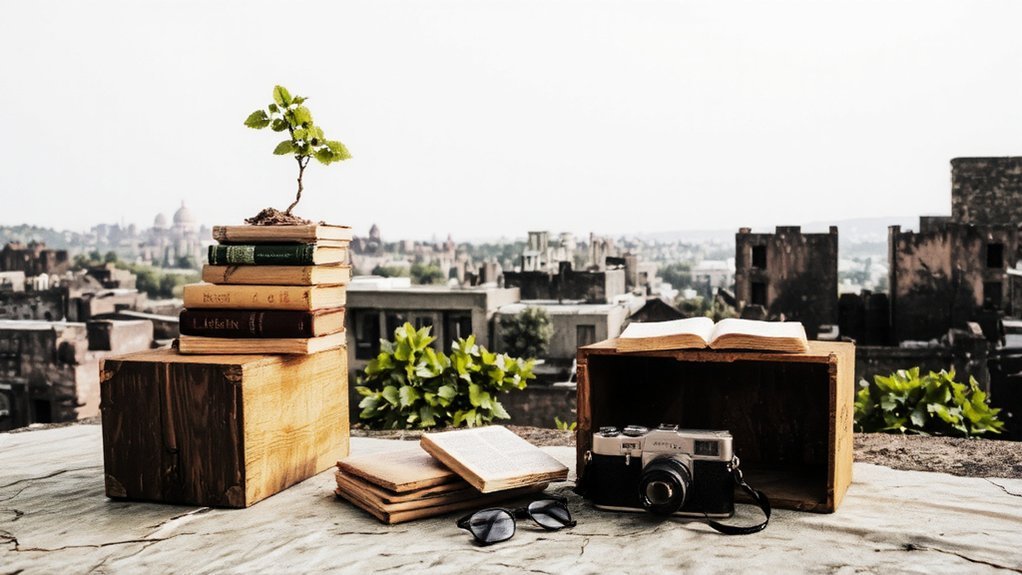
If the old world taught us anything, it was how to fail loudly—and then how to laugh while we dig through the ruins.
You find seedlings in shattered pots, ideas in scavenged manuals, hope scribbled on cardboard. I point, you listen, we map ruined rooftops into gardens, test rain-catchers, invent small engines that sip fuel like tea.
Seedlings in shattered pots, scavenged manuals, rooftop gardens and tea-sipping engines—small, stubborn hope, hands in the soil.
You feel the grit, smell wet soil, taste salt from the sea that came too close. Our books show intergenerational resilience, kids teaching elders drones, elders teaching patience, everyone sketching sustainable innovations on napkins.
We argue, we joke, we patch broken radios at dusk. It’s messy, bright work, and if you’re ready, you’ll get your hands dirty with us—no heroics, just stubborn, clever rebuilding.
Arctic Echoes: Ice, Memory, and the Slow Return of Species
You’ll walk with me across creaking ice, smelling sharp cold and hearing the hollow echo of things that used to be.
I point out frost-slabbed memories in the landscape, then we watch, amazed and a little guilty, as foxes and lichens creep back into the picture, slow as a hand turning a page.
Stick with me—I’ll tell the small, stubborn comebacks that books capture, and we’ll laugh when nature’s patience makes us look foolish.
Frozen Memory Landscapes
When I first stepped onto the floe, salt spray slapped my face and the wind smelled like old stories, sharp and alive, and I felt ridiculous for thinking I could keep up with a landscape that remembers longer than I do.
You follow my boots into a world where memory preservation isn’t sentimental, it’s literal—ice holds pollen, radio static, the hum of engines long gone.
You touch frozen landscapes, you hear creaks like pages turning, and you know novels set here aren’t about rescue, they’re about translation.
I joke, I stumble, I point at a shard that glints like a bookmark, then get serious: these books teach you to read cold archives, to listen to sheets of time, and to act, with cleverness, not pity.
Species’ Gradual Comeback
I laugh at myself for thinking the ice was only a library; it’s also a slow, stubborn nursery. You watch gulls circle, their cries sharp as new glass, and you feel the thaw underfoot, a wet, mineral smell.
I point out tiny shoots, moss like green velvet, and you kneel, fingers cold, tracing roots that remember salt. We joke about being amateur midwives for returning foxes, but really, we read the land like a patient chart.
Habitat restoration happens in fits and starts, clever patches, and stubborn hope. You learn to listen for the soft footfall of comeback species, to map corridors, to seed resilience.
It’s messy, smart work, and we’re learning how to coax ecological resilience back, together.
Sky Cities and Storm Tech: Near-Future Adaptations
Sometimes a city hangs from a cloud, literally, and I’ll admit that still makes me grin like a kid spotting a secret clubhouse.
You walk narrow suspended promenades, feel mist on your face, and smell wet metal and green leaves from vertical farming tucked into balconies.
I narrate, you imagine, we both lean into sustainable architecture that flexes against storms.
You’ll spot three big moves in these books:
- Skyborne infrastructure that harvests wind and rain, repurposing storms into power.
- Modular habitats, quick to reconfigure when weather pivots, resilient and clever.
- Storm tech — drones, tether systems, predictive shields — that read clouds like a pianist reads sheet music.
Read with curiosity, you’ll want to build, prototype, and argue with the future.
Salt Roads: Coastal Communities, Migration, and Memory
You’ll leave the suspended promenades behind, salt on your shoes and a gull’s caw in your ear, and land in towns that smell of brine and gasoline, where porches sag with stories and half the people are packing.
You walk alleys where kids trade batteries like baseball cards, you listen to elders map the tides with finger-jabs and curses, you taste smoked fish and stubborn hope.
You roam alleys where kids trade batteries, elders jab at tide-lines, and smoked fish tastes like stubborn hope
These books stitch migration narratives to memory, they show people folding themselves into trucks, into boats, into new names.
You’ll laugh, wince, and take notes. I point out clever fixes, call out false comforts, and cheer for coastal resilience that’s nimble, not nostalgic.
Read them, argue with them, then build better.
Green Alleys: Urban Nature, Resistance, and Reinvention
When streets fold themselves into green alleys, you feel it under your feet — a soft, surprising give where concrete used to rule, a smell of wet earth and cut grass that makes city grime seem allergic to beauty.
You walk slower, you notice insects, vines, kids planting tomatoes in a cracked curb. I tell you, these pockets rewrite the city map, they boost urban biodiversity, they teach neighbors to trade seeds and stories.
You touch reclaimed brick, hear rain drum on leaves, and grin because resistance looks leafy now.
- Design for pollinators, people, permeable paths.
- Seed social ties, swap skills, secure community resilience.
- Prototype, iterate, celebrate small wins.