
Tag: book reviews

  • How to Write a Captivating Blog Post About a Book

    How to Write a Captivating Blog Post About a Book

    You want your post to grab a stranger by the lapels and make them care, so start like you mean it—drop a striking fact, a cozy scene, or a tiny confession about why the book hit you at 2 a.m., then sketch the plot and characters without giving the twist away; I’ll show you how to mix vivid quotes, sensory details, and a dash of blunt critique, keep the tone warm and witty, and finish with a call that actually matters—but first, let’s talk about your opening line.

    Key Takeaways

    • Open with a surprising sensory detail or brief scene that hooks readers and poses a compelling question about the book.
    • Provide essential context—setting, tone, opening hook, main complication—without revealing the ending.
    • Focus on emotional resonance: describe the feelings the book evokes with concrete examples or memorable lines.
    • Use short, striking quotes and tiny scenes to illustrate points, then connect them to your personal response.
    • Offer constructive critique and actionable suggestions, ending with a clear call to action for readers.

    Hook Readers From the First Sentence

    engaging openings sensory details

    How do you grab someone before they’ve even read the first line? You grab them with an engaging openings mindset, a bold image, a scent of rain on asphalt, the snap of a paperback spine.

    I’ll nudge you to start loud, then tighten. Lead with a surprising twist—an odd fact, a dare, a tiny confession—that makes the reader twitch, curious.

    You’ll drop concrete sensory details, short punches, then a softer line that hooks emotion. Don’t lecture, tease; don’t summarize, stage.

    I’ll show rather than tell, set a micro-scene, let dialogue crack like glass, then close the first beat with a question that pulls.

    You’ll practice, fail fast, then write a first sentence that won’t let go.

    Provide Essential Context Without Spoilers
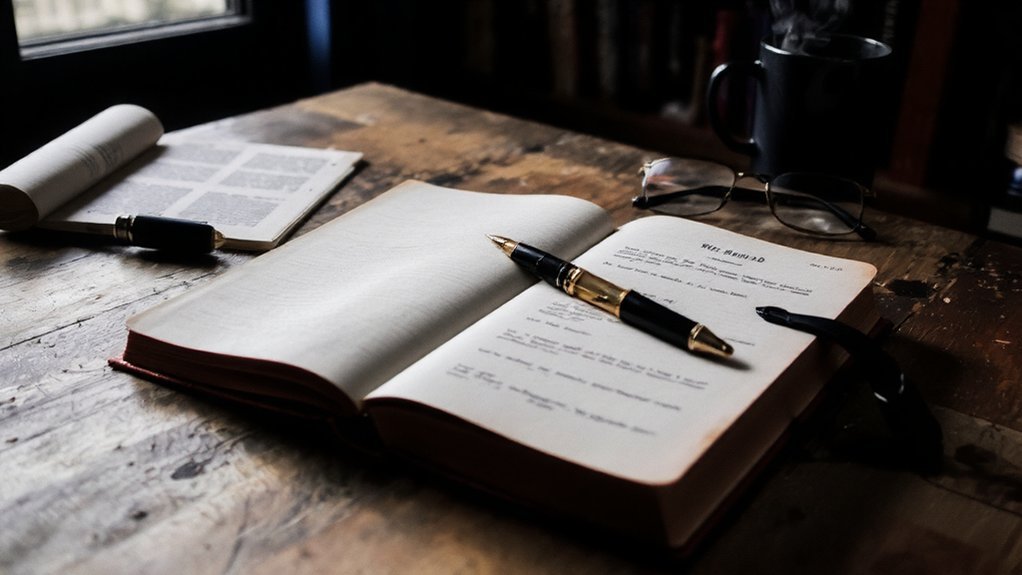
    engaging plot vivid setting

    You don’t need to spoil the ending to make readers care, so I’ll sketch the key plot beats in broad strokes—who’s pushed into change, what obstacle stalks them, and the stakes, without naming the final twist.

    I’ll paint the setting and tone too, the rainy city streets you can hear in the first chapter, the dry, sarcastic voice that makes you smirk, so folks know what mood to expect.

    Keep it tight, I’ll be blunt and playful, and you’ll get enough texture to decide if you want to turn the page.

    Key Plot Beats

    While I won’t spoil the ending, let me walk you through the book’s key plot beats so you know what to expect: the opening hook that smells like rain and danger, the complication that flips the protagonist’s world like a tossed deck of cards, and the midgame choice that makes you squirm in your seat—physically, like you might drop your coffee.

    You’ll map the inciting incident, rising stakes, and the turning point without revealing plot twists, so readers sense surprises are coming. Note the character arcs, who changes and why, not how.

    Point out tempo shifts, a tense confrontation, and a bold dilemma that forces decisions. Keep it crisp, sensory, and inventive, and let curiosity do the heavy lifting.

    Setting and Tone

    If the setting were a person, I’d introduce it with a handshake and maybe a flashlight so you can see the freckles—this place hits all your senses, and it tells you what kind of story you’re in before the first line of dialogue.

    I want you to notice atmospheric details that do more than decorate, they set mood, hint stakes, and whisper history. Point out scent, light, temperature, and the odd object that refuses to be ignored.

    Describe the emotional landscape too, without spilling spoilers: is the world tense, lush, brittle? Say how characters move through it, what they touch, what they avoid.

    Keep it crisp, playful, and useful. You’re guiding readers to feel the scene, not summarizing the plot, and that’s your real power.

    Describe What Resonated With You

    emotional resonance through personal connection

    Because a book hits you in a strange, specific place — the gut, the tiny bones behind your ribs, the part of your brain that rewrites your grocery list — I like to start by naming that place and what it felt like, right down to the temperature of the room and the mug in my hand.

    You tell readers why the book mattered to you, lean into that personal connection, and admit when it surprised you.

    Say what stuck — a thought, a line, a feeling — and why it changed your day or work.

    Keep it tangible: the squeeze in your chest, the laugh you couldn’t help, the idea that rerouted your plans.

    Be honest, curious, inventive; let your emotional impact guide the reader.

    Use Vivid Quotes and Concrete Examples

    Quotations are your secret weapons, so don’t be shy — wield them. You pull a line that snaps the scene into focus, you show vivid imagery, and readers feel the book’s pulse.

    Pick short, striking quotes, place them like spotlight beams, then translate: tell the reader the smell of rain on the page, the scrape of a chair, the exact line that made you blink. Concrete examples make abstract praise believable.

    Don’t just say “beautiful,” quote the cadence, the metaphor, the moment a character flinches. Use impactful language to bridge quote and context, then narrate a tiny scene—your coffee, your scribbled margin note—and watch curiosity spike.

    I’ll admit, I sometimes overquote; I try to resist.

    Balance Critique With Constructive Insight

    You’ll want to point out what the book does well, crisp scenes, sharp ideas, or that character voice that stuck in your head like gum on a shoe.

    Then, gently offer concrete fixes—specific scenes to tighten, pacing to smooth, or clearer stakes—so the author (and your reader) can picture the change.

    I’ll keep it honest, a little cheeky, and useful, because praise without a roadmap is just applause in an empty theater.

    Highlight Strengths Clearly

    When I’m praising a book, I don’t just trot out vague compliments like “well-written” and call it a day; I point to specifics—an image that stuck in my throat, a chapter that made me laugh aloud in public, a line of dialogue that felt like a slap and a hug at once.

    You’ll do a strengths analysis that reads like evidence, not fan mail. Pinpoint scenes, sensory beats, crisp pacing, and character development that surprises, then describe how they land on you.

    Say what worked, why it hummed, and give a short quote or moment to prove it. Be playful, humble, confident—admit when you’re biased, wink, and let the reader taste the book’s best parts.

    Offer Actionable Suggestions

    Although pointing out what didn’t work can feel a little mean, I treat critique like handing someone a well-lit map — clear, practical, and not a personal attack.

    I’ll point out specific moments where reader engagement dipped, and then give concrete fixes you can try right away. Swap slow exposition for a sensory scene, cut a paragraph, add a line of dialogue, or tighten a POV shift.

    Suggest alternate narrative techniques, show a quick before-and-after sentence, and invite the author to run a short reader test. You’ll sound bolder, and you’ll keep curiosity alive.

    Be kind, but be useful. Tell them what to tweak, how to test it, and when to trust their instincts — with a wink, not a critique-shaped guilt trip.

    End With a Clear Call to Action

    Since every great ending deserves an encore, I make the close of a book post work like a tiny stage cue: bright, clear, and impossible to miss.

    You’ll pick one crisp action, nail audience targeting, and pair it with bold engagement techniques that feel modern, not gimmicky.

    Tell readers exactly what to do next — buy, comment, share a line that moved them — and show the sensory payoff: a warm cup waiting, a dog-eared page, a new idea buzzing.

    I’ll write the CTA as if I’m tapping your shoulder, playful but firm, with a little self-deprecating wink: “Try it, you’ll thank me later.”

    End with a link, a deadline, and a tiny reward, and watch that curtain call turn into real momentum.


  • How to Review Books Without Spoiling the Fun

    How to Review Books Without Spoiling the Fun

    You’ll laugh and cry in chapter one, and you’ll still want the ending to be a secret. I’ll show you how to talk about stakes, mood, and surprises without spoiling the plot, give you tidy phrases to signal spoilers, and teach you to lift small, safe details that sparkle — so your reader knows what they’re in for and still gets to gasp on their own. Want to keep them delighted and furious with you in equal measure?

    Key Takeaways

    • Start with a clear spoiler warning and label which sections (if any) contain spoilers.
    • Summarize premise, stakes, and tone without recounting plot events or endings.
    • Use a few brief, contextualized quotes or scenes that illustrate style, not plot twists.
    • Focus on emotional responses, pacing, character growth, and themes instead of plot details.
    • Offer targeted recommendations (who will enjoy it and why) and a spoiler-free rating.

    Why Spoiler-Aware Reviews Matter

    preserve surprises enhance expectations

    If you’ve ever had a friend gush the end of a novel in the middle of dessert, you know why spoiler-aware reviews matter: they save joy.

    I want you to think like an inventor, tuning reader expectations before you disclose the cool parts. You’ll set a tone, drop a gentle warning, then praise craft without handing over the punchline.

    Picture a reviewer tapping a table, smelling coffee, smiling as they sketch moods not reveals. That keeps narrative integrity intact, and keeps readers hungry. You’ll steer curiosity, not blunt it.

    Be clear, playful, and respectful; make the reading experience feel like a secret handshake, shared with people who love surprises. You’ll protect delight, and still be brilliantly useful.

    Signal and Structure: Clear Warnings and Layouts

    clear warnings and layouts

    Because you want readers to trust you—and not toss your review like a grenade at book club—I start with a clear signal. I tell you up front if spoilers lie ahead, I flag scenes, and I use simple icons and line breaks so your eye skims safe territory fast.

    You’ll hear me say “spoiler-free” or “contains spoilers,” in bold, no mystery. My layout design keeps sections tidy: premise, strengths, sensory notes, and a spoiler block that’s gated and labeled. You scroll, you decide.

    I like contrast, white space, short headers, a muted color cue, and a boxed spoiler with a click-to-reveal. It’s efficient, friendly, and a little theatrical—like wearing gloves to handle a vintage comic. Trust me, you’ll stay curious.

    Describing Stakes, Themes, and Tone Without Plot Details

    atmosphere stakes themes tone

    While I won’t unravel the plot, I’ll show you the temperature of the book—what really matters beneath the events—so you’ll know whether to bring a sweater or a parachute.

    I won’t spoil the story — I’ll read the room: atmosphere, stakes, and whether to pack a sweater or parachute

    I’ll tell you how stakes feel, not what happens. You’ll sense urgency, risk, and the gravity of decisions through character motivations and the book’s pulse.

    I’m candid, a bit cheeky, and I point to tone like a thermostat: crisp, humid, iron-gray. You’ll get emotional resonance, tactile mood, and a heads-up on pacing, without spoilers.

    1. Stakes: emotional and practical pressure, how high the risks climb.
    2. Themes: big ideas, repeated images, what it’s trying to say.
    3. Tone: voice, texture, and air around the scenes.

    Using Specific, Spoiler-Free Examples and Quotations

    You don’t have to summarize the plot to prove you read the book, you can show a little scene instead — a line that smells like rain on a page, or a short exchange that makes you wince.

    I’ll point out a specific, spoiler-free moment or quote, give a tight bit of context so readers know why it matters, and then say what that moment made me feel or think.

    Trust me, it’s way more fun to hand someone a taste than a full-course spoiler.

    Show, Don’t Summarize

    If I want to make a point about a book without ruining the punchline, I’ll show you a short, specific moment instead of reciting the plot; imagine me pointing to a single, sticky scene—like the exact line a character mutters in the rain, the way a meal is described so you can taste the garlic, or a clever metaphor that zings—so you get the flavor without the map.

    You’ll see how character development breathes inside a tiny gesture, how narrative style sings through a single sentence. I’ll hand you a slice, not the whole pie. You’ll taste technique, voice, risk.

    Try this on for size:

    1. Point to a tactile detail.
    2. Cite a line that reveals motive.
    3. Note rhythm, cadence, and tone.

    Quote With Context

    Quotation is your secret weapon, and I’ll show you how to wield it without handing over the whole plot. You pick a line that shivers, a tactile sentence that smells like coffee and late-night pages, then you frame it.

    I’ll teach you to check quote relevance—why this line matters to mood, theme, or character—without leaking twists. Give readers context importance: where the quote sits, the tone, a tiny gesture or setting note.

    Use brief dialogue snippets, sensory beats, and a wink. Say, “She laughed, not from joy,” then stop. That sparks curiosity, shows craft, and keeps surprises intact.

    You’ll sound sharp, generous, and a little mischievous. Trust me, spoilers are off the table.

    Balancing Personal Response With Reader Needs

    You’ll tell readers how the book landed for you — the shock, the laugh, the quiet ache — but you won’t spoiler their first big gasp.

    I’m asking you to name your emotional beats, then step back and map them onto plot, tone, theme, and context so folks know what to expect without ruining the scene.

    Say what hit you, show how it fits the book’s shape, and wink as you hand them the bookmark.

    Personal Reaction vs. Plot

    Balance feels like tightrope walking with a paperback in one hand and a latte in the other, and I’m the guy wobbling between heart and headline.

    You’ll want to share your character development thrills and emotional impact, but don’t map the plot like a spoiler treasure hunt. Stay sensory—note the way a scene smells, sounds, or hits your chest—so readers feel your reaction without getting the play-by-play.

    1. Flag feelings, not events: describe how a twist landed, not the twist itself.
    2. Tease textures: mention pacing, voice, and the laughs or chills you felt.
    3. Offer utility: tell who might love this book, and why it mattered to you.

    You keep it inventive, honest, and useful, with charm, not spoilers.

    Tone, Theme, and Context

    Tone is the book’s accent—the way a sentence smiles, snarls, or sighs—and I’ll tell you how to hear it without narrating every note.

    You’ll listen for shifts, textures, and pace, noting how literary devices color a scene, without reciting plot points. I point to thematic elements, then say what they felt like to me, a quick snapshot, not a map.

    You’ll name mood, compare moments to smells or sounds, drop one vivid detail, and keep the rest for readers to discover. I joke, I shrug, I admit when I’m puzzled.

    You’ll balance your love or grumble with context—genre, era, voice—so readers know why they might care, without stealing the show.

    Practical Templates and Phrases to Protect Surprises

    If you want readers to savor the twist while still knowing whether to buy the book, lean on simple, ready-to-use language that shields surprises without sounding like a librarian in armor.

    I’ll show you practical phrases and template examples that keep secrets, spark curiosity, and sell the experience. You’ll sound sharp, playful, and fair.

    1. “Without giving spoilers: the book’s strength is…” — highlights tone, stakes, and craft.
    2. “Think of this as [genre touchstone], with a twist that flips expectations — no plot details.” — orients readers quickly.
    3. “If you like [concrete sensory cue], you’ll love this; it builds to an unexpected payoff.” — teases mood and payoff.

    Use these, tweak the voice, trust your instincts, and protect the surprise.

  • The Most Overhyped Books of 2025 – Honest Take

    The Most Overhyped Books of 2025 – Honest Take

    You’ve probably seen the stack of glossy covers everywhere, all promise and celebrity blurbs—don’t buy the sizzle for the steak. I’ll walk you through memoirs that trade feeling for image, prize novels that feel manufactured, and genre books sold with vague, shiny copy; I’ll point out what’s real and what’s hype, smell the cheap perfume, and tell you where to actually spend your attention—if you stick with me.

    Key Takeaways

    • Many 2025 bestsellers trade spectacle and marketing for thin prose and recycled plot beats.
    • Celebrity memoirs often prioritize image management and glossy anecdotes over revealing, messy inner work.
    • Prize-winning novels sometimes feel engineered for critics, prioritizing polish and themes over surprise and emotional risk.
    • Trend-driven genre titles exaggerate blurrier crossovers, promising novelty but delivering familiar, safe formulas.
    • Essay collections frequently favor tidy arcs and likability instead of radical honesty, structural risk, or genuine vulnerability.

    Books That Rely More on Hype Than Craft

    hype over substance in literature

    Call it smoke and mirrors, if you like—I’ll call it a party where the hors d’oeuvres are louder than the music.

    You watch covers gleam, watch blurbs by celebrity authors parade across feeds, and you feel the buzz before you feel the book.

    I tell you, don’t confuse noise with craft. You flip pages, you smell glossy paper, you shrug at plots that purr but don’t bite.

    Social media hypes a moment, not a manuscript, and you’re nudged toward dopamine, not depth.

    I nudge you back toward screws and sentences, toward quiet revision.

    You want innovation, you want work that earns applause; don’t settle for clever branding.

    Read for risk, for surprise, for sentences that sing, not just for the spotlight.

    Memoirs Built on Image, Not Insight

    grit over gloss please

    When a memoir reads like a carefully curated Instagram grid, you should squint at it—because glossy snapshots don’t make an interior life.

    You flip pages, smell new-paper and lacquer, and you expect honesty, not PR polish.

    I tell you straight: these celebrity narratives trade grit for glam, pose for profundity, and leave you holding a pretty object that won’t bruise or bleed.

    You want invention, a fresh angle, not recycled sound bites.

    You’ll spot superficial storytelling in staged scenes, name-dropping, and sigh-inducing lines meant for headlines.

    Call me picky, call me hopeful, I still want a pulse under the polish.

    Put the selfie down, please, and show me a real bruise, a messy morning, a stubborn truth.

    Prize-Winning Novels That Feel Engineered

    engineered literary award winners

    Though the trophies shine, you’ll notice the seams if you look close enough; I’ve held prize lists like cocktail menus and found many of the novels taste-tested to death.

    Though prizes glitter, the seams show — many award-chased novels are polished to perfection and hollowed of surprise.

    You flip pages, sniff glue of glossy jackets, and sense an assembly-line cleverness. I tell you, some books chase literary awards like runners chase medals, polishing every sentence until the voice hums but the heart’s gone quiet.

    You’ll applaud the craft, accept the critical acclaim, and still feel cheated, like someone handed you a perfect dessert with no flavor.

    I point out plot scaffolding, characters built to impress juries, lines placed for sound bites. You want work that surprises, not one that’s engineered to win.

    Trust your taste, not the trophies.

    Genre Titles Oversold by Blurry Marketing

    If a book cover promises “blends elements of sci‑fi, romance, and culinary noir” and the blurb smells like a perfume counter, you’ve been hoodwinked—and I’m here to point out the trick.

    You flip pages, taste recipes that never cook, fall for faux chemistry scenes, and then shrug. I say no more.

    Publishers ride genre trends like carnival rides, slap vague hooks on jackets, and call it innovation. You want novelty, not mashed-up marketing.

    Watch how marketing strategies blur genre lines to chase clicks, then deliver sameness. I poke the fluff, pull down the curtain, and laugh at my own gullibility when I bought the hype.

    You’ll learn to sniff sincerity, demand sharper promises, and buy books that actually do what they claim.

    Essay Collections That Say Less Than They Promise

    Because you picked up an essay collection that promised “radical honesty” and got polished anecdotes instead, I feel your disappointment in my molasses-sticky fingertips when I flip a page.

    You wanted edges, experiments, sparks; you got glossy summaries, shallow reflections, and comfortable self-pity.

    I sniff the coffee stain on page three, smirk, and tell you, bluntly, this book prefers neat arcs to real mess.

    You keep hoping for rupture, for missed connections to be exposed, not skirted.

    I lean in, lower my voice, and say try harder authors, demand risk.

    Here’s what those essays quietly trade away, and what you’ll miss when you close the cover.

    • curated vulnerability over real rupture
    • tidy punchlines that mute disruption
    • recycled metaphors, less invention
    • conversational tone, no structural daring
    • safe endings that dodge risk