Like finding a secret track on a favorite album, you’ll want to open the book before the film starts humming. I’ll walk you through classics that change when you turn the page—characters bloom, motives sharpen, and small lines punch harder on the tongue; you’ll smell dust on Atticus’s bookshelf, taste the grit in McCarthy’s West, and feel the chill behind King’s door. Stick around, and I’ll tell you which ones make the movie richer—and which don’t.
Key Takeaways
- Read the novel first to appreciate deeper character motivations and quieter psychological details often trimmed in films.
- Look for omitted scenes and motifs in the book that provide richer themes and emotional texture missing onscreen.
- Note narrative structure differences—books often shift perspective or pace, changing suspense and reader sympathy.
- Use the film as a companion piece: adaptations highlight key choices and visuals but simplify inner lives.
- Prioritize titles known for literary depth (e.g., To Kill a Mockingbird, The Godfather, The Shining, Fight Club).
To Kill a Mockingbird by Harper Lee
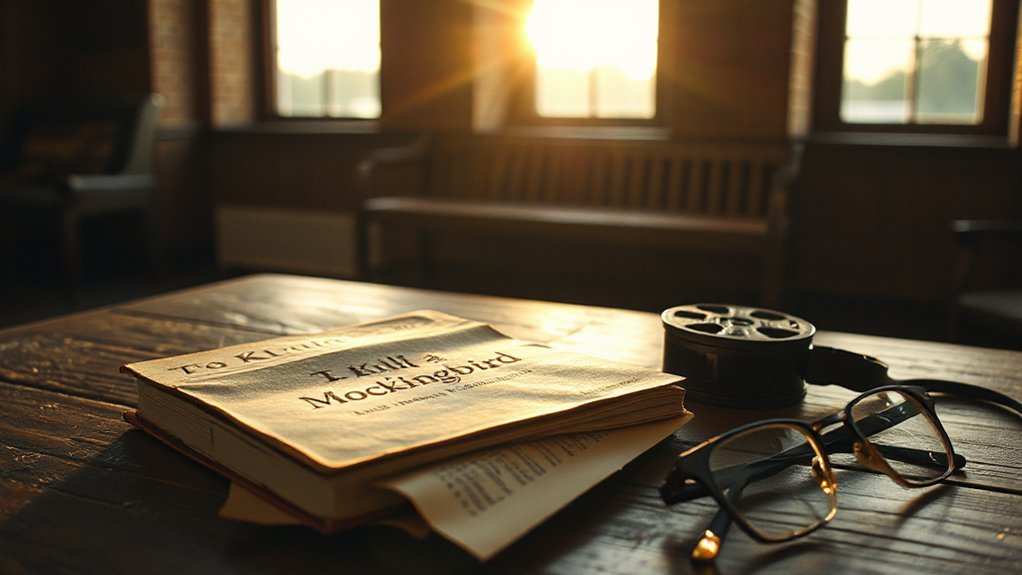
A courtroom, dusty and sunlit, still snaps me awake whenever I think of To Kill a Mockingbird; I’ll admit I’ve watched the film more than I’ve re-read the book, and I’m not proud of it.
You’ll get hooked by Scout’s perspective, you’ll feel her small shoes scuffing porch boards, hear her laugh, and you’ll notice moral lessons settling like dust motes in a beam of light.
I talk to you like a friend who nudges you toward better choices, I point out the film’s bravery, its honest nervousness, the way it makes you squirm and then soften.
That voice of a child teaches you, shocks you, asks you to act. Take the book first, then watch—don’t cheat yourself.
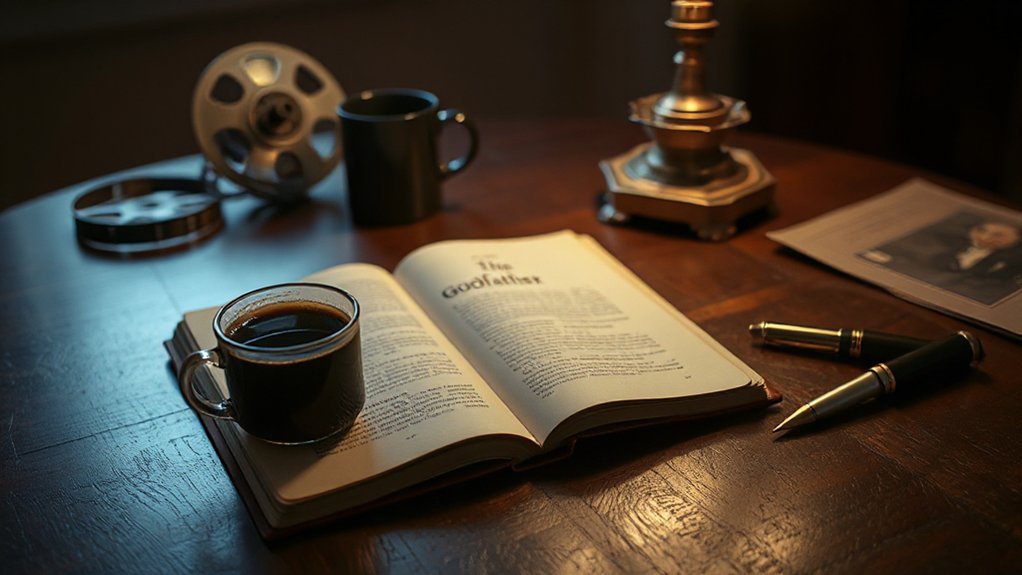
The Godfather by Mario Puzo
You loved Scout’s squeaky shoes and moral scold, now brace yourself for cigar smoke and whispered threats. I’m telling you, read Puzo before you watch. You’ll feel mafioso dynamics in the cadence of a phone call, taste garlic and fear at a dimly lit table, sense family loyalty like a pulse under the tablecloth.
I guide you through scenes where conversations are violence, silence is strategy, and loyalty buys safety or doom. Picture a backyard wedding, laughter, then a dark car idling, muffled orders passed along like recipes.
You’ll notice small gestures, fingers tapping on marble, eyes that don’t blink. It’s gritty, elegant, and oddly humane. Read it first, so the film hits with knowledge, not surprise.
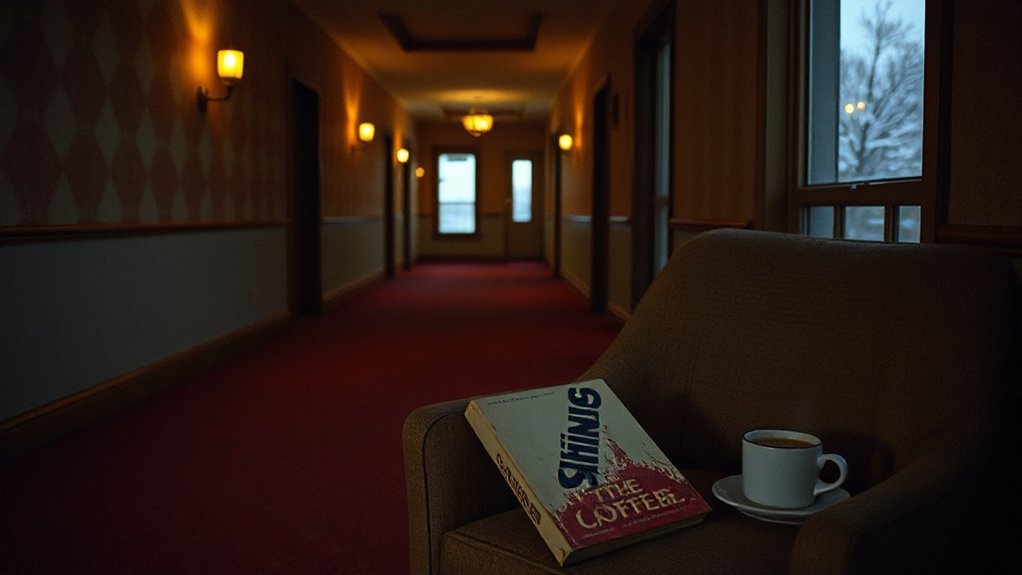
The Shining by Stephen King
You’re about to see how King’s slow-burn, character-driven novel turns into a colder, more visual film, and I’ll point out the moments that make you squirm differently.
I’ll compare specific book scenes to Kubrick’s edits, note how themes like family breakdown and supernatural menace shift tone, and mention that iconic shot of the hallway that smells like polished wood and menace.
Stick around, I’ll crack a few jokes at my own expense while we map the changes, and you might start hearing the hotel’s rumble in your bones.
Book vs. Film Differences
Even though I love both, I’ll say it straight: the book and the movie of The Shining aren’t the same beast, and that’s exactly why this comparison’s fun.
You’ll notice King gives you inner monologues, slow-burning dread, and clear character motivations, while Kubrick slices scenes into icy, visual tableaux that make you feel rather than explain.
You read Jack’s collapse from the inside; you watch Nicholson erupt from the outside.
The narrative structure shifts too — the novel unfolds like a slow, inevitable storm, the film like a series of mirrors and dead ends.
If you want innovation, study both: listen to the creak of the hotel in prose, then let the camera show you what words can’t quite capture.
Themes and Tone Shift
If the last bit was about how King lets you crawl inside Jack’s skull while Kubrick makes you watch him implode, then let me take you through how that shift in perspective reshapes the whole mood and meaning of The Shining.
I want you to notice how narrative perspective flips everything, like swapping a flashlight for a spotlight. In the book you feel heat, hear the creak, smell stale whiskey, you live Jack’s unraveling, you get emotional depth that punches you in the gut.
In the film, distance makes the hotel a character, cold and clinical, a slow zoom on dread. You’ll prefer one version for intimacy, the other for design.
I’ll nudge you to try both, then pick your favorite kind of scary.
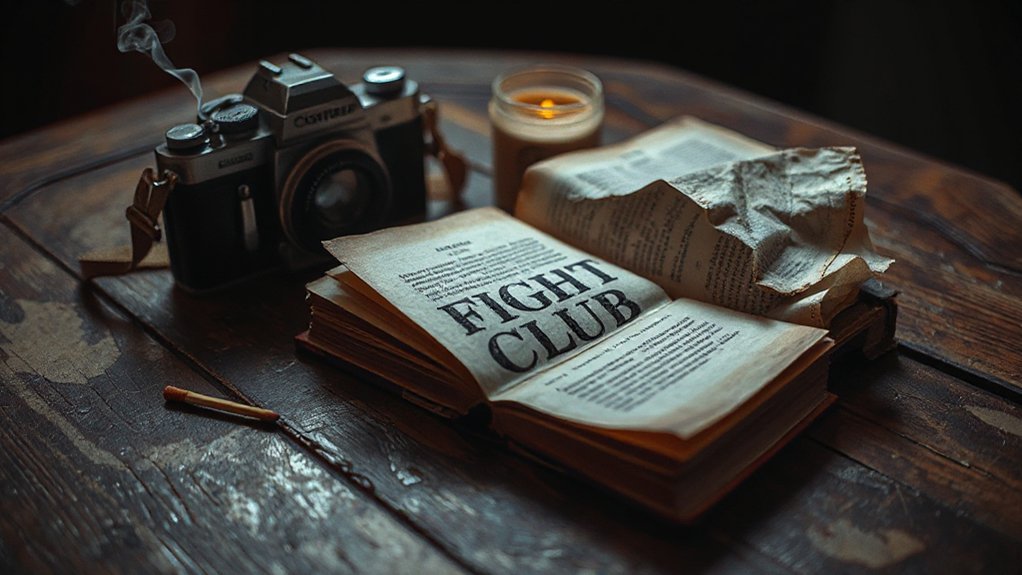
Fight Club by Chuck Palahniuk
You’re standing in a cramped, fluorescent-lit support group, and I’m sitting next to you, whispering that Tyler isn’t just a bad idea—he’s the louder half of your brain.
You’ll notice the book lets you smell the coffee and blood, and it teases out a darker, sardonic tone that the movie sharpens into punchy, visual chaos.
Narrator vs. Tyler
I remember the first time I realized I was in a fight with myself—literally—because that’s what happens in Fight Club: you wake up one morning and the enemy is your reflection.
You follow a narrative perspective that toys with your head, and you know the narrator is unreliable, so you squint at each scene like it’s a clue.
I tell you, you’ll feel the room tilt, smell smoke, hear gloves slap. You move through bars, basements, and late-night flights, watching Tyler swagger where you limp.
You want innovation? Good—you’ll get split identities choreographed like a dance, witty banter, and a punchline that’s both terrifying and oddly liberating.
You leave guessing, grinning, and a little bruised.
Themes and Tone
Rebellion tastes like metal and cheap beer, and in Fight Club it’s served blunt, hot, and unapologetic. You feel grit in your teeth, the punch in your ribs, the city’s hum under neon.
I nudge you through themes that cut—consumerism, identity, violence—each a clean strike, each a dare. You’ll notice symbolic motifs, like soap and bruises, that repeat until they sting, they’re clever signposts, not mere props.
Tone shifts from deadpan humor to raw ache, and you’ll ride it, laughing, then flinching. Emotional resonance lands when quiet moments break the noise, when Tyler’s swagger peels away and you see the hollow.
Read the book, watch the film, you’ll want both—each sharpens the other.
No Country for Old Men by Cormac McCarthy
If you haven’t seen the Coen brothers’ take on Cormac McCarthy’s No Country for Old Men, you’re in for a shock that smells like diesel and gunpowder.
I’ll tell you straight: the book forces you to stare at moral ambiguity, it nudges you into uncomfortable corners, and it makes character motivations feel raw and dangerous.
You’ll walk dusty Texas roads, hear tires crack on gravel, taste metal and fear.
I like how McCarthy tightens scenes, with quiet threats and brutal choices, and I’ll warn you, it won’t comfort you.
Read it before you watch, so you catch the small decisions the film compresses, the silences the actors fill, the ethical echoes that linger after the credits.
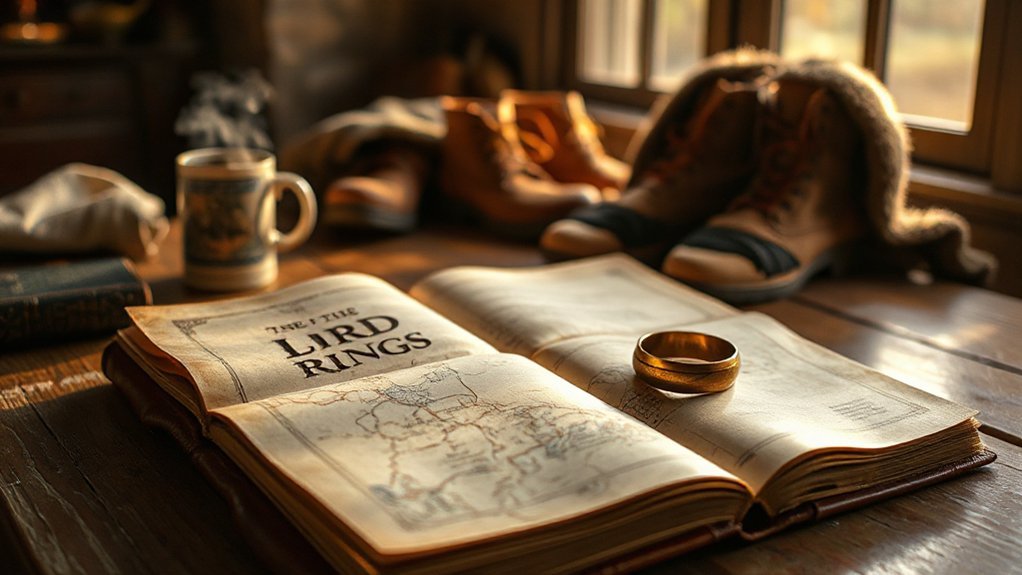
The Lord of the Rings by J.R.R. Tolkien
You’ll notice the movies blow up Tolkien’s map, showing sweeping mountains and sweating battles, while the book lingers on quiet maps, the smell of pipeweed, and long evenings by the fire.
I’ll point out where characters get trimmed or reshaped—Frodo’s interior ache is often quieter on screen, Aragorn’s doubts get shorter—and you’ll spot what those cuts do to the heart of the story.
Let’s also talk about themes and the scenes that went missing, because some omissions sting, others sharpen, and a few actually make you laugh at the absurdity of trying to fit Middle-earth into a runtime.
Worldbuilding and Scope
Maps matter. You’ll trace mountain ridges, breathe mist off the Shire, feel gravel under boots, and I’ll nudge you toward Tolkien’s worldbuilding techniques that make Middle-earth feel lived-in.
You’ll notice myth stacked like strata, languages humming under names, histories whispered in weather. The narrative scope is enormous, yet it’s never vague; landscapes act, cities remember, small kitchens matter as much as coronation halls.
I’ll point out how detail creates scale—maps, songs, genealogies—so you sense continents, not just scenes. You’ll learn to translate those methods into your own projects: build rules, plant textures, let geography dictate plot.
It’s practical magic, tactile and strategic, and yes, slightly addictive — you’re warned.
Character Differences Highlighted
We just finished tracing ridgelines and smelling damp earth, so now let’s stand in the doorway of a hobbit hole and listen to people argue.
You’ll notice the book gives each voice more room, it shows private doubts, private triumphs; the films compress, they cut a corridor through inner thought to keep pace.
You’ll feel character motivations shift under your hand, subtle scenes revealing why someone risks everything, while the movies lean on looks and a close-up to suggest the same thing.
You get longer, winding character arcs in print, the slow burn of change, whereas cinema tightens beats, trades nuance for momentum.
Read the book first, you’ll catch the choices filmmakers made, and admire their clever shortcuts.
Themes and Omitted Scenes
Though the movies thunder and shimmer, the book whispers in corners, and I want you to hear both.
You’ll feel themes of loss and hope more like a slow burn, they seep into pages, not just explosions.
I point out symbolic elements—trees that sigh, rings that weigh—you’ll spot motifs the films trim.
I’ll show you omitted scenes that change mood, like a quiet boat ride, Gandalf’s softer counsel, small village textures, they add gravity.
Your sense of character arcs deepens; Frodo’s fatigue, Sam’s stubborn light, they resonate differently on paper.
Read it, you’ll notice the subtle echoes, you’ll savor textures the camera skips, and you’ll watch the films with smarter, kinder eyes.
Gone Girl by Gillian Flynn
Picture a houseboat on a Tennessee river, lights flickering, and you already know trouble’s coming—because I do, and I’m not subtle about it.
You plunge into Gone Girl expecting a psychological thriller, and Flynn smacks you with clever cruelty, then winks.
I narrate with glee as you flip pages, sensory details sharp: the smell of beer, the sting of cold morning air, the click of keys.
The narrative structure toys with you, alternating voices, dropping bait, rewiring sympathy.
You’ll admire the cinematic payoff, but read first to catch the small betrayals the film trims.
You’ll laugh, squirm, and revise your trust meter repeatedly.
Trust me, this one’s a delicious, unsettling lesson in how stories can lie.
The Silence of the Lambs by Thomas Harris
There’s a chill that follows you into The Silence of the Lambs, and I’m glad you asked for it—because I’ll tell you how it lands. You step into Buffalo Bill’s world, sensing textures: cold tile, muted radios, the rasp of leather.
I guide you, I joke, I point out how Thomas Harris rigs tension through character motivations and razor-sharp psychological depth, so you feel each decision.
- You track Clarice’s grit, vulnerability, courage.
- You meet Hannibal’s refined menace, unsettling charm.
- You notice forensic detail, the smell of antiseptic and fear.
- You witness shifts, moral edges, choices that sting.
Read it first, you’ll appreciate the film’s economy, its daring fidelity, and how it innovates suspense.
The Handmaid’s Tale by Margaret Atwood
If we can leave Hannibal’s polished menace at the door for a moment, I’ll take you into a world that smells of canned peaches and antiseptic control.
You step into Atwood’s Gilead, where a dystopian society rearranges bodies and language, and you feel the rules press against your throat.
I’ll walk beside you, pointing out the feminist themes that simmer under ritual, the small rebellions, the stolen glances.
The prose is sharp, sensory—red cloth, winter wind, coffee gone cold—and the film captures that claustrophobia, sometimes brilliantly, sometimes bluntly.
You’ll cringe, you’ll admire.
Read the book first, because its interior voice teaches you to listen, to notice the tiny, brave details the screen can only hint at.
Jurassic Park by Michael Crichton
A whiff of motor oil and wet earth greets you as I lead you onto Isla Nublar, where Michael Crichton’s science reads like a dare and the dinosaurs are answerably real.
You’ll feel wonder, then edge, as you turn pages that argue with progress. I point out the bones of scientific realism, the tech details that make the park plausible, and the slippery moral slope of dinosaur ethics.
You laugh, you wince, you decide.
- You marvel at invention, then fear it.
- You admire clever science, then question who’s in charge.
- You sense scale, then feel small.
- You leave buzzing, ideas racing.
Read it, then watch, and let it change how you build.