Blog

  • How to Track the Books You Read (And Remember Them)

    How to Track the Books You Read (And Remember Them)

    You want to keep the books you finish from turning into a blur, and you’re tired of vague notes and abandoned notebooks gathering dust; I’ll show you a tiny system that fits your pockets and your brain, so each title leaves a crisp takeaway and a memory you can actually use. We’ll pick what to record, where to put it, and a few playful tricks to lock insights in—plus a habit hack that won’t make you feel like a chore—and then you’ll want to try it out.

    Key Takeaways

    • Pick one simple system (app, spreadsheet, or notebook) and use it consistently for every book entry.
    • Log minimal bibliographic details (title, author, date) plus a one-line takeaway immediately after finishing.
    • Capture one vivid quote or image and one concrete action to cement memory and future use.
    • Tag entries by theme, project, or mood, and review tags quarterly to rediscover patterns.
    • Keep entries tiny and habit-friendly: two–three fields, quick rating, and occasional full reviews.

    Why Tracking Your Reading Matters

    track reading for retention

    Because you’ll forget most of what you read unless you do something about it, tracking isn’t optional if you want reading to actually stick.

    You’ll notice the benefits of tracking instantly: a quick log turns vague impressions into sharp notes, and you’ll feel the impact on retention when concepts pop back into mind like familiar songs.

    I’ll admit, I used to rely on good intentions — bad idea.

    Now I jot a line, add a quote, tactile, pen-on-page or a slick app tap, and the book stays with me.

    You build a memory trail, then follow it. It’s practical, a little nerdy, and oddly satisfying.

    Try it, you’ll be surprised, I promise — you’ll actually remember.

    Choosing a Simple Logging System

    simple consistent logging system

    Pick a format you’ll actually use—phone app, spreadsheet, or a battered paper notebook that smells like coffee—because I’ll bet you won’t stick with anything fancier.

    Keep each entry tiny: title, author, date, one quick thought, nothing that feels like homework.

    Use the same simple fields every time, so your log looks neat and your brain doesn’t have to work overtime.

    Decide Format: Digital or Paper

    Which side are you leaning toward: the tactile comfort of paper, or the slick convenience of digital?

    You’ll feel the digital advantages immediately — search, sync, tags that bend to your brain — and I’ll admit, I love the instant zap of finding a quote.

    Paper preferences matter too: the weight of a page, the scratch of a pen, notes that smell like coffee and commitment.

    Pick what sparks you. If you want speed and analytics, go digital; if you crave ritual and sensory cues, go paper.

    Try both, briefly. Carry one in your bag, one on your phone, see which sticks.

    No sacred rules, just tests. Decide fast, iterate faster, and keep delight at the center.

    Keep Entries Minimal

    1 quick rule: less is more. I tell you this because you’ll thank me later, promise.

    Adopt a minimalist approach, pick two or three fields, and log only what sparks memory — title, one-line takeaway, a quick feeling. You’ll feel lighter, like clearing a cluttered desk, and you’ll actually keep up with it.

    Make concise entries, fast to write, fun to scan. I scribble a scent of coffee, a pulpy page creak, a fade-in quote, and that’s enough to replay whole scenes. You won’t need perfection, just consistency.

    If you crave innovation, think of your log as a pocket-sized lab notebook, experiment boldly, toss what fails. Minimal wins. Your future self will high-five you, grinning, for making reading effortless.

    Use Consistent, Simple Fields

    You liked the minimalist rule, and good — keep that energy.

    I want you to pick a tiny template, one page or one line per book, and treat it like a lab notebook. Use consistent formats for dates, ratings, and tags — ISO dates, five-star or numeric, single-word tags.

    Simple fields win: title, author, date, one-sentence takeaway, one action line. Write them fast, like tapping a voice memo, then breathe.

    I’ll joke, I’m lazy too, but structure frees you to experiment. Color-code if it delights you, or plug into a spreadsheet that hums with formulas.

    When you flip back, your brain will thank you — crisp entries, sensory notes, clear steps. You’ll remember more, and look cooler doing it.

    What to Capture for Each Book
    book details and insights

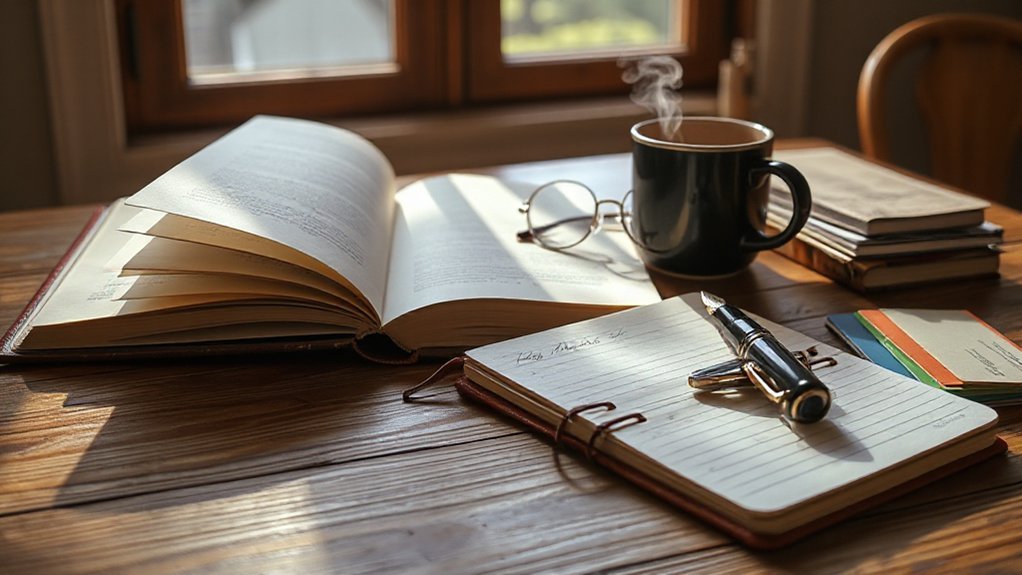
    You’ll want to note the basics first — title, author, edition, and anything else that helps you find the book again, like ISBN or where you picked it up.

    Then jot the core ideas and the takeaways that hit you, the stuff you’ll actually quote or argue with later; I’m talking the spine-tingle lines and the “aha” points, not every paragraph.

    Keep it quick, tactile — fingers on the spine, a sniff of paper, a one-line verdict — and you’ll thank yourself when you need that memory.

    Key Bibliographic Details

    Think of this as your book’s ID card—small, honest, and suspiciously useful. I want you to grab the basics, in modern, flexible bibliographic formats, those essential details that let you find, cite, and revisit a book without drama.

    Jot them down like you’re labeling jars in a future lab: clear, fast, proud. You’ll thank me when you search.

    • Title, subtitle, and edition — the full name, please, not your shorthand.
    • Author(s) and contributor roles — voice, editor, translator, whoever mattered.
    • Publisher, publication year, ISBN/ASIN — the serial fingerprints, crisp.
    • Format, page count, language, and cover image link — tactile, visual cues that stick.

    Core Ideas & Takeaways

    Ideas matter more than metadata. You’ll jot the central thesis, the argument arc, and the one sentence that made you sit up and spill your coffee.

    I tell you, capture personal insights, the aha moments, and the parts that tugged at your gut. Note practical steps, experiments to try, and warnings you’ll thank yourself for later.

    Use quick memory techniques—mnemonics, vivid images, a sticky phrase—and sketch a tiny scene where the idea applies, smell, sound, and all.

    I’ll nudge you to write a one-line action, a follow-up date, and a rating that actually means something.

    Keep it compact, tactile, slightly witty. You’ll remember more, apply faster, and look smarter in meetings—no cape required.

    Quick Methods for Recording Reading Progress

    quick fun reading tracking

    If you want to catch your reading streak without turning it into a spreadsheet obsession, start with tiny habits that feel more like snacks than a full meal.

    I’ll show you quick, quirky ways to track books, because your reading habits deserve simplicity, not bureaucracy.

    Tap, jot, or snap — do what feels fun. Keep it tactile, make it visible, and let novelty stick.

    • note the page or chapter on a sticky, like a Post-it breadcrumb
    • take a 5-second photo of your spot in the book, store in a “reads” folder
    • log titles with one-word emojis in a notes app, for instant mood tracking
    • set a daily 5-minute timer, mark a check when you finish it

    These tracking techniques keep momentum, and they’re delightfully low-effort.

    Techniques to Extract and Preserve Key Takeaways

    extract and preserve takeaways

    You want the meat, not the crumbs, so start by spotting and capturing the core ideas as you read—underline a line, snap a photo, or whisper the takeaway to yourself like it’s a guilty secret.

    Then turn those sparks into durable notes: make a one-sentence summary, add a single example, and file it where you’ll actually find it later.

    I’ll show you tricks that keep the good stuff from evaporating, so your future self won’t think you were reading hieroglyphs.

    Capture Core Ideas

    Because your brain won’t happily babysit every clever line, you need a system that grabs the good stuff before it evaporates—so let’s catch it like a butterfly, not a soap bubble.

    I want you to snag core concepts and memorable quotes as soon as they land, feel them between your fingers, and pin them down with a quick label.

    Read with a pen, whisper a one-line summary, snap a photo if you must. Turn each capture into a tiny artifact: raw, vivid, usable.

    • write a one-sentence essence, bold and tiny
    • note where it sits, scene and page, sensory detail
    • copy crisp memorable quotes, attribution, context
    • tag by theme, problem, and next experiment

    Do it fast, do it playfully, make capture a ritual.

    Create Durable Notes

    Nice captures — now let’s make them last. I’ll show you how to turn fleeting insights into durable notes, with smart note taking strategies that actually survive your next caffeine crash.

    First, extract one clear takeaway per note, write it bold and short, then add a 1–2 sentence context: who said it, why it matters, one real-world use.

    Use durable formats: plain text files, indexed cards, or searchable markdown, anything that won’t vanish with an app update. Tag aggressively, link ideas, and date every entry.

    I talk to my future self in tiny prompts — “Use this when…” — and you should too. It’s low drama, high payoff. Keep it tactile, tidy, and a little cheeky.

    Writing Short, Useful Review Notes
    short effective review techniques

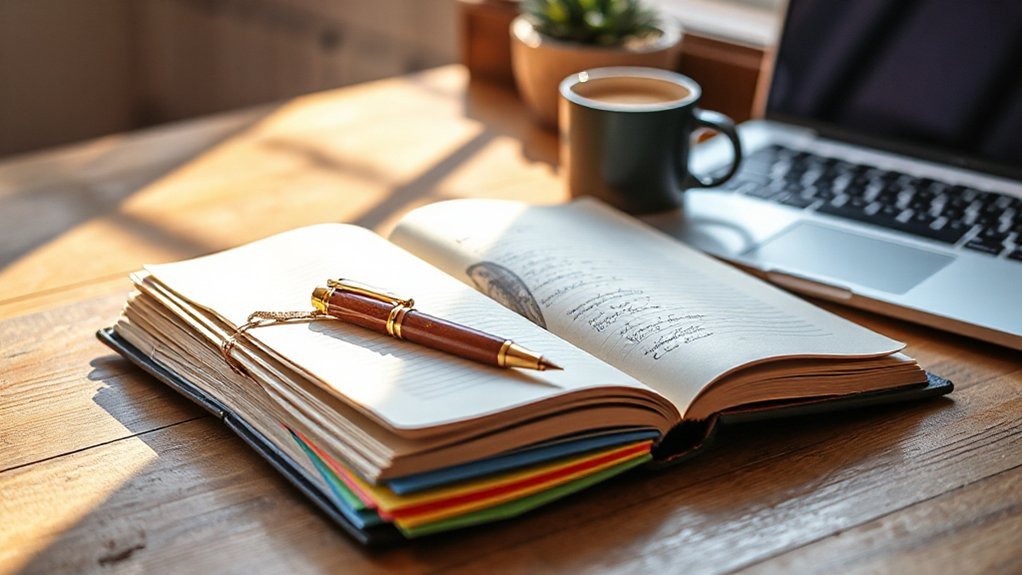
    Grab a pen or tap your phone, because short reviews are tiny experiments in clarity that save you hours later; I’ll show you how to write them so they actually stick.

    You want review techniques that snap into place, note taking methods that don’t bog you down. I’ll walk you through quick rhythms, sensory nudges, and one-line judgments that feel honest.

    • State the core idea in one sentence, like a neon sign, bright and ruthless.
    • Note one vivid image or quote, so memory smells like coffee and rain.
    • List one action you’ll take, practical and oddly thrilling.
    • Rate urgency and usefulness, two tiny knobs that tell future-you what matters.

    Do this after reading, not weeks later, and you’ll actually remember.

    Organizing Your Notes for Easy Retrieval
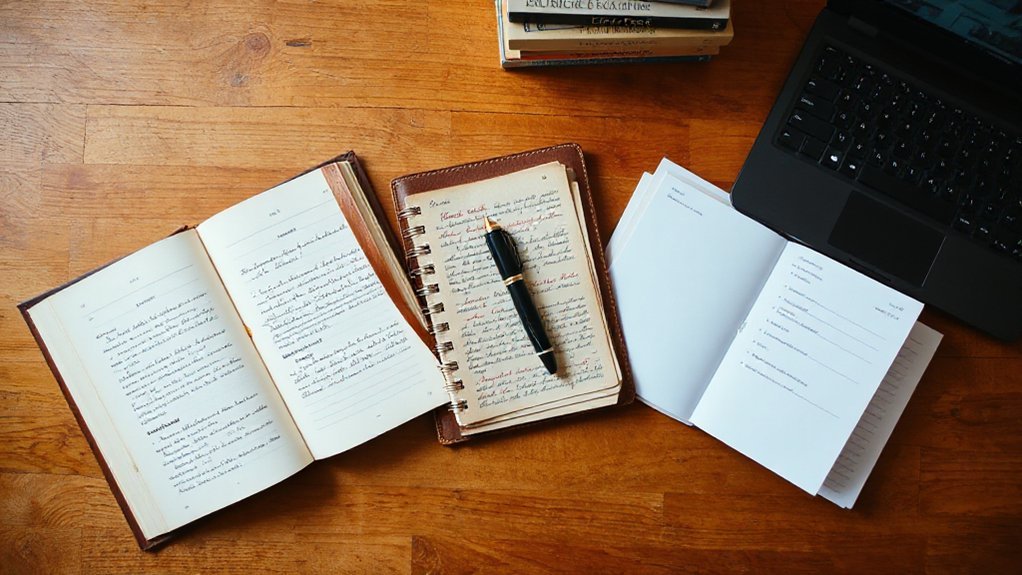
    organized notes enhance retrieval

    If you want to actually find that brilliant note you scribbled last spring, you’ve got to treat your reading notes like a tiny, organized crime scene—evidence labeled, photos taken, and the single smoking clue highlighted.

    I tell you this because chaos hides ideas. You’ll separate the juicy lines from the filler, stack pages by book and purpose, and scan or snap clear images, so nothing fades.

    Use simple folders, timestamps, and a consistent naming rhythm; it feels nerdy, and yes, it works. I create quick indexes, sticky previews, and one-line summaries you can skim in five seconds.

    Those small rituals are your retrieval strategies, your daily rescue kit. Trust the system, it’ll return favors when inspiration knocks.

    Using Tags, Categories, and Metadata Effectively

    effective tagging and categorization

    When you tag a note, don’t just toss on whatever feels clever in the moment — think like a librarian who also likes tacos. I tell you this because tagging strategies and metadata usage save time, and they make your archive feel alive.

    You’ll name tags with purpose, combine broad categories with micro-tags, and smell the paper — or at least pretend to — as you decide where a thought belongs.

    • Use hierarchical categories for big themes, micro-tags for sharp insights.
    • Apply consistent metadata fields: author, genre, page, mood, takeaway.
    • Limit tags to a functional set, prune monthly, keep it lean.
    • Link tags to projects, so notes become usable, not just sentimental clutter.

    You’ll build a system that sparks discovery, not chaos.

    Reviewing and Revisiting Your Reading Archive

    review revisit reflect rediscover

    Think of your archive like a sun-warmed attic trunk that still smells faintly of ink and dust; I’m going to help you pry it open without sneezing on the good stuff.

    You’ll flip through past notes, skim headlines, and pull up patterns in your reading habits, looking for sparks and blind spots. I’ll nudge you to sample old highlights, recatalog sudden obsessions, and replay memorable lines aloud, because sound wakes fresh angles.

    Use simple archival strategies: set a quarterly ritual, mark revisit-worthy books, and jot a one-sentence update after re-reads.

    You’ll get surprised, groan at trends you’d sworn you’d outgrown, and laugh at the you who thought footnotes were optional.

    It’s curator work, and it’s oddly joyful.

    Tools and Apps That Make Tracking Easier

    helpful reading tracking tools

    You’ve emptied the attic trunk and spread the papers on the kitchen table; now let’s give those memories a home that doesn’t involve sticky notes or a scribbled index card shoved in a paperback.

    I want you to choose reading apps and tracking tools that feel like helpful friends, not needy roommates. You’ll snap a cover photo, tag mood and moment, and the app whispers, “You got this.”

    I’ll admit I once labeled a thriller “probably important” — don’t be me.

    • Use a minimalist reading app for quick logs, star ratings, and short notes.
    • Try a calendar-style tracker to spot rhythms, and gaps.
    • Pick tools with export options for future tinkering.
    • Prefer apps with incremental prompts, not nagging notifications.

  • How to Start Reading Again After Years of Not Picking Up a Book

    How to Start Reading Again After Years of Not Picking Up a Book

    You’ve drifted away from books, and that’s okay — I’ve done it too, more than once, with dust on the spines to prove it; start by stealing five minutes on the couch, make a tiny, cozy corner with a lamp that smells faintly of old paper, pick something short and juicy, and don’t pretend you’ll finish an epic tonight — let the words creep back like a friendly cat, purring in your lap, and I’ll show you how to turn those five minutes into a habit that actually sticks.

    Key Takeaways

    • Start tiny: commit to five minutes or one paragraph daily to remove pressure and build consistency.
    • Choose joy over prestige: sample genres and skip books that don’t hook you in the first pages.
    • Create a cozy, distraction-free reading spot and a simple cue like morning coffee or bedtime light.
    • Use audiobooks and two-page sessions during commutes or breaks to fit reading into busy days.
    • Track tiny wins (minutes or pages) and celebrate progress with small rewards or a reading buddy.

    Why Reading Again Is Easier Than You Think

    reading is forgiving and fun

    Even if it’s been years since you cracked a spine, you can jump back in without ceremony or guilt — really. I’ll tell you straight: reading benefits are immediate, subtle, and delightfully nerdy. You’ll feel pages under your fingers, smell ink and dust, notice your heart slow. Your brain perks up, mental stimulation arrives like strong coffee for thought.

    You don’t need a ritual, a perfect chair, or sacred silence. Start with a sentence that hooks, keep going, pause, come back. I’ll admit, I’ve abandoned trilogies mid-battle, then returned triumphant, slightly ashamed, mostly wiser. It’s forgiving.

    You learn faster when you play, when experiments replace pressure. So test formats, genres, times of day, and celebrate small victories with a smug grin.

    Start Small: Habits That Actually Stick

    start small celebrate wins

    If you want reading to become a habit, start so small it feels almost ridiculous — five minutes, one page, or even a single sentence at bedtime. I promise, you’ll surprise yourself.

    Pick a bright corner, feel the paper, hear the soft flip. Set a tiny alarm, tell a friend, or join micro reading challenges, and watch momentum trickle in.

    Choose a sunny nook, savor the paper and page-turn, set a tiny alarm, and let momentum build.

    Don’t overcommit. Celebrate the tiny wins, with a goofy fist pump if you must. I stash a sticky note on my mug, and that silly cue works.

    Try a mini-book club with one fellow experimenter — quick check-ins, no pressure. Keep adjustments playful, iterate like a startup.

    Habit-building is design work, tactile and strangely joyful, and yes, it really does stick.

    Choosing Books You’ll Finish and Enjoy

    choose books that resonate

    How do you pick a book you’ll actually finish without scrolling five pages of reviews and then crying into your tea? I tell you, you don’t need a PhD in reading.

    Try a brisk experiment: pick two mini samples, sniff the prose like it’s coffee, taste the voice, note whether your chest tightens or your feet tap. Use genre exploration like a lab tool, mix familiar comfort with one wild card.

    List three personal preferences — pace, humor, subject — and toss anything that clashes. Read the first chapter standing, then sitting, see which feels electric.

    If a sentence makes you laugh or reach for a highlighter, it’s a keeper. Quit guilt, not books. Finish the ones that spark you.

    Making Reading Fit Your Daily Life

    reading habits for joy

    You’ve just learned to pick books that don’t make you sigh into your tea, so now let’s make those wins live in your messy, beautiful life.

    I’ll show you quick hacks to sneak pages into real days, no temple-like devotion required.

    Think tiny, inventive moves that respect time management and spark joy.

    Make tiny, playful habits that honor your time and spark joy—reading as a cheerful, doable upgrade to your day.

    1. Morning 10: read one vivid paragraph with coffee steam in your face.
    2. Commute swap: audiobook chapters instead of doomscrolling.
    3. Snack-break ritual: two pages, a playlist, a practiced deep breath.
    4. Bedtime buffer: lights dim, phone off, bookmark waiting.

    You’ll build reading rituals that feel like upgrades.

    You’ll surprise yourself. I promise, future-you thanks current-you with a smug smile.

    Staying Motivated and Measuring Progress

    set goals celebrate victories

    Because wins feel better when you can actually see them, let’s make progress something you can taste, tap, and brag about—quietly, like a responsible adult who still owns a stack of overdue library books.

    I tell you to set crisp reading goals, not vague dreams; pick page counts, minutes, or chapters, then log them on a bright app or a sticky note that gets shoved on your fridge.

    Celebrate small victories with a cup of coffee you really savor, or a five-minute victory dance that embarrasses only you.

    Use accountability partners who text you a weekly check-in, or join a tiny club that cheers when you finish a chapter.

    Track, tweak, repeat — and watch momentum grow, slow-brewed and irresistible.

  • How to Read More Books When You’re Always Busy

    How to Read More Books When You’re Always Busy

    Like a secret pocket in your coat, tiny minutes hide everywhere—use them. You’re juggling meetings, laundry, and a brain that hums podcasts; I get it, I’ve been there, smudged coffee cup in hand. Swap ten scrolling minutes for a page, queue audiobooks for commutes, and stash a slim paperback by the kettle; small wins stack. Stick with books that match your energy, celebrate tiny finishes, and I’ll show you how to turn pockets of time into steady progress—next up: practical tricks.

    Key Takeaways

    • Set tiny, specific reading goals (one page or five minutes) tied to a cue, time, and place to make progress automatic.
    • Replace short phone checks with five-minute micro-reading sessions or a quick chapter to capture spare moments.
    • Match book choice to your energy: pick light, engaging reads when tired and dense books when focused.
    • Use audiobooks on commutes, chores, or workouts and keep an ebook backup for unexpected waits.
    • Track small wins (pages, minutes, chapters) and reward progress to sustain momentum and build habit.

    Rethink Your Reading Goals to Fit Real Life

    rethink realistic reading goals

    If you’re still chasing a 52-books-a-year badge because someone on social media makes it look effortless, stop—seriously, drop the bag of arbitrary pressure and sit down. I tell you this while sipping too-sweet coffee, and I mean it: set realistic expectations, not internet flexes.

    Sketch flexible schedules, carve neat time blocks, and pick manageable chapters so reading feels bite-sized, not brutal. Mix diverse genres and varied formats — audio for commutes, paper for porch pages — to keep curiosity humming.

    Focused reading beats frantic skimming; prioritize enjoyment factor, not page count. Try daily reflections, jot one-sentence takeaways, invite social accountability with a friend who actually shows up. You’ll read more, and you’ll like it.

    Use Micro-Reading Sessions Throughout the Day

    micro reading for progress

    Try five minutes—no, really—because those tiny pockets of time are secret reading gold. You grab your phone, but don’t doom-scroll; open a chapter instead, feel the paper or cool glass under your thumb, inhale a quick story zap.

    I teach micro reading techniques that slice books into bite-sized missions, so you can build pages like pixels. Set alarms, stash a slim paperback by the kettle, whisper a page during a coffee pause. It’s effective time management, turned playful.

    You’ll surprise yourself, closing a chapter between emails, smirking at how manageable progress feels. I promise you’ll read more without rearranging your life, just stealing delightful seconds, savoring sentences, and laughing that you ever thought you needed hours to learn something new.

    Make the Most of Commutes and Waiting Time

    transform commutes into reading

    While the subway coughs and the bus grinds its brakes, you can turn that whole groaning commute into a tiny, sacred library; I do it every morning, earbuds in, paperback tucked like contraband, savoring the way pages whisper under my thumb.

    You scan for pockets of time, choose commute strategies that fit your rhythm — audiobook for noisy rides, pocket novel for standing-room only, an app for five-minute chapters.

    Waiting activities become deliberate: you read a paragraph while the kettle boils, finish a scene in the doctor’s lobby, steal a page at red lights (hands off the wheel, obviously).

    You experiment, adapt, keep a backup ebook for dead-battery days. It feels a little rebellious, and it works.

    Prioritize Books That Match Your Energy Levels

    match books to energy

    Because your brain isn’t a luxury bookstore open 24/7, you shouldn’t force dense tomes on it when it’s running on fumes — I’ve learned that the hard, delightful way.

    You scan your shelf like a DJ reading a crowd, picking bright, upbeat pieces when you’re wired, quiet essays when you’re mellow. Energy alignment matters — match the book to your pulse.

    When your mind buzzes, grab smart, snackable chapters, witty non-fiction, or illustrated essays that feel electric. When you’re soothed, slide into slow fiction, lyrical memoirs, the kind that smell like rain.

    Try mood matching as a tiny experiment: two pages of comedy on a bad morning, ten pages of depth on a calm night. You’ll read more, without martyring joy.

    Turn Audiobooks Into Productive, Hands-Free Reading

    hands free audiobook learning

    Ever find yourself with ten minutes, two hands full of grocery bags, and a nagging impulse to read something other than cereal boxes? I do too, and that’s where audiobook benefits shine.

    Slip on earbuds, hit play, and suddenly you’ve got hands free learning while peeling lettuce, folding shirts, or commuting. You’ll catch crisp narration, scene sounds, even character voices — it’s sensory reading without pages.

    I speed up to 1.25x when I’m enthusiastic, slow down for meatier passages, and bookmark brilliant lines with a tap. Use smart speakers for room-wide listening, queue chapters for bite-size sessions, and mix nonfiction with fiction to stay fresh.

    It’s clever, pragmatic, slightly indulgent, and way more readable than a cereal box.

    Build a Simple Daily or Weekly Reading Habit

    build tiny reading habits

    If you want to actually finish books, don’t wait for motivation to show up like a polite guest — build a tiny habit instead. I tell you this because grand plans stall, but five focused minutes don’t.

    Pick a cue: morning coffee steam, elevator ding, or bedtime lamp click. Make it simple, so you can’t argue with it. Track it, celebrate tiny wins, tweak after a week.

    Your reading routines become scaffolding for better work and bold ideas. Treat daily rituals like lab experiments: measure, iterate, repeat. Read one page, then two, then a chapter.

    I keep a sticky note and a timer, and yes, I bribe myself with a silly sticker once in a while. You’re designing momentum, not heroics.

    Combine Reading With Other Low-Effort Activities

    combine reading with activities

    I’ll bet you can squeeze more books into your life without becoming a hermit, so try listening on your commute—feel the city hum, earbuds in, a plot unfolding while traffic crawls.

    Fold reading into chores, too: pages or audiobooks keep your hands busy with dishes or laundry and your brain happily occupied, like a clever sidekick.

    And for workouts, swap a playlist for an audiobook, let narration time your intervals, and pretend you’re getting smarter while you sweat.

    Listen While Commuting

    Usually you already have reading time hiding in plain sight — your commute. I’ll admit, I used to stare out the window, counting brake lights. Don’t. Swap that dead time for smart listening, and you’ll feel like you’ve hacked the day.

    Pick formats that suit your audio preferences — full audiobooks, narrated summaries, or fiction podcasts. Notice the commuting benefits immediately: less guilt, more ideas, and a calmer morning pulse. I plug in, adjust volume, and let narration paint scenes while the city blurs past.

    If your brain wants rest, choose soothing nonfiction; if it craves sparks, grab a cinematic novel. Test speeds, bookmarks, and quick rewind. You’ll arrive smarter, happier, and odd looks from drivers won’t bother you anymore.

    Read During Chores

    You can sneak pages into dish duty and laundry like a tiny, delightful heist. I tuck a slim paperback by the sink, feel the warm suds, flip a page between rinses, then sprint back to the plot while the kettle hums.

    You’ll invent pockets of time, combine reading multitasking with tidy chores, and feel clever doing it. Let a cookbook or short-story collection ride the dryer, smell of fabric softener grounding you.

    These productive distractions turn folding into focus, sweeping into savoring. Talk aloud to a character when you’re alone—yes, people will judge, but you’ll laugh.

    Start small, stack five-minute sprints, and watch pages add up. It’s simple, slightly sneaky, and oddly revolutionary.

    Audiobooks for Workouts

    Some people sweat it out with music; I let stories do the heavy lifting. You clip in earbuds, start an audiobook playlist, and suddenly your jog has a plot twist. You’ll outrun boredom and keep pace with ideas, not just calories.

    Pick tense narration for sprints, mellow nonfiction for cool-downs, mix chapters like intervals. The voice on your run becomes a trainer and a teacher, boosting workout motivation without a pep talk that smells like a gym.

    I’ll admit, I once laughed so hard mid-stride I startled a dog. Small price to pay. Swap playlists, speed up narration, bookmark scenes to revisit.

    You combine fitness with reading, save time, and actually look forward to lacing up.

    Choose Formats and Tools That Reduce Friction

    choose formats reduce friction

    Pick two formats and ditch the rest — seriously, I’ve learned that the fewer choices I face, the more reading actually happens.

    You’ll pick one tactile and one pocketable: a paperback for slow, focused afternoons, and an e-reader for subway bursts.

    I love e-reader benefits — crisp fonts, no glare, instant page-syncing. Your digital libraries become treasure chests, ready whenever you have two free minutes.

    Keep apps minimal, silence nonessential notifications, and stash one pair of earbuds in every bag.

    Say it out loud: “One book, two ways.”

    I joke, I fail, I reorganize. That’s fine. The point is frictionless access.

    When grabbing a story feels as easy as breathing, you’ll read more, enjoy it more, and actually finish stuff.

    Track Progress and Celebrate Small Wins

    celebrate small victories daily

    You set a tiny, measurable goal—one chapter, ten pages, or twenty minutes—and you’ll surprise yourself by how often you hit it.

    I’ll cheer you on with small rewards, a celebratory coffee, a sticker on a chart, or a smug post-it on your fridge, because winning should taste like something.

    Keep a simple tracker, watch the streak grow, and feel that quiet, satisfying click each time you stack another little victory.

    Set Measurable Mini-Goals

    Set a tiny target, then beat it—and yes, I mean tiny, like “read one page” tiny—because nothing wakes the brain like a quick win.

    I tell you this because goal setting isn’t grand speeches; it’s bite-size experiments. Pick a cue, time, and place: coffee table, five minutes, page one. Track it, note measurable milestones — pages, chapters, minutes — and watch a digital tick or scribbled tally feel like rocket fuel.

    You’ll get momentum fast. I like to imagine the paper scent, hear the soft page flip, feel that smug grin.

    If you miss a day, shrug, recalibrate, shrink the target. Repeat. Tiny wins snowball into habits, and suddenly you’re finishing books you only used to admire.

    Reward Progress Regularly

    Nice work getting those tiny wins—now let’s make sure you notice them. I tell you this because your brain loves reading milestones, it smells progress and sticks with habits.

    Track pages, chapters, or minutes, then celebrate with tiny rituals: a strong coffee, a five-minute stretch, a victory gif. I clap, loudly in my head, when I hit a goal, and you should too.

    Positive reinforcement rewires your routine, makes reading feel delicious, not dutiful. Set a visual tracker, a sticker chart, or a sleek app, watch colors fill in, feel the small rush.

    Say aloud, “I did that,” then reward yourself, sincere and a little smug. Keep it fun, keep it obvious, and you’ll read more, easily.

    Create an Environment That Encourages Consistent Reading

    create a cozy reading nook

    If your reading habit feels like a guilty snack you hide in the pantry, make the pantry actually delightful — I promise it helps.

    You design a reading nook with cozy ambiance, declutter space, add calming colors, and make lighting adjustments that flatter the page.

    I tell you, comfortable seating matters — no one reads slumped like a wilted lettuce.

    Turn it into a distraction free zone: silence the phone, stash chargers, close the door.

    Build a mini personal library within arm’s reach, spine-to-spine comfort, the smell of paper like a low-key perfume.

    I’ll nag you gently: set a ritual, brew something, place a timer.

    Small scenes, big wins. Commit to this lab, experiment boldly, and watch your reading consistency become inevitable.

  • How to Choose the Best Book to Read Next (Without Overthinking)

    How to Choose the Best Book to Read Next (Without Overthinking)

    Like a key you can’t find, choosing a book wastes time until you stop pretending you need a perfect fit; I’ll show you how to pick fast, with a little whim, a shrug, and a plan. You’re tired of indecision, so we’ll match mood to length, pick one goal, and give yourself a painless escape hatch—think tiny rituals, not a dramatic life change—so you actually start, and maybe finish, something worth your time.

    Key Takeaways

    • Pick one reading purpose (escape, learn, feel connected) to narrow choices quickly.
    • Match book length to your available time: short stories for minutes, novels for travel or weekends.
    • Choose by mood bucket (Quick Fun, Thorough Exploration, Cozy Comfort) and let that guide selection.
    • Use a 50-page or three-chapter exit rule and abandon without guilt if it doesn’t engage.
    • Start small: trust one recommendation, set a 3–5 minute decision limit, and read one page to begin.

    Clarify What You Want Right Now

    clarify your reading preferences

    Wondering what you actually want to read right now? You lean back, thumb tapping a bright screen, and I tell you to start small.

    Name your reading preferences out loud, loud enough that you hear the shape of them — brisk plots, dense ideas, or cozy scenes. Pin down personal interests too, the threads that light you up: tech, travel, true crime, or tiny acts of kindness.

    Smell the paper, or imagine the page glow. Ask: do I want escape, skill, or company? Say yes to one, no to the rest.

    I nudge you to pick a page count that feels like a wink, not a chore, and promise you’ll switch if it doesn’t fit, no guilt.

    Match Book Length and Commitment to Your Schedule

    match reading time wisely

    How long do you actually have between meetings, naps, and snacks? I check my calendar, squint, then pick a book length that fits the gaps.

    You’ll stop starting epics when you’ve got ten-minute windows, and you’ll savor a chunkier read when a weekend opens. Match book length to your available time, and be honest about the time commitment you want.

    • Scan chapter lengths, like skimming a menu, pick portions that match your appetite.
    • Try short stories or essays for bite-sized wins, they give momentum and dopamine.
    • Reserve long novels for travel days, lazy mornings, or deliberate commitments.
    • Mix formats: audio for walks, e-books for naps, paper for rituals, keep it playful and intentional.

    Use Three Simple Mood Categories

    sort books by mood

    If you’re juggling mood, time, and the nagging urge to start three books at once, try sorting your options into just three mood buckets — Quick Fun, Thorough Exploration, and Cozy Comfort — and watch decision paralysis evaporate.

    I tell you to scan covers, sniff the new-paper smell, and feel the heft; those are honest mood indicators. Tap into your reading preferences, note if you want fast laughs, in-depth explorations, or a warm lap-by-the-fire read.

    I’ll joke that your inner librarian is a ruthless sorter, but it works: Quick Fun for short bursts, Thorough Exploration when you’ve got brainspace, Cozy Comfort for slow evenings.

    Pick the bucket that matches the room you’re in, and let the book choose you.

    Pick One Goal for This Read

    choose one clear goal

    Which single thing do you want this book to do for you? You pick one reading purpose, and everything gets simpler.

    I want you to choose a clear goal—spark a new idea, learn one skill, feel less alone, or reset your habits. Say it out loud, feel it in your chest, then let the book earn that promise.

    Choose one clear reading goal—spark, learn, belong, or reset. Say it aloud, feel it, and let the book deliver.

    • Spark a wild idea, lightbulb bright, pages smelling like possibility.
    • Learn one skill, hands-on, dog-eared chapters and practice sessions.
    • Feel less alone, characters whispering like old friends beside you.
    • Reset your habits, small exercises, morning pages, tiny rituals.

    You’re after personal growth, not perfection. Commit, start small, judge later.

    You’ll read with purpose, and you’ll actually finish something.

    Narrow Choices With One Quick Rule

    choose based on mood

    You’re staring at a stack of covers, and I’ll be blunt: pick the one that fits your mood right now — upbeat for messy mornings, slow-burn for rainy evenings.

    Then check the stakes on the flap; if the plot hooks you in the first line with clear danger or desire, it’ll carry you through.

    Trust this tiny rule, I promise it’s kinder than indecision and way faster than scrolling forever.

    Align With Current Mood

    Ever feel like your brain is yelling for a cozy blanket of words or a cold shot of adrenaline? I do, and I learned to let mood influences steer my reading preferences, fast.

    Match the book to how you feel, not how you think you should feel. Trust the quick rule: pick the vibe.

    • If you’re tired, grab something gentle, tactile, slow-burning.
    • If you’re wired, choose crisp chapters, sharp dialogue, high stakes.
    • If you want wonder, pick sensory world-building that smells like rain.
    • If you need comfort, pick familiar rhythms, warm humor, small victories.

    I keep it playful, like flipping a switch. One mood, one choice. It’s simple, effective, and saves you from scrolling into paralysis.

    Prioritize Clear Stakes

    Stakes are your reading GPS, and I swear by the tiny mercy of a clear deadline: if the book doesn’t tell me what’s at risk in the first few chapters, I close it like a bored cashier slamming a register.

    You want momentum, so look for stake importance immediately — a ticking clock, a relationship on the line, knowledge you’ll miss if you don’t finish.

    Hold books up to a stakes comparison: which one threatens more loss, promises bigger gain, or forces you to act?

    Say it out loud, compare the gut-punches, feel the tension like a string under your fingertips.

    Pick the one that tightens the chest, not the one that nibbles politely.

    I do this, you’ll thank me later, promise.

    Trust a Single Trusted Recommendation

    trust one solid recommendation

    If you’ve ever stood in a bookstore aisle staring at a sea of spines and felt your palms go clammy, good — that’s the exact moment to trust one solid recommendation.

    I tell you, pick one trusted source, trust your taste, and let recommendation filters do the heavy lifting. You’ll cut noise, feel the weight lift, and actually read something.

    • Choose a person, critic, or algorithm you respect, and commit.
    • Use simple recommendation filters: mood, length, risk level, novelty.
    • Ignore the rest of the shelf chatter, breathe, and reach out like you mean it.
    • Buy, borrow, or download that book, and start turning pages.

    You’ll discover speed breeds clarity, and curiosity rewards bold shortcuts.

    Set a Gentle Time Limit to Decide

    gentle time limit decision making

    Alright, you picked a trusted recommendation and felt the pressure lift — good call, high five — now set a gentle time limit so you don’t stand there like a deer in a bookstore spotlight.

    You picked a trusted rec — high five. Set a short timer, skim a chapter, and decide without drama.

    I give myself, and you can too, three to five minutes to scan covers, skim the blurb, smell the paper if that’s your thing, and feel whether the spine tugs.

    It’s a tiny experiment in time management, an anti-decision fatigue trick disguised as a game. Set a timer, whisper to yourself, “Try it for a chapter,” and commit.

    If your pulse says yes, buy it. If not, move on without melodrama.

    You’ll innovate your instincts, trust your taste faster, and actually get reading — which, admit it, feels pretty great.

    Prepare a No-Guilt Exit Strategy

    no guilt book exit

    I tell you to pick a short trial length—say, 50 pages or two afternoons—so you can feel the book, not be married to it.

    Notice the little exit triggers: boredom, confusion, or that sinking “this isn’t me” feeling, and name them out loud so they stop nagging at the back of your head.

    Then make the goodbye easy—bookmark your place, put the book on a “maybe” shelf, and walk away without the melodrama; you’ll thank me, and so will your reading pile.

    Set a Clear Trial Length

    Because you deserve a fair shot and I don’t want you stuck halfway through a book that makes you frown into your tea, give each new read a clear trial length—say, fifty pages, two chapters, or one long subway commute—and actually write that limit down.

    I tell you this because trial duration matters; it keeps choice nimble and preserves reading consistency, which is code for fewer guilty bookmarks. Decide, jot it in your notes app, then treat it as an experiment.

    • Pick a measurable span you can test in a week.
    • Treat the trial like a prototype, not a commitment.
    • Note sensory cues: is the prose slick, sluggish, or electric?
    • Log feels: excitement, boredom, curiosity, or annoyance.

    You’ll iterate fast, learn your taste, and stop dragging dead weight.

    Define Your Exit Triggers

    You’ve set your little trial, scribbled the page count, waited for the prose to sing or sink — good.

    Now you define exit triggers, a tiny manifesto that keeps guilt out of your nightstand. Say aloud your reading criteria: pace, voice, usefulness, or sheer joy.

    If the narrator’s tone grates for three sessions, if the plot stalls past your cutoff, or if you loathe a scene so much you wince, you bail.

    I’ll admit it: leaving feels dramatic, but it’s smart curation. Mark the moment, jot why, shelve it without ceremony.

    You’ll sleep better. You’ll free cognitive space for experiments. Treat the exit strategy like a lab protocol—clear, unemotional, repeatable—and you’ll read braver, not harder.

    Make Leaving Frictionless

    If a book starts feeling like homework, make the exit so easy you hardly notice you left. I tell you this like a lab hack: build tiny, humane exit strategies into your reading habits, so you can pivot without guilt, or melodrama, or drama-queen regret.

    You’ll thank me when you’d rather sketch instead of slog.

    • Mark a checkpoint, close the cover, breathe; pretend you’re pausing a podcast.
    • Swap formats, try an audiobook, or a thread; change texture, change mood.
    • Set a 50-page rule, no shame, just data; if it’s not clicking, move on.
    • Log quick notes, three words, three feelings; you’ll learn fast, trust the trail.

    You’ll keep experimenting, iterate your taste, and enjoy picking books like a playful craftsman.

    Make Starting Easier With Micro-Habits

    start small build momentum

    Let’s strip away the drama and start small — like painfully small. You set the book on your nightstand, crack one page, and call it a win. I promise I won’t roll my eyes; I’ll cheer.

    Micro habit examples: read one paragraph after breakfast, skim a page during coffee, or flip a single page before bed. Those tiny moves slice resistance, build momentum, and make daily reading feel inevitable, not heroic.

    Read one paragraph after breakfast, skim a page with your coffee, or flip a single page before bed — tiny moves, big momentum.

    Picture the soft lamp, the coffee steam, fingers tracing a sentence—comfort fuels curiosity. I talk to you like a lab partner: experiment, tweak, repeat.

    If one paragraph becomes ten, celebrate. If not, adjust. Small wins compound, your stack of finished books grows, and you quietly become the reader you wanted.

  • How To” & Guide Style Titles

    How To” & Guide Style Titles

    You want clicks, not vague promises, so I’ll show you how to write “how to” titles that actually deliver—clear verbs, a sensory hook, and a tiny deadline to spark action. Picture a headline that smells like fresh coffee and feels like a helpful nudge; say it fast, make it useful, and don’t waste words. I’ll walk you through structure, power words, templates, and the sneaky tweaks that lift CTRs—but first, let’s fix the most common headline sin.

    Key Takeaways

    • Start with a clear action verb and a specific outcome (e.g., “Build a 7‑day email welcome sequence”).
    • Promise a tiny, measurable payoff or timeframe to boost relevance and clicks.
    • Keep titles 6–12 words, front-load important keywords, and avoid filler words.
    • Use vivid, sensory verbs or persuasive adjectives to add personality without sounding clickbaity.
    • A/B test two strong variants, track CTR and engagement, then iterate quickly based on results.

    Why “How To” and Guide Titles Drive Clicks

    effective titles drive engagement

    One quick truth: people click when they think they’re about to learn something useful, fast.

    You want results, and “How To” or guide titles promise a roadmap, a smell of coffee and clear steps on the table.

    I’ll tell you bluntly: that promise lifts click through rates, because your reader expects action, not prefab hype.

    You get them reading, and user engagement rises as they follow tangible cues—headlines like a compass, bullets like breadcrumbs.

    You’ll feel clever nudging curiosity, and I’ll chuckle when a plain verb outperforms a flashy adjective.

    Use sensory verbs, tight directions, and a wink of personality; readers will click, stick around, and thank you.

    It’s simple craft, executed with curious, relentless care.

    Matching Title Structure to Search Intent

    craft titles for intent

    You’ve got the promise part nailed—“How To” makes readers lean in—but now you’ve got to match that promise to what they actually want when they type a query.

    You’ll study search behavior like a detective, listening for verbs, urgency, and intent—are they learning, buying, or troubleshooting?

    Then you’ll shape title relevance to fit: teach, fix, compare, or inspire. Picture users tapping screens, squinting at results, breathing relief when they spot your clear offer.

    Shape titles to teach, fix, compare, or inspire — make users pause, click, and feel instantly understood.

    I’ll admit, I obsess over tiny words — they steer clicks. Use specific outcomes, timeframes, and audience cues; cut fluff.

    Match tone too, whether casual or clinical. Do this, and your “How To” becomes the obvious click, not a guess.

    Elements of an Effective “How To” Headline

    engaging clear actionable headlines

    Three tiny ingredients turn a bland “How To” into a headline people actually click: clarity, consequence, and a pinch of personality.

    I’ll show you how to blend them, so your titles pop off the page, smell like fresh ideas, and promise real results.

    Keep your effective phrasing tight, use engaging verbs that move readers toward action, and paint one crisp outcome.

    Don’t waffle, don’t hide the payoff. Imagine a neon sign flashing benefit, you reach for it.

    Swap passive fluff for verbs that pull—build, fix, transform—then add a human twist, a wink, a little audacity.

    You’ll write headlines that feel clever, useful, and urgent, ones you’d click at 2 a.m., when inspiration bites and coffee still helps.

    Power Words and Phrasing That Boost Engagement

    boost engagement with words

    A little vocabulary tweak can flip a sleepy headline into something that practically tugs readers through the screen, and I’m going to show you which words do the heavy lifting.

    You’ll swap bland phrasing for engaging verbs and persuasive adjectives that snap, sizzling with clarity.

    I talk like a coworker over coffee, pointing at the screen, nudging you to try bold verbs, crisp descriptors, sensory hooks, and tiny surprises that pull attention.

    • Use visceral verbs: ignite, slice, morph.
    • Pick persuasive adjectives: effortless, jaw-dropping, essential.
    • Lead with action: show, build, transform.
    • Add a sensory detail: hear, taste, feel.
    • Insert a tiny promise: faster, safer, smarter.

    Try one tweak, watch clicks rise, grin when it works.

    Optimizing Length, Keywords, and Readability

    title optimization techniques explained

    You want titles that hit the sweet spot — long enough to tell a story, short enough to read in a glance, and juicy where it counts.

    I’ll show you where to tuck keywords so search engines and real people both nod, and we’ll trim excess words until the title snaps.

    Picture me under a desk, scissors in hand, cutting clutter while I whisper the perfect 50-70 character secret.

    Optimal Title Length

    Let’s cut to the chase: I don’t pad titles for fun, and neither should you—shorter feels sharper, reads faster, and grabs attention like a neon sign in fog.

    You want an ideal word count that balances punch with clarity, and you care about title readability so people actually click. I’ll tell you what works, why it sings, and how to trim without losing meaning.

    Picture a headline that snaps, not snores — you can smell the coffee, hear the tap of keys, and see the link light up.

    • Aim for 6–12 words, tight and focused.
    • Use concrete verbs, ditch fluff.
    • Keep important words up front.
    • Test variants, read aloud.
    • Respect context: platform matters.

    Keyword Placement Strategies

    Think of keyword placement like seasoning—too little and the title’s bland, too much and you choke. I want you to place primary terms up front, so readers and algorithms sniff them first.

    You’ll tuck supporting words later, keeping rhythm and readability, while practicing tasteful keyword integration that feels natural. Say the main benefit early, sprinkle modifiers after, and avoid awkward stuffing that makes you cringe.

    I’ll admit, I’ve bungled titles, but I learned: clarity wins clicks. Test variants, read them aloud, notice cadence, trim clunky bits.

    Aim for search visibility without sounding robotic; think human ears, not just bots. You’ll craft titles that pop, lure curiosity, and still rank — sleek, clever, and useful.

    Templates for Different Content Types and Audiences

    content templates for audiences

    You’ll want a handful of go-to templates — short how-to lines for blog posts, punchy listicle starters for quick reads, and formal guide frames for whitepapers — so you’re not guessing mid-write.

    I’ll show you how to tweak tone and word choice for each audience, swapping slang and bright verbs for clearer, calmer phrasing when you need to talk to executives, or adding playful beats for casual readers.

    Picture me handing you a recipe card, we riff on it, you try it, and we tweak until the title smells just right.

    Template Types by Format

    Templates are your backstage pass — a tidy blueprint that turns chaos into something you can actually finish before lunch.

    I’ll show you how template variations and format differences steer your work, so you pick the right one fast. You’ll see layouts that sing on screen, print, or in a slide deck, and you’ll feel the difference when things click.

    • One-page cheat sheet, quick skim, instant action
    • Long-form guide, thorough explorations, tactile footnotes
    • Slide deck layout, punchy visuals, tight pacing
    • Social post template, bold hooks, snackable beats
    • Email sequence format, sequenced touches, measurable nudges

    You’ll touch, tweak, ship. I’ll wink, you’ll win, repeat.

    Audience-Specific Language

    Who are you really writing for — the tired intern racing the clock, the skeptical C-suite exec who drinks coffee like a dare, or the parent scrolling between PTA posts and bedtime stories?

    I tell you this because audience personas shape everything; they dictate your language tone, the jokes you risk, the examples you use.

    Picture the intern: fast verbs, snackable bullets, a neon-highlighted takeaway.

    Imagine the exec: crisp numbers, bold headers, a confident one-liner that lands.

    See the parent: empathetic as a hug, practical steps you can do between chores.

    You’ll switch templates, like changing lenses, to match attention span and stakes.

    I joke, I test, I tweak until the template sings — clear, bold, and oddly human.

    A/B Testing and Measuring Headline Performance

    a b testing for headlines

    Ever wonder which headline actually grabs attention — the clever one, the clear one, or the weird one that makes people blink? You’ll run A/B testing like a curious scientist, toss two headlines into the ring, and watch clicks, scrolls, and time-on-page tell the tale.

    Track performance metrics, don’t guess. I’ll cheerlead, and nudge you to test boldly, iterate fast, and savor surprising winners.

    • Test small changes first, like verbs or punctuation.
    • Measure CTR, bounce rate, engagement, and conversion.
    • Rotate variants to avoid audience fatigue.
    • Segment by device, source, and audience persona.
    • Use statistical significance, but don’t let it paralyze action.

    You’ll learn quickly, tweak smarter, and headline like a pro.

    Common Mistakes and Quick Fixes

    revise headlines for clarity

    If you’ve ever watched your headline flop like a pancake off a spatula, don’t worry — I’ve burned breakfast plenty of times, too.

    You’ll spot common title mistakes fast if you listen: vagueness, jargon, clickbait that smells cheap. I’ll show quick fixes you can do in minutes. Trim words, add a promise, swap a boring verb for a vivid one, test numbers and benefits.

    Watch for phrasing pitfalls—awkward order, passive voice, stuffed keywords—and yank them out like weeds. Rewrite aloud, taste the rhythm, cut what drags.

    Sniff out awkward phrasing and passive voice—speak headlines aloud, trim the dead weight, let rhythm lead.

    Try A/B pairs, measure clicks, then repeat. You’ll learn to craft bold, nimble headlines that pop, pull readers in, and don’t pretend to be something they’re not.

  • Best Graphic Novels for People New to Comics

    Best Graphic Novels for People New to Comics

    You want stories that grab you, pictures that pull you in, and pages that don’t demand a manual. I’ll show you cozy mysteries, punchy superheroes, and memoirs that feel like a friend confessing over coffee, and yeah, you’ll laugh and maybe blink away a tear; I’ll also warn you about the dense stuff that’ll make you feel like you missed a bus. Stay with me—there’s a perfect first book waiting to surprise you.

    Key Takeaways

    • Start with standalone graphic novels that tell a complete story without requiring prior continuity or background knowledge.
    • Choose varied genres (mystery, memoir, sci‑fi, fantasy, superhero) to discover which visual storytelling appeals most.
    • Look for clear, readable artwork and panel layouts that guide the eye and clarify pacing.
    • Pick memoirs or true stories for emotional accessibility and relatable, grounded narratives.
    • Try short series or single‑volume reimaginings of familiar heroes for approachable superhero entry points.

    Understanding Graphic Novels: A Beginner’s Guide

    visual storytelling techniques explained

    Even if you’ve only ever judged books by their covers, you’re about to find out why graphic novels slap harder than their paperback cousins.

    You’ll learn graphic novel definitions fast, no jargon fog, just panels, gutters, and pacing. I’ll walk you through visual storytelling techniques that hit like a drumbeat, show not tell, color and angle doing the heavy lifting.

    You’ll see how a close-up makes breath fog on the page, how a splash panel smells like rain, how silence can scream. I poke fun at my own cliffhanger obsession, you nod, we move on.

    Try a page, flip it, feel the rhythm. You’ll get why these books aren’t comics’ awkward cousin, they’re evolution, raw and readable.

    Must-Read Standalone Adventures

    standalone stories with impact

    When you want a story that wraps up cleanly, slams you with feeling, and doesn’t demand you learn a fifty-issue timeline, pick a standalone — they’re the perfect one-sitting thrill.

    When you crave a complete, emotional hit without the backlog—standalones deliver one-sitting thrills.

    I love pointing you to standalone stories that innovate, surprise, and look gorgeous on the page. You’ll taste bold art, crisp plotting, and endings that land.

    1. A bright, cinematic mystery with tactile ink, where you flip a page and hear rain.
    2. A quiet sci‑fi parable that smells like metal and coffee, folding big ideas into a humane hour.
    3. A whimsical, raw adventure with punchy dialogue, color that sings, and a finale that’ll make you grin.

    These graphic novel recommendations are curated for curious readers, who want impact without commitment.

    Powerful Memoirs and True Stories

    true stories and memoirs

    You’ll find true lives in panels here, stories that smell like rain on a crowded street and sound like a friend admitting something wild over coffee.

    I’ll point you to memoir comics to read that hit hard, make you laugh, and sometimes leave you staring at the last page, blinking.

    Stick with me, you’ll meet real people drawn with grit and heart, and yes, I’ll warn you when tissues are required.

    True Lives in Panels

    If graphic novels were a neighborhood, memoirs would be the house with string lights and an honest dog in the yard, the place you wander into because something smells like cinnamon and truth; I’m the nosy neighbor who drags you to the porch and insists these are the stories worth reading first.

    You’ll see lives sketched with care, feel textures under your fingertips, hear a laugh in a gutter panel. I point out how graphic storytelling techniques and panel composition analysis turn memory into motion, make small moments roar.

    1. Read for rhythm, notice beat changes, savor quiet panels like held breaths.
    2. Trust visuals over summary, let images do the heavy lifting.
    3. Start where you feel curiously tender, then binge.

    Memoir Comics to Read

    Let’s wander off the porch and into rooms that smell like old paper and coffee — I’m guiding, but you can bring snacks.

    You’ll find memoir comics that hit like a warm punch, intimate and bold, where personal storytelling folds into art.

    I point you to crisp panels, tactile inks, and pages that echo footsteps. You read someone else’s life, feel their tremor, laugh at their bad haircuts, then blink at a quiet page and realize you’re moved.

    These books use visual narrative to compress time, memory, and scent into a single frame.

    I’ll nudge you toward titles that experiment, that mix diary honesty with cinematic pacing.

    Trust me, these true stories will tease, teach, and stick with you.

    Accessible Superhero Tales

    accessible superhero comic recommendations

    Because superhero stories can feel like a secret club with a weird handshake, I’m steering you straight to the friendlier doors first—comics that welcome you with a smile, not a decoder ring.

    You’ll meet iconic heroes reimagined through modern storytelling, cleanly drawn, emotionally honest, and easy to follow. I’ll hold your hand, crack a joke, then point to the bold panels that pull you in.

    1. Start with a grounded origin, where capes smell like rain and guilt, and the stakes are human.
    2. Pick a title that mixes adventure, humor, and real feelings, panels that sing and pacing that snaps.
    3. Try a short series, sip it like espresso, not a whole vat — you’ll want more.

    Imaginative Fantasy and Science Fiction

    magical realms futuristic domains

    You liked the grounded capes, I know — rain-slick rooftops, guilt that smells faintly of pennies — but now I’m steering you toward domains that yank the rug out from under your feet, in the best way.

    You’ll step into magical realms where trees whisper stock tips, and into futuristic domains where neon tastes like battery acid and regret.

    I’ll hand you books that invent rules, then gleefully break them. Read for the textures, the light on glass, the hiss of airlocks, the warmth of a borrowed spell.

    Expect strange maps, believable stakes, characters who feel both alien and oddly familiar.

    You won’t get lost. I’ll point at the weird stuff, joke when it’s bleak, and push you toward the stories that expand what comics can do.

    Quirky, Humorous Picks to Lighten the Mood

    quirky humor and inventive narratives

    Maybe you need a laugh that doesn’t feel like a slapping cliché, and I’ve got just the weird little detonations for that.

    I talk fast, I wink, and I pick titles that fizz — full of quirky humor and bright, oddball energy. You’ll flip pages smelling fresh ink, snort coffee, and grin at tiny visual jokes that land like a perfect pratfall.

    1. A small-town absurdist romp, where deadpan narration meets vivid, chewy art — it’s playful, inventive, and oddly tender.
    2. A surreal workplace comedy, punchy panels, crisp timing, razor dialogue; you’ll hear the clack of keys and the sigh of relief.
    3. A travelogue of tiny disasters, warm color, quick gags, sincere heart — it’s clever, humane, and surprisingly brave.

    How to Build Your First Graphic Novel Shelf

    smart eclectic graphic novel shelf

    Shelf-building is a joy that smells faintly of new paper and bad coffee, and I’m going to walk you through it like a slightly overenthusiastic bookstore clerk.

    You’ll start by clearing a spot, wiping dust that smells like old stories, and picturing your shelf as a tiny museum. I’ll nag you into smart shelf organization: mix heights, color pops, and leave breathing room.

    For genre selection, don’t hyperfocus — blend memoir, sci-fi, and a goofy indie comic. Put favorites at eye level, experimental stuff above, and comfort reads within reach.

    Label with sticky notes if you must. Touch covers, riffle pages, sip coffee, and adjust. You’ll build a shelf that’s useful, weird, and proudly yours.

  • Best Book-to-Movie Adaptations You Should Read Before Watching

    Best Book-to-Movie Adaptations You Should Read Before Watching

    Like finding a secret track on a favorite album, you’ll want to open the book before the film starts humming. I’ll walk you through classics that change when you turn the page—characters bloom, motives sharpen, and small lines punch harder on the tongue; you’ll smell dust on Atticus’s bookshelf, taste the grit in McCarthy’s West, and feel the chill behind King’s door. Stick around, and I’ll tell you which ones make the movie richer—and which don’t.

    Key Takeaways

    • Read the novel first to appreciate deeper character motivations and quieter psychological details often trimmed in films.
    • Look for omitted scenes and motifs in the book that provide richer themes and emotional texture missing onscreen.
    • Note narrative structure differences—books often shift perspective or pace, changing suspense and reader sympathy.
    • Use the film as a companion piece: adaptations highlight key choices and visuals but simplify inner lives.
    • Prioritize titles known for literary depth (e.g., To Kill a Mockingbird, The Godfather, The Shining, Fight Club).

    To Kill a Mockingbird by Harper Lee

    child s perspective moral lessons

    A courtroom, dusty and sunlit, still snaps me awake whenever I think of To Kill a Mockingbird; I’ll admit I’ve watched the film more than I’ve re-read the book, and I’m not proud of it.

    You’ll get hooked by Scout’s perspective, you’ll feel her small shoes scuffing porch boards, hear her laugh, and you’ll notice moral lessons settling like dust motes in a beam of light.

    I talk to you like a friend who nudges you toward better choices, I point out the film’s bravery, its honest nervousness, the way it makes you squirm and then soften.

    That voice of a child teaches you, shocks you, asks you to act. Take the book first, then watch—don’t cheat yourself.

    The Godfather by Mario Puzo

    mafioso dynamics and loyalty

    You loved Scout’s squeaky shoes and moral scold, now brace yourself for cigar smoke and whispered threats. I’m telling you, read Puzo before you watch. You’ll feel mafioso dynamics in the cadence of a phone call, taste garlic and fear at a dimly lit table, sense family loyalty like a pulse under the tablecloth.

    I guide you through scenes where conversations are violence, silence is strategy, and loyalty buys safety or doom. Picture a backyard wedding, laughter, then a dark car idling, muffled orders passed along like recipes.

    You’ll notice small gestures, fingers tapping on marble, eyes that don’t blink. It’s gritty, elegant, and oddly humane. Read it first, so the film hits with knowledge, not surprise.

    The Shining by Stephen King

    slow burn horror adaptation analysis

    You’re about to see how King’s slow-burn, character-driven novel turns into a colder, more visual film, and I’ll point out the moments that make you squirm differently.

    I’ll compare specific book scenes to Kubrick’s edits, note how themes like family breakdown and supernatural menace shift tone, and mention that iconic shot of the hallway that smells like polished wood and menace.

    Stick around, I’ll crack a few jokes at my own expense while we map the changes, and you might start hearing the hotel’s rumble in your bones.

    Book vs. Film Differences

    Even though I love both, I’ll say it straight: the book and the movie of The Shining aren’t the same beast, and that’s exactly why this comparison’s fun.

    You’ll notice King gives you inner monologues, slow-burning dread, and clear character motivations, while Kubrick slices scenes into icy, visual tableaux that make you feel rather than explain.

    You read Jack’s collapse from the inside; you watch Nicholson erupt from the outside.

    The narrative structure shifts too — the novel unfolds like a slow, inevitable storm, the film like a series of mirrors and dead ends.

    If you want innovation, study both: listen to the creak of the hotel in prose, then let the camera show you what words can’t quite capture.

    Themes and Tone Shift

    If the last bit was about how King lets you crawl inside Jack’s skull while Kubrick makes you watch him implode, then let me take you through how that shift in perspective reshapes the whole mood and meaning of The Shining.

    I want you to notice how narrative perspective flips everything, like swapping a flashlight for a spotlight. In the book you feel heat, hear the creak, smell stale whiskey, you live Jack’s unraveling, you get emotional depth that punches you in the gut.

    In the film, distance makes the hotel a character, cold and clinical, a slow zoom on dread. You’ll prefer one version for intimacy, the other for design.

    I’ll nudge you to try both, then pick your favorite kind of scary.

    Fight Club by Chuck Palahniuk

    dark sardonic visual chaos

    You’re standing in a cramped, fluorescent-lit support group, and I’m sitting next to you, whispering that Tyler isn’t just a bad idea—he’s the louder half of your brain.

    You’ll notice the book lets you smell the coffee and blood, and it teases out a darker, sardonic tone that the movie sharpens into punchy, visual chaos.

    Narrator vs. Tyler

    I remember the first time I realized I was in a fight with myself—literally—because that’s what happens in Fight Club: you wake up one morning and the enemy is your reflection.

    You follow a narrative perspective that toys with your head, and you know the narrator is unreliable, so you squint at each scene like it’s a clue.

    I tell you, you’ll feel the room tilt, smell smoke, hear gloves slap. You move through bars, basements, and late-night flights, watching Tyler swagger where you limp.

    You want innovation? Good—you’ll get split identities choreographed like a dance, witty banter, and a punchline that’s both terrifying and oddly liberating.

    You leave guessing, grinning, and a little bruised.

    Themes and Tone

    Rebellion tastes like metal and cheap beer, and in Fight Club it’s served blunt, hot, and unapologetic. You feel grit in your teeth, the punch in your ribs, the city’s hum under neon.

    I nudge you through themes that cut—consumerism, identity, violence—each a clean strike, each a dare. You’ll notice symbolic motifs, like soap and bruises, that repeat until they sting, they’re clever signposts, not mere props.

    Tone shifts from deadpan humor to raw ache, and you’ll ride it, laughing, then flinching. Emotional resonance lands when quiet moments break the noise, when Tyler’s swagger peels away and you see the hollow.

    Read the book, watch the film, you’ll want both—each sharpens the other.

    No Country for Old Men by Cormac McCarthy

    moral ambiguity and brutality

    If you haven’t seen the Coen brothers’ take on Cormac McCarthy’s No Country for Old Men, you’re in for a shock that smells like diesel and gunpowder.

    I’ll tell you straight: the book forces you to stare at moral ambiguity, it nudges you into uncomfortable corners, and it makes character motivations feel raw and dangerous.

    You’ll walk dusty Texas roads, hear tires crack on gravel, taste metal and fear.

    I like how McCarthy tightens scenes, with quiet threats and brutal choices, and I’ll warn you, it won’t comfort you.

    Read it before you watch, so you catch the small decisions the film compresses, the silences the actors fill, the ethical echoes that linger after the credits.

    The Lord of the Rings by J.R.R. Tolkien

    tolkien s nuanced storytelling omitted

    You’ll notice the movies blow up Tolkien’s map, showing sweeping mountains and sweating battles, while the book lingers on quiet maps, the smell of pipeweed, and long evenings by the fire.

    I’ll point out where characters get trimmed or reshaped—Frodo’s interior ache is often quieter on screen, Aragorn’s doubts get shorter—and you’ll spot what those cuts do to the heart of the story.

    Let’s also talk about themes and the scenes that went missing, because some omissions sting, others sharpen, and a few actually make you laugh at the absurdity of trying to fit Middle-earth into a runtime.

    Worldbuilding and Scope

    Maps matter. You’ll trace mountain ridges, breathe mist off the Shire, feel gravel under boots, and I’ll nudge you toward Tolkien’s worldbuilding techniques that make Middle-earth feel lived-in.

    You’ll notice myth stacked like strata, languages humming under names, histories whispered in weather. The narrative scope is enormous, yet it’s never vague; landscapes act, cities remember, small kitchens matter as much as coronation halls.

    I’ll point out how detail creates scale—maps, songs, genealogies—so you sense continents, not just scenes. You’ll learn to translate those methods into your own projects: build rules, plant textures, let geography dictate plot.

    It’s practical magic, tactile and strategic, and yes, slightly addictive — you’re warned.

    Character Differences Highlighted

    We just finished tracing ridgelines and smelling damp earth, so now let’s stand in the doorway of a hobbit hole and listen to people argue.

    You’ll notice the book gives each voice more room, it shows private doubts, private triumphs; the films compress, they cut a corridor through inner thought to keep pace.

    You’ll feel character motivations shift under your hand, subtle scenes revealing why someone risks everything, while the movies lean on looks and a close-up to suggest the same thing.

    You get longer, winding character arcs in print, the slow burn of change, whereas cinema tightens beats, trades nuance for momentum.

    Read the book first, you’ll catch the choices filmmakers made, and admire their clever shortcuts.

    Themes and Omitted Scenes

    Though the movies thunder and shimmer, the book whispers in corners, and I want you to hear both.

    You’ll feel themes of loss and hope more like a slow burn, they seep into pages, not just explosions.

    I point out symbolic elements—trees that sigh, rings that weigh—you’ll spot motifs the films trim.

    I’ll show you omitted scenes that change mood, like a quiet boat ride, Gandalf’s softer counsel, small village textures, they add gravity.

    Your sense of character arcs deepens; Frodo’s fatigue, Sam’s stubborn light, they resonate differently on paper.

    Read it, you’ll notice the subtle echoes, you’ll savor textures the camera skips, and you’ll watch the films with smarter, kinder eyes.

    Gone Girl by Gillian Flynn

    psychological thriller with deception

    Picture a houseboat on a Tennessee river, lights flickering, and you already know trouble’s coming—because I do, and I’m not subtle about it.

    You plunge into Gone Girl expecting a psychological thriller, and Flynn smacks you with clever cruelty, then winks.

    I narrate with glee as you flip pages, sensory details sharp: the smell of beer, the sting of cold morning air, the click of keys.

    The narrative structure toys with you, alternating voices, dropping bait, rewiring sympathy.

    You’ll admire the cinematic payoff, but read first to catch the small betrayals the film trims.

    You’ll laugh, squirm, and revise your trust meter repeatedly.

    Trust me, this one’s a delicious, unsettling lesson in how stories can lie.

    The Silence of the Lambs by Thomas Harris

    chilling psychological suspense unfolds

    There’s a chill that follows you into The Silence of the Lambs, and I’m glad you asked for it—because I’ll tell you how it lands. You step into Buffalo Bill’s world, sensing textures: cold tile, muted radios, the rasp of leather.

    I guide you, I joke, I point out how Thomas Harris rigs tension through character motivations and razor-sharp psychological depth, so you feel each decision.

    1. You track Clarice’s grit, vulnerability, courage.
    2. You meet Hannibal’s refined menace, unsettling charm.
    3. You notice forensic detail, the smell of antiseptic and fear.
    4. You witness shifts, moral edges, choices that sting.

    Read it first, you’ll appreciate the film’s economy, its daring fidelity, and how it innovates suspense.

    The Handmaid’s Tale by Margaret Atwood

    dystopian society feminist themes

    If we can leave Hannibal’s polished menace at the door for a moment, I’ll take you into a world that smells of canned peaches and antiseptic control.

    You step into Atwood’s Gilead, where a dystopian society rearranges bodies and language, and you feel the rules press against your throat.

    I’ll walk beside you, pointing out the feminist themes that simmer under ritual, the small rebellions, the stolen glances.

    The prose is sharp, sensory—red cloth, winter wind, coffee gone cold—and the film captures that claustrophobia, sometimes brilliantly, sometimes bluntly.

    You’ll cringe, you’ll admire.

    Read the book first, because its interior voice teaches you to listen, to notice the tiny, brave details the screen can only hint at.

    Jurassic Park by Michael Crichton

    dinosaurs ethics progress consequences

    A whiff of motor oil and wet earth greets you as I lead you onto Isla Nublar, where Michael Crichton’s science reads like a dare and the dinosaurs are answerably real.

    You’ll feel wonder, then edge, as you turn pages that argue with progress. I point out the bones of scientific realism, the tech details that make the park plausible, and the slippery moral slope of dinosaur ethics.

    You laugh, you wince, you decide.

    1. You marvel at invention, then fear it.
    2. You admire clever science, then question who’s in charge.
    3. You sense scale, then feel small.
    4. You leave buzzing, ideas racing.

    Read it, then watch, and let it change how you build.

  • Best Kindle Unlimited Books You Should Download First

    Best Kindle Unlimited Books You Should Download First

    Like a key that fits too many locks, your Kindle Unlimited pass opens worlds you didn’t know you needed. I’ll walk you through binge-ready series, quiet heartbreaks, and sci‑fi worlds that smell faintly of ozone, so you’ll know what to grab first; I’ll also point out hidden gems from indie authors that’ll make you feel smug. Stick around—pick one, and your next great page-turner is already waiting.

    Key Takeaways

    • Start with highly rated binge‑worthy historical fiction for immersive settings and sensory detail that maximize Kindle Unlimited value.
    • Choose lean mysteries and thrillers with sharp pacing and clever twists for fast, satisfying weekend reads.
    • Download contemporary and historical romances—slow‑burn or romantic suspense—that build emotional depth and replay value.
    • Pick fast, engaging science fiction or fantasy novellas to explore unique worlds without heavy time investment.
    • Include practical nonfiction: short how‑tos, memoirs, and productivity guides for immediate, actionable takeaways.

    Fiction: Binge-Worthy Series to Start Now

    binge worthy series for escapism

    If you’re the kind of reader who’s happy to disappear for a weekend, I’ve got your next rabbit hole. You’ll find binge worthy sagas that pull you in like warm coffee on a cold morning, chapters stacking until dawn.

    I’ll nudge you toward series with compelling characters who feel like friends and wild cards, people you’d trust with a secret or laugh at over bad takeout. You’ll flip pages, pace the room, toss your bookmark in dramatic fashion.

    Characters who feel like friends and mischief-makers—trust them with secrets, laugh with them, and lose sleep turning pages.

    I’m blunt, I’ll admit I pick books that keep me up, but you’ll thank me. Jump in, start at book one, and savor textures—rain on windows, slick city neon, the quiet hum of a plot tightening.

    You’re ready.

    Mystery & Thrillers: Page-Turners You Can’t Put Down

    unputdownable mystery thrillers await

    There’s nothing like the click of a porch light and the first page that makes you forget dinner plans—I’ve done it more times than I’ll admit—because mystery and thrillers on KU are built to yank you through late nights and keep your heart doing small, guilty sprints.

    You’ll hunt clues, smell rain on ink, and skim pages so fast your tea goes cold. I point you to lean, innovative stories with twisted plots and razor-sharp pacing, where dialogue snaps and ambience pulls you into alleys and abandoned diners.

    Expect unexpected endings that make you laugh and curse the author, in equal measure. Read smart, read hungry, and don’t be surprised when you stay up past sane o’clock.

    • Choose short series starters
    • Rotate noir and high-tech thrillers
    • Bookmark twisty standalone reads

    Romance: Heartfelt Reads Across Subgenres

    heartfelt slow burn romances

    You’re in for a treat — I’ll walk you through contemporary slow-burn stories that make your heart race by inches, gush-worthy Highland romances that smell like peat and rain, and romantic suspense thrillers where kisses come with danger.

    Picture a café scene, slow coffee steam, two stubborn people circling each other for chapters; now switch to a misty moor, tartan snapping in wind, a duke with too many secrets; then flip to a midnight car chase, breath fogging, hands finding each other in the dark.

    Read on, because I promise grit, swoon, and the exact kind of tension that makes you forget to blink.

    Contemporary Slow-Burn

    When I want slow-burn romance, I don’t mean glacial, give-me-a-telescope slow; I mean the kind that simmers—long looks, small gestures, coffee cups warming hands, a laugh that lands in your chest—and then, finally, a spark that feels earned.

    You’ll find contemporary slow-burns that prize character development and emotional depth, scenes that breathe, and dialogue that snaps like cold air.

    I narrate like I’m whispering secrets over a counter, I mock myself, I point at details you’ll crave: the scent of rain on concrete, a sweater that smells like someone you miss, a hand that lingers.

    These books reward patience, they innovate with structure, perspective, and quiet heat.

    • Read with a notebook, jot feelings.
    • Savor slow scenes, re-read.
    • Notice small gestures, they matter.

    Historical Highland Romances

    If you like your hearts slow-roasting over peat smoke and regret, then step closer—I’ll pass you the tartan and a dram.

    You’ll find time travel cheekily stitched into kilts, lovers stumbling from modern streets into misty glens, blinking at hearthlight and honor codes.

    I guide you through clan dynamics that feel lived-in, messy, loyal, and surprising, where grudges smell like singed wool and forgiveness tastes like hot tea.

    You’ll touch damp wool, hear boots on flagstone, grin at banter sharpened by centuries.

    I won’t sugarcoat the brooding, I’ll nudge it with wit.

    If you want innovation layered on tradition, these reads fuse fresh premises with ancient heartbeats, and yes, you’ll shed a tear—maybe laugh too.

    Romantic Suspense Thrillers

    Though danger prowls the plot like a storm cat at the window, I’ll hand you a blanket and a flashlight—because you’ll need both.

    You’ll sink into Romantic Suspense Thrillers that pair pulse-racing, suspenseful plots with real heart, and you’ll love how the pages smell like rain and gunpowder, oddly comforting.

    I nudge you toward titles that innovate, with unexpected twists that make you laugh, wince, then gasp. I talk fast, I joke, I admit I hide under cushions during tense scenes—don’t judge.

    You’ll want tension, chemistry, smart stakes, and scenes that feel tactile, raw, cinematic.

    • Pick a book with layered clues, tight pacing, and sensory detail.
    • Choose heroes who’re flawed, brave, inventive.
    • Prefer twists that reset your assumptions.

    Science Fiction & Fantasy: Worlds That Hook You Fast

    fast paced immersive storytelling adventures

    Because a book that grabs you on page one can feel like being shoved through a wormhole and spat out somewhere glorious, I’m here to point you to stories that do that exact thing — fast, fun, and impossible to put down.

    You’ll tumble into worlds where alien civilizations greet you like annoying neighbors, where magical realism sneaks into streetlight reflections, and where tech and myth argue over coffee.

    I’ll nudge you toward novels with sharp hooks, tactile scenes, and stakes that make your pulse quicken. You’ll smell ozone, feel cold metal under your palms, and laugh at a robot’s bad joke.

    I read so you don’t waste time on slow builds. Trust me, download one, and disappear happily for a weekend.

    Nonfiction: Smart Guides and Engaging Memoirs

    practical guides and memoirs

    You want practical how-to guides that give straight-up steps, not fuzzy pep talks, so I’ll point you to titles that make you act, scribble notes, and feel the satisfying snap of a plan falling into place.

    You’ll also find memoirs that smell like road trips and late-night confessions, voice so present you can hear the author’s laugh in the margin, and essays that stretch your brain without putting it to sleep.

    Stick with me, I’ll steer you to sharp, useful reads and a few soulful detours that’ll keep you turning pages and taking notes.

    Practical How-To Guides

    Picture a toolbox that fits in your head—light, orderly, and a little smug. I want you to grab one guide, flip pages with intent, and taste the crisp of new tactics.

    These how-to books deliver effective learning, they speed up skill development, and they hand you neat, repeatable moves. You’ll feel tools clink, see checklists like tiny roadmaps, and hear my voice nudging you: try it now.

    • Pick one concrete habit, practice it daily, and notice progress.
    • Follow step-by-step projects, build confidence with small wins.
    • Mix techniques, tweak them, and invent your own shortcuts.

    You’ll work, fail fast, laugh, and come out smarter, with usable tricks you actually keep.

    Captivating Personal Memoirs

    Why does a single life sometimes read like a map to better living? I tell you, a sharp memoir can do that. You’ll flip pages smelling coffee and highway dust, feeling a scrape of failure, then grin at an unexpected win.

    I point you to voices that pack inspiring life lessons into scenes, not lectures. You’ll meet folks who tumble hard, then rebuild with tools you can borrow—practical grit, new habits, clever pivots.

    These books deliver transformative experiences in compact chapters, they nudge you to try, fail, adjust. I wink at my own foibles while sharing cheap, vivid details that make lessons stick.

    Grab one, read aloud on a noisy commute, and come away oddly braver.

    Insightful Long-Form Essays

    When a long-form essay lands, it’s like someone handed you a lantern and a map, then sat back to tell you what they tripped over so you don’t.

    You’ll read smart guides that fold complex tools into tidy how-tos, and memoir-ish pieces that smell of coffee and late-night honesty.

    I’ll point out essays that blend philosophical reflections with sharp cultural critiques, so you think, laugh, then rethink a habit or belief.

    You’ll touch paper (or pixel), hear a streetcar clank, taste citrus in a city dusk, and get shown a new route.

    • Read slowly, underline lines that sting, then argue with them aloud.
    • Sketch a margin map, connect ideas like constellations.
    • Swap one essay for a walk, report back.

    Cozy Mysteries and Light Reads for Downtime

    cozy mysteries for relaxation

    There’s a particular kind of joy I get from sinking into a cozy mystery after a long day — the kettle hisses, the lamp throws a warm pool of light, and you can almost taste the shortbread on the page; you don’t need high stakes or blood, just clever puzzles, quirky locals, and a heroine who bakes better than she solves crimes (until she doesn’t).

    You’ll love the low-stakes tension, cozy settings, and charming characters that feel like old friends with new quirks. I guide you to gentle twists, clever red herrings, and dialogue that snaps, “Did you see that?”

    You relax, you grin, you guess badly, then cheer. These light reads innovate comfort, they reward curiosity, and they reset your brain.

    Historical Fiction Picks That Feel Immersive

    immersive historical fiction experience

    You’ll step into rooms that smell of coal smoke and lemon oil, and I’ll point out the rugs, the clinking teacups, the way sunlight hits wallpaper—so you feel like you’re rummaging through someone’s life, not reading footnotes.

    These picks aren’t window dressing; they’re built on serious research, rich maps, and tiny authentic details that make you squint and say, “Yep, that’s how they’d do it.”

    Stick with me, I’ll steer you to vivid streets and tightly stitched worlds, and we’ll mock any anachronisms together.

    Vivid Period Atmosphere

    I love the way a book can make you smell coal smoke and lilacs at once, like your nose is doing time travel while your feet stay planted on the couch.

    You want vivid descriptions that land, immersive settings that feel lived-in, and scenes that clap like a theater cue.

    I’ll be blunt: you don’t need a museum tour, you need a living room that doubles as a battlefield, a kitchen that hums with secrets.

    Read with curiosity, and let small details hijack your imagination.

    • Notice textures: soot on skin, silk against palm, the tang of cider on a cold night.
    • Listen for layered sounds: horse hooves, distant radio, a neighbor’s laughter.
    • Track the weather, it’s a mood engine.

    Deeply Researched Settings

    If the scent of coal smoke and lilacs got your imagination running, let me show you the maps and grocery lists that make those smells believable.

    You’ll walk cobbled alleys with me, taste stale bread and hot tea, and I’ll point out how immersive landscapes shift with a single weather line.

    I’ll tell you which authors sweat the small stuff, who digs for census records, who tapes old postcards to walls.

    You’ll feel the grit under your nails, hear market cries, and trust the cultural authenticity because I checked the footnotes so you don’t have to.

    I’m playful, I’ll tease the melodrama, and I’ll slide you straight to Kindle links—no fuss, just the good historically rich stuff.

    Self-Help & Productivity Books Worth Rereading

    mindfulness productivity routines creativity

    Three books have stuck with me like gum on a shoe — stubborn, slightly embarrassing, and impossible to ignore — and they’re the ones I keep returning to when my brain needs a tune-up.

    You’ll find practical mindfulness techniques that quiet the clatter, productivity hacks that actually stick, and chapters that feel like a coach tapping your shoulder.

    I reread them when I need fresh angles, when deadlines loom, or when I want to invent a better routine without reinventing the wheel.

    • A slim guide that teaches breath work, five-minute resets, and focus rituals.
    • A crisp manual full of productivity hacks, templates, and tiny experiments you can run today.
    • A creative playbook mixing habits, design thinking, and radical empathy.

    Indie Authors and Hidden Gems to Discover

    indie books hidden gems

    When you’re hunting for a book that feels like finding a secret coffee shop, you start paying attention to the indie stacks — low-slung covers, bold blurbs, and stories that smell faintly of late-night revisions and strong espresso.

    Hunting for books that feel like secret coffee shops — indie stacks, bold blurbs, and stories brewed at midnight

    I push past the front table, grab a title, and you should too. In my indie author spotlight, I point to daring voices, weird premises, and craft that experiments without apology.

    You’ll find hidden gem recommendations that make you gasp, laugh, and bookmark whole paragraphs. I’ll tell you where to click, why the voice hooks, and when to expect payoff.

    You’ll discover fresh angles, risk-taking plots, and authors who’d happily sign your imaginary bookmark. Trust me, start small, dive deep.

    Short Story Collections and Novellas for Quick Wins

    short stories for quick enjoyment

    Because you’re tired of committing to doorstop novels, I’ll steer you toward short story collections and novellas that give big emotional payoff in bite-sized sittings.

    You’ll zip through inventive plots, taste bold styles, and get the novelty rush without marathon reading. I narrate like a friend who’s tried everything, I point you to compact gems, I warn you they’ll hit hard and disappear fast.

    Imagine sipping hot coffee, the window fogging, a sharp scene folding into your day. These short story and quick reads are ideal when you crave innovation, crisp characters, and electric endings.

    You’ll feel clever picking them, and smug when you recommend one. Try these to win back time and thrill.

    • Pick a linked collection, read one piece.
    • Choose a themed novella, savor momentum.
    • Rotate moods, finish before sleep.
  • Best BookTok Books That Are Actually Worth Reading

    Best BookTok Books That Are Actually Worth Reading

    You know The Song of Achilles will make you ugly-cry into your tea, because I did it in the park last spring and strangers tutted; you’ll feel every salted breeze and sword scrape. I’ll walk you through nine BookTok faves that actually deserve the hype, from glamour and betrayal to haunted houses and sprawling epics, I’ll point out which ones sting, which ones soothe, and which ones leave you furious—and I’ll tell you which to skip when you’ve only got one weekend.

    Key Takeaways

    • Pick BookTok favorites that combine strong character development with emotional stakes, like layered identity or trauma-driven arcs.
    • Prioritize books praised for prose and pacing that sustain emotional impact rather than viral moments alone.
    • Look for titles blending genre flair with social commentary — gothic, historical, or contemporary — for richer themes.
    • Choose novels with memorable, complex relationships and moral ambiguity that invite discussion and rereads.
    • Favor works by diverse authors whose cultural perspectives deepen authenticity and avoid surface-level trends.

    The Song of Achilles by Madeline Miller

    greek mythology s tragic love

    Okay, let’s talk about The Song of Achilles. You’ll plunge into Greek mythology reimagined, and I’ll guide you—no lecturing, just enthusiasm.

    You watch tragic love unfurl, feel character growth in small gestures, and taste emotional depth in starlit scenes. My narrator voice is frank, sometimes wry, as I point out Miller’s literary style: a modern retelling that keeps historical context alive, yet feels fresh.

    You touch armor, hear waves, smell smoke, and you wince at decisions that sting. Thematic exploration—fate, honor, desire—lands like a punch and a lullaby, simultaneously.

    Poetic language wraps raw feeling, and the book moves you. You’ll laugh, then cry, then recommend it like you discovered a secret.

    The Seven Husbands of Evelyn Hugo by Taylor Jenkins Reid

    hollywood ambition and betrayal

    If you pick up The Seven Husbands of Evelyn Hugo, don’t be surprised when it hooks you in the first chapter and won’t let go; I promise you’ll devour it like secret candy.

    You follow Evelyn, you smell perfume and smoke, you see cameras flash, and you feel Evelyn’s ambitions pulse under her silk.

    You trail Evelyn—perfume, cigarette smoke, flashing cameras—her ambitions throbbing beneath silk, unstoppable and intoxicating.

    I tell you secrets, I nudge you, I laugh at how ruthless she is, then admit I’d do the same.

    Hollywood glamour dazzles, but Reid peels the glitter back, shows the grind, the bargains, the quiet betrayals.

    You read fast, you wince, you cheer.

    Dialogue snaps, scenes shift like quick cuts, and by the last page you’re changed, satisfied, a little complicit.

    A Little Life by Hanya Yanagihara

    emotional trauma and friendship

    You’re about to sit with a book that won’t let you go, and I’ll warn you now, it gets intense—teeth-clenchingly emotional, tactile in its pain and its small joys.

    You’ll watch friendships bend and bruise, feel the weight of trauma in quiet rooms and crowded parties, and notice how Yanagihara paces revelation like footsteps in a hallway: slow, then sudden.

    Stay ready for long, patient scenes that build character bonds, sharp shifts in timing that make your chest tighten, and a story that asks you to keep turning pages even when you want to look away.

    Emotional Intensity and Trauma

    When I first opened A Little Life, I thought I was ready for a heavy book—I was wrong, loudly and embarrassingly wrong.

    You’ll feel it in your bones, the slow press of trauma, like cold rain seeping through a coat you thought was waterproof. I watch, narrate, and wince with you as the prose drills into memory, taste, and ache.

    This isn’t melodrama, it’s deliberate excavation—harrowing scenes, quiet regressions, and the messy, stubborn work of healing journeys that demand emotional resilience. You’ll mouth expletives, fold pages, make tea you don’t finish.

    It’s a tough, innovative read that rearranges your interior furniture, leaves some shards, but also shows how repair can glitter, oddly, in the light.

    Character Relationships and Bonds

    Because the friends in A Little Life are stitched to one another by habit, history, and a kind of tender stubbornness, you feel every pull and slack in their bonds like a muscle under the skin.

    I watch character dynamics shift in tiny rooms, in hospital halls, over cheap takeout, and I wince with you. You track emotional connections that bruise and bloom, relationship growth that’s messy, honest, stubborn.

    Bond exploration here is tactile; hands, silences, flinches do the talking. Contrasting personalities spark, clash, then cushion one another.

    Friendship evolution reads like weather, sudden and inevitable. Love complexities, trust issues, familial ties, loyalty themes braid through scenes, and I keep saying: it hurts, it holds, and sometimes it saves.

    Narrative Structure and Pacing

    Those tight, bruising friendships set the shape of the book, and now I want to show you how Yanagihara arranges the furniture of the story so those bonds look inevitable.

    I guide you through narrative techniques that twist time, drop you into rooms, then yank you back out, and you feel every bruise.

    You’ll notice pacing strategies that linger on a stare, then sprint through years, so the pain lands like a sucker punch.

    I talk like your savvy friend, I wink, I wince. You read scenes that smell of coffee and hospital antiseptic, you hear laughter and quiet sobs, you move with the quartet as the plot tightens, loosens, then tightens again.

    It’s bold, it’s blunt, and it works.

    • A slow burn hallway, light slanting, footsteps echo
    • A sudden cut to bright street, taxis honk, breathless
    • A hush in a small apartment, rain on glass, a held breath

    The Nightingale by Kristin Hannah

    wartime struggles sisterly bonds

    If you like books that grab you by the collar and don’t let go, then The Nightingale will do exactly that—Kristin Hannah throws you into wartime France with sand in your shoes, cold rain on your collar, and two sisters whose lives split down the middle.

    You’ll feel the historical context, you’ll watch character development like a slow, stubborn burn, and you’ll root for clever, messy survival. I talk to you like a friend who’s already cried in public over a plot twist.

    You get texture—smoke, bread, whispers—and choices that sting. The prose nudges you forward, the stakes keep expanding, and yes, you’ll laugh, gasp, and then, probably, ugly-cry on the bus. Worth the ticket.

    Normal People by Sally Rooney

    emotional depth in intimacy

    Normal People hits you like a quiet shove—you’ll notice it in the way Rooney stages a hallway, a glance, a text that lands like a stone in a still pond.

    I tell you, you’ll be hooked by raw character dynamics, by the small, stubborn details that lean into emotional depth. You watch gestures, overhear silences, and feel inventions of intimacy that feel new and unavoidable.

    I laugh at myself when a line stops me. You’ll move through scenes, and Rooney won’t let you skim.

    • A half-lit kitchen, cups clink, breath held between words.
    • A college corridor, footsteps sync, a look that reroutes time.
    • Rain on a window, a hand reaches, a silence becomes language.

    Read it, if you want fresh truth.

    The Invisible Life of Addie LaRue by V.E. Schwab

    immortality s bittersweet reality

    Maybe everyone thinks immortality sounds glamorous, but let me tell you, it isn’t—unless you’re a moth to a midnight streetlamp.

    Immortality isn’t glamor—unless you’re a moth to a midnight streetlamp, drawn to impossible light and slow burn.

    You follow Addie LaRue into alleys of memory and candlelight, and I promise you’ll leave more curious than you arrived. I walk beside her, tracing the grain of old wood, smelling salt and rain, feeling a bargain hum under my skin.

    V.E. Schwab gifts you an audacious premise, then sharpens it with small, brutal truths. You’ll want to annotate every line, pause at phrases that sting, laugh at my bad jokes, then choke on the ache.

    This book teaches you to love risk, to savor stolen moments, to reinvent yourself when the world forgets you—innovative, tender, and surprisingly bright.

    The Priory of the Orange Tree by Samantha Shannon

    dragons lore feminist themes

    A handful of sweeping epics make you feel like you’re getting your money’s worth, and The Priory of the Orange Tree is one of those glorious beasts you’ll happily wrestle with; I dove in expecting dragons and court gossip, and came up with fire, salt, and a throne room that smelled faintly of old paper and orange peel.

    You’ll ride long chapters that reward patience, you’ll learn intricate dragons lore, and you’ll grin at feminist themes threaded through sword practice and statecraft. I narrate scenes like I’m passing you a map, honest and a little smug, because this book earns its scope.

    It hugs slow build, then punches with mythic stakes, and yes, the dragons are worth it.

    • Scales glinting in torchlight, sea salt on leather
    • Silk banners, ink-stained treaties, whispered strategy
    • Hot metal, iron tang, a chorus of wings

    The Vanishing Half by Brit Bennett

    identity family secrets race

    I want you to grab a coffee and picture two sisters, one who walks into a room and is seen, the other who slips in like a cat and gets an entirely different life.

    You’ll notice how identity and passing tangle with family secrets, every conversation and holiday stuffed with small betrayals and the scent of boxed cake.

    Read it for the sharp questions about race and legacy, they’ll sit with you, uncomfortable and thrilling, like a song you can’t stop humming.

    Identity and Passing

    Because you’ll want a place to sit before we start, grab a mug and settle in — I’ll tell you why The Vanishing Half hits like a mirror with a crack in it.

    You watch identities shift, you feel the heat of social expectations, and you trace cultural identity like a fingerprint.

    I lean in, you lean back, we both squint at dual identities, intersectional experiences, and the tug between societal acceptance and authenticity struggles.

    It’s about calm scenes and loud reckonings, about self discovery that smells like coffee and fear.

    • A moth slipping into light, wings unsure, searching for authenticity.
    • Two women at a bus stop, shared silence, separate cultural heritage.
    • A torn family album, pages fluttering with identity exploration.

    Family and Secrets

    When secrets live in your house like uninvited relatives, you learn to walk around them—soft-footed, a little guilty, always checking for noise.

    I watch family dynamics twist like knotted cords, you feel the tension under dinners, hear siblings trade barbs, that sibling rivalry is sharp, almost audible.

    You touch hidden truths, they stick to your palms. Scenes snap: a slammed door, a whispered confession, a laugh swallowed.

    Generational conflict hums in the walls, parental expectations crow like roosters at dawn.

    You trace family legacies in old photos, you wince at secrets revealed, you catalog emotional scars like souvenirs.

    I nudge you toward Bennett’s craft, it’s clever, exact, painfully humane — and yes, oddly comforting.

    Race and Legacy

    If you’ve ever watched someone step into a room and deliberately lose the color of their skin like it’s a costume change, you know the electric hush Brit Bennett builds in The Vanishing Half.

    You walk with twins who choose different lives, you feel the tug of race relations in every small lie, and you sense how cultural legacy gets passed like a secret recipe.

    I’ll admit, it prickles. You want innovation in storytelling? This delivers, sleek and sharp.

    You see faces, hear muted laughter, smell coffee and dust in split apartments. You laugh at my terrible metaphors, then you nod, because Bennett forces you to choose sides, or to drop the choice entirely.

    • A whispered name in a crowded diner
    • Two mirrors, one cracked
    • A postage stamp of a hometown

    Mexican Gothic by Silvia Moreno-Garcia

    gothic horror with cultural depth

    You’ll want to light a candle for this one, even if you’re only pretending to set the mood; I did, mostly to feel like a competent Gothic heroine and partly because the house in Mexican Gothic smells like damp library books and old cigarettes.

    You step into a poisoned glamour, you notice the wallpaper peeling, and you keep asking questions. This gothic horror novel plays like a clever invention, it blends dread with sharp social observation, and it honors cultural heritage without tokenizing anything.

    You’ll root for Noemí, you’ll whisper to her, “Don’t open that door,” and she’ll do it anyway — brilliant, messy courage.

    It’s eerie, stylish, and inventive; you’ll close it satisfied, slightly chilled, wanting to talk about it.

    The Atlas Six by Olivie Blake

    magic betrayal character development

    Even though I promised myself I wouldn’t join the fandom, I opened The Atlas Six at midnight with a mug of tea gone cold and a guilty grin on my face.

    You’ll be pulled in by a slick, experimental magic system, and you’ll stay for the sharp character development—every betrayal tastes like citrus, every alliance hums.

    I narrate the chaos, I laugh at my own impulse buys, and I point out how the book rewires expectations without being smug.

    • Candle wax pooling, pages fluttering like small wings
    • Velvet robes rustling, a library breathing secrets
    • A map sketched in coffee rings, margins full of furious notes

    You’ll want to debate ethics, memorize quotes, and then reread, immediately.

  • Best Standalone Novels If You Don’t Want a Series

    Best Standalone Novels If You Don’t Want a Series

    You want a book that starts, lands, and finishes without dangling threads, and I’m right there with you—no cliffhanger guilt, no “wait, there’s a sequel” sigh. Picture holding a single, weighty story: you smell the dust on the first page, hear the city at night, and you know the arc will close. I’ll point you to tight, unforgettable novels that give you full payoff, and yes, a few will sting. Want to pick one?

    Key Takeaways

    • Choose emotionally complete novels with satisfying endings that don’t rely on sequels for closure.
    • Prefer richly self-contained character arcs that resolve major conflicts within one book.
    • Look for standalone literary fiction or modern classics praised for thematic depth and craft.
    • Consider varied tones—gritty, lyrical, speculative, or historical—to match your mood without commitment.
    • Read reviews highlighting narrative economy and emotional payoff to ensure single-book fulfillment.

    The Night Watchman by Louise Erdrich

    heartfelt native american resilience

    A small, stubborn town sits at the center of Louise Erdrich’s The Night Watchman, and I’ll bet you’ll feel like you know its creaky porches by the end of the first chapter.

    You walk those boards with the characters, you smell wood smoke and coffee, you hear radio static and sharp laughter.

    I’ll be blunt: this Native American Historical Fiction novel hooks you with heart, anger, and wit.

    A fierce, compassionate Native American historical novel — sharp, funny, and fiercely honest, it grabs you by the heart and won’t let go

    You’ll meet a watchman who patrols at night, a sister who won’t be sidelined, and laws that gnaw at dignity.

    I warn you, I’m biased; I love smart, empathetic books that do more than tell stories.

    This one teaches you to listen, then makes you act.

    You’ll leave changed, in a good way.

    Never Let Me Go by Kazuo Ishiguro

    expectations rearranged emotions stirred

    Even if you think you know what kind of book this is, don’t be smug — Kazuo Ishiguro sneaks up on you.

    You follow Kathy’s steady voice, you smell rain on worn classrooms, you touch the brittle edges of memory.

    I tell you straight: this novel rearranges your expectations, quietly, surgically.

    You’ll face ethical dilemmas that don’t shout, they sit across the table and sip tea.

    The emotional impact hits in small doses, then swells, like a chord that won’t quit.

    You’ll laugh nervously at a clumsy joke, then choke on the truth.

    I won’t sugarcoat it, you’ll feel used and moved, in a humane, devastating way.

    Read it in one sitting, or linger, but don’t leave unchanged.

    The Goldfinch by Donna Tartt

    gritty transformative artistic journey

    If you think you’re ready for a tidy, feel-good read, think again — I’ll tell you straight, Donna Tartt doesn’t do tidy.

    You step into Theo’s world, gritty and luminous, smelling of paint thinner and old books, and you don’t leave unchanged.

    I’ll be blunt: the novel’s long, it luxuriates, but it earns every page with daring artistic themes and relentless character development.

    You watch a boy stumble through loss, addiction, and art’s strange salvation, and you feel each misstep like a bruise.

    I laugh at my own softness, I wince with him, I keep reading.

    Scenes crackle—auctions, smoky rooms, small victories—and Tartt’s prose makes the ordinary feel incandescent, stubbornly alive.

    The Secret History by Donna Tartt

    elegant trap of secrets

    Because you’ll be tempted to call it a campus novel and move on, let me stop you right there: The Secret History is a slow-burning, elegant trap.

    You’ll walk into tight rooms, hear boots on wet stone, and watch people trade intellectual flirtations that mask darker intents. You want innovation? Tartt gives it: crisp Character dynamics, dialogue that snaps, and Moral ambiguity that doesn’t apologize. You’ll feel both repelled and fascinated.

    • A group that thinks beauty justifies risk, you’ll be both participant and witness.
    • Secrets unfold like notes in a chamber piece, precise, unsettling.
    • The narrator drags you, gossipy and guilty, through each moral misstep.

    Read it when you want your comfort zone rearranged, neatly, painfully.

    Station Eleven by Emily St. John Mandel

    interconnected narratives in survival

    So you loved the tight rooms and guilty narrators of The Secret History — good, I admire your taste — but now let me shove you into a very different kind of beautiful ruin: Station Eleven.

    You’ll walk through snow-slick streets, smell diesel and stale coffee, hear a violin in an empty airport, and feel oddly hopeful. I tell you this as someone who likes clever tricks, and yes, I cried in the middle row.

    Mandel mixes post apocalyptic survival grit with grace, she threads interconnected narratives like a seamstress on speed, characters looping back, surprising you. It’s spare, vivid, funny, sad.

    You’ll want to keep flipping, then stop and breathe, then laugh at a ridiculous line I won’t spoil. Trust me, it lands.

    The Power by Naomi Alderman

    electric thrill societal inversion

    I remember the first time I felt like the world had flipped its wiring, a small electric thrill under my skin while everyone else kept making tea and scrolling, blissfully unshocked; it’s the kind of moment that sneaks up on you and then rearranges your life.

    The first electric thrill—everything rearranged while the world brewed tea and scrolled, blissfully unshocked.

    You read The Power and your pulse matches its buzz, you watch society invert, you grin at the clever cruelty. Alderman’s feminist dystopia hums with invention, it smells like ozone and hot metal, it tastes like adrenaline.

    You’ll like it if you want bold ideas.

    • sharp characters that sting
    • inventive premise, panoramic scope
    • moral puzzles that linger

    I narrate this like a friend, I joke, I nudge, I dare you to feel the societal power shift.