
The chatroom feels like stepping into a library where someone smacks your favorite paperback and mutters, “That’s not literature.” You’ll spot the gatekeepers by their clipped jokes, private jokes, and the way newcomers get schooled instead of welcomed, and you’ll notice moderators who wink at the favorites while steamrolling anyone who asks questions—so keep an eye on tone, who’s laughed at, and who’s quietly pushed out, because once you see the pattern, you’ll know whether to stay—and how to call it out.
Key Takeaways
- Members mock popular tastes, gatekeep reading lists, or dismiss newcomers to enforce an “in-crowd” hierarchy.
- Conversations include relentless messaging, public shaming, or targeted humiliation rather than constructive critique.
- Moderation is inconsistent, with sudden bans, vague rules, or unequal enforcement favoring insiders.
- Discussions use exclusive jargon, insider slang, or private emojis that discourage new participants from joining.
- High praise for certain voices with no pushback, deleted replies, or flagged dissent indicate biased group dynamics.
Recognizing Gatekeeping and Elitism
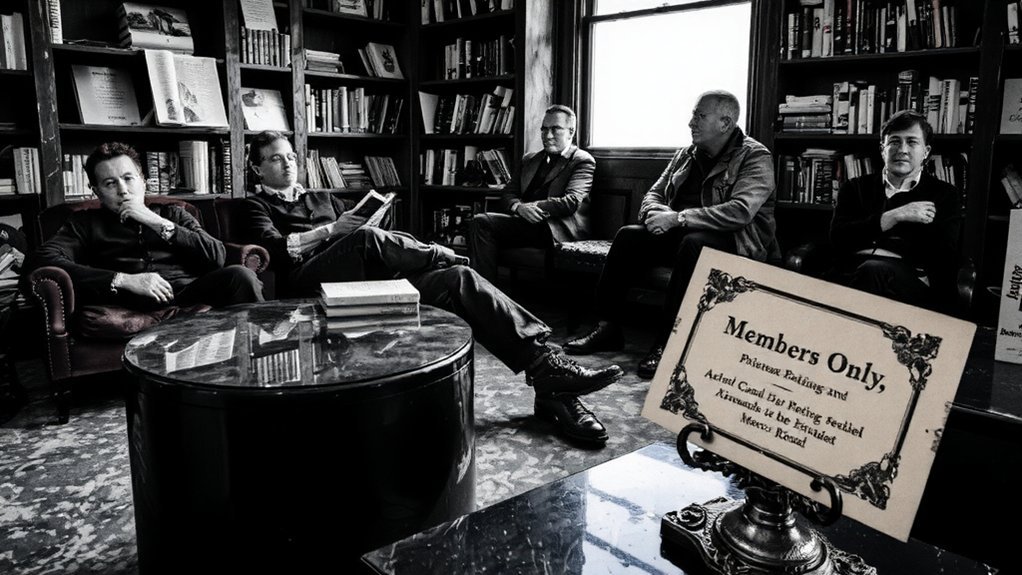
If you’ve ever posted a glowing five-star review and watched someone sigh like you’d offered them lukewarm tea, you’ve met gatekeeping. You’ll feel it as a chill, a clipped comment, “That’s not real literature,” or a thread of silent eye-rolls.
You notice gatekeeping behavior when people police reading lists, mock popular tastes, or insist on obscure credentials like badges. I’ll call them out, I’ll roll my eyes with you, and I’ll keep moving toward fresh ideas.
Elitist attitudes sound smug, smell faintly of old libraries, and taste like burnt toast—unpleasant and unnecessary. Don’t shrink. Speak up, share your finds, and build spaces where curiosity wins, not hierarchies.
Signs of Harassment and Targeted Shaming

Gatekeeping can sting, but harassment leaves bruises—emotional ones you can’t just shrug off.
You’ll notice harassment patterns: relentless DMing, piling onto a post, screenshots used like weapons. Your feed snaps from civil to corrosive, comments buzzing like angry flies.
You see shaming tactics that name-call, mock reading tastes, or single someone out for cancelation. I watch threads curdle, taste metallic dread, and say, nope.
Trust your gut when a joke feels sharp, when allies whisper off-thread. Call it out, mute, screenshot, report, build small defenses.
Trust your gut when words cut—call it out, mute, screenshot, report, and build small defenses.
Don’t play hero every time, learn the signals, step back when it’s overwhelming. Innovation needs safety, and you deserve communities that critique, not crucify.
When Performative Outrage Takes Over

When outrage goes performative, I watch the feed morph like a stage curtain snapping open — sudden, noisy, all lights and no backstage — and I feel that tiny electric dread in my teeth.
You scroll, you see the same bold declarations, the recycled hashtags, the photo-op posts, all calibrated for maximum share. It smells like performative activism, not like sweat and real work; it tastes like applause over action.
You want authentic change, innovation, real problem-solving, not performative posing. So you learn to spot patterns: choreographed outrage, one-note scripts, hot takes that vanish when pressure hits.
Call it outrage culture, call it theater. Either way, you step back, test motives, and demand substance behind the sparkle.
Cliques, Exclusion, and In-Group Dynamics
You’ll spot the clique by the secret handshake of insider slang, those odd nicknames and shorthand that make you squint like you missed a memo.
They’ll whisper about the “right” reading list, gatekeeping authors and titles with the smugness of someone guarding a VIP rope, while you’re left holding your paperbacks like an awkward plus-one.
I watch it happen, I cringe, and I’ll call it out—because good book talk should invite you in, not test your vocabulary.
Exclusive Insider Language
Think of a secret handshake, but it’s a phrase in a comment thread and it smells faintly of bad coffee and exclusivity.
I watch you scan a feed and stumble on exclusive jargon, insider slang, and you feel the nudge: join us, or don’t even try.
You’ll notice tiny rules, nicknames dropped like breadcrumb traps, private emojis that gate conversation.
You’ll hear clipped jokes that land only for them, see moderators laugh in shorthand.
Don’t be fooled by warmth — it’s curated. Step closer, and you’ll feel the air thin, your ideas flattening to fit.
I’ve poked at these groups, gotten gently sidelined, and learned to flag the language that locks people out before they’ve had a chance to speak.
Gatekeeping Reading Lists
I noticed that same smug slang bleeding into the reading lists, like a secret handshake stamped on the spine of every recommendation — and that’s where the real gatekeeping shows up.
You scroll, you click, you feel the tap-tap of exclusion. They boast reading recommendations like badges, smirking at anything outside their canon. You want innovation, but they recycle the same edgy picks, whispering who belongs.
Call them out, but do it smart — point to gaps, suggest inclusive lists that widen the table, toss in diverse voices, newer formats, experimental stuff.
Make a scene: post a counter-list, tag friends, invite strangers. Watch the clique twitch, then either adapt, or reveal themselves, which is useful info if you’re trying to build something better.
Persistent Drama and Conflict Cycles
When a thread blows up every other week, like clockwork, you’re not seeing passion—you’re watching a soap opera with bad lighting and worse snacks.
I’ve watched comment sections fizz like cheap soda, watched drama escalation happen in predictable beats: accusation, pile-on, performative apology. You’ll smell the burnt popcorn of repeat fights, see the same players rehearse outrage, feel the tired déjà vu.
If you want innovation, you’ll spot communities stuck in loops, not systems solving problems. You can call for conflict resolution, propose new formats, or quietly leave before the marquee feud starts.
I suggest sketching small experiments—time-limited discussions, rotating facilitators—then watch whether they break the cycle, or just give better lighting to the same old show.
Manipulative Moderation and Power Imbalances
Because power rarely wears a label, you’ll probably miss it until you taste the metallic bite of unfair rules—sudden bans, disappearing comments, or glowingly vague moderator notes that read like fortune cookies.
Power often hides—until unfair rules bite: sudden bans, vanished comments, or vague moderator notes that leave you tasting metal.
I watch moderators steer threads like ship captains who never answer questions, and you feel the current pull. Toxic leadership shows up as curated silence, private chats where decisions are whispered, and staged apologies that smell like machine oil.
You’ll notice skewed power dynamics when rules land hard on newcomers, but bend for insiders. Act like a sleuth: log examples, save screenshots, and test boundaries gently.
Practical signs:
- Rules applied inconsistently.
- Private channels driving public decisions.
- Repeated silencing of dissent.
- Praise given to favorites only.
Normalizing Bullying and Toxic Language
You start to notice it the same way you notice a bad smell in a crowded subway—at first you think it’s just one person, then it follows you through the car.
You scroll, you blink, and jokes that sting become the norm. Threads congratulate snark, moderators shrug, and toxic rhetoric slips into punchlines.
You feel the air tighten, like someone closing a window. You call out one barb, they laugh you off. You try to steer conversation back to books, they pivot to piling on.
Bullying normalization sounds clinical, but you taste it in comments, see it in avatars, hear it in clipped replies.
You innovate ways to respond, you set boundaries, you refuse to let cruelty pass as humor—yes, even when everyone else is laughing.
Echo Chambers and Refusal to Engage With Critique
If you hang around long enough, you’ll notice the same posts circling like friendly sharks, all teeth and familiar smiles—everyone agrees, nobody questions, and dissent gets swallowed or shuffled off as “not our vibe.”
I watch threads fold into themselves: a bold take gets posted, a handful of people cheer, then the person who tagged a different opinion vanishes under gifs and groans. You feel the air go stale, ideas dulled by comfort, as echo chambers hum approval and critique avoidance becomes a policy.
I point, you see the patterns. I nudge, you test the water. Try these checks, quick and practical:
- Note who answers first, and how loudly they cheer.
- Track deleted replies, and who flags them.
- Measure repeated praise, zero pushback.
- Invite a gentle, probing question and watch the reaction.
Red Flags in Community Rules and Enforcement
You’ll spot trouble when the rules read fuzzy, change on a whim, or get used like a rubber stamp — it feels like walking into a bookstore where the shelves rearrange themselves while you’re looking.
Watch for moderators who hand out bans like bookmarks, or policies that seem written to snag one particular person; it’s not accidental, it’s choreography.
I’ll point out what to look for, and you’ll learn how to call it out without getting shushed.
Vague or Inconsistent Rules
When rules read like fortune cookies—mysterious, short, and vaguely threatening—I’ll roll my eyes and warn you: that’s not community-building, it’s theater.
You’ll notice inconsistent guidelines and unclear expectations the moment you hover over the rules, taste the paper, and shrug. I point, you nod, we test the edges.
- Rules that change mid-chat, no notice, no logic — confusing, disorienting.
- Vague bans like “be respectful” with no examples — leaves you guessing.
- Moderators who interpret rules differently — creates cliques, tension.
- “Do what feels right” policies — sounds poetic, works terribly.
You deserve clear guardrails, honest explanations, and a ruleset that feels engineered, not performative.
Trust your senses, call out the fog.
Punitive Enforcement Actions
Okay, so you’ve spotted the foggy rulebook—good job, you’re already halfway out of the theater—and now it’s time to watch how those rules are actually used.
You’ll notice leaders love dramatic, sudden punitive measures, a click and ban, like a wink that feels more like a slap. You see members booted without context, posts deleted overnight, private messages that hiss accusations. That behavior smells like control, not care.
You’ll hear whispers, then a roar of community backlash, then silence, like someone turned off the lights. I point, you judge. Take screenshots, timestamp posts, document patterns.
Innovators don’t just rage, we build alternatives. If enforcement feels performative, or punishes dissent rather than harm, you’re better off sketching a kinder, sturdier space elsewhere.
Rules Targeting Specific Members
If a rule smells like it was written with one person in mind, don’t ignore the smell — it’s probably rot.
I watch policies like a detective, sniffing unfair restrictions, spotting targeted exclusions, hearing the clack of keystrokes that named a target without naming a name.
You’ll feel the chill when bylaws read like a grudge, vague deadlines, sudden bans that hit one profile.
- Look for oddly specific verbs, they point to people, not problems.
- Count the exceptions, they often shield favorites while punishing others.
- Test enforcement, post a harmless challenge, see who gets flagged.
- Read appeals, they reveal bias, sloppy secrecy, theatrical vetoes.
You deserve a community that builds, not one that fences and whispers.
Leave a Reply