
You want to mark a book without turning it into an archaeological artifact, and I get it — you like your pages neat, but your brain loves chaos. Grab a soft pencil, sticky flags, and a tiny bit of nerve; trace echoes of sentences, tap the margins with shorthand, peel a note when the mood changes. It feels tactile, almost naughty, like whispering to the author — and I’ll show you how to do it without wrecking the spine…
Key Takeaways
- Use removable tools: sticky tabs, page flags, and adhesive notes to mark passages without writing on pages.
- Reserve pencil for tentative underlines or marginalia so you can erase and refine later.
- Develop a simple symbol/color key and use it consistently to make quick, noninvasive annotations.
- Summarize each chapter on a single note or index card instead of crowding page margins.
- Protect books physically: clean hands, acid-free bookmarks, and avoid folding or heavy pressure on the spine.
Why Thoughtful Annotation Matters

Even if you’ve skimmed a book before, you haven’t really met it until you’ve got a pen in your hand and a margin full of notes—trust me, it changes everything.
Put a pen to the page and watch the book stop being a relic and start being a conversation.
You lean in, feel the paper, hear the scratch, and suddenly the importance of comprehension isn’t an abstract goal, it’s a tactile mission. You jot questions, arrow connections, underline punchlines, and you’re actively enhancing retention, because action cements ideas.
I nudge you to treat pages like collaborators, not relics. You’ll make the text work for you, reveal hidden patterns, and laugh at your past timid self.
Small marks spark big insights, and later, when you flip back, memories bloom—clear, bright, usable.
Choosing the Right Tools for the Job

When you pick up a book with a pen already in your hand, you’re signaling intent — and the right tools make that intent sing.
I like gear that feels alive: slick annotation tools, slim writing instruments, they slide and whisper across paper. You want control, not drama. Reach for pens that dry fast, pencils that bite just enough, and sticky tabs that peek without shouting.
I test textures, weight, balance, the little satisfying click or whisper of a cap. Try a fine-tip for tiny notes, a soft pencil for sketching margins, and a bright tab for jumping back.
You’ll learn what suits your rhythm, what keeps pages readable, and what turns reading into active, joyful work.
Marking Without Permanent Damage

You’ll want to mark books without wrecking them, so I’ll show you two low-risk tricks that feel almost naughty.
Stick on removable page flags for quick notes and color-coding, they peel off clean and snap against the paper with a satisfying little click.
If you do underline, use pencil first — it lets you press, erase, and refine your thoughts without committing ink to eternity.
Removable Page Flags
I love those neon tabs—tiny rectangles of bravery that scream, “I’ll be back,” without wrecking the book; slap one on a page and you’ve got a bookmark, a flag, and a tiny piece of organization that peeks out like a confident eyebrow.
You grab a pad of removable flags, stick them where ideas zing, and move them later, no guilt. They’re removable flags, temporary markers, and your brain’s best friend when you’re testing thoughts.
- color-code themes, it’s visual shorthand
- write a tiny note on the tab for quick recall
- peel and reposition as your thinking evolves
I narrate my experiments like a lab report, but with snacks and sarcasm, letting innovation play without wrecking the paper.
Pencil-First Underlining
Grab a soft pencil and some courage, then hover it over the page like a respectful tattoo artist—gentle pressure, steady hand.
I tell you, the pencil advantages are real: erasable, subtle, forgiving. You’ll trace sentences, not scar them.
Try short underlines first, breathe, then connect thoughts with light shading, that’s one underlining technique that keeps pages readable.
I like the click of the pencil, the graphite smear on my finger, it feels intentional.
Say a line aloud, underline, wink at the margin. If you change your mind, erase without guilt.
Switch hardness for texture, softer for warmth, harder for crispness. You’re innovating, not vandalizing.
Keep it honest, keep it light, and enjoy leaving marks that play well with the book.
Using Sticky Notes and Flags Effectively

When a page throws you a brilliant line or an infuriating contradiction, sticky notes and flags let you trap that moment before it slips away; think of them as tiny neon lifeboats for your thoughts.
I like to riff on sticky note strategies, and I show you simple flag placement techniques that keep ideas tidy, visible, and ready to deploy. You’ll feel clever, tactile, slightly obsessive — good signs.
- Color-code by mood or project, keep it bold.
- Use short verbs or symbols, save space.
- Fold flags to peek without opening, protect margins.
Stick, scribble, peel. You’ll hear the paper sigh, you’ll see the neon pop, and you’ll know where your brain landed.
It’s nimble, reversible, and kind to the book.
Lightweight Writing Techniques for Different Formats
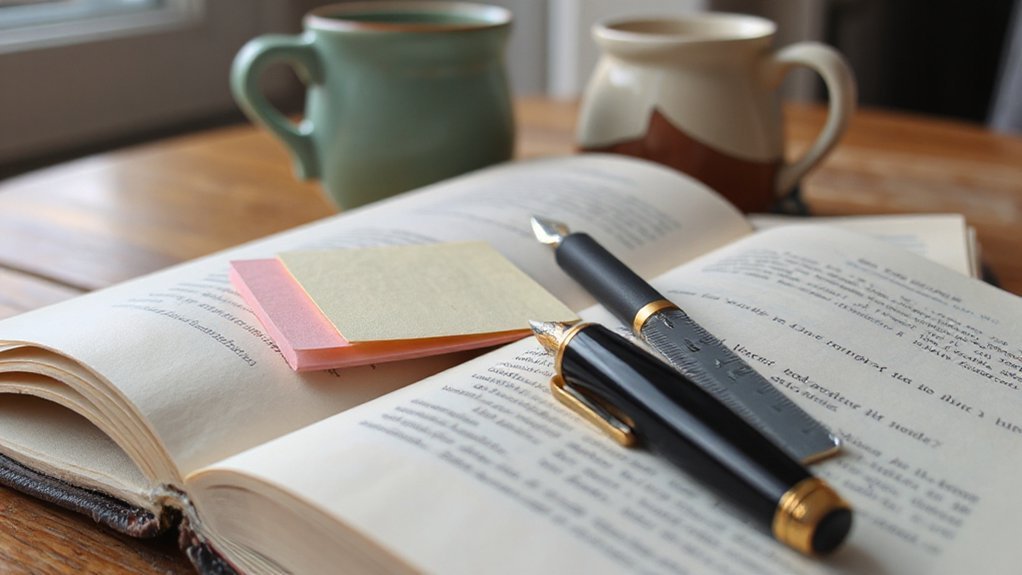
You’ll start by sketching quick margin symbols and icons — a star for gems, a lightbulb for ideas, a tiny trash can for shrug-worthy bits — and I’ll admit, my first attempts looked like a toddler’s treasure map.
Then you’ll add restrained color-coding, a wash of one or two hues so pages hum instead of scream, and you’ll feel smarter just looking at the neat visual rhythm.
Finally, layer sticky notes like tacos: one thin note for a summary, another for a question, a final tab for an action item, and together they give you a tidy, touchable roadmap through the book.
Margin Symbols and Icons
Think of margin symbols as your book’s secret emoji language — quick, neat, and a little smug.
I show you a tiny toolkit, so you’ll annotate fast, stay tidy, and feel clever without wrecking the page. Use consistent margin icons, jot a key, and let symbol meanings do the heavy lifting. You’ll tap, glance, and move on.
- *★* for aha moments — bright, small, impossible to miss.
- *→* for follow-ups — a gentle nudge toward action or cross-reference.
- *! * for challenges — sharp, useful, slightly accusatory.
You’ll hear the paper, feel the pen, see neat glyphs crowd the side like smart friends.
It’s playful, restrained, and oddly satisfying — like organizing rebellion.
Color-Coding With Restraint
If you use color like a sober painter, you’ll get clean, fast cues instead of a confetti disaster. I want you to pick a tight palette, test it on one page, then commit.
Use color significance — one hue for claims, another for questions, a third for evidence. Don’t overdo it, resist rainbow pride; restraint sharpens meaning.
Establish a color hierarchy: strongest ideas get the boldest shade, minor as a pale tint. I’ll admit I once turned a novel into a disco, learned quickly.
Touch the paper, see the ink, breathe, adjust. In digital notes, copy the same scheme for muscle memory.
This is practical aesthetic, the minimalist toolbox that keeps your annotations readable, usable, and a little bit stylish.
Sticky-Note Layering System
Color taught you restraint; sticky notes teach you how to break the rules, a little.
I show you a Sticky-Note Layering System that keeps pages pristine, while letting you riff, argue, and doodle in color. You’ll pick sticky note styles, stack ideas, and read the book without guilt.
Try this trio:
- bright flags for quotes, slim, quick, obvious
- square notes for thoughts, layered, movable, expandable
- translucent tabs for questions, subtle, peek-through, persistent
You peel, press, and layer; the book stays intact, your thoughts get depth.
I encourage playful experiments, layered colors that sing together, little stacks you can shuffle. It’s lightweight, reversible, and oddly satisfying—like making a sandwich for ideas, then eating only the crumbs.
Organizing Notes for Easy Review
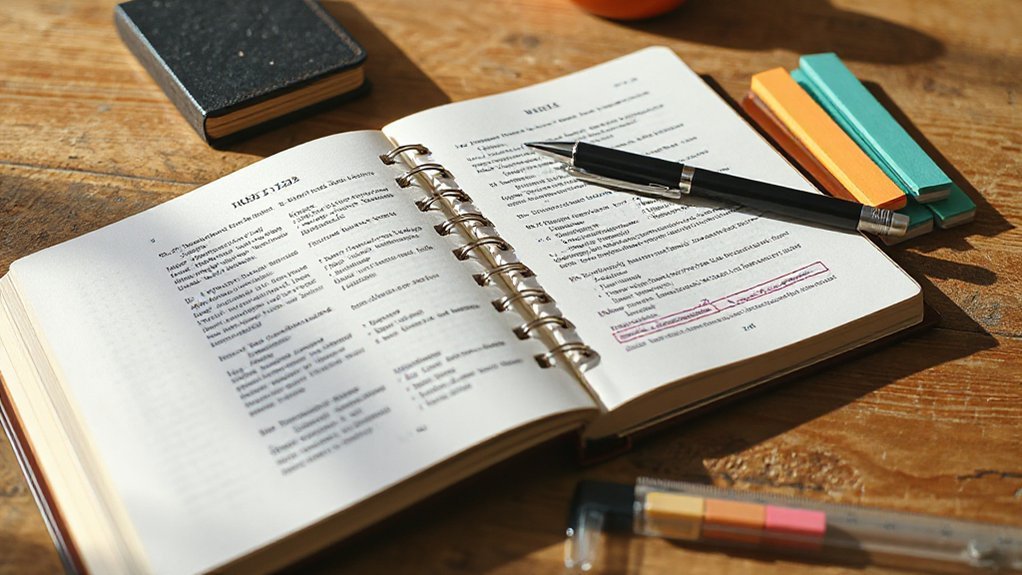
Okay—let’s make your notes work like a little library that actually helps you.
Make your notes into a tiny, helpful library—organized, charming, and actually easy to use.
You’ll build a compact system for note organization, tags and tabs that smell faintly of fresh paper and possibility. I’ll show you how to group highlights by theme, clip key phrases, and leave tiny marginal summaries that sing when you flip pages.
For review strategies, set a quick-scan ritual: two minutes per chapter, a thirty-second peek at each tag, and one bold sentence to stick in your memory.
You’ll use color sparingly, icons for mood, and one central index card that breathes. It’s playful, efficient, and a little nerdy — exactly the kind of method you’ll actually use, not abandon.
Digital and Hybrid Annotation Strategies

You’ve built a tiny library on paper that sings; now we’ll make it hum on screen. You’ll mix digital tools with tactile joy, scan margins, sync highlights, and watch your notes come alive.
I’ll confess, I love the click of an app and the smell of ink — you’ll keep both.
- Use cloud-based highlights to link quotes, images, quick tags.
- Snap photos of marginalia, OCR them, add searchable comments.
- Pair physical sticky notes with short QR links to expanded drafts.
You’ll toggle between devices, hear a satisfying ping, scroll a linked thought, then return to the dog-eared page, grinning.
Hybrid methods let you experiment fast, iterate, and keep the book’s soul intact, while the screen stores your wildest insights.
Preserving Value and Appearance Over Time

If you want your books to look as sharp in ten years as they do today, treat them like guests at a spa—gentle, occasional pampering, no sloppy coffee stains.
I tell you this because you’ll want preserving aesthetics without sacrificing notes. Handle pages with clean hands, use a soft cloth on covers, and tuck delicate volumes into archival sleeves when humidity’s high.
Don’t jam them on crowded shelves; let spines breathe. I swear by acid-free bookmarks and light-blocking slipcases, tiny interventions that keep color true and binding strong.
When transporting, cradle the book, not toss it. These moves feel fussy, I know, but they keep your annotations legible, your margins tidy, and your collection maintaining integrity over time.
Developing a Personal Annotation System
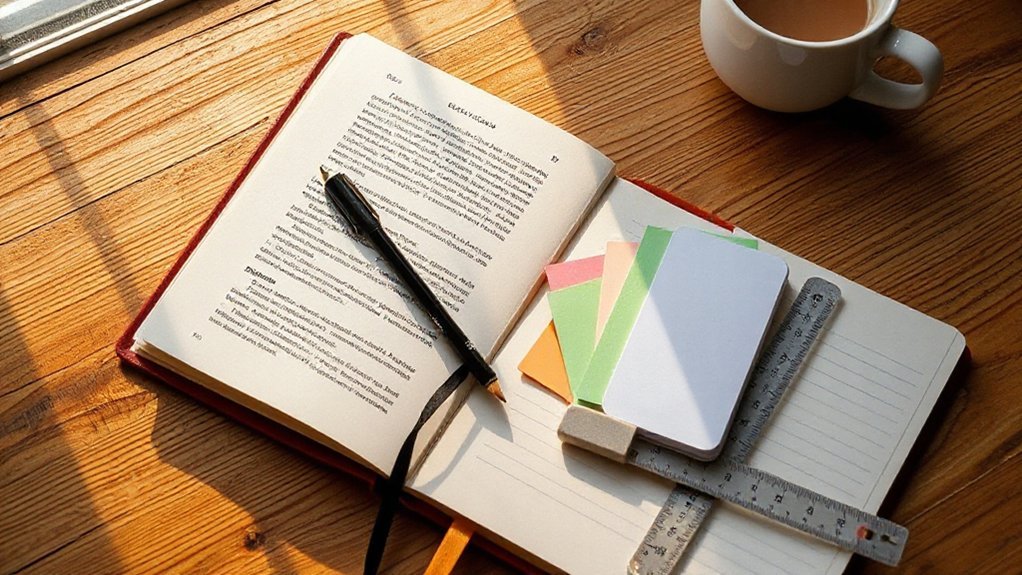
When you decide to make your marginalia more than random squiggles and dramatic exclamation points, you’re starting to build a system—your system—and that’s the fun part.
I want you to treat notes like a designer treats a sketchbook: tactile, intentional, and slightly rebellious. Choose personal symbols, color cues, and a short legend, then stick to them. Annotation consistency is the secret sauce; it turns chaos into a map you can actually follow.
- Quick symbol key: !surprise, ? question, ★ insight
- Tools: pencil for timid edits, pen for commitments, highlighter for heat
- Rhythm: note on first read, refine on reread, archive in a digital note
Play, test, iterate, and enjoy the evidence of your thinking.
Leave a Reply