
Call me your bookish Virgil—I’ll guide you through fires and quiet rooms alike. You’ll get Harper Lee for moral heft, Erdrich for sharp, lived-in detail, Murakami when you want strange comfort, Morrison when grief needs teeth, Ishiguro for polite ruin, Harari to shake your timelines, Tartt for deliciously bad ideas, Coelho for tinkling parables, and Mandel if the end ever feels beautiful; stick with me and I’ll tell you which to start with.
Key Takeaways
- Start with a humane classic that explores character and morality, like To Kill a Mockingbird, for empathy and clarity.
- Choose a emotionally powerful novel that confronts history and memory, such as Beloved, to provoke reflection.
- Recommend a quietly devastating introspective book like The Remains of the Day for subtlety and regret.
- Suggest a genre-bending, surreal modern work like The Wind-Up Bird Chronicle for imaginative, uncanny storytelling.
- Offer an uplifting post-apocalyptic or aspirational title like Station Eleven or The Alchemist for hope and purpose.
To Kill a Mockingbird by Harper Lee

Warm porch light: that’s how I first picture To Kill a Mockingbird — soft, steady, the smell of dust and lemon oil, kids playing tag in the yard while a grown-up tells a story you won’t forget.
You pick it up, you’re curious, and you get swept into a small town where a child’s eyes teach you about moral growth, and adults stumble through courage.
The air’s thick with heat, voices, courtroom oak, and the sting of racial injustice that won’t let you look away.
I’ll tell you, it’s not preachy, it’s honest, sharp, human. You’ll laugh at Scout, cringe at hypocrisy, and leave smarter, angrier, kinder.
Read it, then pass it on. Trust me, it earns the porch light.
The Night Watchman by Louise Erdrich

If you loved the porch-light steady voice of To Kill a Mockingbird, you’ll find a different kind of lamp here—one that buzzes in the cold night, throws hard shadows, and keeps watch over a stubborn, funny, furious world.
I tell you, The Night Watchman pins you with kindness, then makes you laugh while it punches. You’ll meet workboots, coffee, council rooms, and a man who patrols both reservation and conscience.
The novel gives Native American representation real weight, not token sparkle, and roots its urgency in historical context that still hums today.
Native American voices that carry weight—not decoration—anchored in a history that still hums and demands reckonings.
You’ll feel wind, hear arguments, taste fried bread, and live beside characters who fight like family.
Read it for grit, wit, and a mind that refuses easy answers.
The Wind-Up Bird Chronicle by Haruki Murakami
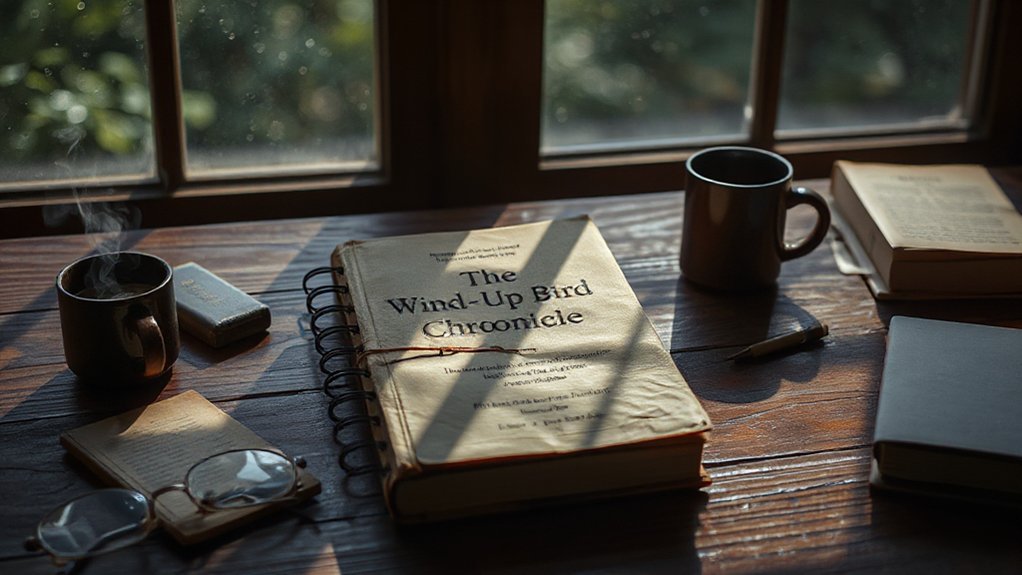
You’ll follow a man who loses a cat and finds a world that feels both oddly familiar and sharply tilted. The apartment’s stale coffee smell rubbing against strange domestic mysteries that make you squint.
I watch you blink at memory and absence—photos fading, conversations dropped mid-breath—and I promise it’s as unsettling as stepping into an empty room and hearing your own name.
When you walk Tokyo’s underbelly with him, the city hums, lights blur, and surreal urban journeys sneak up like a friend tapping your shoulder.
Strange Domestic Mysteries
When a friend first told me about The Wind-Up Bird Chronicle, I expected a quiet domestic drama with a weird streak — you know, missing cat, marital tiff, small-town oddities — and then Haruki Murakami yanked the rug out from under my shoes and kept pulling.
You follow a husband, you smell dust in a dry well, you hear a piano down a corridor, and ordinary rooms twist into unusual settings, revealing family secrets that hum under the floorboards.
You’ll laugh, cringe, and nod like you’ve been caught eavesdropping. I’ll admit, I felt clever and slightly alarmed.
Read it when you want domesticity to tilt, when you crave strangeness stitched into cozy scenes.
- ordinary rooms as portals
- quiet gestures that explode
- tactile, uncanny detail
- moral ambiguity up close
- humor, then vertigo
Memory and Absence
Because memory in The Wind-Up Bird Chronicle isn’t a tidy attic you can lock, it feels more like a basement you’ve waded into ankle-deep, then suddenly it’s waist-deep and smells of old paper and cold iron.
You follow low-lit corridors, I say, feeling for familiar faces that blur. Murakami makes memory retrieval tactile; you pull at threads, and something essential is missing.
That absence stings, and it changes the room’s geometry. You listen for echoes, you touch a damp photograph, you laugh nervously because the joke is on you.
The absence effects ripple outward, altering how you act, how you love. I nudge you toward discomfort, because innovation demands risk, and this book rewards you with quiet, strange truth.
Surreal Urban Journeys
If you step off the familiar pavement and duck into a side street that smells faintly of frying oil and old rain, I’ll walk with you—because Murakami’s city in The Wind-Up Bird Chronicle isn’t a map, it’s a maze that hums.
You’ll wander through dreamlike landscapes, feel urban isolation press like damp paper against your ribs, and laugh at how sane that feels.
I narrate, I stumble, I point at doors that open to other rooms of memory. You touch a rusted gate, you hear a distant radio, you trade a cigarette for a story.
This book teaches you to explore cities as if they were strange machines, and you’ll want to tinker.
- Seek the uncanny in everyday streets.
- Listen for hidden histories.
- Trade routine for risky curiosity.
- Embrace solitude as fuel.
- Map feelings, not locations.
Beloved by Toni Morrison

You’ll feel it the minute you open Beloved — a chill that’s partly grief, partly heat off a Kentucky field, partly the weight of a name that won’t let go — and I’ll warn you now, this book doesn’t let you skim.
You lean in, you listen. I’ll point out Morrison’s legacy here, but mostly you’ll meet themes of motherhood that grab you by the throat, tender and unforgiving.
Scenes crackle, sensory and immediate: the river’s cold, the skin’s itch, a baby’s cry that rewrites time. You’ll laugh, wince, then sit very still.
I say this as someone who read it on a bad night and came out better educated, slightly bruised, oddly hopeful.
Read it aloud, underlight, and don’t rush.
The Remains of the Day by Kazuo Ishiguro

You’ll meet Stevens, a stoic but flawed butler who moves through rooms like someone tiptoeing around a memory, and you’ll feel the quiet weight of everything he never said.
I’ll point out how duty shaped his face, how regret tastes like over-steeped tea, and how identity keeps slipping under his hands when he polishes silver.
Read it with your ears open, because Ishiguro’s silence speaks loud, and you’ll laugh, wince, and maybe want to call someone you’ve been meaning to apologize to.
Memory and Regret
Though I don’t always like admitting it, memory has a sneaky way of running the show; I’ll catch myself tracing the rim of a teacup and suddenly I’m back in a brown-paneled dining room, watching a man fold his sorrow like a napkin.
You’ll feel nostalgic reflections and move through emotional landscapes, noticing small betrayals, missed chances, and the taste of lemon on a tongue that remembers better days.
I tell you this as someone who still misplaces keys and dignity, but learns from the ache.
You’ll recognize quiet reckonings, the way light hits a table, and the stubborn comfort of regret that teaches without shouting.
- Hold contradictions tenderly.
- Read slowly, savoring detail.
- Let silence speak.
- Notice texture, not just plot.
- Embrace imperfect truths.
Duty and Identity
If duty is a uniform, then Stevens wears his so neatly even the buttons look apologetic — and yes, I know that sounds dramatic, but bear with me.
You follow him down gravel paths, feel the clipped rain on his sleeve, hear polite silences like clock ticks.
I point out how the book stages duty vs. freedom, how choices are small, stubborn, repeated.
You sense identity formation not as a reveal, but as slow tailoring, stitches made from manners and omission.
I joke that he’s allergic to spontaneity, and you laugh, because it’s true.
Still, that laugh lands somewhere between admiration and pity.
You leave the room thinking about your own clothes, wondering what parts you’d dare unbutton.
Quiet Emotional Power
Restraint is a strange kind of loudness, and here it bangs softly against every scene in The Remains of the Day. I talk to you like a fellow experimenter, you listen, and together we trace emotional resonance through small acts: a folded napkin, a paused step, a withheld joke.
You feel subtle storytelling as a pressure, slow and precise, reshaping what you expect from plot and character. I confess, I prefer books that nudge you rather than shove.
You’ll notice texture, the scrape of shoes on hall tile, the faint smell of polish, the stiff courtesy that hides a flood. It’s brave, quiet, and very clever.
- Quiet gestures reveal inner collapse
- Memory reframes duty, slowly
- Silence amplifies regret
- Detail breeds intimacy
- Language designs emotional resonance
Sapiens: A Brief History of Humankind by Yuval Noah Harari

Picture a single book that makes you feel both tiny and oddly important; that’s Sapiens for me.
You’ll flip pages that trace cognitive evolution, watch ideas spark like flint, and feel your brain click into new gear. I narrate scenes where ancient fires smell of smoke and possibility, where myths glue strangers into nations — Harari shows the cultural impact of stories, markets, and laws.
You’ll laugh at my smug surprise, you’ll frown, you’ll jot notes in margins. It reads like a brisk tour, then roars into existential questions that stick to your teeth.
You’ll grin at my astonishment, scowl at the grit, and scribble margins as a brisk tour detonates into sticky, big questions
If you want a book that rewires assumptions, nudges ambition, and makes future-thinking practical, start here — and bring coffee, you’ll need it.
The Secret History by Donna Tartt

When I first opened The Secret History, the air in my tiny apartment suddenly smelled like old books and ambition, and I knew I was in trouble.
You’ll sink into a gleaming, odd classroom where dark academia feels alive, and you’ll watch clever people choose badly, again and again.
I narrate like a guilty friend, I joke, I wince, I point out how moral ambiguity hooks you, then drags you through ivy and wine.
You’ll crave its slow-building tension, its crisp sentences, the way small choices stack like dominoes.
Read it if you like stylish risk, elegant danger, and stories that make you squint at your own ethics.
- Beauty masking rot
- Friendship turned calculus
- Language that stings
- Choices with price tags
- Thrill in slow burns
The Alchemist by Paulo Coelho

A leather-bound map of possibility, The Alchemist hit me like desert wind—dry, warm, and full of secrets you can almost taste; I read it on a sunlit balcony, the pages smelling faintly of dust and orange blossom, and I kept thinking, this book will make you hustle for your dreams and then laugh at the hustle.
You’ll follow a shepherd’s small steps across dunes, feeling sun on your neck, hearing coins clink, and you’ll nod at the line between ambition and obsession.
It teaches you to chase your personal legend without mistaking noise for guidance. Its universal themes slide into your day like clever graffiti, simple but hard to ignore.
Read it when you need a nudge, or a charming kick in the pants.
Station Eleven by Emily St. John Mandel

You loved the hopeful swagger of The Alchemist, didn’t you? I tell you, Station Eleven rewires that optimism, it probes loss and beauty amid post apocalyptic themes, and it hums with quiet, fierce life.
You follow a traveling troupe, taste cold rain on a ruined highway, hear an old symphony in a grocery store turned shrine. The prose stitches past and present, interconnected narratives looping like radio signals.
I’m playful, I’m blunt: this book makes you ache and grin.
- Survivors acting, singing, keeping memory alive
- Desperate kindness against bleak infrastructure
- Objects that carry grief and wonder
- Time folding, characters bumping into fate
- Art as rebellion, fragile and luminous
Leave a Reply