
You’re about to meet worlds that feel oddly familiar and wildly new, so grab something warm to drink and a comfy chair — I’ll wait; no, really. I’ll walk you through a stranded astronaut who jokes while fixing a rover, a kid commanding fleets and losing sleep, a nomadic troupe clinging to music after everything collapses, and a locked, icy planet where gender is a political puzzle — all easy doors into bigger ideas. Stick around, there’s one book that might punch you straight in the chest.
Key Takeaways
- Start with approachable, human-focused novels (e.g., The Martian, Station Eleven) that blend character and clear stakes with accessible prose.
- Choose books mixing humor and wonder (e.g., The Hitchhiker’s Guide) to ease readers into speculative ideas without heavy jargon.
- Try emotionally driven stories (e.g., Kindred, The Road) to show science fiction’s power to explore identity and resilience.
- Pick fast-paced, plot-forward reads (e.g., Ender’s Game) to hook new readers through action and clear conflict.
- Sample varied styles—satire, cyberpunk, lyrical, hard science—to discover which sci‑fi subgenre resonates most.
The Martian — Andy Weir

A cracked helmet sits on a dusty table in my mind every time I think of The Martian — and I still laugh at how stubbornly human it feels, even when you’re stranded on a dead planet.
I walk you through Mark Watney’s toolbox, you feel grit under your nails, the bitter tang of recycled water, and you learn practical survival tactics while grinning at his snark.
I narrate his log entries, you hear the lone radio crackle, the humor balance keeps panic at bay, it’s survival with a wink.
You’ll sprint through science, savor clever fixes, and come away energized, curious, and oddly hopeful — convinced engineering, grit, and jokes still win the day.
The Left Hand of Darkness — Ursula K. Le Guin
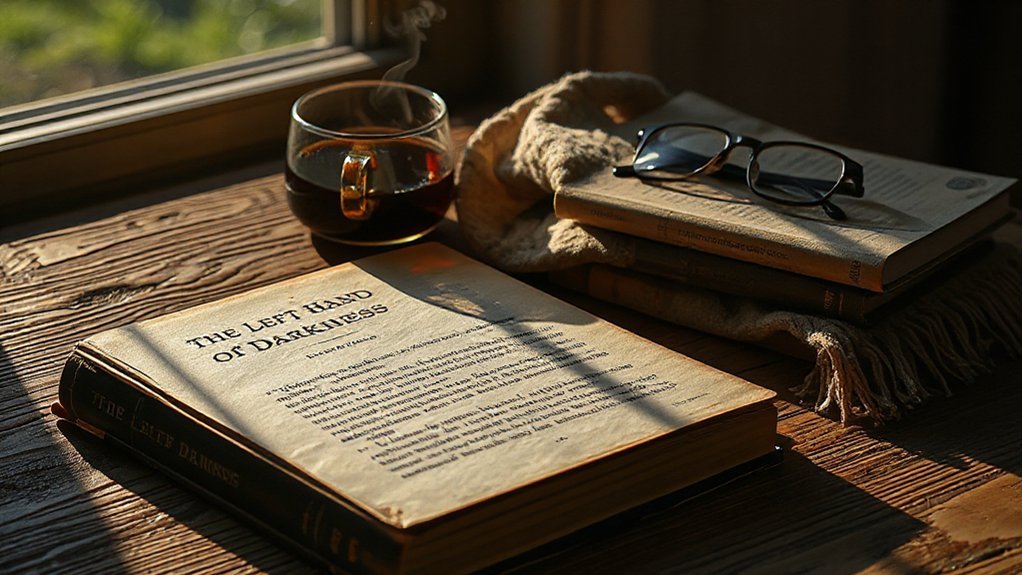
You laughed at Mark Watney’s stubborn optimism, and now I’m dragging you to a planet where optimism gets complicated. You step onto Gethen with me, wind biting, ice crunching under boots, and you’ll notice how Le Guin makes you rethink people, bodies, and power.
You laughed at Watney; come with me to Gethen—wind, ice, and a world reshaping bodies, power, and questions
I point out the subtle brilliance: gender fluidity woven into daily life, not a lecture, but lived experience. You’ll follow a lone envoy, feel diplomatic rooms thrum with uneasy silences, and watch political intrigue unfurl like frost on glass.
I joke that you’ll miss your comfy assumptions, then admit you won’t, not really. The prose is spare, the scenes tactile, the conversations sharp.
Read it, wrestle with it, come back changed, curious, ready to ask better questions.
Station Eleven — Emily St. John Mandel

You’re going to follow fragments of time that wobble between before and after, like stepping through rooms in a half-lit house, and I’ll point out the clues you’ll love.
You’ll feel the grit of survival — cold nights, rationed coffee, a violin’s bow scraping air — and see how art keeps people human, small scenes that sting more than big explosions.
Stick with me, and we’ll savor the book’s quiet, human-scale stakes, the tiny choices that change lives, because honestly, it’s the kind of story that sneaks up on you and refuses to leave.
Fragmented Timeline Exploration
When timelines snap and shuffle, I lean in — because Station Eleven doesn’t hand you a neat chronology, it gives you puzzle pieces, stained with coffee and cigarette ash, that you happily fit together on the kitchen table late at night.
You ride nonlinear storytelling like a slick tram, hopping eras, eavesdropping on lives, feeling the seams. Time manipulation here isn’t a gimmick, it’s a craft, it teases memory, reveals causes backward, and makes small gestures land heavier.
You’ll stitch scenes — a playbill, a coma room, a circus of musicians — and each stitch sings. I’ll admit, you’ll sometimes squint, curse softly, then laugh when a detail clicks.
It teaches you to trust fragments, to savor gaps, to read like a detective who loves beauty.
Survival and Art
Okay, so we just finished assembling that jigsaw of timelines, and now I want to talk about what people hold onto when the world goes quiet: art.
You watch actors cross an empty airport, you hear a flute cut through cold air, and you feel that odd comfort—like soup on a bad day.
I’ll admit, I nerd out over the idea that survival instincts don’t only mean fight or flee; they include carrying songs, sketches, plays.
You, me, and a ragged troupe trade canned beans for a sonnet, we polish a prop, we rehearse under stars.
That blend of practical grit and artistic expression keeps memory honest, sparks hope, and makes ruined places liveable, even briefly.
It’s clever, it’s human, and it sticks.
Quiet, Human-Scale Stakes
If the end of the world taught us one practical thing, it was how small the things that matter really are; I keep thinking about a paper cup of coffee, warm between freezing fingers, and how that’s enough of a miracle to make a morning.
You’ll find Station Eleven grounding because it shrinks apocalypse to room size, to a wrapped hand, to the music that keeps you human.
I talk to you like a friend, because you want innovation that’s human, not flashy tech for its own sake.
Mandel shows personal relationships as the engine, she digs emotional depth without melodrama.
Scenes land, sensory and specific, then pivot to a line of dialogue that makes you grin, or ache, or both.
It’s quiet, sharp, honest.
Ender’s Game — Orson Scott Card

Because it zips from zero to full-throttle in the first page, Ender’s Game grabs you like a cold shower—bracing, immediate, and impossible to ignore.
I’ll tell you straight: you’re thrown into corridors that smell of sweat and ozone, you feel the jolt of zero‑g under your boots, and you learn Ender’s strategy alongside him, as if you could pull the moves out of the air.
Battle school reads like a lab for cleverness, where games are lessons and isolation is the teacher.
You’ll root for a kid who thinks like a machine and feels like a human, you’ll wince, you’ll admire.
It’s tight, sharp, inventive, and it keeps offering surprises, even when you think you’ve guessed the play.
Kindred — Octavia E. Butler

You think you know what sci‑fi looks like after Ender’s Game, all starships and strategy, but let me grab your sleeve and pull you into a different kind of strange.
I’ll admit, I expected gadgets, too, but Kindred hits like a cold kitchen floor, sudden and sharp. You’re yanked between 1970s California and a brutal antebellum Maryland plantation, the air tasting of smoke and iron, sweat clinging to your shirt.
Butler uses time travel to force confrontation, she doesn’t wink at it. You feel the pull, you flinch. The book stares hard at racial identity, memory, obligation, and survival.
It’s intimate, violent, humane. Read it and you’ll stop thinking sci‑fi is only rockets; it can rewrite your sense of now.
The Hitchhiker’s Guide to the Galaxy — Douglas Adams

You’ll laugh at the absurd British humor from the first line, I promise—I still snort tea out my nose picturing Vogons reciting terrible poetry.
You’ll notice the book skewers cosmic bureaucracy with cold, funny precision, so expect forms, red tape, and a galaxy that treats you like a lost intern.
You’ll meet a quirky ensemble—Zaphod’s grin, Arthur’s bewilderment, Ford’s calm mischief—that feels like a sitcom cast dropped into space, and you’ll keep turning pages to see what ridiculous thing they’ll bungle next.
Absurdist British Humor
If you like your comedy slightly mad, a little dry, and oddly comforting, then Douglas Adams is your tour guide through the galaxy’s most polite chaos.
I’ll pull you into scenes where absurd situations pop like cosmic balloons, and you’ll smell rain on metal spacecraft, hear polite panic, and laugh at the mismatch. You’ll follow a bewildered human, meet eccentric aliens, and witness logic doing somersaults.
My voice nudges you: this isn’t slapstick, it’s clever, it’s dry wit with a wink. You’ll read lines that stop you, grin, then keep moving.
I tease myself about getting hooked, I offer quick quotes, and I point you toward moments that sparkle, so you can taste the joy without drowning in it.
Cosmic Bureaucracy Satire
When absurdity meets paperwork, I swear the universe takes notes. You step into Douglas Adams’ world and feel the rubber stamp thud in your chest, the smell of old files, the buzz of fluorescent bureaucracy.
I guide you through cosmic governance that treats galaxies like municipal districts, rules scrawled on napkins, and interstellar forms lost in black holes. You’ll laugh, wince, then nod, because the satire lands like a paper airplane against a starship window.
I point out clever details, chew on lines that fizzle and sparkle, and admit I’m grinning as I explain. It’s playful, sharp, and oddly reassuring; the absurdity teaches you to question systems, while keeping you delighted, curious, and hungry for more.
Quirky Character Ensemble
Cast of misfits. You step into Douglas Adams’ world and I promise, you won’t just meet characters, you’ll ride them. You smell burnt tea, hear a paranoid robot hum, and watch a towel flap like a tiny flag.
I point out the quirky dynamics—odd couples, accidental heroes, a man perpetually bewildered—and you laugh, then feel something shift. I give them room to grow, yet they spring surprises; character development happens in punchy exchanges, absurd crises, and quiet, human moments.
You’ll notice how banter builds bonds, how silliness masks depth. I nudge you to lean in, to savor the comic timing, to let the ensemble teach you new ways stories can breathe. It’s playful, it’s sharp, it’s inventive.
The Road — Cormac McCarthy
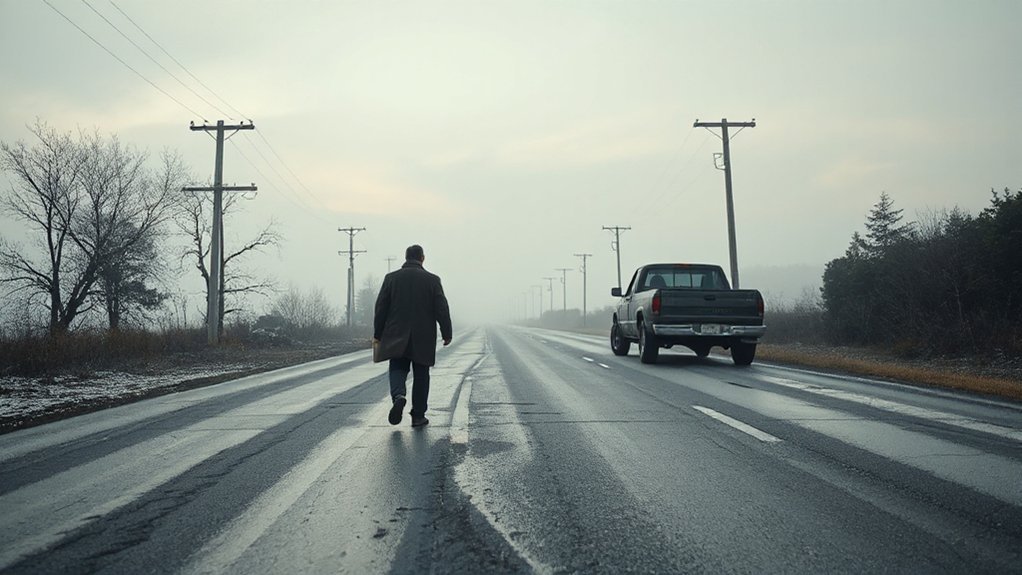
Ash and cold greet you first — gray ash, fine as flour, scraping at your teeth and filling the air like a bad decision you can’t cough out.
I walk along with you, and the book drags you into a stripped world, a post apocalyptic journey that feels tactile, grim, and oddly honest.
I walk with them into ash and hunger, a stripped world that feels tactile, grim, and unbearably true
You follow a man and a child, their father son bond is the engine, tender and brutal.
You’ll taste soot, hear the crunch of dead leaves, feel the weight of a cart.
McCarthy’s sentences hit like small surprises, quiet then relentless.
It’s spare, inventive, morally sharp.
You’ll wince, you’ll laugh in a cough, you’ll keep going because hope here is stubborn and strangely luminous.
Snow Crash — Neal Stephenson
One thing you need to know up front: Snow Crash slaps you awake with neon and noise, like someone shoved a soda can in your ear and promised ramen for dinner.
I tell you straight — this book zips, it bites, it invents cool futures, and you’ll feel the grit. You’ll ride fast through cyberpunk themes, taste virtual reality like street food, and laugh when hero Hiro slices code with blades.
I gush, I poke fun at myself, I admit I’m hooked.
- It moves at subway speed, no filler.
- It mixes tech, myth, and sharp satire.
- It’s a blueprint for modern speculative ideas, readable and electric.
Leave a Reply