
Once, I hid in a snowdrift to finish a chapter and nearly missed dinner — which tells you how powerful a December book can be. You’re going to want cozy covers, crackling tea, stories that smell like cinnamon and woodsmoke, and characters you’ll argue with like family, so I’ve rounded up ten warm, odd, funny, and woo-ful picks — classics, new favorites, and a few sly comedies — and I’ll tell you which one to open first, but only after you promise not to hog the blanket.
Key Takeaways
- Choose cozy, atmospheric novels (snow, fireplaces, small towns) that enhance December’s sensory mood.
- Include a mix of classics (A Christmas Carol, Little Women) and modern festive fantasies for variety.
- Balance light, humorous collections (Sedaris, Skipping Christmas) with emotionally rich, reflective reads.
- Pick books that emphasize community, family, or transformation to match holiday themes.
- Add one magical or folkloric title (The Night Circus, The Bear and the Nightingale, The Snow Child) for wonder.
A Christmas Carol by Charles Dickens

If you think “A Christmas Carol” is just an old man getting lectured by ghosts, think again — I’m telling you it’s a full-on wake-up call wrapped in candlelight and bitter roast chestnuts.
A Christmas Carol isn’t just ghostly lectures — it’s a fiery wake-up call wrapped in candlelight and bitter chestnuts.
You open the book and you smell coal smoke, you hear sleigh bells, and you watch Scrooge’s jaw clench.
I’ll be blunt: Dickens gives you timeless themes, he hacks through sentiment with surgical kindness, and he shows character redemption like a tech pivot that actually fixes things.
You’ll laugh at the deadpan humor, wince at Tiny Tim’s tiny cough, then cheer when Scrooge throws open his shutters and buys the town dinner.
Read it fast, read it slow, just don’t read it like a museum piece.
The Night Circus by Erin Morgenstern
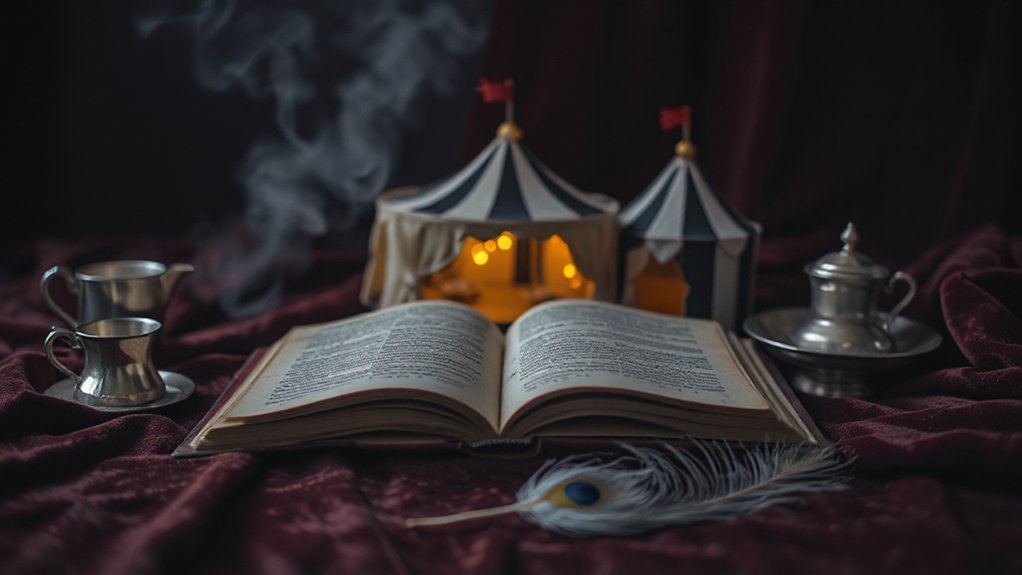
You’ll step into a black-and-white circus that smells of popcorn and rain, where lantern light shivers off satin tents and you can almost hear the soft hiss of magic.
I’ll point out the slow-burn love that threads through the booths, the delicious mysteries that snap your attention like a curtain, and the kind of enchantment that makes snowflakes feel purposeful.
Trust me, you’ll laugh, squint, and gasp in equal measure—this one’s cozy, cunning, and never what you expect.
Enchanting Circus Atmosphere
When I step under the striped canvas of The Night Circus, the air changes—cool, sweet with caramel and something floral I can’t name, and it tickles the back of my throat like a secret.
You wander aisles where circus wonders glow on velvet, and your feet find rhythms you didn’t know you had.
You’ll watch magical performances that bend light and expectation, and you’ll grin, because the tricks feel like invitations.
I narrate, you follow, we trade knowing looks with the tents.
- Contrast: dark canvas, bright inventions — innovation thrives.
- Texture: velvet, smoke, popcorn — detail fuels imagination.
- Pace: slow reveal, sudden awe — design teaches restraint.
You leave buzzing, brain happily rewired.
Love, Mystery, and Magic
Because magic here isn’t polite, it arrives with a grin and a puff of smoke that smells faintly of cinnamon and old books, and I wind up smiling back before I can decide whether that’s a sensible thing to do.
You step inside the Night Circus with me, you feel the velvet, hear distant laughter, and you quicken, because love stories hide in shadowed tents, they tug and nudge like skilled pickpockets.
I point out glass gardens, clockwork horses, a kiss that tastes like peppermint and rain. You watch two rivals rewrite fate, and your heart keeps misbehaving.
It’s mystery, it’s craft, it’s theatrical trickery, it’s magical journeys stitched into midnight.
Trust me, you’ll leave grinning, slightly bewildered, utterly charmed.
Little Women by Louisa May Alcott

Dust motes drift through the March family parlor like tiny, stubborn confetti, and I swear you can smell hot cinnamon and ink when Louisa May Alcott starts a sentence.
You’ll sit by the fire, watch sisters trade jokes and grievances, and feel the sisterly bond doing gentle, relentless work. I narrate with a grin; I’m biased, I love this mess of warmth and rules.
You’ll notice personal growth in small, stubborn increments, like a scarf unraveled and rewoven better.
- Observe: detail teaches empathy, so look close.
- Try: bold choices, creative living, even in modest rooms.
- Remember: tradition can be a launchpad, not a cage.
Read it like a blueprint, and then improve it.
The Bear and the Nightingale by Katherine Arden

I loved the Marches’ parlor for its soundtrack of stitching and squabbling, but let me pull you out of that hearthlight and into a far colder house—one where the wood creaks like an old man clearing his throat and the wind smells of iron and pine.
You step into Katherine Arden’s world, you’ll feel breath fogging, boots sinking, and a hush that’s almost a presence.
Folk creatures whisper by the stove, folklore elements braided through daily life, and you watch Vasya resist prayer and tradition with equal parts stubbornness and charm.
The winter setting presses in, sharp and beautiful, while magic slides under doors.
Read it for atmosphere, for brave girls, for that deliciously eerie push-pull between myth and survival.
The Snow Child by Eowyn Ivey

You’ll feel the cold at the edges of every page in The Snow Child, snow crunching under boots, breath fogging the air, while magical realism tiptoes in and out like a curious fox.
I’ll point out how grief shapes the characters, a quiet ache that turns small gestures into lifelines, and how the winter setting isn’t just backdrop, it’s a character that sharpens every hope and fear.
Read a passage aloud, you’ll hear the prose humming with frost and light, and you’ll catch that mix of wonder and sorrow that makes this a perfect, strange holiday read.
Magical Realism and Setting
If you want winter to feel like a character, The Snow Child will do it — it breathes frost right onto your cheeks and scrapes icicles across your boots.
I speak to you like a friend who’s trudged the same trail, I point out how magical elements slip into everyday chores, how immersive settings become a third person in the room.
You’ll feel cold, smell spruce, hear snow settling on a roof, and grin at small, uncanny miracles.
- The landscape acts, it nudges decisions, it hides secrets.
- Folklore threads through daily life, and you notice the seams.
- Scenes switch fast, tactile and precise, so you stay awake.
Trust me, it rewires how you expect winter to behave.
Themes of Grief
Though grief hums under every snowdrift in The Snow Child, it never mopes in a corner — it gets up, shoves you, leaves footprints.
I tell you straight: this book makes grief processing feel like a craft project — messy, stubborn, oddly beautiful. You smell wood smoke, taste cold air, hear sled runners whispering secrets.
The characters grieve out loud, they fumble, they invent ritual, they trade loneliness for small, fierce companionship. You’ll nod, flinch, laugh at a wry line, then cry when someone builds meaning from loss.
Holiday nostalgia sneaks in like a candy cane in your pocket, sweet and sharp. I keep nudging you to notice: mourning here is inventive, physical, thrift-store brave, and quietly revolutionary.
Winter’s Atmospheric Prose
When I say the snow in The Snow Child smells like wood smoke and old wool, trust me — I’m not being poetic for the sake of it.
You’ll walk through those pages, you’ll feel cold bite your cheeks, and you’ll notice how atmospheric settings shape every heartbeat.
I point things out, I tease the magic, I admit when I’m charmed.
- Read for texture — the snow crunches underfoot, the prose uses evocative language to make touch sing.
- Read for silence — sparse dialogue, long white pauses that pull meaning into the gaps.
- Read for invention — small surreal moments that pivot ordinary life into something new.
You’ll come away wanting to write, experiment, and breathe colder air.
Holidays on Ice by David Sedaris

Snowflakes would be a lie if they didn’t make you feel a little giddy, and David Sedaris knows that exact tickle — he turns holiday cheer into a crooked mirror and laughs right along with you.
You’ll recognize Sedaris humor immediately, the sly observational jabs, the self-mockery, the way he pins holiday traditions to the wall and studies them like odd specimens.
Sedaris’ humor arrives sharp and sly, poking holiday rituals with affectionate, self-mocking curiosity.
I walk through his scenes with you, there’s scent of burned sugar, tacky lights, a sheepish aunt, you wince and grin.
He’s inventive, sharp, never reverent, he rewires familiar rituals into comic gadgets you didn’t know you needed.
Read a story, you’ll snort, then pause, then think differently about your own celebrations.
It feels surprising, warm, and oddly liberating.
The Ten Thousand Doors of January by Alix E. Harrow

Maps have always felt like promises to me, little paper oaths that something curious waits just off the edge, and Alix E. Harrow’s novel hands you a key.
You’ll follow January, hear the scrape of brass, smell rain on slate, and taste the metallic thrill of discovery. The book teases magical doors, it opens them, and it insists alternate realities matter, not as gimmicks but as lives you can learn from.
- You’ll crave thresholds — curiosity as design tool.
- You’ll see stories as portals — narrative innovation, practical and bold.
- You’ll leave changed — imagination turned into strategy for making new worlds.
Read it with coffee, a notebook, and the stubborn belief you can step through.
Skipping Christmas by John Grisham

Guilt’s a funny thing — I felt it in my socks the first morning we decided to skip Christmas, a heavy, itchy sort that made me want to hide under the coffee table.
You’ll follow my wry, first-person lead through John Grisham’s playful, sharp take on seasonality, a humorous satire that pokes at inflated expectations and noisy neighborhood displays.
You’ll smell burnt cinnamon, see boxes of unneeded lights, hear a wife’s incredulous laugh.
I narrate our plot to opt out, you get the sting and relief, and we trade traditions for quiet, inventive rituals.
It’s clever, brisk, kind, and sardonic, a book that nudges you to rethink holiday traditions without killing the cheer, or your sense of humor.
The Bookshop on the Corner by Jenny Colgan

You’ll step into a tiny Scottish town where the air smells of peat smoke and cinnamon, and I’ll admit, I’m already jealous of the kettle on every stove.
Books pull people together here — you’ll watch strangers become friends over paperbacks, impromptu book clubs, and squabbles about the best tea blend.
It’s cozy, clever, and oddly miraculous, and you’ll want to move in before the shop even opens.
Cozy Small-Town Charm
If I’m honest, small towns are my literary comfort food, and Jenny Colgan’s The Bookshop on the Corner is the warmest bowl on the menu.
You’ll smell peat fires, feel a wool scarf tug at your chin, and watch a bookshop on wheels roll into a place where small town traditions and holiday festivities stitch people together.
I narrate this like a friend nudging you: go, explore, and tweak your expectations.
- A protagonist who reinvents herself, showing you innovation can be cozy.
- Sensory scenes—rain, cinnamon, cheap coffee—make invention tactile.
- Quiet rituals turn ordinary nights into creative labs.
You’ll laugh, you’ll learn, you’ll want to buy a tiny van.
Books Bring People Together
I loved that wool-scarf image, but let me take you a step further: books in Colgan’s world don’t just warm you, they stitch a town together.
You wander into Nina’s mobile bookshop, smell paper and cinnamon, and suddenly strangers exchange recommendations like secret recipes. You’ll see overdue smiles, shared experiences sparked by a paperback, and quirky debates over who deserves the last mince pie.
Colgan shows how literary connections become social glue; characters trade stories, gossip, advice, and even recipes, all around stacks of books. You’ll laugh, roll your eyes, then cry a little—because community grows from small, repeatable rituals.
It’s hopeful, inventive, and practical; the novel nudges you to start your own local ripple, one book at a time.
The Secret History of Us by Jess Kidd

Dinner-party gossip is how Jess Kidd sneaks up on you in The Secret History of Us — bright plates clatter, laughter skitters, and then someone mentions a name that makes the room go quiet.
You lean in, you sip wine, you smell citrus and gunmetal rain; the novel trades whispers for revelation, hidden truths unravel like string lights.
I tell you, the character development feels engineered and human, sharp and kind of scandalous, and you’ll grin when secrets click into place.
- Map the clues — follow texture, scent, and small lies.
- Track the arcs — notice how people change, then change again.
- Embrace the reveal — it’s clever, tender, and oddly generous.
Leave a Reply