Author: LeoStar

  • How to Write a Captivating Blog Post About a Book

    How to Write a Captivating Blog Post About a Book

    You want your post to grab a stranger by the lapels and make them care, so start like you mean it—drop a striking fact, a cozy scene, or a tiny confession about why the book hit you at 2 a.m., then sketch the plot and characters without giving the twist away; I’ll show you how to mix vivid quotes, sensory details, and a dash of blunt critique, keep the tone warm and witty, and finish with a call that actually matters—but first, let’s talk about your opening line.

    Key Takeaways

    • Open with a surprising sensory detail or brief scene that hooks readers and poses a compelling question about the book.
    • Provide essential context—setting, tone, opening hook, main complication—without revealing the ending.
    • Focus on emotional resonance: describe the feelings the book evokes with concrete examples or memorable lines.
    • Use short, striking quotes and tiny scenes to illustrate points, then connect them to your personal response.
    • Offer constructive critique and actionable suggestions, ending with a clear call to action for readers.

    Hook Readers From the First Sentence

    engaging openings sensory details

    How do you grab someone before they’ve even read the first line? You grab them with an engaging openings mindset, a bold image, a scent of rain on asphalt, the snap of a paperback spine.

    I’ll nudge you to start loud, then tighten. Lead with a surprising twist—an odd fact, a dare, a tiny confession—that makes the reader twitch, curious.

    You’ll drop concrete sensory details, short punches, then a softer line that hooks emotion. Don’t lecture, tease; don’t summarize, stage.

    I’ll show rather than tell, set a micro-scene, let dialogue crack like glass, then close the first beat with a question that pulls.

    You’ll practice, fail fast, then write a first sentence that won’t let go.

    Provide Essential Context Without Spoilers
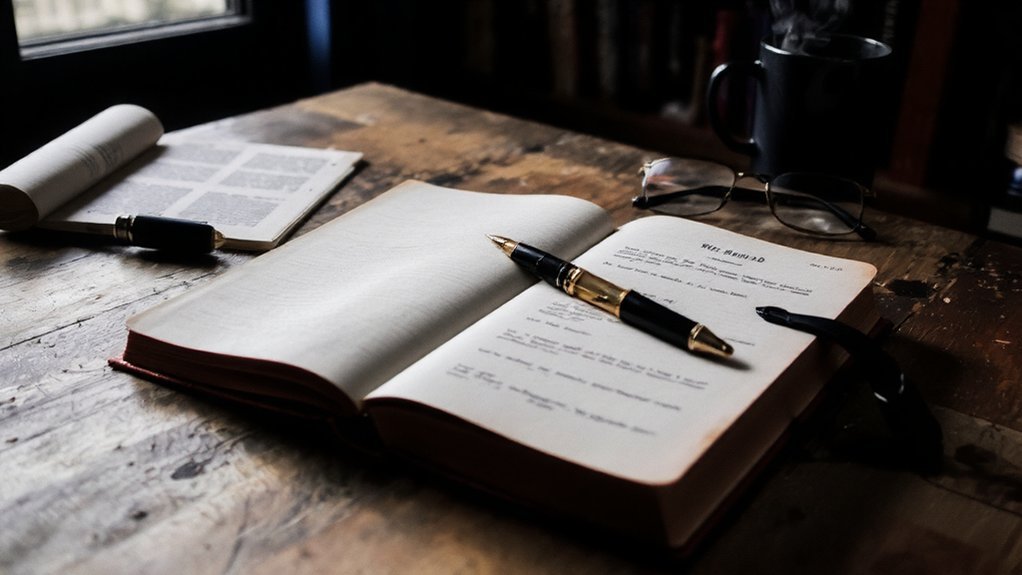
    engaging plot vivid setting

    You don’t need to spoil the ending to make readers care, so I’ll sketch the key plot beats in broad strokes—who’s pushed into change, what obstacle stalks them, and the stakes, without naming the final twist.

    I’ll paint the setting and tone too, the rainy city streets you can hear in the first chapter, the dry, sarcastic voice that makes you smirk, so folks know what mood to expect.

    Keep it tight, I’ll be blunt and playful, and you’ll get enough texture to decide if you want to turn the page.

    Key Plot Beats

    While I won’t spoil the ending, let me walk you through the book’s key plot beats so you know what to expect: the opening hook that smells like rain and danger, the complication that flips the protagonist’s world like a tossed deck of cards, and the midgame choice that makes you squirm in your seat—physically, like you might drop your coffee.

    You’ll map the inciting incident, rising stakes, and the turning point without revealing plot twists, so readers sense surprises are coming. Note the character arcs, who changes and why, not how.

    Point out tempo shifts, a tense confrontation, and a bold dilemma that forces decisions. Keep it crisp, sensory, and inventive, and let curiosity do the heavy lifting.

    Setting and Tone

    If the setting were a person, I’d introduce it with a handshake and maybe a flashlight so you can see the freckles—this place hits all your senses, and it tells you what kind of story you’re in before the first line of dialogue.

    I want you to notice atmospheric details that do more than decorate, they set mood, hint stakes, and whisper history. Point out scent, light, temperature, and the odd object that refuses to be ignored.

    Describe the emotional landscape too, without spilling spoilers: is the world tense, lush, brittle? Say how characters move through it, what they touch, what they avoid.

    Keep it crisp, playful, and useful. You’re guiding readers to feel the scene, not summarizing the plot, and that’s your real power.

    Describe What Resonated With You

    emotional resonance through personal connection

    Because a book hits you in a strange, specific place — the gut, the tiny bones behind your ribs, the part of your brain that rewrites your grocery list — I like to start by naming that place and what it felt like, right down to the temperature of the room and the mug in my hand.

    You tell readers why the book mattered to you, lean into that personal connection, and admit when it surprised you.

    Say what stuck — a thought, a line, a feeling — and why it changed your day or work.

    Keep it tangible: the squeeze in your chest, the laugh you couldn’t help, the idea that rerouted your plans.

    Be honest, curious, inventive; let your emotional impact guide the reader.

    Use Vivid Quotes and Concrete Examples

    Quotations are your secret weapons, so don’t be shy — wield them. You pull a line that snaps the scene into focus, you show vivid imagery, and readers feel the book’s pulse.

    Pick short, striking quotes, place them like spotlight beams, then translate: tell the reader the smell of rain on the page, the scrape of a chair, the exact line that made you blink. Concrete examples make abstract praise believable.

    Don’t just say “beautiful,” quote the cadence, the metaphor, the moment a character flinches. Use impactful language to bridge quote and context, then narrate a tiny scene—your coffee, your scribbled margin note—and watch curiosity spike.

    I’ll admit, I sometimes overquote; I try to resist.

    Balance Critique With Constructive Insight

    You’ll want to point out what the book does well, crisp scenes, sharp ideas, or that character voice that stuck in your head like gum on a shoe.

    Then, gently offer concrete fixes—specific scenes to tighten, pacing to smooth, or clearer stakes—so the author (and your reader) can picture the change.

    I’ll keep it honest, a little cheeky, and useful, because praise without a roadmap is just applause in an empty theater.

    Highlight Strengths Clearly

    When I’m praising a book, I don’t just trot out vague compliments like “well-written” and call it a day; I point to specifics—an image that stuck in my throat, a chapter that made me laugh aloud in public, a line of dialogue that felt like a slap and a hug at once.

    You’ll do a strengths analysis that reads like evidence, not fan mail. Pinpoint scenes, sensory beats, crisp pacing, and character development that surprises, then describe how they land on you.

    Say what worked, why it hummed, and give a short quote or moment to prove it. Be playful, humble, confident—admit when you’re biased, wink, and let the reader taste the book’s best parts.

    Offer Actionable Suggestions

    Although pointing out what didn’t work can feel a little mean, I treat critique like handing someone a well-lit map — clear, practical, and not a personal attack.

    I’ll point out specific moments where reader engagement dipped, and then give concrete fixes you can try right away. Swap slow exposition for a sensory scene, cut a paragraph, add a line of dialogue, or tighten a POV shift.

    Suggest alternate narrative techniques, show a quick before-and-after sentence, and invite the author to run a short reader test. You’ll sound bolder, and you’ll keep curiosity alive.

    Be kind, but be useful. Tell them what to tweak, how to test it, and when to trust their instincts — with a wink, not a critique-shaped guilt trip.

    End With a Clear Call to Action

    Since every great ending deserves an encore, I make the close of a book post work like a tiny stage cue: bright, clear, and impossible to miss.

    You’ll pick one crisp action, nail audience targeting, and pair it with bold engagement techniques that feel modern, not gimmicky.

    Tell readers exactly what to do next — buy, comment, share a line that moved them — and show the sensory payoff: a warm cup waiting, a dog-eared page, a new idea buzzing.

    I’ll write the CTA as if I’m tapping your shoulder, playful but firm, with a little self-deprecating wink: “Try it, you’ll thank me later.”

    End with a link, a deadline, and a tiny reward, and watch that curtain call turn into real momentum.

  • The Best Books With Villain Protagonists in 2025

    The Best Books With Villain Protagonists in 2025

    You’ll like these books because they make you root for people you shouldn’t, and I’ll admit I enjoy the guilty pleasure—warm coffee in hand, the page smells like mischief. I’ll walk you through charming manipulators, crooked geniuses, and tyrants with soft spots, point out the tricks authors use, and confess when a villain fooled me; stick around—there’s a twist coming that’ll make you reconsider who the real monster is.

    Key Takeaways

    • Highlight recent critically acclaimed novels (2023–2025) featuring sympathetic or charismatic villain protagonists.
    • Emphasize morally ambiguous narrators who blur reader complicity and ethical judgment.
    • Recommend books with strong sensory atmosphere and cunning, seductive antagonist voices.
    • Include varied genres (literary fiction, thriller, fantasy, noir) to showcase different villain archetypes.
    • Prioritize titles praised for complex character psychology, craft, and memorable dark charisma.

    The Charismatic Manipulator Who Redefines Sympathy

    charming deception thrilling danger

    Picture a golden smile that hides a knife — I’ve met that grin more times in fiction than at dinner parties, and I still can’t resist it.

    A golden smile that conceals a knife — I keep leaning into that dangerous, irresistible charm.

    You spot them across a crowded page, smooth as silk, voice like warm syrup, and you’re pulled in by charismatic deception, by a manipulative charm that makes you forgive before you know why.

    I lean in with you, tasting cheap coffee and risk, watching them rearrange truths like playing cards.

    You’ll laugh at their jokes, then flinch when consequences click into place.

    I confess, I root for clever villains, I admire the craft.

    They teach you to read subtext, to love style and danger together.

    Don’t mistake sympathy for approval — it’s curiosity, delicious and dangerous.

    The Sympathetic Criminal Who Tests Your Morals

    sympathetic criminals test morals

    If you catch yourself secretly rooting for someone who steals, lies, or bends the law, don’t worry — I do it too, and I won’t pretend it’s noble.

    You watch them slide through rain-slick alleys, feel the click of a safe, taste stale coffee on stakeout nights, and you cheer.

    That’s the pull of the sympathetic criminal: they’re messy, brilliant, human.

    I’ll point out how authors set up moral dilemmas, then shove you into the hot seat, asking what you’d forgive for love, revenge, or survival.

    You squirm, you justify, you laugh at yourself.

    I narrate with a grin, offer pithy lines, and leave you craving the next book that makes your ethics wobble.

    The Fantastical Tyrant With a Tender Interior

    tender tyranny s complex allure

    When a despot blooms a single rose in a throne room full of carved teeth, you lean in — yes, you do, and so do I — because that tiny, tender thing ruins the whole neat picture of evil.

    You watch the fantastical fragility of a ruler who hums lullabies to glass birds, who arranges sunsets like careful bowls, and you feel the weird tug: sympathy, curiosity, alarm.

    This is tender tyranny, all velvet gloves over iron claws, and it forces you to ask which parts are performance, which are habit, which are breaks in the armor.

    I point, you squint, we trade glances with the page.

    Scenes shimmer—petals fall, candles gutter—and you keep reading, because complexity tastes like danger, and you like danger.

    The Unreliable Narrator Twisting Truth and Guilt

    Because I love being lied to, I lean in whenever a narrator starts tripping over their own memory, smiling like a gull that’s just spotted a chip of sandwich, and you should know why: unreliable narrators make guilt taste like citrus—sharp, bright, impossible to ignore.

    You follow a voice that fudges facts, pauses, then offers a detail that glints like a lie with polish. That’s truth manipulation, and it thrills you because it converts moral fog into a puzzle you can finger.

    I narrate, I backtrack, I confess a half-truth and watch you rearrange blame. It’s guilt exploration as sport. You smell cold coffee, hear the clack of keys, and feel the delicious unease of being complicit.

    The Calculating Antihero Driven by Ambition

    You watch them move through rooms like a chessmaster, cool breath fogging the glass as they map the next climb.

    I’ll point out how their strategy turns tidy plans into cold ascents, and how those moral lines smear into gray as they step over people who once trusted them.

    It’s messy, thrilling, and a little awful—exactly the kind of ambition you can’t help but admire from a safe distance.

    Cold, Strategic Rise

    Slip into a sharp suit of calm and you’ll see the world differently; I watch chessboards, not crowds, and I’ll tell you why that matters.

    You step into rooms sensing temperature, the click of glasses, the microbeat of hesitation. You prefer cold calculation, you map moves like a cartographer, and you don’t flinch when others do.

    You plot in long arcs, layer by layer, strategic manipulation humming under your skin. You trade warmth for leverage, but you still savor coffee that bites, the metallic tang of late-night plans.

    I narrate your ascents, the quiet taps on keyboards, the breath held before a door opens. You’re precise, unapologetic, inventive—ambition as craft.

    It’s thrilling, a little cruel, and entirely deliberate.

    Moral Lines Blurred

    When the rules get fuzzy, I lean in—watch the tilt of a head, the clink of a glass, the way someone’s smile doesn’t reach their eyes—and I start recalculating.

    You follow the calculating antihero, you notice the cold logic, the neat lists of pros and cons that hide messy motives.

    You’ll smell cigar smoke, feel the slick wood of a desk, hear a pen tapping like a metronome for ambition.

    These books tempt you with moral complexity, they hand you ethical dilemmas like polished keys, and you try them, one by one.

    You’ll root for cunning, then grimace at the cost, then cheer because you’re human and greedy for stories that don’t apologize.

    I wink, because so am I.

    The Monster Who Reveals Human Weakness

    I want you to look in the cracked mirror these monsters hold up, feel the sting when their grotesque choices reflect your quiet compromises.

    You’ll see moral ambiguity laid bare, the air tasting like iron as empathy sneaks in through the cracks and makes you squirm.

    I’ll point to books that make your chest tighten, whisper a rude truth, then somehow have you rooting for the beast.

    Mirror to Humanity

    Even if you came here hunting monsters, you’ll leave staring at a mirror.

    I nudge you toward books where villains hold up dark reflections, and you flinch, because those pages make you check your hands. You’ll smell ink and sweat, hear a door close, feel a pulse quicken as the antagonist names your comforts and cracks them.

    I point out scenes that force moral introspection, but I don’t moralize; I wink, I prod. You’ll watch cruelty replay family dinners, greed echo in boardrooms, tenderness twist into threat.

    You laugh, nervously, at a line that’s too true. You’ll close the book, breathe, and realize the monster’s lesson wasn’t glory, it was a dare—to change, or to admit you wouldn’t.

    Moral Ambiguity Exposed

    You thought the mirror scene left you shivering? I lean in, grin crooked, and tell you it was just the warm-up.

    You track a villain who peels back skin, not to scare, but to expose moral complexity, the soft rot in choices you’d make if pushed.

    You smell cold metal, hear rain on glass, feel the actor’s calm breath. I point, you squirm, we both laugh.

    Consider these provocations:

    • A calculated kindness that buys a lie, and the silence that follows.
    • A confession that rewrites guilt, like ink smudged by rain.
    • Small cruelties that reveal survival math, not monsters.
    • Choices that force you into ethical dilemmas, breathing hot and close.
    • The beauty of being tempted, and admitting it.

    You’ll leave unsettled, smarter, oddly proud.

    Empathy Through Monstrosity

    When a monster steps off the page, it doesn’t roar so much as point a finger at the parts of you that wobble in bad light; I watch, amused and a little proud, as you squirm.

    You lean in, smelling dust and ink, and the creature tilts its head, studying your twitch. It shows you where empathy gaps live, those cold, awkward spaces you ignore over dinner.

    You flinch, then laugh, because monstrous empathy arrives in a slow, filthy grin, reminding you how fragile kindness can be.

    I narrate, I prod, I hand you a flashlight. You squint, find the soft places you’d buried, and admit you’re not all virtue.

    It’s uncomfortable, honest, and oddly freeing.

    The Charming Sociopath You Can’t Look Away From

    Why does a smile that should feel like danger instead make you lean in? I’ll admit, I’ve been duped by that charming darkness, the sociopathic allure that slips in like perfume. You watch, you judge, then you cheer—don’t lie.

    I narrate the lookout, the tiny details: cologne, a careless laugh, a hand resting too long. You feel curious, then complicit.

    • He trims a rose, whispers where blood once was.
    • She orders espresso, tastes rumors like sugar.
    • He sketches plans, doodles your name in the margins.
    • She walks city alleys, lights flicker in reply.
    • He tells a joke, you forget the plan.

    You stay because the voice is clever, the stakes are art, and you love being wrong.

  • Why People Love Dark Academia Fashion and Books

    Why People Love Dark Academia Fashion and Books

    You crave dusty books and tweed coats at the same time, don’t you; you want both mystery and a sensible blazer. You pad into a dim library, the lamp smells faintly of wax and orange peel, you tuck a stray curl behind your ear, and suddenly your outfit feels like armor. You like the melancholy, the ritual of making tea at midnight, the clever lines you quote to sound smarter than you feel — and there’s more, so keep going.

    Key Takeaways

    • Romanticized intellectualism: Dark Academia celebrates learning, libraries, and the mystique of scholarship as desirable and aspirational.
    • Aesthetic cohesion: Moody colors, vintage fabrics, and curated details create an evocative, wearable visual identity.
    • Ritual and identity: Studying rituals and distinctive outfits offer structure and a clear, expressive personal narrative.
    • Emotional resonance: Poetic melancholy and nostalgia provide comforting, bittersweet feelings that spark creativity.
    • Community and storytelling: Shared tastes in books, study groups, and conversations build belonging and imaginative worlds.

    The Allure of Scholarly Aesthetics

    intellectual charm vintage inspiration

    When you step into a dim library, the air feels like a slow exhale—dust motes drifting in sunbeams, leather spines whispering as you run a thumb along them—you’re already halfway in.

    You lean close, you breathe the pages, you feel an intellectual charm that isn’t smug, it’s inviting. I nudge you toward stacks that smell like history, urging you to mix vintage inspiration with fresh ideas, because nostalgia needs a tweak, not a shrine.

    You skim marginalia, you steal a line, you grin at your own cleverness. I joke, you roll your eyes, and we both know the aesthetic isn’t just clothes, it’s momentum: study, scribble, create.

    You leave with a spine straighter, a head fuller, plans in your pocket.

    Fashion as Ritual and Identity

    fashion as personal ritual

    You breathe the library air, then you button your cardigan like it’s armor—same motion, different meaning. You tug sleeves over knuckles, inhale wool and old paper, and feel the small ceremony of dressing reshape you.

    Clothes become identity expression, not just cover; a tweed elbow patch says, “I study, I wonder,” while a scarf ties your mood into a tidy knot. You perform these acts daily, each fold and polish a ritual significance that steadies mornings and sparks conversation.

    Clothes speak: a tweed patch whispers curiosity, a scarf fastens feeling—daily rituals that steady and invite conversation.

    I tease myself about theatricality, but I’m serious: fashion here is practice, rehearsal for the self you want. You swap a brooch, you change posture, and the room answers.

    It’s shorthand, it’s signal, it’s private and proudly public.

    Literature That Feels Like Home

    nostalgic comforting inventive literature

    If a book could wear a cardigan and hum softly, it’d be the one you keep beside your lamp, dog-eared and smelling faintly of tea. You open it and step into nostalgic settings, cobbled courtyards and rain-soaked libraries, but with fresh angles that surprise you.

    I nudge you toward books that feel like an old coat, familiar yet tailored—characters who speak to you, who bruise and joke, forging character connections that linger. You trace margins, taste ink, hear shoes on stone.

    I’ll tell you where to look: subtle maps, meals described like spells, rooms that become secret allies. You’ll read, return, and find comfort that’s inventive, not safe—intimate, clever, and stubbornly alive.

    The Appeal of Melancholic Nostalgia

    Because nostalgia smells like wet wool and old paper, you slip into it the way you slip into a familiar coat—awkward at first, then suddenly right.

    I watch you cradle a chipped mug, feel the weight of dusk in the room, and know that nostalgic yearning has you by the collar, grinning despite yourself.

    You chase poetic melancholy like it’s a secret ingredient, stirring old songs, lamp light, and margin notes into something new.

    You’ll call it sadness, I’ll call it texture.

    You rearrange memories like furniture, vote for the shadowed corner.

    It’s a stylish ache that sparks invention, a soft tether to what mattered, and yes, it’s oddly energizing—grief with a to-do list.

    Community, Rituals, and Study Culture

    Nostalgia sits at the center table, but community is the chatter that fills the room; I can smell the tea and hear the quiet clink of teaspoons as we gather.

    Nostalgia at the center, community murmuring around it—tea-steeped gatherings where ideas and teaspoons gently collide.

    You step in, you bring a notebook, and we trade margins and marginalia like secret currency.

    You want rituals that feel new, not dusty—so we invent midnight reading sprints, and candlelit citation nights, and flirt with productive chaos.

    Study groups hum with purpose, they riff, they critique, they laugh.

    Intellectual camaraderie keeps you honest, it sharpens ideas, it comforts when a paragraph collapses.

    You’re part of a scene that studies, performs, and experiments.

    1. Shared rituals that spark creativity.
    2. Short, structured study groups.
    3. Communal celebrations of tiny wins.

    Balancing Romanticism With Realism

    While I lean into the romance—soft lamplight, wool scarves, and the idea that every book could be a conspirator—I also pack a planner and a realistic sense of deadlines, because prettiness doesn’t pay tuition.

    You’ll savor romantic ideals, let them color your notes, and still set alarms. You’ll buy a vintage coat, but you’ll pick durable shoes for rainy walks between archives.

    You’ll write sonnets in margins, then summarize sources in bullet points, because balance is stylish. I joke that my heart lives in a library, my head lives in a spreadsheet.

    That split keeps you creative, and keeps bills paid. Make pragmatic choices, keep the mood, tweak rituals, and own both the dream and the to-do list.

  • Best Books About Time Loops and Alternate Realities

    Best Books About Time Loops and Alternate Realities

    You’ll love how these books loop you back, nudge you left or drop a mirror in your lap; I’ll walk you through clever rewinds, split timelines, and intimate multiverses that smell like rain and burnt toast, where a character’s tiny choice shatters a life or makes it holy. I keep it practical, a little snarky—think quick scene flashes, bits of dialogue, and maps of “what if” streets—so stick around if you like puzzles with heart and very bad luck.

    Key Takeaways

    • Start with Groundhog Day–style classics (e.g., Groundhog Day novelizations, Derek Landy) to experience cozy, iterative time-loop storytelling.
    • Read puzzle-driven time-loop mysteries (e.g., Palm of Time, The First Fifteen Lives of Harry August) for investigative repetition and revelation.
    • Explore intimate multiverse novels (e.g., The Midnight Library, Life After Life) that examine subtle, personal alternate lives and choices.
    • Try high-concept alternate-reality epics (e.g., The Man in the High Castle, 11/22/63) for large-scale historical divergences and moral consequences.
    • Mix short-story collections and novellas for varied loop mechanics and concise explorations of branching realities.

    Groundhog Day and Repeating Days in Fiction

    time loops and details

    If you’ve ever wished you could rewind a bad day—or secretly hoped for a do-over after an especially mortifying moment—then welcome to the cozy tyranny of Groundhog Day and its literary cousins.

    You immerse yourself in time loop stories because they let you push the same buttons, watch the same coffee spill, learn exactly when the dog bolts, and tweak one choice.

    Day repetition becomes your lab, you experiment, fail, and try again, faster each cycle.

    I’ll admit I savor the small details—the smell of rain on hot pavement, the jangle of a tram bell—because creators use them like fingerprints to map change.

    I savor the tiny sensory cues—the rain-wet pavement, the tram’s jangle—those fingerprints creators drop to trace change.

    These novels invite you to hack routine, to iterate your way toward meaning, and to enjoy clever twists that reward attention.

    Parallel Lives and Split Timelines

    parallel choices divergent realities

    When I wake up in a story about parallel lives, I always expect the room to be slightly wrong—colors shifted, the mug on the left instead of the right, the dog wearing a different collar—and that small dissonance is what hooks me.

    You step through pages that treat multiverse theories like a toolbox, not a sermon. You’ll feel the texture of choices, the metallic clink of keys in a palm, the stale coffee of roads not taken.

    Split decisions ripple outward, spawning selves that argue in the margins, swapping insults over breakfast. I narrate, you follow, we trade knowing glances with hyped curiosity.

    These books reward risk, they tinker, they ask “what if” and then shove you, laughing, into the next corridor.

    Time-Loop Mysteries and Puzzle Novels

    time loop mystery puzzles await

    You liked the tiny wrongness of parallel lives, the mug switched, the dog sporting a feisty new collar, and you thought choices were the only thing that made stories click.

    I’ll tug that thread into time-loop mysteries where you relive clues, taste burnt coffee again, hear the same footstep twice, and grin because you’re smarter this loop.

    These books make loop mechanics a puzzle box, they show you gears turning inside narrative structure, and they dare you to pry a seam.

    You’ll follow a detective repeating one grim afternoon, learn to read small deviations, and laugh when I fumble a clue aloud.

    It’s cozy dread, crisp clues, clever reveals—books that teach you to love repeating, and then surprise you.

    Alternate Histories and Branching Worlds

    Because I’ve always liked the smell of old paper and the thump of a train station announcement, alternate histories grab me like a hand on my sleeve and won’t let go.

    You step into worlds where one small choice reroutes a continent, and you feel the air change — coal smoke thicker, or flags you don’t recognize snapping over familiar streets.

    You love historical speculation, the delicious thought experiment of, say, a different treaty signature or a messenger who missed a train.

    Narrative divergence becomes playground and puzzle, a sandbox for bold ideas and moral what-ifs.

    I guide you through novels that rewire timelines, point out surprises, and crack wise when an author gets giddy.

    You’ll leave excited, a little unsteady, ready to question every “what if.”

    Intimate Multiverses and Character Doubles

    I loved alternate histories for the big, dramatic gestures — flags, trains, treaties — but now I want the small, quiet uncanny: rooms where a single life splits into many, and each version breathes slightly differently.

    You step into those pages and you feel the wallpaper, you smell coffee gone cold, you hear footsteps echoing slightly out of sync.

    I show you scenes where character reflections stare back with different scars, different jokes, different regrets, and you think, huh, which me is the real me?

    Authors peel back dual identities like bandages, revealing choices as textures, not just plot devices.

    You’ll meet doubles who argue over recipes, who share a memory but not the tone.

    It’s intimate, clever, and oddly consoling.

  • Top 10 Books That Will Make You Cry

    Top 10 Books That Will Make You Cry

    Did you know over 60% of readers say a book made them cry at least once? You’ll squint, you’ll gasp, you’ll hug a pillow and pretend it’s a person—I’ve done it, awkwardly—because these ten novels hit you where it counts. You’ll meet fiercely loyal friends, awful betrayals, quiet deaths, and small acts that feel like miracles; I’ll point out the parts that wrecked me and why they’ll get you too, but first—which one do you think will break you hardest?

    Key Takeaways

    • Include novels known for emotional stakes and themes of loss, love, or injustice that consistently move readers to tears.
    • Highlight representative titles (e.g., A Thousand Splendid Suns, The Fault in Our Stars, The Kite Runner) to anchor the list.
    • Note why each book evokes crying: grief, guilt, sacrifice, innocence lost, or quiet ethical dilemmas.
    • Offer brief content warnings (death, abuse, terminal illness, trauma) so sensitive readers can decide.
    • Suggest reading context: bring tissues, read with pauses, or share with a friend for emotional support.

    A Thousand Splendid Suns

    love sacrifice resilience hope

    Grief hits like dust in sunlight—welcome to A Thousand Splendid Suns, a book that’ll sneak up on you, punch your heart, then offer you tea like nothing happened.

    Grief arrives like dust in sunlight—this novel punches, comforts, and leaves you strangely braver.

    You’ll follow Mariam and Laila, you’ll taste cold bread and stove-smoke, you’ll feel their hands clasping in a dark room.

    I tell you straight: this is love and sacrifice on steroids, tender and fierce. You learn resilience in adversity by watching them stitch hope into tiny moments, plotting escape with whispered jokes, sharing a single blanket.

    I joke to keep from crying, you’ll do the same. Scenes land like soft blows, dialogue bites, scents linger—cardamom, dust, old metal.

    It’s brutal, warm, and oddly uplifting.

    The Fault in Our Stars

    love in difficult circumstances

    You walk into Hazel and Gus’s world and your chest tightens, because their love blooms in hospital corridors and on rain-wet streets, it’s bright and ridiculous and stubborn against every prognosis.

    I’ll say it straight: you’ll laugh at their jokes, wince at the scans, and then wonder what makes life worth the small, perfect moments.

    Keep a tissue handy, because when they argue about fate and meaning, you feel every heartbeat like a drum in your ribs.

    Love Against Odds

    Even if I try to be cool about it, I still choke up at the start — that first hospital room, the cardboard smell of textbooks, Hazel handing Augustus a cigarette lighter like it’s a tiny dare.

    You watch two kids invent something brave, and you feel unconditional love bloom, messy and bright.

    You see love resilience in how they joke through pain, love’s sacrifice when plans bend for each other, love’s endurance in small routines.

    Their love’s transformation turns fear into shared grin.

    You witness love’s redemption in honest confessions, love’s complexity in moments that aren’t tidy, love’s fragility when silence arrives, love’s triumph in simple presence, love’s legacy in the echo they leave.

    You laugh, you sniffle, you breathe differently.

    Mortality and Meaning

    If love made you choke up, mortality will have you inhale sharply and notice the taste of hospital bleach. You watch Hazel and Gus trade jokes, raw truths, and mixtapes, and you feel the room tilt.

    I tell you plainly, this isn’t sentimental cheese, it’s bright, sharp grief that teaches you to laugh in a waiting room. You get existential reflections that sting, legacy exploration that hums, and tiny, fierce moments that make time feel urgent.

    You touch paperbacks, dog-ear pages, sniff that bookstore glue, and the ache lands. I joke about my own melodrama, you roll your eyes, then you cry—quiet, surprised, satisfied.

    It’s clever, humane, and it’ll stay with you.

    The Kite Runner

    messy redemption and honesty

    Guilt sneaks up on you like a cold wind through an open window, and The Kite Runner swings that window wide.

    Guilt creeps in like a cold wind; The Kite Runner throws that window wide, unflinching and raw.

    You feel the grit of Kabul streets under your shoes, smell stale tea in a crowded room, and watch a boy run after a kite that’s also a promise.

    I’ll tell you straight: this book hits with smart, messy redemption arcs and a fierce sense of cultural identity, it doesn’t preach, it pulls.

    You squirm, you root, you wince at choices you’d never make, yet recognize the ache anyway.

    Dialogue snaps, scenes move like film cuts, and occasionally I crack a joke to save us both.

    Read it when you want honesty, not comfort; it’ll stay with you.

    Never Let Me Go

    Khaled Hosseini left you raw; now Kazuo Ishiguro makes you ache in a quieter way, like a bruise you notice when you reach for your tea.

    I watch you navigate Hailsham with curious, stubborn eyes, you touch worn dorm sheets, you smell chalk and rain, and you laugh at awkward jokes to keep from asking the big questions.

    The novel toys with ethical dilemmas, it tugs on your gut, then it teaches a strange kind of emotional resilience.

    You don’t get shouted answers, you get gentle betrayals.

    I poke you with a wry smile, confess I’m teary too, we both love characters who carry secret weight.

    Read it slowly, savor the quiet, prepare to ache and think.

    The Book Thief

    You’ll watch soot-streaked faces and empty chairs teach you what wartime loss smells and sounds like, not as headlines but as heartbeats.

    You’ll see words used like matches—lighting hope, burning fear—and you’ll want to steal every sentence back for someone who needs it.

    I’ll bet you’ll end up cheering for this ragtag, impossible family, crying when they hold each other close, and feeling a little guilty for enjoying the company.

    Humanizing Wartime Loss

    If I tell you The Book Thief makes wartime loss feel painfully small and painfully human, don’t roll your eyes—I’m right.

    You walk streets with Liesel, smell coal and rain, hear distant boots, and it lands: grief’s impact isn’t abstract anymore, it’s a hand on your shoulder.

    I point at moments that sting, you flinch, we laugh awkwardly, because the book forces intimacy with ordinary faces ruined by war.

    You watch small rituals—bread stolen, books read aloud—become tiny, stubborn healing journeys.

    It’s simple, brutal, tender; scenes cut to the bone.

    I confess, I cried at the kitchen table, crumbs and all.

    You’ll find yourself noticing names, listening harder, wanting to mend things you never knew were torn.

    Power of Words

    Language is a weapon and a salve, and in The Book Thief I felt both before breakfast. I read like a thief myself, stealing lines, tasting poetic language, feeling emotional resonance that knocks the wind out of you, then holds you.

    You’ll notice narrative depth in small gestures, character development in a glance, storytelling techniques that make each page hum.

    • Words stitched into memory: the smell of ink, the rasp of pages, the quiet fury of a child.
    • Lines that teach you to feel: thematic exploration meets reader empathy, hooray and hurts.
    • Sentences that change you: literary impact, cultural significance, and tiny transformative experiences.

    I joke, I cry, I learn, and you’ll do the same.

    Found Family Bonds

    When I say family in The Book Thief, I don’t mean tidy portraits and matching sweaters—I mean the messy, accidental tribe that forms because people choose each other when everything else is collapsing.

    You walk into Liesel’s world and feel chosen family wrap around you like a threadbare blanket, comforting, stubborn, real. You see unconditional love in small acts: bread slid into a pocket, a hand squeezed under a table.

    Shared struggles stitch people together, connection through adversity becomes daily routine, whispers in the cellar, the smell of rain on coal. You witness emotional resilience, bonds of friendship that become support systems, transformative relationships that reshape survival into meaning.

    It’s heartbreaking and hopeful, funny and fierce—exactly the kind of grief that teaches you to keep loving.

    Me Before You

    I’m not ashamed to say I bawled like a baby reading Me Before You; there, the secret’s out. You’ll meet Lou and Will, and you’ll ride a sharp, humane Emotional journey that trades predictability for honest pain.

    I tell you, the Character development hits like a polite elbow to the ribs — surprising, warm, a little awkward. You laugh, you squirm, you reach for tissues. The prose shows rather than lectures, and you’ll admire the clever risks it takes.

    • Bright café light, lukewarm coffee, awkward jokes that land anyway.
    • Hospital room hush, a hand squeezed, a promise said and unsaid.
    • A seaside scene, gulls, salty wind, regret tasting like wet sand.

    All the Light We Cannot See

    You’ll follow Marie-Laure’s fingertips as she navigates a darkened Paris apartment, and you’ll feel the grain of the wooden stairs under her palms, which makes the world strangely intimate and sharp.

    I watch how wartime hushes small lives — the radio hiss, the muffled boots, the tiny mercies like a shared loaf — and I’m not ashamed to admit it squeezes my chest.

    Blindness and Perception

    Even though the world in All the Light We Can’t See often sits in darkness, the book makes you see more than a dozen sunny afternoons ever could.

    I walk beside Marie-Laure, you listen to radios, and perception shifts hit like light through shutters. You feel textures, hear footsteps, taste salt, and your emotional awareness tightens, like a fist unclenching.

    I joke to keep from crying, you smirk, then ache. The prose teaches you to map inner landscapes, to chart how blindness sharpens other senses, and to invent ways of knowing without sight. It’s inventive, humane, and quietly radical.

    Here are snapshots that stick:

    • Finger tracing Braille, rain on cobblestones, a radio humming.
    • A tethered small hand, warm bread, distant church bells.
    • A map drawn with memory, breath held, then released.

    War’s Quiet Tragedies

    When war sneaks into the small moments, it doesn’t arrive with fanfare — it arrives like a missed step, a radio gone quiet, a child’s hand that won’t reach yours.

    You watch a bread crust cool on a windowsill, you listen to a blind boy describe light, and you feel how ordinary life thins.

    I tell you plainly: this book teaches emotional resilience by showing small, stubborn refusals to break.

    You’ll notice personal sacrifice stitched into gestures—a map tucked away, a silence held for someone else.

    Scenes smell of coal and salt, doors creak, little radios crackle.

    I laugh at my own heavy heart, then cry a bit.

    It’s quiet, sharp, humane, and it stays with you like a single, clear note.

    Small Mercies Amid Darkness

    If you let me be blunt, I’ll say it right up front: All the Light We Can’t See finds small mercies hiding in the cracks, and I love it for that—maybe too much.

    You watch characters collect small victories, taste fleeting joy, and patch wounds with resilience themes that feel honest. I talk to you like a friend, pointing out hope in despair, healing journeys that hum, love’s endurance that won’t quit.

    You feel light in shadows, hear compassion acts in quiet rooms, and sense redemption arcs folding back into daily life. It’s tactile, it’s sharp, it’s tender. You’ll laugh, snort, cry a little, then nod. You’ll want to embrace vulnerability, then get up and try again.

    • Radio static, warm bread, soft confession
    • Rain on cobblestones, coded kindness, a stubborn hope
    • Flickering lamp, shared silence, steady hands

    The Lovely Bones

    Because I couldn’t stop thinking about Susie’s voice the minute I turned the page, I’ll warn you straight away: this book sneaks up on your heart and rearranges it.

    You’ll read from a vantage that toys with life after death, and it’ll make you curious, uncomfortable, oddly hopeful.

    I guide you through grief like a tour guide with a flashlight, pointing at small, bright details — a smell, a scrap of music, a backyard swing — that sting and soothe.

    You laugh, you flinch, you keep turning pages.

    The prose is clever, the scenes tactile, and yes, you’ll cry, but in a way that nudges emotional healing.

    I won’t coddle you; I’ll tell you when to breathe.

    A Little Life

    Brace yourself: A Little Life is a gut-punch wrapped in velvet. You plunge in, and the city smells of rain and cheap coffee, voices close, laughter brittle.

    I tell you, the character relationships will rip open and stitch you up, sometimes in the same page. You’ll watch care, cruelty, and loyalty collide, you’ll flinch at the echoes of emotional trauma, and you’ll keep turning pages like you’re chasing a heartbeat.

    • A worn apartment, sunlight slicing stale air, a mug trembling in your hand.
    • Quiet hospital halls, antiseptic scent, a friend holding a fist of keys like a promise.
    • Late-night diners, burnt coffee, whispered confessions that land like small miracles.

    It’s beautiful, brutal, unforgettable.

    Bridge to Terabithia

    Light spills across the page like the first brave day of spring, and I still get a lump in my throat reading about Jess and Leslie building a kingdom from rope, dirt, and stubborn kid logic.

    You step into Terabithia with sticky knees, wind in your hair, and a thudding heart that remembers daring. I watch you map secret trails, trade jokes sharp as rocks, and learn how friendship themes can rewrite the rules of lonely afternoons.

    The book smells like sun-warmed paper, and you can almost taste the creek, cold and honest.

    I confess I cried, twice, because childhood innocence is both armor and a fragile thing. It’s clever, raw, funny, and it hits you where you live.

  • The Best Books With Sapphic Leads This Year

    The Best Books With Sapphic Leads This Year

    You’ll want these books on your nightstand, trust me — they pull you in with sharp lines, salt air, and the quiet panic of falling for someone at the wrong time. I’ll point out the heartbreak that heals and the small, stubborn joys that stick like sugar on your tongue; we’ll laugh, wince, and pretend we’re composed while two women rewrite the rules of love. Stick around — there’s a lighthouse, a conspiracy, and a map that won’t stay closed.

    Key Takeaways

    • Look for emotionally rich sapphic romances that foreground messy, brave character growth over grand gestures.
    • Prioritize books using strong sensory settings—seaside, winter, or foggy shorelines—to deepen emotional resonance.
    • Seek novels weaving symbolism (lighthouses, wildflowers, ribboned conspiracies) into queer desire and resilience.
    • Favor character-driven stories with tactile intimacy, quiet courage, and subtle, honest connections.
    • Choose titles that balance heartbreak and hope, inviting discussion through vivid details and poignant small acts.

    Heartbreak and Stardust

    celestial love and heartbreak

    If heartbreak had a playlist, it’d start with a slow-burning single and end with fireworks — and I’ll bet you’d sing along, even if you’re out of tune.

    You stand at a rooftop, wind tugging your jacket, holding a paperback that smells like rain and possibility, and you know sapphic heartbreak can sting like citrus and glitter at once.

    I tell you, those novels trade safe breaks for celestial love, they map bruises with constellations.

    You turn pages, bite your lip, laugh at a bad joke, then cry because the surviving line is perfect.

    I nudge you toward books that innovate the ache, that make heartache feel like science, like starlight—brave, exact, oddly tender.

    You’ll want to reread.

    The Lighthouse Keeper’s Daughter

    lighthouse daughter desire danger

    When the fog rolls in, you can hear the ocean first—low and patient, like it’s got all the time—and then you meet her: the lighthouse keeper’s daughter, hair full of salt and stubbornness, hands that still smell faintly of oil and lemon.

    You get pulled into lighthouse symbolism that’s sly, not preachy; the tower is a signal and a secret.

    I watch you lean in, reading how daughter dynamics bend family duty into queer desire, how she fixes bulbs and breaks rules.

    You’d laugh at my spoilers, so I won’t.

    Still, imagine near-miss nights, a crate of maps, a kiss over wet rope.

    It’s intimate, clever, and a little dangerous—exactly the kind of book you want to steal time for.

    Wildflowers in Winter

    wildflowers defy winter s chill

    Even though winter’s supposed to be all gray and grip, I found a patch of wildflowers stubborn enough to argue with the season, and you’ll appreciate the gall of it.

    You walk up close, fingers numb, breath fogging, and I point out a bloom defying the frozen ground. It’s small, ridiculous, vivid. You smirk, I joke about botanical rebellion, we both know the wildflower symbolism — resilience, hidden desire, stubborn hope.

    I press a mitten to a petal, it’s damp and alive, surprising. The scene makes you think, winter reflections sliding in between jokes.

    This book mirrors that: queer leads, quiet fights, tenderness that surprises. You’ll want to read it, then reread, then tell everyone.

    City of Paper Moons

    You stroll the foggy boardwalk with me, salt on your lips and a mystery tucked under your coat, and I promise this one’s gentle, not gory.

    It’s a quiet seaside whodunit that blooms into a tender found-family romance, scenes of tea on a chipped porch and late-night confessions by lantern light.

    Trust me, you’ll want to slow down, listen to the gulls, and watch these soft-hearted women stitch themselves into a home.

    Quiet Seaside Mystery

    If you want a mystery that tastes like salt and old paper, I’ve got you: City of Paper Moons parks you in a sleepy seaside town where gulls scream like broken alarms and the harbor smells of diesel and frying dough.

    You walk its crooked piers, you touch damp posters, you overhear half-truths. I’ll be blunt, you’ll love the seaside secrets and the quiet revelations, they’re threaded through dim bookshops and a lighthouse that never quite stops blinking.

    You question everyone, you brew too much coffee, you get caught in rain that smells like pennies.

    Dialogue snaps, clues pile up, and the lead—sharp and human—invites you to poke at old wounds.

    It’s intimate, clever, slightly melancholy, and utterly addictive.

    Tender Found-Family Romance

    Okay, so you’ve spent time poking around wet piers and dusty bookshop corners, and now I’m going to make your heart ache in the best way.

    I tell you about City of Paper Moons like I stole it from a secret shelf, because you want new takes, bold warmth, and found family dynamics that don’t feel tired.

    You’ll watch strangers stitch themselves into a home, you’ll breathe in salty air and candle smoke, and you’ll laugh when the heroine burns toast while confessing love.

    I’m not subtle, and I like it that way.

    • A rooftop dinner, fragrant with lemon and frying garlic.
    • An argument, quick, then a hand held under rain.
    • A late-night pact, whispered, glowing with tender connections.

    Red Ribbon Conspiracy

    You’re about to meet a conspiracy with a very queer core, and I’ll admit I’m hooked—think whispered codes in rain-slick alleys, secret handshakes that feel like a kiss, and people you want to root for even when they’re lying.

    You’ll get spycraft that’s slick and tactile, gadgets that click under your fingertips, and romance that sneaks up like a plot twist, making your chest do weird, delightful things.

    Stick with me, I’ll point out the best scenes, crack a bad joke or two, and we’ll figure out who’s betraying whom before the last page.

    Conspiracy’s Queer Core

    When I first cracked open Red Ribbon Conspiracy, I didn’t expect a pulse-quickening mashup of cloak-and-dagger thrills and tender, messy queer love—yet there it was, smelling faintly of bad coffee and wet pavement, dragging me into alleys full of whispered codes and sweaty palms.

    You’ll find conspiracy theories braided into character work, not thrown in like confetti, and queer representation that feels lived-in, vivid. I narrate with a smirk, I wince at my own clichés, and I invite you to lean close, because the book rewards attention.

    • Neon-lit stakeouts, clipped dialogue, breath fogging in the cold night air
    • Handwritten manifestos, back-alley warmth, a stolen kiss behind a laundromat
    • Maps scrawled in margins, secrets traded over black tea and guilt

    Spycraft and Romance

    If you think spy novels are all buttoned-up suits and inscrutable codebooks, Red Ribbon Conspiracy will shove a damp paper bag over that smug stereotype and hand you a lipstick-stained dossier instead.

    You step into a city that smells like rain on pavement and cheap perfume, and I guide you through alleys where covert operations hide in plain sight.

    You’ll watch two agents trade glances across a briefing table, then trade secrets in a backseat, and yes, feel the electric, deliberate romantic tension crackling like static.

    I’ll make you laugh, I’ll sigh with you, I’ll roast my own spy clichés.

    Scenes snap by, dialogue bites, details gleam — a torn glove, a trembling hand — all leading to a clever, tender payoff.

    When We Wore Each Other’s Names

    I plunged into When We Wore Each Other’s Names like a nosy neighbor peeking through lace curtains, because honestly, who could resist a story that starts with a name as stubborn as a stuck zipper?

    You’ll ride the push-and-pull, you’ll taste the city rain on the characters’ lips, you’ll hear their laugh like a small, honest bell.

    I talk, you imagine, we both nod at how identity exploration and relationship dynamics bend and glow here. It’s sharp, inventive, and comfortably risky — the kind of book that makes you rethink labels while loving the mess.

    • Two lovers, midnight diner, tangled scarves and laughs
    • A backyard vow, a sudden, brilliant silence
    • Old letters, new names, tactile revelations

    Signal Fires at Dawn

    I’m asking you to step onto the foggy shoreline with me, where salted wind, a heating sky, and the crack of signal fires set the scene—you can almost feel the grit under your nails.

    You’ll watch characters who are messy and brave, their romance growing from whispered maps and repaired boats, and you’ll notice how every small act of kindness becomes a lifeline.

    These books teach resilience like a stubborn tide: it scours, reshapes, and somehow leaves something brighter behind.

    Setting and Atmosphere

    When dawn slashes the sky with pink and cigarette-gray, you can practically smell the sea and old bonfires—salt, smoke, wet sand—so of course I’m going to make the setting do as much emotional heavy lifting as the characters.

    You walk through atmospheric landscapes that feel alive, where evocative settings double as emotional backdrops, and immersive worlds shift under your feet. I point out sensory details, the creak of floorboards, the tang of citrus, the hush before a storm.

    You get vibrant locales and intimate environments, contrasting atmospheres that tug at memory, symbolic spaces that whisper plot, nostalgic settings that sting in a good way.

    • Wind-off-the-dunes, salt on your tongue, signal fires curling skyward
    • Lantern-lit alleys, mosaic bars, a laugh that smells like citrus peel
    • Empty beaches at dawn, footprints that keep secrets

    Character-Driven Romance

    Though you might expect fireworks, I prefer signal fires: small, stubborn, and stubbornly honest.

    You walk into a room and I point at the pulse, the character arcs that make you lean in, the emotional depth that smells like rain on warm pavement.

    I talk about relational dynamics with a grin, the narrative voice that whispers and shouts, intimacy exploration that’s tactile — a hand on a table, a breath held.

    You’ll track character growth through tiny failures, love languages shown in mismatched snacks, vulnerability themes that sting and heal.

    These connection journeys feel lived-in, sensory, immediate.

    Representation impact matters, it reshapes expectations, and yes, I’ll cry quietly with you — then make a joke.

    Themes of Resilience

    If you’ve ever watched someone rebuild a life like they’re stacking river-worn stones — careful, stubborn, a little amazed at their own hands — you know why resilience is its own kind of love story.

    You watch, you learn, you root. I’ll point out how Signal Fires at Dawn makes overcoming adversity feel tactile, like sanding splinters from a broken oar; you smell rain, feel grit, hear resolve.

    You’ll see inner strength braided into small, brave acts, not grand speeches. It’s practical, inventive, funny in a rueful way. You’ll want to steal strategies.

    • A dawn scene where silence becomes planning, cup steaming, you take the first step.
    • Quiet training, scars mapped, laughter as medicine.
    • A final signal, bright, stubborn, impossible to ignore.

    A History of Quiet Courage

    Because history didn’t shout about women who loved women, I’ve spent years digging through dusty letters, damp library basements, and more than one thrift-store romance novel to find them.

    You’ll see how historical representation sneaks in, small as a folded note, loud as a stolen glance. I point to marginalia, to mended sleeves, and to recipes with secret codes, because evidence can be tactile, smudged, fragrant with old paper.

    History whispers in folded notes, marginalia, mended sleeves—evidence tactile, smudged, fragrant with old paper and stolen glances

    You feel the quiet strength in hands that stitch and sign, in poems left unsigned. I joke, I wince, I trail a finger over an ink blot for you.

    You’ll leave with a list of books that reframe past silences, and a keener eye for stories hiding in plain sight.

    Map of Small Disappearances

    Three small things vanish every time I enter an old house: a button, a memory, a little scrap of courage I meant to wear like a ribbon.

    I tell you this because Map of Small Disappearances tracks disappearance themes with a keen, inventive eye, and you’ll feel the emotional impact in your ribs.

    You flip pages like lifting floorboards, finding traces — a cold brass key, the scent of tea gone bitter, a laugh tucked into a drawer.

    I’m the narrator who shrugs and grins, pointing out how loss can be clever and strangely illuminating.

    • A threadbare map, coffee-stained, folded into a palm.
    • Soft footsteps on wooden stairs, then silence.
    • A postcard with half a sentence, raining ink.

    The Long Way Home

    When I took the long way home, I did it on purpose, like I was stretching a story out to see where the plot wanted to sit; you should know I’m not proud of how thrilled I get watching the taillights thin into a trail of red thread.

    You ride shotgun with me, window cracked, coffee gone cold, listening as I narrate detours that double as quiet rebellions.

    This book makes traversing journeys feel like a practice, messy and elegant, where maps tear and you learn to fold new ones.

    You’ll smell rain on leather, feel the steering wheel hum under your palms, hear a laugh that undoes you.

    It’s about emotional growth, soft, stubborn, and funny — a long road that actually gets you somewhere.

  • How to Deal With Reading Slumps in 2025

    How to Deal With Reading Slumps in 2025

    You probably haven’t noticed how dusty your favorite chair got, which is weird because you used to live there with a book. I’ll show you how to clear space, tame your phone, and trick your brain into wanting words again—yes, even with five minutes and an audiobook in your pocket—so stick around while I explain the tiny, silly swaps that actually work.

    Key Takeaways

    • Reset your reading environment: create a device-free nook with warm lighting and minimal digital clutter to reduce distractions.
    • Set micro-goals like five pages or ten minutes daily to rebuild momentum without pressure.
    • Experiment with formats and genres—try audiobooks, graphic novels, or short nonfiction to spark interest.
    • Use AI and mixed recommendation sources to get personalized, short summaries and sensory hooks for new books.
    • Join micro-reading communities or accountability groups for social motivation, micro-challenges, and shared celebrations.

    Understand Why the Slump Happened

    understanding personal reading slumps

    If you’re suddenly staring at a book like it’s a foreign object, don’t panic—you didn’t lose your brain, you just hit a bump. I’ll say it straight: you’ve shifted, and that’s okay.

    Ask yourself, did your personal interests change, quietly, while you were busy? Maybe your taste nudged toward podcasts, or nonfiction talks to a different part of your brain.

    Or did external distractions creep in—notifications, noisy roommates, a new job that eats evenings?

    Picture the book’s spine under your fingers, the paper’s faint scent, and notice how your attention slips. Admit it, tweak your goals, swap a heavy tome for a sharp essay, or schedule a ten-minute reading sprint.

    Small experiments tell you more than guilt ever will.

    Reset Your Reading Environment and Devices

    clear distractions enhance focus

    I’m going to be blunt: clear the digital junk — delete or archive tabs, mute notifications, and toss the apps that scream for attention, so your brain can hear the book.

    Then fix the lighting, tilt a lamp until the page looks like a promise, and notice how warm, focused light makes words taste better.

    Finally, create a device-free nook, a tiny sanctuary where you and the book have a truce, and yes, you’ll feel oddly proud for doing something so simple.

    Clear Digital Clutter

    Three clicks, one deep breath, and your reading nook goes from chaotic to calm. I tell you, digital decluttering strategies are tiny revolutions.

    You close tabs that scream for attention, archive old PDFs that smell like procrastination, and mute notifications until your eyes can wander again. Toss apps you never open, reorganize folders into minimalist reading spaces, and set a single “now reading” shelf on your device.

    You’ll feel the weight lift, like sunlight through clean glass. I make a timer for ten focused minutes, then stretch, sip something warm, and open the book app with a smug grin.

    It’s simple, audacious, effective — and yes, you’ll thank me when pages feel irresistible again.

    Optimize Lighting Setup

    One quick swap can change everything: flip on a warm lamp, close the blackout curtain just enough to keep street glare out, and watch your reading corner go from harsh office to cozy hideaway.

    You’ll tune the room’s ambient lighting to match mood and page density, like a DJ mixing calm. Pick fixtures with adjustable brightness, so you can go bright for dense nonfiction, low for late-night fiction.

    I tinker, you benefit; that’s the trade. Add a soft backlight behind your chair to cut screen contrast, a focused task lamp for margins, and a dimmer that remembers settings—yes, smart bulbs make you look organized.

    Feel the paper, notice color tones, reduce eye fatigue, reclaim your attention. Try it, adjust, read more.

    Designate Device-Free Zones

    When you walk into your favorite reading spot, chances are a phone will buzz, a laptop will blink, or a tablet will whisper for attention — and that’s the exact thing you don’t want.

    I tell you, designate device-free zones: a chair, a corner, even a windowsill. Feel the fabric, smell the book glue, hear pages sigh.

    Put devices in a basket, on silent, or better, in another room. You’ll discover device free benefits fast — deeper focus, calmer breath, real page-turning joy.

    Call it a mini technology detox, call it rebellion against endless pings. I cheat sometimes, sure, but mostly I honor the rule.

    Try it for an hour, then two; reclaim reading as a tiny, brilliant ritual.

    Use Smart Recommendations and AI Tools

    ai powered personalized reading recommendations

    If you’ve ever scrolled past a recommendation that looked like it was written by a bored robot, don’t worry—I’ve been there, I’ve swiped left, and I’ve learned how to make the tech actually work for me.

    You’ll use AI book recommendations and personalized reading suggestions like a curious scientist, tuning prompts, rejecting bland matches, and rewarding sparks. I narrate experiments, you try tweaks, we laugh at one dud.

    1. Tell the tool genres, moods, and a wild card title.
    2. Ask for short summaries, sensory hooks, and pacing notes.
    3. Feed back what landed, what bored you, fast.
    4. Rotate sources: apps, community models, librarian bots.

    You’ll get sharper, bolder picks, and rediscover reading as discovery.

    Set Micro-Goals and Flexible Reading Routines

    I’ll start simple: set tiny, achievable targets—read five pages, ten minutes, one chapter—and celebrate like you’ve won a small, shame-free medal.

    Block short reading windows in your day, cue them with a kettle hiss or a phone alarm, and if your brain rebels, swap formats—ebook, audiobook, comic—like changing socks.

    You’ll build momentum fast, I promise, and you’ll feel the pages (or earbuds) under your fingers, so let’s make this delightfully easy.

    Tiny, Achievable Targets

    Because tiny wins add up faster than grand intentions, I like to break reading into bite-sized promises you can actually keep — five pages, ten minutes, one scene — and treat them like sacred, low-drama rituals.

    I tell you this because reading motivation flips when goals feel playful, not punitive, and goal setting becomes a creative hack, not a chore.

    Try this compact routine, imagine tactile pages, a warm mug, the hum of a city outside:

    1. Pick one micro-target, write it on a sticky.
    2. Read aloud one paragraph, feel the rhythm.
    3. Celebrate with a tiny sound, a fist pump.
    4. Log completion, then reboot in five minutes.

    You’ll recalibrate, sneak progress in, and outsmart the slump with joyful tiny wins.

    Time-Blocked Reading Windows

    Think of a reading window like a tiny, sacred appointment with yourself — I block fifteen- or thirty-minute slots on purpose, and they turn into little islands of calm amid the chaos.

    You’ll set micro-goals, grab a mug, and sit; the page becomes tactile, like a small, deliberate act of rebellion.

    Use time blocking techniques to carve predictable breathing room, then flex them when life sneaks in. I talk to my timer like it’s a stern but lovable coach.

    You’ll build reading schedules that respect energy, not ego, and swap intensity—slow, immersive minutes, then a quicker skim if your brain protests.

    It’s experimental, forgiving, smart. Try it, fail gently, tweak, and watch momentum quietly return.

    Swap Formats Regularly

    Time-blocked reading windows are great, but when your brain starts yawning at page five, change the scenery. I tell you, swap formats like a DJ mixes tracks; you’ll outrun boredom fast.

    Try these small switches to reboot momentum and hit micro-goals.

    1. Listen: sample audiobook benefits, set a 20-minute chapter, feel narration color, use a reading playlist.
    2. Scan: flip to graphic novels or poetry collections, savor line breaks, see text as texture.
    3. Tap: play with e reader features, change font, breathe with adjustable margins.
    4. Blend: assemble mixed media, genre blending, short essays and images, create immersive experiences.

    You’ll read smarter, not harder, and enjoy the ride.

    Rediscover Genres and Formats That Fit Your Life

    How do you pick a book when your brain insists on scrolling instead? I get it, I’m right there with you, tapping, swiping, hungry for novelty.

    Try genre exploration like a taste test: short sci-fi bites for buzz, cozy mysteries for comfort, lyrical nonfiction for slow savoring.

    Pair that with format experimentation — audio on walks, serialized episodes on commutes, flashy illustrated zines at cafés. Smell the ink, feel the weight, let narration cadence hook you.

    Swap one sensory route when attention wanes. I’ll nudge you: set tiny goals, a chapter or a 10-minute listen, then celebrate with real coffee, not just a like.

    You’ll rediscover what fits your life, and yes, you might actually finish something.

    Join Hybrid Book Communities and Accountability Groups

    Once you invite other readers into your slump—online, in a café corner, or on a rambling group walk—it stops feeling like a private failing and starts feeling like a plot twist.

    I tell you, hybrid communities mix the best of both worlds: tactile paper, glowing screens, and real human weirdness. You’ll join online meetups, try micro reading sprints, and trade hot takes over cold coffee.

    Imagine this:

    1. A parkside meet, someone reading aloud, leaves crunching.
    2. A late-night video call, books piled like guilty pleasures.
    3. A texting thread for micro-reads, gifs included.
    4. A weekend walk-and-discuss, pages fluttering in the wind.

    Jump in, try group challenges, experiment, fail gloriously, then read again with fresh eyes.

    Track Progress and Celebrate Small Wins

    You bring people into your slump, trade complaints and coffee, and suddenly the pile of unread books doesn’t feel like a shame spiral anymore — it feels manageable, even slightly fun.

    You jot down chapters, mark minutes, and treat progress tracking like a little lab experiment. You tap a habit app, stick post-its on the spine, or snap a progress photo that looks annoyingly proud.

    Jot chapters, clock minutes, and treat progress like a tiny experiment — habit apps, spine post-its, proudly smug progress photos.

    Celebrate milestones with tiny rituals: a celebratory cookie after fifty pages, a five-minute dance when you finish a chapter, a sticky note coronation for a completed book.

    You narrate your wins to friends, you laugh at your own dramatics, you keep it tangible, sensory — the crumb of victory, the sticky note flutter — and then keep going.

  • Best Books That Challenge Traditional Tropes

    Best Books That Challenge Traditional Tropes

    You’ll notice these books don’t behave like the ones you grew up with; they flip scenes, steal lines, and make the princess do the heavy lifting—sometimes literally, sometimes with a wrench and a smirk. I’ll point you to queer romances that ache without neat bows, antiheroes who demand sympathy while breaking things, and speculative worlds that toss power charts in the fire. Sip your tea, tuck your chin, and stay—there’s a sentence that’ll change how you argue with plot.

    Key Takeaways

    • Choose feminist retellings that empower protagonists and subvert passive tropes through action-driven narratives.
    • Read queer romances that embrace messy, unresolved relationships and honest emotional complexity.
    • Select speculative fiction where authority is inverted and marginalized voices reclaim power in imaginative worlds.
    • Try antihero narratives that explore moral ambiguity and flawed characters without tidy resolutions.
    • Explore domestic stories that challenge gender expectations and depict everyday acts as forms of rebellion.

    Reimagined Fairy Tales That Put Power in New Hands

    empowered diverse fairy tale reimaginings

    If you picked up a fairy tale expecting a helpless princess and a mustache-twirling villain, get ready to be pleasantly annoyed—because these books flip that script and then set it on fire.

    I’ll walk you through reimagined tales that trade glass slippers for calluses, and sighs for battle plans. You feel the grit, taste smoke, hear laughter from women who’d rather lead armies than wait for rescue.

    These feminist retellings hand power to characters you didn’t know you needed, and they’re full of diverse protagonists whose accents, scars, and stubbornness make scenes pop.

    You’ll flip pages, grin, sometimes wince, and often say, “Finally.” I poke fun, but I mean it—these versions restart the genre with joy and teeth.

    Queer Romances That Refuse Neat Endings

    messy glorious queer romances

    When love stories refuse to tie everything with a bow, you get the messy, glorious romances I can’t stop recommending.

    When love won’t neat itself, you get messy, glorious romances that linger—unfinished, honest, and utterly irresistible.

    I tell you, novels that honor non binary relationships and cheer for unconventional endings feel like cool rain on a hot sidewalk. You’ll meet characters who fumble, taste coffee that’s too bitter, and argue under neon lights.

    I’m loud about liking the unresolved, because life rarely gives closure.

    1. You’ll find scenes that hum with texture, breath, and honest longing.
    2. You’ll read dialogue that snaps, hurts, then mends in tiny, real ways.
    3. You’ll leave thinking, smiling, a little undone — in the best way.

    Trust me, these books change how you want love to land.

    Speculative Fiction That Scrambles Power Structures

    redistributed power chaotic authority

    You step into worlds where kings are secretaries and councils meet in kitchens, and I grin because you’ll like the chaos.

    You’ll feel the hum of redistributed power, hear whispered councils in alleyways, and watch authority leak to the edges where gardeners, midwives, and hackers reorder the rules.

    It’s messy, it’s thrilling, and I promise you’ll come away rooting for the margins.

    Inverted Political Orders

    Because I like my politics shaken, not stirred, I plunge into books where the usual power map gets flipped upside down and everyone has to relearn how to breathe—sometimes literally.

    You feel the grit, see neon banners, smell rain on stone as revolutionary leadership hijacks ceremonies, and subversive governance rearranges who answers to whom.

    I narrate, you nod, we grin.

    1. You follow an exiled mayor who runs a secret school, teaching kids to read maps of dissent.
    2. You ride with a crown made of glass, fragile, humming with stolen votes.
    3. You watch a city eat its monuments to rebuild a commons, loud, stubborn, human.

    You’ll laugh, wince, then want to write your own rulebook.

    Distributed Authority Models

    Though it looks like chaos at first, I promise it’s choreography—patchwork councils, algorithmic mayors, neighborhood juries that vote by candlelight and code—and I love watching power misbehave.

    You step into streets where decisions smell like rain and toasted bread, where a local baker calls a meeting, and an app tallies opinions as easily as fingers dunk croissants.

    I guide you through scenes of collaborative leadership, messy and brilliant, where a carpenter debates zoning with a coder, and kids hand out ballots with sticky syrup on their palms.

    Decentralized decision making hums like a hive, surprising, stubborn, humane. You laugh, you squirm, you learn to trust the tangle.

    I’ll admit I get giddy—this is governance with personality, and it works.

    Power From the Margins

    When the underdog takes the stage, it doesn’t whisper—it’s all brass and elbow grease—and I lean in, popcorn in hand.

    You watch worlds flip, because speculative fiction lets marginalized voices steal the script, rewrite the rules, and wink at the old guard. I tell you, subversive narratives hit like cold rain on hot metal; you smell ozone, you taste change.

    1. They reassign power, quietly at first, then with a grin.
    2. They give margins agency, tools, and hilarious revenge plots.
    3. They make rulers wobble, then dance — you clap, sometimes cry.

    You’ll savor sharp scenes, tactile settings, and characters who talk back.

    Read these books, you’ll leave smarter, braver, and oddly comforted.

    Antihero Narratives That Center Complicated Empathy

    I love a good antihero, and you probably do too — but not for the usual reasons.

    You want chars who smell of smoke and coffee, who muddle through choices that glitter with moral ambiguity, and who keep you guessing. I point them out like favorite scars, you lean in, we trade knowing looks.

    These books center complicated empathy, they make you root for people who’d flinch at your kindness, and they sketch complex relationships with spare, sharp strokes.

    You’ll feel textures—rain on a collar, the clink of a cheap glass—then get hit with a line that lands like a joke and stings.

    Read them to learn, to squirm, to admire craft that refuses tidy endings.

    Domestic Stories That Upend Gender Expectations

    We loved rooting for lonely, flawed protagonists who make terrible choices and somehow still earn our sympathy — now let’s put that messy empathy under a kitchen light.

    You step into homes where pots clang, smells of cumin or burned toast hang in the air, and gender rules get dismantled over coffee. You watch hands chop, mend, pound — not novelties, but rebellions.

    1. Sisters swap recipes and revolutions, female friendships run the plot, sharp and tender.
    2. Fathers fold laundry, daughters teach them new rhythms, familial dynamics shift like furniture.
    3. Lovers trade roles, neighbors gossip like chorus, quiet acts feel seismic.

    I narrate, occasionally confessing I cried over a casserole.

    You’ll laugh, wince, then rethink domestic lore.

    Historical Retellings That Give Voice to the Marginalized

    Because history didn’t only happen to kings and generals, I like to lean in close and listen for the people who were pushed to the margins, the ones whose footsteps barely scuffed the page—then tell you what their kitchens smelled like, how their hands trembled, and why they kept singing.

    You’ll find historical perspectives that reroute the map, show you alleyways, backyard gardens, market stalls. I point to novels that let marginalized voices narrate the scene, so you can taste stew, hear lullabies, smell smoke.

    I’ll nudge you toward retellings that pry open old myths, swap crowns for aprons, and flip the script with grit and humor. Read one, you’ll feel both wiser and oddly giddy. Trust me, it’s worth the detour.

  • Why First-Person POV Is So Popular on BookTok

    Why First-Person POV Is So Popular on BookTok

    You feel every tiny panic and goofy triumph when a narrator speaks directly to you, like they’re whispering secrets over coffee, and that closeness hooks you fast; the voice is sharp, funny, and messy—mouth open, crumbs on the shirt—so lines land hard and clip into short videos, fans reenact them with dramatic eye-rolls and bedside lamps, and suddenly the protagonist is your friend you owe an honest text to—and you’ll want to see what they do next.

    Key Takeaways

    • First-person POV creates immediate intimacy, letting viewers feel like they’re inside the narrator’s head.
    • Distinctive narrator voice yields shareable, quotable lines that perform well as short clips.
    • Micro-moments and sensory beats translate into snackable scenes ideal for quick videos.
    • Confessional tone builds parasocial connections, making creators’ reactions feel personal and relatable.
    • Strong quirks and emotional honesty drive engagement through comments, duets, and repeat viewing.

    The Power of Intimacy: Feeling Every Thought and Emotion

    intimacy through immersive storytelling

    Because I want you to know just how close this gets, I’ll start blunt: first-person POV makes you a spy inside a character’s skull, and it’s deliciously invasive.

    You lean in, breath held, smelling coffee grounds and fear, and every thought lands like a punch or a tickle. You feel emotional resonance in the small stuff—the lame joke, the skipped heartbeat—so scenes hit harder, faster.

    It’s an immersive experience, sensory-first: you hear the rustle, taste regret, touch the frayed sleeve. I’ll poke you with honesty, wink at the awkward bits, then shove you into the next heartbeat.

    You’ll find intimacy breeds trust, and trust lets the story whisper secrets straight to your ribs, where they ache and stick.

    Instant Relatability Through Voice and Tone

    emotional connection through narration

    You feel it the second a narrator snaps at you, or whispers a guilty secret into your ear, because their voice hands you the emotion like a warm mug.

    I’ll point out how a distinctive narrator—full of odd little rhythms, salty jokes, breathy confessions—gets you laughing, bristling, or choking up in one line.

    Picture a character chewing gum, rolling their eyes, then confessing a regret, and you’re already hooked, because that tone makes everything immediate.

    Immediate Emotional Access

    Connection matters. You feel the narrator’s pulse, you catch their breath, and you’re pulled into emotional resonance before page two.

    I talk to you like we’re in the same room, I point at a crooked mug, you laugh, you already care.

    First-person hands you immediate emotional access, it lets you smell hot coffee, hear a trembling voice, see the small lie that spirals. Immersive storytelling happens fast, no distance, just raw feeling and the micro-moments that teach you who someone is.

    You don’t have to decode motive, you live it. That speed fuels BookTok clips, and yes, it cheats the usual slow reveal—deliciously.

    You’re hooked, you swipe, you want the next hit, and I’m grinning because me too.

    Distinctive Narrator Voice

    I’m not asking permission to steal your attention—I’m taking it, with a wink and a chipped mug in hand.

    You lean in because my voice sounds like someone who knows the map and drew you a shortcut. I use distinctive language, the kind that snaps pictures in your head, smells like burnt coffee, and clicks like a cheap spoon against porcelain.

    You hear a unique perspective, a narrator who admits flaws, cracks jokes, then hands you the truth on a napkin. You feel seen, instantly, because I speak like a neighbor who’s also a spy—familiar, surprising.

    Short lines land like beats, longer ones pull you through the room. You laugh, you roll your eyes, you buy the idea.

    That’s the power of voice.

    Snackable Scenes Built for Short-Form Videos

    snackable storytelling in motion

    When a scene’s built for thirty seconds, you learn to love the snap: quick beats, bold gestures, and a single line that lands like a punchline.

    When scenes live in thirty seconds, every beat snaps — bold gestures, one punchline, visuals that do the heavy lifting

    You craft snackable storytelling, trimming to a vivid kernel that hooks, surprises, and leaves a taste. You pick one strong image—a slammed door, neon dripping rain, coffee spilling slow—and you let the camera eat it.

    Visual engagement is king, so you stage movement, color, and texture, then cut for rhythm. You talk to the viewer, wink, admit you’re cheating a little with montage, but it works.

    You trust sensory detail, a tactile sound, a bitter smell, a heat on skin, to sell emotion fast. You leave space, let viewers fill in the rest.

    Quotable Lines and Shareable Moments

    Snackable scenes give you the visual hook, but lines make people hoard clips like snacks in their pockets. You hear a phrase, you pause, you save it—those quotable moments become currency.

    I watch you clip, caption, and send, because a sharp sentence hits like cold cider, bright and surprising. You want shareable lines that sting, soothe, or make you snort-laugh on a crowded bus.

    I suggest phrasing that’s vivid, tactile, a salted lemon on the tongue: tactile verbs, crisp rhythms, a tiny twist at the end. You don’t need epic monologues, just a pulse—an arresting turn of phrase that begs to be repeated.

    Give viewers a bite-size emotional jolt, and they’ll carry it everywhere.

    Performing the Text: Reenactments and POV Transformation

    You jump into voice-actor reenactments, mimicking breath, cadence, and that little throat-clear the narrator uses, and you feel the scene swell around you.

    Then you flip perspective, performing a POV scene adaptation where you mouth another character’s thoughts, tilt the camera, and make the room tilt with them.

    It’s messy, fun, and a little theatrical—exactly the kind of playful experiment that turns readers into performers, and viewers into witnesses.

    Voice-Actor Reenactments

    How do you take a paragraph off the page and make it breathe like a living person? You lean in, listen to cadence, and play with voice modulation until the sentence smiles or snarls.

    I’ll admit, I butcher a line or two before it sings, but that’s part of the fun. You practice character embodiment by shifting jaw, posture, tiny vocal twitches, making the narrator’s room smell like rain, or their coffee taste too strong.

    You film quick cuts, whisper a confession, then boom — a full-throated rant. Viewers feel invited, like they’re eavesdropping on a soul.

    It’s playful, precise, a craft and a prank. You perform first-person text, and suddenly strangers believe it’s their story.

    POV Scene Adaptations

    When I flip a paragraph into a scene, I don’t just read it — I stage it, like I’m sneaking a play into someone’s living room.

    You watch me map beats, pick props, and whisper lines, then test pov techniques — close third, breathy first, unreliable wink — until the room tilts.

    You lean in, you hear cloth rustle, coffee clink, a throat clear.

    I chop narrative structure, splice tempo, shove the line into your face, and watch you react.

    Sometimes I laugh at my accents, sometimes I nail the choke in a syllable.

    You’ll mimic, remix, loop a clip, and suddenly that sentence lives as a tiny, addictive drama.

    It’s rehearsal, performance, and micro-theater rolled into a scrollable thrill.

    Building Parasocial Connections With Protagonists

    Even if you’re skimming the back cover at midnight, squinting through the lamplight like a detective on a sugar high, I’ll bet you’ve already started chatting with the protagonist in your head.

    You lean into first-person narration because it hands you a voice like a friend who knows your coffee order. That reader identification snaps into place fast, you feel seen, you feel implicated.

    Character immersion arrives through sensory beats—your palms sweat, the room smells like rain and cheap perfume, you whisper the jokes before the line lands.

    Sensory beats pull you in—palms sweat, rooms smell like rain and cheap perfume, jokes land early.

    You forgive flaws, you root for risky choices, you keep the protagonist’s secrets like gossip. It’s intimate, cozy, intense.

    In short, first-person builds a parasocial spark, and you can’t help but fan it.

  • Best Books With Island Settings in 2025

    Best Books With Island Settings in 2025

    You’ll want a book that smells like salt and sunscreen, one that pulls you into a sun-bleached village where gossip tastes like mango and the ocean hides its teeth; I’ve lined up mysteries that whisper, literary novels that let the wind do the talking, thrillers that make your phone seem suspicious, quiet family dramas and survival tales that will make you check your locks—stay with me, because the best island secrets don’t give themselves up.

    Key Takeaways

    • Look for recent 2024–2025 releases across genres: mysteries, literary, speculative, domestic drama, and survival stories set on islands.
    • Prioritize acclaimed titles with starred reviews, prizes, or strong reader ratings for 2025 relevance.
    • Choose books where the island functions as character or plot engine—landscape, weather, or isolation shape events.
    • Include variety: a sun-bleached whodunit, a lush literary novel, a speculative thriller, an intimate domestic drama, and a survival tale.
    • Check publication date, edition notes, and author interviews to confirm contemporary themes and 2025 availability.

    Sun-Bleached Mysteries That Keep You Guessing

    tropical mysteries and betrayals

    Sun-scorched sand, salt in your hair, and a murder that refuses to stay buried—welcome to sun-bleached mysteries that keep you guessing.

    You’ll flip pages under a fan, taste lime, and follow clues that sting like sunscreen in your eyes. I point you to tropical whodunits with bright covers and dark plots, each one a clever trap you’ll gladly fall into.

    You’ll spy on smug locals, eavesdrop in beach bars, and sprint across dunes when the tide calls a deadline. Coastal enigmas coil slowly, then snap, and you’ll love that sensation, trust me.

    I joke, I groan, I admit I peeked at the last chapter. Come for the setting, stay for the betrayals, leave breathless.

    Lush Literary Novels Where Landscape Becomes Character

    landscape as character s voice

    You’ll feel the island’s grasses brush your shins, hear waves rehearsing their lines, and notice the place behaving like a stubborn, opinionated character.

    I’ll point out how the ecology — tangled mangroves, salt-scorched cliffs, swarms of insects — pushes the plot forward, forcing choices, secrets, and reckonings.

    And when a storm rolls in, you’ll know exactly what the characters are feeling, because the weather narrates mood better than any confession.

    Landscape as Living Presence

    If you’ve ever stood on a cliff and felt the rocks breathe beneath your feet, you’ll know why I read island novels the way others collect postcards — compulsively, and with sticky fingers.

    You’ll find landscape symbolism pulsing through sentences, hills whispering secrets, wind filing down characters’ edges until they gleam or crack. I point, you follow; we track tide lines like plot clues.

    Nature’s influence isn’t wallpaper here, it’s coauthor, stealing scenes, demanding confession. You smell salt, hear gulls, taste rain in a character’s answer, and you’re implicated, whether you like it or not.

    I joke, I wince, I admit I cry a little—because good landscapes reveal stubborn truths, and you’ll keep turning pages to see what the island will do next.

    Island Ecology Shapes Plot

    Because islands don’t just sit there pretty, they plot—I’ve watched them conspire in every book I’ve loved, rearranging weather and memory until characters do what the coastline wants.

    You step onto coral-scraped sand and the plot tightens, you breathe salt and get a new agenda.

    I point out mangrove roots, invasive vines, the sting of bird calls, and you’ll see choices are ecological: lovers leave, fishermen mend nets, secrets rot into compost.

    I wink, because even I didn’t expect to learn ethics from a shell.

    Authors map biodiversity impact onto motive, they make island resilience a character arc, and you nod, surprised by how survival becomes stylish.

    It’s tactile, pungent, a little cruel, and wildly humane.

    Weather Mirrors Emotion

    When I say the weather in these books isn’t just background, I mean it grabs the protagonist by the collar and drags them through a revelation or two.

    You move with them, squinting through rain that tastes like memory, feeling emotional storms roll across skin and thought.

    I point out how wind scours secrets from hedges, how fog muffles lies until they’re soft enough to hear.

    You watch reflective tides redraw shorelines and promises, you learn, laugh, and grit teeth with characters who argue with squalls.

    The prose makes scent, salt, and cold into motive, so climate becomes conspirator.

    I’m blunt, I tease, but I’m also right: on these islands, weather isn’t mood music, it’s the lead actor, and you’ll notice.

    Speculative Thrillers Set on Remote Shores

    islands concealing dark secrets

    I’ll admit I’ve a soft spot for islands that look like vacation postcards but act like traps, because nothing says “relaxing getaway” like wind that smells faintly of salt and something stranger, something metallic under the waves; you’ll feel the sun warm your neck while the tide keeps secrets.

    Islands that look like postcards but keep metallic secrets beneath the waves, where sunshine masks something watching.

    You walk the shoreline, earbuds in, and the gulls seem to be gossiping. You want innovation, so authors twist tech, myths, and ecology into tight plots that spark your brain.

    These speculative thrillers lean on psychological tension, remote settings, and clever reveals, they make you squint at horizons, question who’s watching, who’s editing memories.

    You’ll laugh nervously, then sprint to the pier, because curiosity is a terrible, brilliant guide.

    Intimate Domestic Dramas in Island Towns

    If you’ve ever watched a neighbor drag a trash bag to the curb and felt your whole life hang on that creak of the lid, you’ll get why island towns are perfect for intimate domestic drama.

    You step onto a porch, smell salt and coffee, and suddenly every whispered grievance feels cinematic. I point to novels where family dynamics twist like climbing vines, where a dinner table holds more tension than a courtroom.

    You eavesdrop on small town secrets, you learn who’s keeping a boat, or a grudge, hidden. Characters move through yards, slam doors, sip tea, and confess in hallways.

    I’ll tease plots, drop wry asides, and hand you titles that feel like living rooms — cozy, revealing, a little dangerous.

    Survival Stories of Sea, Storm, and Isolation

    You think small-town drama is all gossip and damp curtains, but set the same people against wind and salt and you get something else entirely: raw, loud, unforgiving.

    You stand ankle-deep in brine, watch a roof fly like paper, and learn how sharp survival instincts can be. I narrate the scenes so you feel spray on your lips, hear the keel grind, smell diesel and fear.

    Ankle-deep in brine, roofs airborne, survival sharp as salt—stories that sting, echo, and stay with you.

    You barter canned beans for a flashlight, argue with a neighbor over a radio crackle, double-knot ropes when the dock groans.

    Isolation challenges teach you manners: stubbornness, creativity, mercy. I joke about my lack of sea legs, but I mean it — these books reinvent toughness, they hum, they bite, they leave you thinking, and wanting more.

    Queer and Feminist Voices Claiming Island Space

    When I walk onto these islands in books, the salt and sun don’t just set the scene — they rewrite who gets to belong. You feel sand under your shoes, wind tangling your hair, and suddenly queer representation blooms in tide pools, loud and unapologetic.

    I point out feminist narratives that swap tired tropes for cunning maps, secret coves, and women who chart their own storms. You’ll laugh, sometimes choke up, maybe pocket a line like contraband.

    I nudge you toward novels that make island life a laboratory for desire, power, and joy. We trade rescue fantasies for chosen families, we burn old rules on the shore, and yes, we dance barefoot at dusk—messy, alive, triumphant.