Author: LeoStar

  • Beginner’s Guide: The Best Books to Start Your Reading Journey

    Beginner’s Guide: The Best Books to Start Your Reading Journey

    You’ll be surprised how a short, cozy mystery can make you forget the world for an hour, and yes, that’s my not-so-humble warning. You’ll curl into a chair, smell the tea, flip a page, and suddenly you’re invested in a quirky sleuth with a cat and terrible taste in sweaters — trust me, you’ll root for them. Stick around; I’ll show you how to pick the right starter books and keep that spark alive.

    Key Takeaways

    • Start with short, high-impact books (novellas, YA, or memoirs) to build confidence and momentum quickly.
    • Mix one comfort read, one short challenge, one wild-card genre, and one practical guide in your first stack.
    • Use five-page or ten-minute daily habits, plus audiobooks, to make reading consistent and low-pressure.
    • Test and quit quickly: discard books that don’t engage you to preserve curiosity and enjoyment.
    • Track progress and swap recommendations in communities to sustain motivation and discover fresh picks.

    Why Reading Matters and How to Start Small

    start small enjoy reading

    Even if you think you’re “not a reader,” you can start small and actually enjoy it — I promise I wasn’t born with a novel in my hands, either.

    You’ll notice the importance of reading when ideas start sticking, when your morning coffee smells richer and sentences paint color in your head.

    I’ll show you tiny starting habits: five pages, ten minutes, an audiobook on your commute, a chapter before bed.

    Touch the paper, feel the spine, listen for cadence — those sensory hooks keep you coming back.

    Touch the paper, feel the spine, hear the cadence — sensory little rituals that pull you back to reading.

    You’ll experiment, fail, laugh at your early choices, and refine voice tastes.

    I keep it playful, honest: reading isn’t a chore, it’s a toolkit.

    Start small, iterate, and you’ll innovate how you think.

    Cozy Mysteries That Hook You Fast

    cozy clever quirky mysteries

    Three pages in, you’ll be hooked — not by gore or grim dread, but by a perfectly brewed cup of tea and a sharply funny observation about the librarian’s missing cat.

    I guide you through cozy settings that feel lived-in, warm, inventive; you smell pastry, hear rain on tin, and spot clues in a chipped teacup.

    You meet quirky characters who wink at you, drop one-liners, then hide a motive under a cardigan.

    You’ll turn pages fast, because these mysteries reward cleverness, empathy, and small-scale justice.

    I’ll suggest starters that play with form, subvert tropes, and keep stakes human.

    Pick one, settle in, let curiosity nudge you — mystery can be gentle, smart, and wildly addictive.

    Heartfelt Contemporary Fiction for Beginners

    messy love modern relationships

    You’ll recognize these stories from the first scene — a bruised coffee cup, a text that pings at midnight, a small kindness that changes everything.

    I’ll walk you through books that catch modern relationships in honest light, where feelings unfold gently, like sunlight across a living room rug.

    Pick one, sit down, and let the quiet, warm chaos of someone else’s life remind you how simple, messy love really feels.

    Relatable Modern Relationships

    If I’m honest, I picked up my first heartfelt contemporary because I wanted to cry in public without explaining myself.

    You’ll find books that dissect modern love with the curiosity of a scientist and the heart of a poet, scenes that smell like coffee and damp sidewalks, conversations that snap like fresh bread.

    You watch people hold hands, text, argue, make up, and you learn the messy relationship dynamics that feel true to your timeline.

    I narrate, I wince, I laugh—sometimes at myself—and you’ll recognize your own awkward bravery.

    These novels move fast, then linger on a single look.

    They teach you to read faces, pauses, the weight of a silence, and to trust tenderness that’s not theatrical, but real.

    Gentle Emotional Journeys

    When I’m in the mood for a book that nudges rather than floors me, I reach for gentle emotional journeys—the kind that unfold like a warm cup of tea on a porch at dusk.

    You’ll find soft, deliberate plots that smell faintly of rain and lemon, characters who fumble, laugh, and learn without melodrama.

    These gentle narratives invite you to sit with small moments, to notice textures, overheard lines, the clink of a spoon.

    You’ll watch emotional growth happen in breaths, not explosions, and you’ll feel smarter for witnessing it.

    I nudge you toward titles that innovate through stillness, that fold inventive structure into plain speech.

    Read one, then another.

    You’ll finish with a quiet grin, a tissue, and a new map for your heart.

    Short, Powerful Novels to Build Confidence

    short novels big impact

    You’ll love these short, powerful novels because they hit fast, they hit hard, and you can finish one between coffee sips.

    I’ll point out compact pages that pack big ideas, emotional beats that make your chest tighten, and scenes so vivid you’ll smell rain on the sidewalk.

    Trust me, read one now, feel braver tomorrow — I’m just the arrogant friend nudging you toward a tiny, readable triumph.

    Quick, Engaging Reads

    Since we all need a quick win now and then, I like to hand you novels that hit like espresso shots—short, sharp, and oddly comforting—books you can finish between breakfast and the bus, then feel smug about for the rest of the day.

    You’ll want page turning thrillers and enthralling short stories that teach you momentum, pacing, and the sweet hit of completion. I’ll point you to titles that spark ideas, sharpen instincts, and reward curiosity without demanding a week.

    1. Razor-quick thrillers that keep your pulse neat.
    2. Inventive novellas that pack a concept punch.
    3. Short, witty fictions that teach craft silently.
    4. Lightly strange tales that expand your taste.

    Pick one, read it fast, repeat.

    Emotional, Impactful Stories

    Those quick, caffeinated reads sharpen your reflexes, but now let’s aim for the kind of short novels that hit your chest and leave you steadier afterward.

    You’ll pick books that deliver emotional resonance fast, stories that punch and then hold. I’ll nudge you toward compact, vivid scenes—rain on a window, a trembling hand, a sentence that stops you cold.

    You’ll feel characters breathe, fail, and rise, and that builds quiet courage. These impactful narratives teach you empathy and reading stamina, without bulky chapters or ego trips.

    Read like an experiment, take notes, mark lines that sting, and savor small triumphs. Trust me, confidence grows in tiny, fierce doses—one sharp story at a time.

    Short Pages, Big Ideas

    I’ve got five short novels in my back pocket that’ll do more for your reading confidence than a shelf full of doorstoppers; pick one, and we’ll prove bravery can come in under 200 pages.

    You’ll feel things fast, the pages hum, and you’ll finish a whole story by dinner. These short stories punch above weight, they bundle big themes into concise narratives, and they deliver impactful messages without wasting a comma.

    1. Quick character arcs that hit you, like a tap on the shoulder.
    2. Tight plots that race, no filler, just momentum.
    3. Vivid scenes you can taste, smell, and see in a paragraph.
    4. Bold ideas that expand your thinking, then sit politely.

    Pick one, read, and flex that reader muscle.

    Fast-Paced Thrillers That Keep Turning Pages

    addictive fast paced thrillers

    When the first chapter slams into you like a slammed car door, you know you’re in the right book; I love that jolt, the quick intake of breath, the urge to keep reading even when your eyes burn.

    You want books that shove you forward, curly adrenaline in your throat, pages flipping like nervous fingers. I point you to fast-paced thrillers with high stakes suspense and unpredictable twists, novels that wake your brain, invent new rules, then break them.

    You’ll taste cold rain, hear a footstep on metal, feel a pulse against a steering wheel.

    I’ll warn you, they’re addictive, you’ll miss sleep, and I’ll laugh when you brag about one more chapter.

    Start here, sprint, don’t look back.

    Engaging Nonfiction to Spark Curiosity

    engaging nonfiction sparks curiosity

    Curious what could make your brain buzz the way a thriller does, without the car chases? I’ll show you tight nonfiction that snaps awake your curiosity. You’ll taste ideas, feel gears shift, smile at clever turns.

    1. Read intriguing biographies that reveal failure, spark, and grit, you’ll smell coffee and late-night notes.
    2. Try science explorations that turn lab lights into neon “aha” signs, experiments described so you nearly touch glass.
    3. Pick short essays that bite-sized teach frameworks, you’ll nod, jot, and start small projects.
    4. Explore narrative essays that map concepts onto real streets, you’ll walk beside the author, laugh at their bad jokes.

    I keep it practical, witty, and direct, you get momentum, a stack of books and a plan.

    Memoirs That Read Like Stories

    memoirs that feel fictional

    You liked the nonfiction that made your brain click; now let me hand you stories that feel like novels but came from real lives.

    I’ll guide you through memoirs that read like fiction, where the voice pulls you in, scenes unfold like film, and every detail smells of coffee, rain, and second chances.

    You want personal growth without self-help lecturing, and a narrative style that experiments, surprises, and comforts.

    Picture a diner conversation, a sudden revelation, a kitchen towel slammed down — that’s the pacing.

    I point out books with crisp dialogue, cinematic openings, and honest, messy arcs.

    You’ll finish one and feel smarter, softer, and oddly more entertained.

    Read these, you’ll laugh, wince, then keep turning pages.

    Young Adult Books Perfect for New Readers

    engaging stories for newcomers

    You’ll find books here that hit like a first crush, honest coming-of-age tales that smell like teen locker rooms and warm, late-night confessions.

    I’ll toss in fast-paced adventures that make you turn pages so hard your thumb protests, plus graphic novels and hybrids that mix art and text into snackable, stick-with-you stories.

    Pick one, open it, and let the plot do the convincing — I promise I won’t judge if you read the whole thing in one sitting.

    Relatable Coming-Of-Age Stories

    I’ve always loved a good coming-of-age story—there’s something delicious about the scrape of adolescence, the sticky-sweet chaos of firsts, the way a single rainy afternoon can feel like a turning point.

    You’ll find books that map teenage transformations with crisp scenes, sensory detail, and relatable characters who smell like cafeteria fries and possibility.

    You’ll laugh, wince, then nod because you recognize that awkward lurch toward self.

    1. Short, poignant voice that hooks you fast.
    2. Honest scenes: locker rooms, kitchen tables, subway rides.
    3. Characters who talk like real teens, messy and brilliant.
    4. Stories that pivot on small choices, big feelings.

    Pick one, plunge into it, and let a single chapter change how you see yourself.

    Fast-Paced Adventure Reads

    If fast beats slow, then these books are caffeine—grab a chapter and you’re already sprinting. You’ll flip pages like a pro, heart thumping, palms sticky with suspense, because action packed narratives don’t waste time.

    I’ll point you to tight plots, vivid scenes, and characters who move—run, dodge, joke under pressure. You’ll hear tires screech, taste salt from a seaside chase, feel the scrape of rope against skin.

    Thrilling escapades teach you to trust momentum, to let plot shove you forward. I nudge you toward clear stakes, clever twists, and snappy dialogue that reads like real breath.

    You want innovation? These picks bend genre rules, mix daring with heart, and make starting easy, fun, immediate.

    Graphic Novels and Hybrids

    Fast reads get your pulse up, but picture-heavy books get you hooked without the throat-clearing—think popcorn, not spinach.

    You’ll love how panels snap, colors smack, and pages fly, I promise. I give you bold graphic novel recommendations, and I nerd out over illustrated storytelling techniques, because visuals do half the talking.

    You touch glossy pages, hear a crowd in your head, see motion lines—instant cinema.

    1. Start with a short, vibrant standalone.
    2. Try a hybrid, prose with art breaks.
    3. Pick a series for steady, addictive beats.
    4. Choose diverse voices, fresh visual experiments.

    I’ll nudge you toward daring, playful choices, hand you neat entry points, and cheer as you turn the next bright page.

    Graphic Novels and Illustrated Picks

    bold visuals tight plots

    When you’re ready to let pictures do half the talking, graphic novels are like a shot of espresso for the imagination — bold, immediate, and oddly comforting, with ink-smudged hands and coffee rings on the table.

    I’ll admit, I choose books by cover sometimes, and that’s fine. You’ll love my graphic novel recommendations, because they pair startling visuals with tight plots, and they teach illustrated storytelling techniques that do more than decorate pages.

    Flip, pause, savor a panel. You’ll hear the scrape of a pen, smell fresh paper, feel a heartbeat in a close-up.

    Start with short, punchy reads, then graduate to hybrids that surprise. I’ll nudge you toward daring art, clever pacing, and stories that hit like a grin.

    Classic Stories That Are Surprisingly Accessible

    accessible modern classic stories

    Because classic doesn’t have to mean dusty, I’ll say this plainly: you can love Shakespeare and still binge snackable reads on the couch.

    I want you to touch pages that smell faintly of attic sunlight, and feel sentences that move like clean jazz. Timeless tales can be electric, they pull you in, and accessible classics let you start bold.

    1. Short novels that read like a long movie.
    2. Modern translations that keep the spark, not the footnotes.
    3. Stories with sharp dialogue, scenes you can hear in your head.
    4. Editions with intros that actually help, not lecture.

    I’ll guide you to titles that respect your time, ignite curiosity, and make classic feel new, fun, and strangely urgent.

    Audiobooks and How to Use Them Effectively

    If you’re anything like me, you’ll learn to love books through your ears—so grab your headband, tuck a mug under your chin, and let a good narrator do the heavy lifting.

    You’ll discover audiobook benefits right away: multitask-friendly, immersive soundscapes, actors who breathe life into prose.

    Listen actively, pause to note lines that spark you, rewind a phrase for flavor, and experiment with playback speed. Effective listening means treating the audio like theatre, not background noise; lean in, imagine settings, track characters by voice.

    You’ll find short walks, morning coffee, or commute windows are perfect stages.

    I’ll be blunt, you won’t read every page, but you’ll feel stories deeply, learn faster, and get curious for more.

    Simple Strategies to Make Reading a Habit

    Although I’ll admit I’m partially motivated by snacks and vanity, you can turn reading into a habit without dramatic life upheaval; tuck a book by your mug, stash an ebook on your phone, and you’re already halfway there.

    Partly motivated by snacks and vanity, you can make reading a habit—book by the mug, ebook in your pocket.

    I’ll walk you through tiny, innovative moves that stack into a ritual. Keep it playful, keep it real.

    1. Set a 10-minute timer, read one page, repeat—consistency beats intensity.
    2. Create reading rituals: warm tea, soft lamp, distraction free environment—signal your brain.
    3. Design micro-goals, celebrate small wins with a silly reward, like a sticker or extra cookie.
    4. Track streaks visually, tweak times, iterate fast—treat habits like experiments, not moral tests.

    How to Choose Books Based on Your Interests

    You know what lights you up—mystery, memoir, or something wildly impractical—and I’ll help you match that spark to a genre so you’re not flailing at the bookstore like a confused octopus.

    Think about why you’re reading, too: escape, skill-building, or pure nosiness, and pick books that actually serve that goal so your time smells like coffee and victory.

    I’ll call out clear choices, make a few cheeky bets, and you can blame me if you get hooked.

    Match Genres to Interests

    Curious what genre will actually stick to you like gum on a shoe?

    I’ll walk you through quick genre exploration, and we’ll aim for tight interest alignment so you don’t waste time.

    Smell paper, flip pages, notice what makes you grin or grit teeth.

    1. Try a short sci‑fi story, taste future tech, feel your pulse.
    2. Read a cozy mystery chapter, notice comfort, the click of clues.
    3. Flip a literary essay, savor language, the velvet of good prose.
    4. Immerse yourself in a brisk how‑to, grab practical thrills, hands-on payoff.

    You’ll test, compare, discard.

    I’ll nudge you toward what sparks curiosity, keeps momentum, and fits your playful, innovative brain.

    Consider Reading Goals

    If you want reading to stick, start by naming what you actually want from a book—I mean, put a sticky note on your brain and be specific.

    I tell you to ask sharp questions: Do you want escape, skills, awkward laughs, or a new habit? Pick one, feel it like a color.

    Then set tiny reading goals, say twenty pages or fifteen minutes, and call that your experiment. I’ll check in with you—did the scene smell like coffee? Great, you’re engaged. Didn’t care? Switch.

    Setting intentions keeps momentum, and it’s okay to quit quickly, like ripping off a bandage.

    Try a month of mini-challenges, track wins, adjust. That’s how you turn interest into a reliable reading ritual.

    Building a Beginner-Friendly Reading List

    Picture a small stack of books on your kitchen table, their spines whispering promises — that’s where we start.

    I’ll walk you through building a beginner-friendly reading list that matches your reading preferences, sparks genre exploration, and feels exciting, not like homework. You touch a cover, smell ink, decide.

    1. Pick one comfort read, something familiar to hook you.
    2. Add one challenge, a short book that stretches you.
    3. Toss in one wild card, a new genre or format.
    4. Include one practical guide, for tools and tips.

    I nudge you toward variety, with playful experiments, quick wins, and bold detours.

    You’ll curate a list that’s flexible, sensory, and designed to keep you turning pages.

    Next Steps: Growing Your Reading Challenge

    Okay, you’ve got a starter stack that smells like ink and possibility, and now I want to push you a little — gently, like rearranging cushions.

    I tell you this because reading challenges grow you, not overwhelm you. Start with clear goal setting, a small bold target, then stretch it.

    Track progress with a simple app or a paper tally that makes each check feel like a tiny victory, trust me, I celebrate like it’s confetti.

    Swap book recommendations with reading communities, try genre exploration like a food sampler, and jot why a book hit you — scent, texture, voice.

    Use motivation techniques: timers, rewards, dares.

    You’ll notice personal growth, sharper curiosity, and a fuller shelf, pronto.

  • Short Books With Big Ideas You’Ll Think About for Years

    Short Books With Big Ideas You’Ll Think About for Years

    You’ll pick up a slim book, flip to the first page, and suddenly your morning coffee tastes like a revelation; I’ll smirk and admit I’ve been saved by two hundred pages more than once. These tiny books hit like a cold splash—philosophy that fits in your pocket, a memoir that feels like a confession, a science idea that reorders your bookshelf—and they’ll sit in your head, nudging you at odd hours, until…

    Key Takeaways

    • Choose pocket-sized philosophy classics that use thought experiments to pose enduring ethical and existential questions.
    • Pick memoirs that condense life into vivid moments, making a few scenes linger long after reading.
    • Read compact science books that reveal grand perspectives—cosmology, ecology, or quantum ideas that reshape thinking.
    • Prefer sharp essay collections that challenge social norms and stick with memorable arguments or provocative aphorisms.
    • Opt for short practical guides with tiny experiments and habits you can apply, test, and revisit over years.

    Essential Philosophy in Pocket Form

    pocket sized philosophy for everyone

    If you’ve ever stared at a philosophy book the size of a small moon and wished for something pocket-sized instead, you’re in the right place—I’m with you.

    You pick up a slim volume, feel the cool paper, flip it open, and suddenly big ideas fit in your hand.

    I’ll walk you through how these short texts tackle existential questions without the lecture hall boredom, they hit you like espresso, sharp and quick.

    You’ll read crisp examples, a tiny thought experiment, maybe a bold question on the metro, and you’ll actually grin at a moral dilemmas puzzle.

    I joke that I prefer my profundity portable, because who wants a sermon when you can carry a spark?

    Keep one in your pocket, try it.

    Memoirs That Condense a Life Into a Moment

    life s essence in fragments

    When a whole life gets squeezed into a single carefully chosen moment, you learn to read the margins—where the light hits the kitchen table, the smell of rain on cardboard, the tiny tremor in someone’s laugh.

    I point at those small scenes, you lean in, we both grin at how a single page can hold entire life moments.

    I point to small scenes, you lean in, we grin as one page holds whole lives.

    These memoirs give memory snapshots, sharp and bright, like a Polaroid slapped onto your fridge. You’ll taste coffee, hear a door click, feel a childhood bargain made and broken.

    I joke that my attention span is short, but these books make me smartly present. They teach you to trust the fragment, to map a life from one brilliant, imperfect instant.

    Compact Science Books That Expand Your Worldview

    compact books expansive insights

    Curious how a book the size of a paperback can shove your worldview sideways and still fit in your back pocket? You flip pages, breathe in ink and intent, and suddenly you’re tracing electrons with a grin, that quantum curiosity bubbling like soda.

    I point, you follow; we map strange landscapes where tiny things rewrite why you think you’re solid. These compact science books tug at your sense of wonder, they smell faintly of rain and printer glue, they sit on your lap during midnight epiphanies.

    They also demand moral muscle—ecological ethics slips in between equations, nudging you to act. Read one, carry it on the train, challenge a dinner table claim, and watch the world rearrange, slightly, deliciously.

    Sharp Essays on Society and Behavior

    provocative insights on behavior

    Though essays can be short, they punch like a morning espresso—I tilt the cup, you blink, and suddenly someone’s idea has woken you up.

    Short essays land like espresso—one sip, a jolt of idea that wakes your thinking.

    I point to pages that slice through herd thinking, you feel the shock, then a grin. These sharp essays map social norms, they pry at why people do what they do, and they hand you behavioral insights like pocket tools.

    You’ll read crisp scenes, overheard dialogue, a tasting note of city air. I confess I love being provoked, and you’ll enjoy the tug.

    They make you question rituals, tweak habits, and spot unseen patterns at parties or board meetings. Quick, smart, a little cheeky—ideas that stick, and keep nudging you afterward.

    Short Guides to Better Thinking and Living

    mindful playful decision making strategies

    You liked those sharp essays because they woke a part of you that hates clichés and loves being surprised; now let me hand you a pocket manual that actually fixes something.

    I’ll show you tiny experiments, the kind you can do between meetings, while waiting for coffee, or standing in a shower that suddenly feels like an idea lab.

    You’ll practice mindful decision making with a twenty-second checklist, learn to pare choices down, feel the click when clutter falls away.

    I give you sentences to say out loud, habits to test, visual cues to glue into your day—post-its, timers, a single bowl for keys.

    It’s about intentional living, not austerity; it’s playful, practical, and it actually works, promise.

  • Books That Will Make You Fall in Love With Reading Again

    Books That Will Make You Fall in Love With Reading Again

    Once, I found a forgotten paperback under a cafe table like a paper sunbeam—your fingers lifting it felt like rescuing a small, warm planet. You’ll pick it up, sip cold coffee, and get tugged into quieter worlds where people say important things over chipped mugs, and a single sentence can make you pause and grin. Stay with me—there’s one book here that’ll make you honest with yourself, and you’ll want it.

    Key Takeaways

    • Choose warm, character-driven novels with comforting moments and honest conversations that feel like visiting old friends.
    • Try reality-bending or magical-realism stories that surprise perception and revive curiosity about what’s possible.
    • Pick fast-paced page-turners with short, taut sentences and relentless momentum to reclaim lost reading nights.
    • Read tender coming-of-age tales that find meaning in small moments and quietly transform how you see life.
    • Opt for lyrical, joyful novels that blend humor, vivid sensory detail, and emotional payoff in compact, satisfying arcs.

    The Cozy Novel That Feels Like a Warm Blanket

    cozy nostalgic clever unforgettable

    Maybe you’ve got a mug still warm from the kettle, or maybe you’re pretending to be cozy while actually sitting in a drafty corner — either way, this is the kind of book that pulls you in like a soft sweater.

    Warm mug or drafty corner, this book wraps you like a soft sweater—comforting, slyly clever, and quietly unforgettable.

    You’ll meet comforting characters who feel like old neighbors, you’ll wander nostalgic settings scented with rain and cinnamon, and you’ll relax without getting bored.

    I’ll nudge you toward small, clever pleasures: a kitchen scene that sounds like jazz, a porch that creaks with secrets, dialogue that snaps.

    You’ll laugh, you’ll sigh, you’ll dog-ear pages. It’s innovative comfort, reliable yet surprising, the kind of read that re-teaches you how to savor slow moments, and yes, it might make you hug a book.

    A Strange, Beautiful Book That Bends Reality

    wobbly pages unreliable narrator

    You’ll step into a book where the edges of the page feel wet, and facts start to wobble like coins in a fountain.

    I’ll warn you, the narrator can’t be trusted, they wink at you from the margins and change the rules mid-sentence, which somehow makes the whole thing delicious.

    Read it aloud, pause when the room smells like rain, and let the dream logic rearrange your day.

    Blurring Fact and Fantasy

    If I’m honest, I like books that sneak up on me—ones that start in a kitchen and end in a place I can’t pronounce, smelling of cinnamon and old paper.

    You’ll find magic realism stitched into the seams, imaginative storytelling that refuses to label itself. I nudge you toward books that glitch the ordinary, so you touch a mug and the past answers back. You laugh, then get goosebumps.

    1. objects that remember your name
    2. maps that fold into other maps
    3. letters that arrive before you write them
    4. streets that reroute their memories

    You’ll keep turning pages, curious and a little clever, because these books don’t just tell stories, they remodel how you believe.

    Unreliable Narrator Delight

    Those books that let a teacup whisper the past are cousins to the ones I love where the storyteller can’t be trusted—often because they’re charming, mostly because they’re lying.

    You walk into a room with a narrator who smiles, sips hot tea, then hands you a memory that’s slightly bent, like a spoon in sunlight.

    I point, you squint, we trade notes on unreliable memories, and the floor shifts under our feet.

    Voices smell like citrus, laughter tastes like pine, and details keep slipping, deliberately.

    You’ll catch contradictions, grin, and forgive them, because the story plays tricks you didn’t know you wanted.

    It’s playful, strange, precise, a small conspiracy between reader and liar, twisting perceptions into something oddly true.

    Dreamlike Narrative Logic

    When a book starts rearranging the furniture in your head, I grin and take notes—because I like being led down the rabbit hole while still knowing my pockets might be picked.

    You step into pages that smell faintly of rain, you touch words that hum, and dreamlike imagery tilts the floor beneath your feet. I keep you grounded, mostly. We’ll enjoy surreal experiences together, and I’ll wink at the odd logic.

    1. Accept the rules are soft.
    2. Track recurring symbols.
    3. Notice sensory anchors.
    4. Let questions sit, quietly.

    You’ll laugh, wince, then understand. I joke, I trip over metaphors, I point to strange windows and say, “Look.” You follow, curious, and we both change.

    A Fast, Unputdownable Page-Turner

    time vanishes thrilling twists

    Because I can’t resist a book that yanks me through pages like a pogo stick, I’ll admit right up front: I love a story that makes time vanish.

    You grab it at night, and suddenly it’s three a.m., your mug has gone cold, and your pulse keeps time with a relentless pace that feels deliciously unfair.

    You want innovation? This kind of novel rewires expectations, flips scenes like a magician, and serves thrilling twists just when you smugly predict the outcome.

    You’ll leap from alley chases to hushed betrayals, you’ll smell rain on pavement, taste cheap coffee, feel the scrape of a chair; short sentences smash into longer beats, dialogue snaps, internal jokes land.

    You’ll forgive the world for a few lost hours.

    A Small, Heartfelt Story About Connection

    heartfelt moments of connection

    Okay, enough breathless chases for now — let’s slow down and sit on a crooked porch step with a book that whispers instead of shoves.

    You’ll notice the weight in your hands, the paper’s tiny sigh, the sun warming your knee. I point out connection stories that feel like secret handshakes, heartfelt moments tucked into ordinary days.

    You lean in, I crack a joke, we both wince at the truth.

    1. Small gestures that change a life.
    2. Quiet conversations under broken streetlamps.
    3. Meals shared, stories swapped, grudges unwound.
    4. A stray dog, a folded letter, a second chance.

    You’ll walk away lighter, inspired to connect, and oddly hopeful.

    A Brilliantly Funny Novel That Makes Reading Joyful

    joyful escapism through humor

    Slip onto the couch and make room for a book that laughs at life and tugs at your ribcage in the same breath; I promise it’s the kind of thing you’ll read with a grin that leaks coffee.

    You settle in, I flip a page, we both snort. The narrator is a brilliant clown with a scalpel, cutting pretension down to size, handing you warm, honest jokes like biscotti.

    This is humor therapy, pure and practical, a tonic when the world feels flat. You get joyful escapism that’s smart, sharp, and oddly tender, scenes that smell like rain and burnt toast, dialogue that pops.

    I’ll confess, I cried twice, laughed seven times, then read the last line aloud, because it earned an encore.

    A Lyrical, Transportive Work of Literary Fiction

    lyrical prose transformative experience

    Imagine a room that smells like lemon oil and old paper, where light falls in slow, honest strips across a kitchen table — that’s where this book finds you, and I swear it knows your small, stubborn ache.

    You turn pages, you taste salt and rain, and you feel lyrical prose wrap around a quiet muscle in your chest.

    I tell you straight: this isn’t flashy, it’s precise, it’s brave.

    Transportive settings pull you into rooms and oceans you didn’t know you needed.

    You’ll laugh, blink, and then weep a little — efficient that way.

    1. You learn to savor silence.
    2. You map memory like a blueprint.
    3. You trade hurry for attention.
    4. You leave changed, not overwhelmed.

    A Short, Surprising Gem You Can Finish in an Evening

    unexpected engaging evening reads

    Because you’re tired and curious, you’ll pick this up at night and, before you know it, it’s morning and you’ve surprised yourself by finishing it; I say that with the smug satisfaction of someone who’s done it three times.

    You’ll grab it tired, read until dawn, and grin—surprised at how quickly it stole the night.

    You’ll love how these unexpected gems slip into the small hours, compact stories that hit like espresso.

    I tell you this standing over a lamp, pages soft under your fingertips, coffee cold and excellent evidence of commitment.

    These evening reads are sharp, inventive, and refuse to waste a minute. You chuckle, you blink, a scene sticks to your palm like warm syrup.

    I nudge you toward titles that feel new, bold, and oddly intimate — perfect for when you need proof that reading still thrills.

    An Inventive Speculative Tale That Expands Your Imagination

    imaginative worlds spark curiosity

    You’ve just finished a small, late-night confection and your eyes are still gritty with sleep; now I’m asking you to stretch your mind the way you stretch after a long run — slow, satisfying, slightly ridiculous.

    I guide you into speculative fiction that snaps you awake, a book that builds imaginative worlds with confident weirdness, and you’ll grin at odd details.

    I’ll be plain: this kind of tale rewires curiosity.

    1. It surprises you, then teaches you how to wonder again.
    2. It blends rigorous idea-play with human stakes.
    3. It smells like rain on metal, tastes like citrus memory.
    4. It leaves a small, stubborn ache that makes you read the next page.

    Trust me, you’ll want to map every corner.

    A Tender Coming-of-Age Story That Hooks You In

    quiet moments of growth

    You’ll meet a quiet, aching voice that whispers in your ear, small moments clicking into place like sun through blinds, and you’ll feel your chest tug in ways you didn’t expect.

    I’ll point out the big growth—those sudden, honest shifts—and the truths told with warmth, the kind that taste like warm tea and honest laughter.

    You’ll notice details, a scraped knee, a late-night confession, and before you know it, you’re hooked, rooting, and a little bit changed.

    Quiet, Aching Voice

    There’s a small ache to this kind of book, the kind that settles in your chest like a remembered song, and I love it for that.

    You lean in, you listen to whispered emotions, you trace the edges of haunting nostalgia, and you feel both brave and exposed. I tell you, gently, these voices teach you patience.

    1. Quiet scenes that hum, revealing more than loud plot.
    2. Characters whose timbres stay with you, soft but insistent.
    3. Language that nudges at the ribs, precise, inventive.
    4. Moments that fold into memory, surprising and true.

    You’ll find silence doing the heavy lifting, sensory details that smell of rain, coffee, worn denim, and a narrator who winks while handing you the ache.

    Small Moments, Big Growth

    Because I used to think life’s big changes would arrive like fireworks, loud and unavoidable, I’m always delighted when a book shows me otherwise — a cracked joke in a school hallway, the smell of someone else’s shampoo, a folded note in a locker can do the work of a revolution.

    You watch a character learn through small victories, you grin when they finally say the thing they’ve rehearsed, you win with them. I narrate these moments like an experiment, poking, observing, jotting down personal reflections in the margins.

    Scenes snap into place: a kitchen light buzzing, sneakers squeaking on gym floor, a whispered apology that rewires everything. You feel the slow chemistry of growth, tender and inevitable, and you want to read it twice.

    Truths Told With Warmth

    When I say a book got under my skin, I mean it in the helpful, cozy way — like someone slipping a warm sweater over your shoulders while you’re still figuring out how to tie your own shoelaces.

    I tell you this because you’ll meet heartfelt stories that pry open stubborn parts of you, in the nicest possible way. You’ll laugh, wince, and nod, because the relatable characters act like friends who spill secrets over coffee.

    You notice textures, rain on windowpanes, the scrape of a chair. You’ll crave innovation, but want comfort too.

    Consider these anchors:

    1. Small truths that hit home.
    2. Gentle humor that disarms.
    3. Sensory scenes you can taste.
    4. Growth that feels earned, not forced.

    Read it, you’ll come back different, in a good way.

    A Deeply Moving Novel That Stays With You

    emotional resonance and impact

    I keep a little ritual for books that grab me by the ribs and don’t let go: I make tea, sit by the window, and promise myself I won’t sob in public—then I do it anyway.

    You’ll know this novel by how it rearranges your breath, by its emotional resonance that quietly reshapes priorities, by sentences that feel like small, perfect betrayals.

    You turn pages, you taste rain on cardboard, you laugh at awful timing, then you pause, because the last line has teeth.

    It’ll haunt your commute, crash your playlists, demand conversations at three a.m.

    It leaves a lasting impact without preaching, offers invention in character and form, and somehow makes you trust stories again.

    Bring tissues, and bring curiosity.

  • Books That Will Make You Want to Change Careers

    Books That Will Make You Want to Change Careers

    Remember how Dorothy clicked her heels and everything changed? You can do less dramatic things, like skim a book in a coffee shop, feel your stomach flip, and quietly plot an exit. I’ll walk you through titles that nudge, shove, and sometimes prank you into trying something new; you’ll get practical hacks, tiny experiments, and blunt pep talks—plus a few ego-checks—so you can test a different life without torching the old one.

    Key Takeaways

    • Read books that combine mindset shifts with practical experiments to visualize and test new career paths quickly.
    • Prioritize titles that teach transferable skills and deliberate practice to build career capital before switching.
    • Choose books that model low-risk prototyping and small bets to explore alternatives without quitting your job.
    • Look for guidance on redesigning work-life balance and shedding emotional labor to make change sustainable.
    • Favor authors who offer productivity hacks, networking strategies, and action plans for launching remote or portfolio careers.

    Quitter by Jon Acuff

    brave career changes plan

    One big truth: you don’t have to leap from the cliff to call yourself brave. I tell you this because Quitter hands you a plan, not a parachute, for career changes that feel smart and human.

    You’ll smell coffee, tap a notebook, and sketch passion projects that push job satisfaction without wrecking your work life balance. I nudge you toward tiny experiments, motivation strategies you can try tonight, mindset shifts that quiet the fear.

    You’ll practice brave, not reckless, and discover self discovery moments that sting and sing. I joke about my own false starts, you laugh, we move on.

    Professional growth becomes a map, overcoming fear a muscle, and personal fulfillment a steady, doable rhythm.

    Designing Your Life by Bill Burnett and Dave Evans

    practical life design toolkit

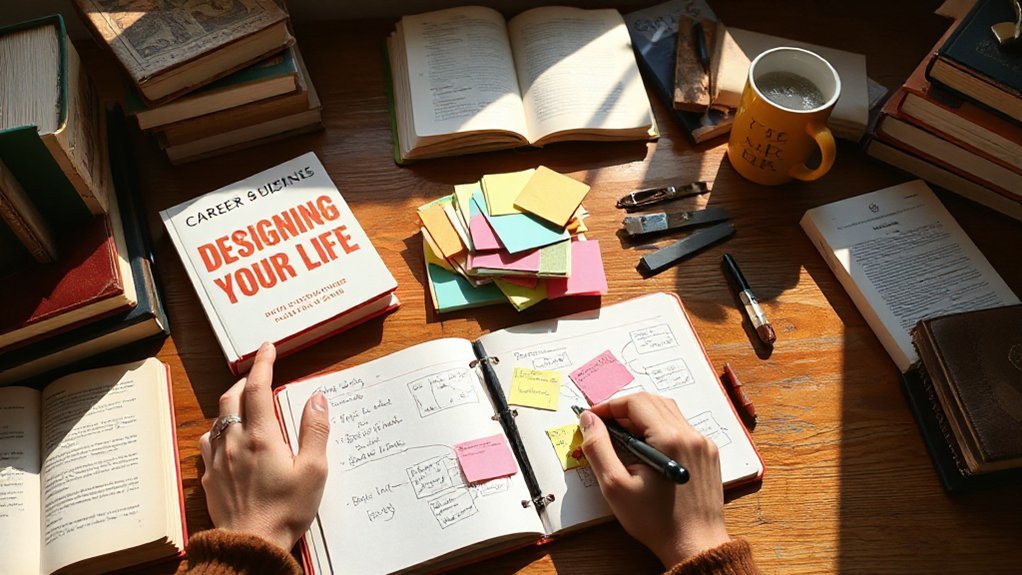
    Blueprints sound boring, until they get you unstuck. I tell you, this book turns sketches into experiments. You’ll touch paper, jot wild ideas, and prototype tiny versions of possible days, so you can taste them — the buzz of a new role, the calm of a steady routine.

    Burnett and Evans teach practical life design, they make career exploration feel like play, not panic. You’ll map energy, try short interviews, and build multiple futures, like folding paper planes to see which glides.

    I nudge you to fail fast, celebrate small wins, and keep iterating. It’s hands-on, warm, and oddly joyful, a toolkit that asks, “What if?” and hands you a pen so you can answer.

    Range by David Epstein

    embrace interdisciplinary career adaptability

    If you’ve ever been told to specialize early, get good at one thing and stick with it, you’ve probably felt the itch of doubt when that “one thing” didn’t fit anymore.

    I flip through Range like a scout poking a new trail, tasting pine and possibility. Epstein shows you how mixing skills—music, coding, sports—sharpens pattern-spotting, and suddenly career adaptability isn’t a buzzword, it’s a toolkit.

    You’ll laugh at his quirky examples, then jot notes with a pen that left ink on your thumb. Interdisciplinary learning becomes your secret sauce, the spicy mismatch that makes projects pop.

    I tell you, try zigging when others zag. It’s messy, thrilling, and it might actually get you where you want to go.

    The 4-Hour Workweek by Tim Ferriss

    lifestyle design for freedom

    Range taught you to wander the woods before you pick a path; now let’s sprint out of the forest and onto a sun-baked porch with a mojito and a laptop.

    I nudge you to steal time, trim meetings, and prototype a life that fits you, not the other way around. Ferriss hands practical hacks, remote work playbooks, and blunt permission to outsource boredom.

    You’ll learn to test small bets, automate income, and feel the warm salt air of freedom without quitting like a reckless pirate.

    I mock my own attachment to busywork, then show you how to replace it with systems that hum.

    It’s not magic, it’s design — bold, pragmatic lifestyle design that makes work optional, satisfying, and oddly fun.

    Grit by Angela Duckworth

    passion drives purposeful practice

    You’re not stuck because you’re untalented, you’re stuck because you haven’t found the thing that makes your heart and hands move in sync — Duckworth calls that passion over talent.

    I’ll bet you’ve practiced, but not always with purpose; picture yourself at a squeaky piano, repeating the same bar until your fingers complain, then changing the rhythm and suddenly it clicks.

    Passion Over Talent

    Even though talent gets the applause, I’ll bet grit gets the job done; I’ve watched smart, gifted people fizzle while steady, stubborn folks climb, day after day, like ants hauling sugar up a hill.

    You’ll learn from Grit that passion projects matter more than flashy gifts, they steady you through setbacks, they hum in your bones while others chase novelty.

    I’ll tell you this plainly: you can’t rely on charm alone, you need stubborn warmth, a slow-burning obsession that drags you back every morning.

    Picture sticky notes, midnight sketches, coffee rings on drafts, and that stubborn grin when you fix a bug at 2 a.m.

    Do this, and career fulfillment stops being a dream, and starts being your daily commute.

    Practice With Purpose

    When I say practice with purpose, I mean chopping your work into tiny, ugly pieces and attacking them like you’re mad at them — not noodling around until something pretty happens.

    You’ll feel the scrape of failure, the sharp click when a skill locks, and you’ll learn to love the sting. I tell you this because career motivation isn’t a lightning strike, it’s a steady, deliberate grind.

    Adopt purposeful practice: set tiny experiments, time them, measure the pain, tweak the motion. You’ll rehearse awkward scenes, break habits, and build new neural paths that glow like neon.

    I joke I’m a reluctant drill sergeant, but it works. You’ll change how you work, then change what you do.

    So Good They Can’t Ignore You by Cal Newport

    mastery over fleeting passion

    If you think chasing passion is the golden ticket, suspend that hopeful drumroll for a second—Cal Newport argues you’ll get farther by getting really, really good at something first.

    I tell you this because you crave career satisfaction, not a motivational poster. Newport forces a mindset shift: craft rare skills, trade value, build autonomy.

    Picture yourself in a lab, hands sticky with practice, ears tuned to feedback, sweat on the keyboard — you’re prototyping competence.

    I’ll be blunt, you won’t love every hour, but mastery buys options. Start small, obsess over craft, ship imperfect work, iterate fast.

    Say less, do more, collect craft capital. It’s practical, a little brutal, oddly liberating — and it works.

    Pivot by Jenny Blake

    inventory skills experiment safely

    I’m going to be blunt: you already own more useful skills than you think, and I’ll make you hear them like a brass band — inventory your wins, tug at the threads of your day-to-day, and name the talents that travel.

    Then we’ll run tiny, safe experiments together — two-hour projects, a short gig, a polite email — so you can taste the new work without burning the house down.

    After that, we’ll map clear next-step options on a single page, lay them out like a travel brochure, and pick one route you can actually start tomorrow.

    Recognize Transferable Skills

    Because you’ve built more than a job title, you’ve also built a toolbox — and it’s heavier than you think.

    I want you to stop underestimating the little gears inside you. Do a brisk skill assessment, list the projects that lit you up, the spreadsheets that felt like puzzles, the people you rallied.

    Touch the tools, name them, feel their weight. Then sketch a quick career mapping route — dots, arrows, detours, not a manifesto.

    You’ll see patterns: facilitation, rapid learning, systems thinking. Say them out loud, like they’re badges.

    I’ll bet you’re more portable than you thought. I’ll also bet you’ll laugh, because packing up that toolbox suddenly feels more like play than panic.

    Small, Safe Experiments

    Alright, you’ve unboxed the toolbox, named the gears, and even practiced lifting a few. I tell you, small moves beat giant leaps when you’re testing a new direction.

    You’ll run quick risk assessment, set incremental goals, and learn fast, without burning bridges or dinner.

    1. Try a tiny project, like a weekend prototype, taste the texture of new work.
    2. Teach one short class, feel the nerves, enjoy the applause, note what sticks.
    3. Freelance a small gig, count the dollars, track time, tweak the process.
    4. Shadow someone for a day, breathe their air, steal one clever habit.

    You stay curious, you collect data, you pivot gently, and you keep your sense of humor intact.

    Map Next-Step Options

    How do you know which tiny win actually points the way forward? I tell you to map next-step options like plotting a short, bold scavenger hunt.

    You touch things, sketch paths on napkins, and line up career exploration techniques—informational interviews, micro-projects, quick skill sprints. You listen for the fizz of enthusiasm, you note where your hands steady, you jot consequences like receipts.

    I point to future job trends, you scan where demand glints, then we pick three plausible moves. Try one, measure the learning, pivot if needed.

    I’ll coach you through awkward conversations, celebrate small proofs, and crack a joke when you wobble. It’s practical, tactile, slightly ridiculous, and exactly how you’ll find your next right step.

    Drop the Ball by Tiffany Dufu

    reprioritize delegate embrace fulfillment

    If you’re anything like me, you’ve been carrying fifty small, invisible sacks of laundry—work projects, family errands, emotional labor—and pretending you don’t notice the straps digging into your shoulders.

    Drop the Ball tells you to let some straps fall, so you can rewire priorities, chase career fulfillment, and redesign your work life balance without guilt. You’ll laugh, wince, and steal tactics.

    1. Name one chore you’ll drop tonight, feel the lightness.
    2. Ask for help, practice the awkward sentence, then bask in relief.
    3. Build a tiny team around you, delegate like you mean it.
    4. Design experiments, fail fast, iterate toward meaningful work.

    Read it when you want permission to choose yourself.

  • Books That Will Make You Cry (In a Good Way)

    Books That Will Make You Cry (In a Good Way)

    About 65% of people say a book made them cry — even strangers on trains will wipe their eyes. You’ll notice it in the small stuff: a wilted scarf, a kitchen scent that brings a memory, a line that stops you mid-coffee, and you’ll laugh at yourself for crying, because you thought you were tougher than that. Stick with me, I’ll point out the exact moments that do it, and why they work.

    Key Takeaways

    • Pick emotionally honest novels that elevate ordinary moments into profound revelations, often via sensory-rich details like smells or small rituals.
    • Choose books that explore unseen grief and healing, revealing hidden pain through quiet scenes and character introspection.
    • Look for stories about enduring love and lasting connections, where simple objects or scenes become powerful emotional anchors.
    • Read family-centered narratives that portray messy reconciliation and unconditional love with realistic dialogue and emotional growth.
    • Favor novels that find hope in everyday loss, using routines, photography, or shared stories to transform grief into resilience.

    The Quiet Power of Small Moments

    fleeting memories in everyday life

    Even if you’re not a big crier, those tiny, ordinary moments will sneak up and gut you; I know, I’ve been ambushed by them in grocery lines and at bus stops.

    You lean on a cart, smell oranges, and a line from a book slips into your head, suddenly making the fruit taste like childhood. You notice subtle connections between a stranger’s laugh and your own long-ago kitchen, and you grin, then choke up.

    These books train you to spot fleeting memories, the tiny film of light that makes a scene honest. I point, you read, you pause.

    They teach you to catch those ghostly little memories—the thin light that suddenly makes any scene unbearably true.

    You’ll feel fabric, hear rain on a roof, taste coffee gone cold, and laugh at your own tearing eyes. Innovation here is quiet, but it lands hard.

    Stories of Unseen Grief and Healing

    unseen grief healing journeys

    When a book pulls at the corner of your life you didn’t know was loose, you notice in the grocery aisle more than the oranges—you notice the way light pools on the cart handle, the tiny bruise on a banana that looks like a bruise on your mood, and suddenly you’re thinking of a conversation you never had; I’ve been there, hand hovering over the cart, trying to stop the waterworks so I don’t become a public spectacle.

    You read stories of unspoken pain, and they unbutton you slowly. You feel the scrape of memory, taste coffee gone cold on a hard morning, hear small silences like others’ echoes.

    These pages map hidden places, chart healing journeys, and make you laugh at your dramatic face in the mirror. Go on, let them do their work.

    Love That Lasts Beyond the Page

    books as enduring talismans

    If you’ve ever kept a bookmark because it felt like a tiny talisman, you know how a book can stick to you long after the last page.

    I’ll admit I’ve a drawer full of those talismans—receipts, grocery lists, a pressed maple leaf that never made it into a scrapbook.

    You’ll find novels that rewire how you feel about love, where a timeless romance isn’t saccharine, it’s durable, surprising, engineered.

    You touch the paper, you smell rain on ink, you hear a line and it rewires your heart.

    I’ll wink, tell you one scene broke me, another made me grin like a fool.

    These books leave an enduring legacy: habits, hopes, little rituals you carry, like a coded language between you and the page.

    Family Ties That Break and Mend

    love loss reconciliation growth

    Love stories teach you how to keep someone’s hand in a crowd; family stories teach you how to let go of a hand you thought was glued on.

    You watch, you flinch, you laugh, because I’ll admit—I’ve cried over a casserole dish. You read reconciliation journeys that feel like mapless road trips, windows down, pizza boxes on the floor.

    You smell burnt toast, hear an exhale, see two people inching back toward each other. You learn that unconditional love is messy, stubborn, honest.

    Dialogue snaps: “Are you staying?” “Maybe.” Scenes shift from slammed doors to quiet kitchens, hands hovering over old photo albums.

    You’ll want tissues, a snack, a pen to underline the line that breaks and then, somehow, mends you.

    Finding Hope in Everyday Loss

    innovating hope through loss

    Although it feels ridiculous to say out loud, I’ve learned to spot small losses the way some people spot weather changes—by the way the coffee tastes a fraction of a second flat, the missing sock that used to anchor a morning, the half-empty chair across from me that still wears its sunlit groove.

    You’ll notice too, and you’ll do something useful with it. You’ll design tiny rituals, map memories onto objects, use everyday resilience like a toolkit. You’ll keep laughing, even at your own predictable grief.

    1. Catalog a morning ritual, tweak it, repeat.
    2. Photograph a fading spot of sunlight, label it hope.
    3. Swap a lost item for a deliberate new one.
    4. Share a story, test how it changes you.

    You’re innovating nostalgia, and that’s oddly brave.

  • Books That Will Make You Rethink Your Entire Life

    Books That Will Make You Rethink Your Entire Life

    Like a mirror that suddenly whispers, you’re about to see things you’ve smoothed over for years. I’ll walk you through books that jab at your assumptions, nudge your goals, and teach you how to feel without flinching, and yes, I’ll call you out when you hide behind busyness—because growth is messy and kind of fun. Stick around; there’s a chapter that will upend your commute, your calendar, and maybe your stubborn little heart.

    Key Takeaways

    • Read books that challenge your core beliefs and invite perspective shifts rather than simply confirming what you already think.
    • Choose titles that reframe success and ambition toward purpose, calm, and sustainable fulfillment, not just metrics.
    • Pick books that teach emotional literacy—vulnerability, empathy, and regulation—to transform your relationships and self-understanding.
    • Explore works that expose hidden biases and systemic inequality to expand cultural awareness and ethical responsibility.
    • Favor creative, exploratory books that nudge you to experiment, embrace uncertainty, and redraw the map of your life.

    The Books That Challenge Your Beliefs

    books that reshape beliefs

    Ever wondered what it feels like to have your worldview politely shoved into a new shape? You open a book, the spine crackles, and suddenly belief transformation isn’t a lecture, it’s a mild earthquake under your feet.

    I nudge you toward titles that prompt perspective shifts, books that smell like coffee and possibilities, pages that make you squint, laugh, and scribble in margins.

    You’ll argue with the author, then borrow their courage. You’ll taste new ideas, crisp and strange, like biting into an unexpected apple.

    I tell you which chapters to dog-ear, which paragraphs to memorize, and when to close the cover and sit quietly, stunned.

    These reads don’t preach, they prod, and they change how you map your world.

    The Books That Reframe Success and Ambition

    redefining success through purpose

    You think success is a scoreboard, I say it’s a garden — let’s pull up the metrics you’ve been watering without noticing.

    I’ll show you books that trade flashy net worth for calm mornings, steady pulse, and actual laughter at the dinner table.

    Read one, and you might catch yourself choosing purpose over prestige, which sounds dramatic but mostly just feels like finally turning off a noisy alarm.

    Redefining Ambition Metrics

    If we keep measuring success by speed and scoreboard, we’ll miss the quieter wins—those small, stubborn moments when you choose depth over dash.

    I tell you this because books on ambition recalibration sketch new rulers, they smell like fresh pages and late-night thinking, they press you to weigh meaning, not just metrics.

    You flip a page, you feel a pulse in your chest, you slow down.

    I talk plainly, I joke about my own haste, then I show you experiments: limit your inbox, build a stubborn hobby, say no twice a week.

    That’s success redefinition in action.

    You’ll taste it — calmer coffee, clearer goals — and laugh, surprised, at how much lighter you feel.

    Wealth Versus Well-being

    Money is loud; well-being whispers, and I’ve spent years listening to the wrong conversation. You flip pages that promise financial freedom, you taste the shine of material wealth, then you wake up empty.

    I tell you this from messy experiments and books that left sticky notes in my brain. Stop treating success like a scoreboard. Blend charts with naps, spreadsheets with walks, investments with therapy.

    When societal pressures shout, you learn to answer with a soft, firm no. Chase emotional wealth as deliberately as you chase returns. Build routines that favor holistic health, savor cooking, touch grass, call your mother.

    You’ll still aim high, but personal fulfillment will steer the vehicle, not your ego’s horn. Practical, playful, honest.

    Purpose Over Prestige

    Purpose feels like a small, stubborn compass lodged in my chest, and I’ve spent years mistaking fancy badges for true north. You’ll laugh, then squirm, because the books that flip prestige on its head make you smell dust on trophies, taste metal in the mouth of applause.

    You walk into a conference room, sparkle lights, name tags, and you wonder if your pulse races for the gig or the glow. Purpose-driven living asks a different question, it nudges you toward intrinsic motivation, not applause meters.

    I’ll point you to chapters that make you draft a messy manifesto, take one brave “no,” and quit polishing someone else’s dream. Read, scribble margins, and start living on purpose, not prestige.

    The Books That Teach Emotional Literacy

    emotional literacy through reading

    When I first opened a book that actually taught me how to name a feeling, my shoulders relaxed like someone unplugging a buzzer I’d worn for years.

    When a book finally taught me to name feelings, my shoulders unclenched as if a buzzer was unplugged.

    I remember the smell of coffee and rain on the windowsill as if it were a scene from a movie I’d slept through.

    You’re invited to learn emotional intelligence, through reading that feels like a lab and a hug.

    I’ll show you how empathy development and self awareness practices become tools, not clichés.

    You’ll do vulnerability exploration, pick up emotional regulation tricks, and build emotional resilience without sounding like a monk.

    1. Mindfulness techniques for attention, breathing, noticing.
    2. Self compassion strategies to stop the inner bully.
    3. Interpersonal communication drills, real dialogue.
    4. Authentic connection exercises, small, doable, daring.

    The Books That Redefine Relationships

    emotional intelligence fosters growth

    I taught myself to name feelings, then watched those names change how I argued, kissed, and stood in a room full of relatives I barely liked.

    You’ll read books that map relationship dynamics, they’ll hand you love languages like tools, and you’ll finally see emotional intelligence as a muscle, not a mood.

    You’ll spot toxic patterns across texts, trace attachment styles in old arguments, and laugh at your past nervous jokes.

    Dialogue clips will unblock communication barriers, and vulnerability practice will feel awkward, then electric.

    You’ll try trust building exercises with coffee-stained rules, stumble over commitment issues, and keep going.

    These pages push you toward relationship growth, toward smarter, braver intimacy, with a wink and usable homework.

    The Books That Shift Your Sense of Purpose

    books that enhance purpose

    Even if you’ve been drifting like a lost tourist in your own life, you’ll find a book that hands you a map and a flashlight, and yes, I’ll admit I still get teary flipping to the index.

    You’ll read, you’ll nod, you’ll scowl, then something clicks — a small electric zing under the ribs — and suddenly existential questions shift from abstract fog to a crisp path.

    I point you to titles that wake curiosity, sharpen your tools, and nudge you toward a clearer life purpose.

    I’ll be blunt, I’ve stumbled through this stuff too, spilled coffee on a stack of manifestos, laughed at my own dramatics.

    Try one, then another; change compounds.

    1. A radical memoir that reframes ambition.
    2. A practical guide to crafting meaning.
    3. A science-tinged exploration of values.
    4. A short, fierce manifesto for action.

    The Books That Disturb Comfort and Prompt Change

    books that provoke change

    Because books that unsettle you’re the ones that actually get you moving, I’m handing you titles that’ll yank the rug out from under your feet—in the best possible way.

    You’ll flip pages that smell like late-night coffee and nervous energy, and you’ll sit up, startled. These picks provoke existential crises, in a useful, clarifying way, they’re blunt instruments and soft lanterns.

    I’ll point you to transformative narratives that shove you into new rooms, make you answer the hard questions, then hand you a towel. You’ll cringe, laugh, rethink a habit, change a plan.

    I talk fast, I nudge, I confess I cried in one chapter (don’t tell), but mostly, you’ll leave each book less cozy, more alive.

    The Books That Illuminate Hidden Biases

    challenge your biases actively

    When you lift one of these books off the shelf, expect a polite knock on the skull before a full-on rewrite of your mental furniture.

    I grab a title, smell the ink, and cringe at my own assumptions, because these pages expose implicit bias and force privilege examination.

    You’ll feel the tug of systemic inequality, the jolt of cultural awareness, the ache of identity exploration.

    They nudge you toward social justice, provocate ethical dilemmas, and deliver perspective shifts that sting and enlighten.

    1. Read to map your blind spots.
    2. Question the comfy stories you tell.
    3. Practice new language, new habits.
    4. Act, even when you wobble.

    You’ll stumble, laugh, change, and keep going—curious, chastened, energized.

    The Books That Open New Possibility Maps

    maps of creative exploration

    Picture a map spread on my kitchen table, coffee steam curling over its creases, and me poking at routes I didn’t know existed; that’s what these books do — they hand you a new atlas for possibility, all bright lines and unlabeled trails begging to be walked.

    You flip pages and your world widens, possibility thinking becomes a habit, not a hobby. I point, you laugh, we scribble margins like cartographers with bad handwriting. They invite creative exploration, show shortcuts and dead ends, hand you tools to redraw outlines.

    You try an idea, taste its weirdness, and either spit or savor it. These books make you brave, messy, and curious, and they’ll keep nudging you toward the next unexplored road.

  • Books I Recommend to Everyone Who Asks “What Should I Read?

    Books I Recommend to Everyone Who Asks “What Should I Read?

    Call me your bookish Virgil—I’ll guide you through fires and quiet rooms alike. You’ll get Harper Lee for moral heft, Erdrich for sharp, lived-in detail, Murakami when you want strange comfort, Morrison when grief needs teeth, Ishiguro for polite ruin, Harari to shake your timelines, Tartt for deliciously bad ideas, Coelho for tinkling parables, and Mandel if the end ever feels beautiful; stick with me and I’ll tell you which to start with.

    Key Takeaways

    • Start with a humane classic that explores character and morality, like To Kill a Mockingbird, for empathy and clarity.
    • Choose a emotionally powerful novel that confronts history and memory, such as Beloved, to provoke reflection.
    • Recommend a quietly devastating introspective book like The Remains of the Day for subtlety and regret.
    • Suggest a genre-bending, surreal modern work like The Wind-Up Bird Chronicle for imaginative, uncanny storytelling.
    • Offer an uplifting post-apocalyptic or aspirational title like Station Eleven or The Alchemist for hope and purpose.

    To Kill a Mockingbird by Harper Lee

    moral growth through storytelling

    Warm porch light: that’s how I first picture To Kill a Mockingbird — soft, steady, the smell of dust and lemon oil, kids playing tag in the yard while a grown-up tells a story you won’t forget.

    You pick it up, you’re curious, and you get swept into a small town where a child’s eyes teach you about moral growth, and adults stumble through courage.

    The air’s thick with heat, voices, courtroom oak, and the sting of racial injustice that won’t let you look away.

    I’ll tell you, it’s not preachy, it’s honest, sharp, human. You’ll laugh at Scout, cringe at hypocrisy, and leave smarter, angrier, kinder.

    Read it, then pass it on. Trust me, it earns the porch light.

    The Night Watchman by Louise Erdrich

    native resilience humor history

    If you loved the porch-light steady voice of To Kill a Mockingbird, you’ll find a different kind of lamp here—one that buzzes in the cold night, throws hard shadows, and keeps watch over a stubborn, funny, furious world.

    I tell you, The Night Watchman pins you with kindness, then makes you laugh while it punches. You’ll meet workboots, coffee, council rooms, and a man who patrols both reservation and conscience.

    The novel gives Native American representation real weight, not token sparkle, and roots its urgency in historical context that still hums today.

    Native American voices that carry weight—not decoration—anchored in a history that still hums and demands reckonings.

    You’ll feel wind, hear arguments, taste fried bread, and live beside characters who fight like family.

    Read it for grit, wit, and a mind that refuses easy answers.

    The Wind-Up Bird Chronicle by Haruki Murakami

    surreal urban mystery unfolds

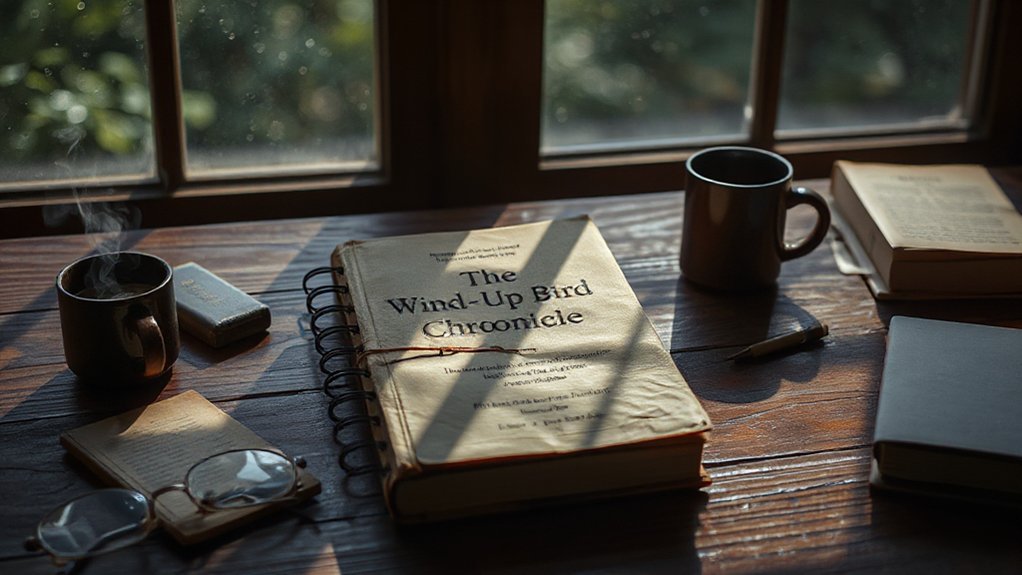
    You’ll follow a man who loses a cat and finds a world that feels both oddly familiar and sharply tilted. The apartment’s stale coffee smell rubbing against strange domestic mysteries that make you squint.

    I watch you blink at memory and absence—photos fading, conversations dropped mid-breath—and I promise it’s as unsettling as stepping into an empty room and hearing your own name.

    When you walk Tokyo’s underbelly with him, the city hums, lights blur, and surreal urban journeys sneak up like a friend tapping your shoulder.

    Strange Domestic Mysteries

    When a friend first told me about The Wind-Up Bird Chronicle, I expected a quiet domestic drama with a weird streak — you know, missing cat, marital tiff, small-town oddities — and then Haruki Murakami yanked the rug out from under my shoes and kept pulling.

    You follow a husband, you smell dust in a dry well, you hear a piano down a corridor, and ordinary rooms twist into unusual settings, revealing family secrets that hum under the floorboards.

    You’ll laugh, cringe, and nod like you’ve been caught eavesdropping. I’ll admit, I felt clever and slightly alarmed.

    Read it when you want domesticity to tilt, when you crave strangeness stitched into cozy scenes.

    • ordinary rooms as portals
    • quiet gestures that explode
    • tactile, uncanny detail
    • moral ambiguity up close
    • humor, then vertigo

    Memory and Absence

    Because memory in The Wind-Up Bird Chronicle isn’t a tidy attic you can lock, it feels more like a basement you’ve waded into ankle-deep, then suddenly it’s waist-deep and smells of old paper and cold iron.

    You follow low-lit corridors, I say, feeling for familiar faces that blur. Murakami makes memory retrieval tactile; you pull at threads, and something essential is missing.

    That absence stings, and it changes the room’s geometry. You listen for echoes, you touch a damp photograph, you laugh nervously because the joke is on you.

    The absence effects ripple outward, altering how you act, how you love. I nudge you toward discomfort, because innovation demands risk, and this book rewards you with quiet, strange truth.

    Surreal Urban Journeys

    If you step off the familiar pavement and duck into a side street that smells faintly of frying oil and old rain, I’ll walk with you—because Murakami’s city in The Wind-Up Bird Chronicle isn’t a map, it’s a maze that hums.

    You’ll wander through dreamlike landscapes, feel urban isolation press like damp paper against your ribs, and laugh at how sane that feels.

    I narrate, I stumble, I point at doors that open to other rooms of memory. You touch a rusted gate, you hear a distant radio, you trade a cigarette for a story.

    This book teaches you to explore cities as if they were strange machines, and you’ll want to tinker.

    • Seek the uncanny in everyday streets.
    • Listen for hidden histories.
    • Trade routine for risky curiosity.
    • Embrace solitude as fuel.
    • Map feelings, not locations.

    Beloved by Toni Morrison

    grief motherhood sensory experiences

    You’ll feel it the minute you open Beloved — a chill that’s partly grief, partly heat off a Kentucky field, partly the weight of a name that won’t let go — and I’ll warn you now, this book doesn’t let you skim.

    You lean in, you listen. I’ll point out Morrison’s legacy here, but mostly you’ll meet themes of motherhood that grab you by the throat, tender and unforgiving.

    Scenes crackle, sensory and immediate: the river’s cold, the skin’s itch, a baby’s cry that rewrites time. You’ll laugh, wince, then sit very still.

    I say this as someone who read it on a bad night and came out better educated, slightly bruised, oddly hopeful.

    Read it aloud, underlight, and don’t rush.

    The Remains of the Day by Kazuo Ishiguro

    silent regrets and duty

    You’ll meet Stevens, a stoic but flawed butler who moves through rooms like someone tiptoeing around a memory, and you’ll feel the quiet weight of everything he never said.

    I’ll point out how duty shaped his face, how regret tastes like over-steeped tea, and how identity keeps slipping under his hands when he polishes silver.

    Read it with your ears open, because Ishiguro’s silence speaks loud, and you’ll laugh, wince, and maybe want to call someone you’ve been meaning to apologize to.

    Memory and Regret

    Though I don’t always like admitting it, memory has a sneaky way of running the show; I’ll catch myself tracing the rim of a teacup and suddenly I’m back in a brown-paneled dining room, watching a man fold his sorrow like a napkin.

    You’ll feel nostalgic reflections and move through emotional landscapes, noticing small betrayals, missed chances, and the taste of lemon on a tongue that remembers better days.

    I tell you this as someone who still misplaces keys and dignity, but learns from the ache.

    You’ll recognize quiet reckonings, the way light hits a table, and the stubborn comfort of regret that teaches without shouting.

    • Hold contradictions tenderly.
    • Read slowly, savoring detail.
    • Let silence speak.
    • Notice texture, not just plot.
    • Embrace imperfect truths.

    Duty and Identity

    If duty is a uniform, then Stevens wears his so neatly even the buttons look apologetic — and yes, I know that sounds dramatic, but bear with me.

    You follow him down gravel paths, feel the clipped rain on his sleeve, hear polite silences like clock ticks.

    I point out how the book stages duty vs. freedom, how choices are small, stubborn, repeated.

    You sense identity formation not as a reveal, but as slow tailoring, stitches made from manners and omission.

    I joke that he’s allergic to spontaneity, and you laugh, because it’s true.

    Still, that laugh lands somewhere between admiration and pity.

    You leave the room thinking about your own clothes, wondering what parts you’d dare unbutton.

    Quiet Emotional Power

    Restraint is a strange kind of loudness, and here it bangs softly against every scene in The Remains of the Day. I talk to you like a fellow experimenter, you listen, and together we trace emotional resonance through small acts: a folded napkin, a paused step, a withheld joke.

    You feel subtle storytelling as a pressure, slow and precise, reshaping what you expect from plot and character. I confess, I prefer books that nudge you rather than shove.

    You’ll notice texture, the scrape of shoes on hall tile, the faint smell of polish, the stiff courtesy that hides a flood. It’s brave, quiet, and very clever.

    • Quiet gestures reveal inner collapse
    • Memory reframes duty, slowly
    • Silence amplifies regret
    • Detail breeds intimacy
    • Language designs emotional resonance

    Sapiens: A Brief History of Humankind by Yuval Noah Harari

    cognitive evolution and existentialism

    Picture a single book that makes you feel both tiny and oddly important; that’s Sapiens for me.

    You’ll flip pages that trace cognitive evolution, watch ideas spark like flint, and feel your brain click into new gear. I narrate scenes where ancient fires smell of smoke and possibility, where myths glue strangers into nations — Harari shows the cultural impact of stories, markets, and laws.

    You’ll laugh at my smug surprise, you’ll frown, you’ll jot notes in margins. It reads like a brisk tour, then roars into existential questions that stick to your teeth.

    You’ll grin at my astonishment, scowl at the grit, and scribble margins as a brisk tour detonates into sticky, big questions

    If you want a book that rewires assumptions, nudges ambition, and makes future-thinking practical, start here — and bring coffee, you’ll need it.

    The Secret History by Donna Tartt

    dark academia s moral ambiguity

    When I first opened The Secret History, the air in my tiny apartment suddenly smelled like old books and ambition, and I knew I was in trouble.

    You’ll sink into a gleaming, odd classroom where dark academia feels alive, and you’ll watch clever people choose badly, again and again.

    I narrate like a guilty friend, I joke, I wince, I point out how moral ambiguity hooks you, then drags you through ivy and wine.

    You’ll crave its slow-building tension, its crisp sentences, the way small choices stack like dominoes.

    Read it if you like stylish risk, elegant danger, and stories that make you squint at your own ethics.

    • Beauty masking rot
    • Friendship turned calculus
    • Language that stings
    • Choices with price tags
    • Thrill in slow burns

    The Alchemist by Paulo Coelho

    hustle for your dreams

    A leather-bound map of possibility, The Alchemist hit me like desert wind—dry, warm, and full of secrets you can almost taste; I read it on a sunlit balcony, the pages smelling faintly of dust and orange blossom, and I kept thinking, this book will make you hustle for your dreams and then laugh at the hustle.

    You’ll follow a shepherd’s small steps across dunes, feeling sun on your neck, hearing coins clink, and you’ll nod at the line between ambition and obsession.

    It teaches you to chase your personal legend without mistaking noise for guidance. Its universal themes slide into your day like clever graffiti, simple but hard to ignore.

    Read it when you need a nudge, or a charming kick in the pants.

    Station Eleven by Emily St. John Mandel

    post apocalyptic beauty and resilience

    You loved the hopeful swagger of The Alchemist, didn’t you? I tell you, Station Eleven rewires that optimism, it probes loss and beauty amid post apocalyptic themes, and it hums with quiet, fierce life.

    You follow a traveling troupe, taste cold rain on a ruined highway, hear an old symphony in a grocery store turned shrine. The prose stitches past and present, interconnected narratives looping like radio signals.

    I’m playful, I’m blunt: this book makes you ache and grin.

    • Survivors acting, singing, keeping memory alive
    • Desperate kindness against bleak infrastructure
    • Objects that carry grief and wonder
    • Time folding, characters bumping into fate
    • Art as rebellion, fragile and luminous
  • Books I Wish I Had Read 10 Years Earlier

    Books I Wish I Had Read 10 Years Earlier

    When my kid came home crying because I’d fixed his homework, I should’ve been handing him a book instead — you’d have loved that quieter chaos, trust me. I’d tell you how Jessica Lahey would’ve let us step back, Tara Brach would’ve taught us to breathe through the mess, and Cal Newport would’ve shown us how to carve hours of calm from the noise, but there’s a twist I didn’t see coming, and it changes everything.

    Key Takeaways

    • Read books that teach resilience and learning from failure to embrace risk and growth earlier in life.
    • Learn mindfulness and self-compassion techniques to manage stress and emotional setbacks sooner.
    • Prioritize focused, distraction-free work habits to produce higher-quality results and faster career progress.
    • Study trauma-informed body-mind approaches to understand how stress affects performance and relationships.
    • Explore broad, diverse experiences to build adaptable, transferable skills rather than rushing specialization.

    The Gift of Failure — Jessica Lahey

    embrace failure for growth

    If you’re like me, you’ve rescued your kid from a small disaster more times than you can count — wiped a tear, fixed a broken science project, whispered the right answer like a backstage cue — and you’ve felt a tiny thrill of pride for being the calm adult in the room.

    You’ll get a jolt from The Gift of Failure, it nudges you toward a resilient mindset, and shows why stepping back beats swooping in.

    The Gift of Failure shocks awake your parenting instincts, pushing you to step back and grow resilient kids.

    You watch them drop a slice of toast, taste the sting, laugh, learn. You’ll cringe, then cheer when they patch a mistake.

    Lahey gives practical experiments, sharp anecdotes, and permission to stop polishing every outcome.

    It’s a manual for embracing imperfections, for raising makers, risk-takers, and slightly messy geniuses.

    Radical Acceptance — Tara Brach

    practical self compassion practices

    Compassion is a muscle, and mine has spent too many years hiding under a stack of “shoulds.”

    I tell you that because Tara Brach’s Radical Acceptance hit me like warm tea poured over a stubborn bruise — startling, oddly soothing, impossible to ignore.

    You’ll find blunt kindness here, practical self compassion practices that aren’t saccharine, they’re tools.

    I noticed my breath, the chair’s creak, and a tiny slackening in my jaw, and I could actually feel space open.

    Brach teaches mindfulness techniques that are experimental and elegant, like a startup pivot for your heart.

    You’ll try a guided pause, snort-laugh at your resistance, then keep going.

    It’s honest, tender, and inventively useful — a manual for living with clearer eyes.

    Deep Work — Cal Newport

    focus strategies for productivity

    Focus feels like a muscle you forgot you’d until someone hands you a heavy suitcase and tells you to run — awkward at first, then suddenly useful.

    I read Deep Work and felt my attention tingle, like a finger on a piano string. You’ll learn blunt, usable focus strategies, the kind that kick digital noise out the door.

    I tried Newport’s rituals, timed blocks, and the sacred no-phone rule, and my work sharpened, edges gleaming. You’ll get productivity techniques that don’t promise magic, just steady gains, sweat, and the odd triumph.

    I narrate my failures too — missed timers, snack-fueled breaks, ego bruises — because innovation is messy.

    Try a two-hour deep stretch, shut the blinds, breathe, and watch ideas harden into results.

    The Body Keeps the Score — Bessel Van Der Kolk

    trauma recovery through bodywork

    When trauma hides in your muscles and whispers through your breath, you don’t just think differently — you feel differently, too, and Bessel van der Kolk makes you notice that in a hurry.

    I tell you, this book rewires how you move through pain, shows you hands-on methods, and offers smart, experimental tools for trauma recovery.

    You’ll touch foam rollers, try breath drills, feel tension melt like snow in sunlight.

    I admit, I was skeptical, until a simple yoga cue unclenched my jaw and my chest exhaled a long-held secret.

    The tone is clinical and wildly humane, it invites innovation, it asks you to combine body work with therapy, and it builds real mental resilience.

    Read it, try things, report back.

    Range — David Epstein

    embrace diverse experiences boldly

    Think of me standing in a cluttered garage, pulling tools from every box, and telling you, “Try stuff, you’ll get smarter.”

    You’ll see how sampling broadly builds surprising advantages, how skills hop between jobs like nimble frogs, and why starting late can still win races.

    I’m saying this because I wish I’d been braver about switching lanes—so listen, laugh, and maybe shake things up.

    Broad Sampling Advantages

    Even if you’ve been sold on the idea of mastering one thing, I’ll tell you why I went the other way: I sampled everything. I walked into studios, kitchens, labs, and improv rooms, tasted paint, heard code sing, felt clay stick to my fingers.

    You expand broad horizons when you poke at odd corners, and you catch diverse perspectives that rewire how you solve problems. You’ll experiment like a curious amateur, fall flat, laugh, then stitch weird ideas together into something new.

    It’s messy, tactile, thrilling. You’ll trade comfortable depth for unpredictable breadth, and surprise is the innovation fuel. Trust me—your future projects will thank you, and you’ll have better stories over coffee.

    Transferable Skill Growth

    Because I didn’t stick to one lane, I ended up with a weird toolbox that opens doors in places I never planned to visit. I tell you this because transferable skill growth felt accidental, until I noticed patterns: design thinking helping me sell ideas, piano rhythm pacing my coding sprints, hiking patience shaping my project timelines.

    You’ll laugh, I did too, at how messy skill diversification looks on a resume, until it stopped being messy and started being useful. You’ll grow personal adaptability like a muscle, by doing small, strange things that strain the usual moves.

    Try a new hobby, volunteer for a weird task, swap teams for a month. The payoff hits like sunlight through blinds — sudden, warm, revealing paths you couldn’t see before.

    Late Specialization Benefits

    If you wander through life like I did, sampling weird courses, odd jobs, and hobbies that had no business fitting together, you’ll start to see a pattern: late specialization isn’t a failure mode, it’s a secret advantage.

    You learn to knit disparate skills into something new, like tasting color or hearing pattern. I’ll admit, I felt behind, compared myself to fast starters, but delayed expertise let me borrow ideas from architecture, improv, and kitchen chaos.

    You move slower at first, then faster in directions others never saw. Smell of solder, stack of notebooks, the click of a prototype—those details stick.

    You’ll appreciate diverse experiences, the strange detours that breed innovation. Embrace the odd routes, they make your future edge.

    How to Do Nothing — Jenny Odell

    reclaim attention through stillness

    When I first picked up Jenny Odell’s How to Do Nothing, I was scrolling—of course I was scrolling—when something in the margins of my feed made me pause, smell the coffee, and actually look out the window; city air smelled like wet pavement and paper, a squirrel darted across the gutter, and I realized my attention had been rented out to a dozen devices.

    I was scrolling—then a margin paused me: coffee steam, wet pavement, a squirrel, and my attention returned.

    You need this book if you crave a digital detox and intentional living. I read it like a manual for reclaiming time. It taught me to resist urgency, to notice, to build resistance as a design choice.

    Imagine this:

    • a bench, rain-spotted, humming with distant traffic
    • a park map, edges creased, birds arguing above it
    • coffee steam, warm on your knuckles, slow to fade
    • a phone asleep, face down, finally unpaid

    Read it. Then do nothing, and make something new.

  • Overhyped Books That Weren’t Worth the Hype (And What to Read Instead)

    Overhyped Books That Weren’t Worth the Hype (And What to Read Instead)

    Sixty percent of readers admit they bought a book because of buzz and felt let down afterward — you’re probably one of them, confess quietly. I’ll say it: some buzzy novels promise fireworks and give you sparklers, the prose shiny but thin, the twist obvious, the characters echoey; I’ve sat in cafés frowning at pages I wanted to love, sighing into my latte. Stick around and I’ll point out the usual culprits, why they fail, and what actually gives you the payoff you were sold.

    Key Takeaways

    • Call out specific overhyped titles that underdeliver and explain succinctly why their twist, premise, or prose fails to satisfy.
    • Highlight common flaws—predictable twists, hollow characters, and style-over-substance—that make popular books feel disappointing.
    • Recommend clear, better-aligned alternatives: books that earn twists, develop characters, and fulfill their premises.
    • Suggest criteria for judging hype: narrative payoff, integrated clues, emotional authenticity, and meaningful worldbuilding.
    • Offer quick reading strategies: sample multiple pages, read reviews focused on craft, and prioritize recommendations matching your taste.

    When the Twist Falls Flat: Plot Twisters That Didn’t Deliver

    twists that disappoint readers

    If you’ve ever slammed a book shut and muttered, “That’s it?” you’re not alone — I’m too, and yes, I’ve been conned by a twist that promised fireworks and delivered a damp sparkler.

    You pick up a novel hungry for surprise, you smell the twist like ozone before a storm, and then get predictable endings, anticlimactic reveals that feel like soggy confetti.

    You pace, you blink, you re-check clues that were shoved under the rug.

    I shrug, I laugh, I plot revenge by recommending better risks.

    You want innovation, not recycled tricks, so learn to sniff out lazy setups, demand stakes that sing, and celebrate authors who earn shocks with craft.

    Trust your gut, toss the false fireworks, read boldly.

    Style Over Substance: Books That Prioritized Hypey Prose

    substance over style priority

    When a book spends three chapters luxuriating over a single moonlit metaphor and still forgets to tell you what actually happens, you feel played — I know I did, squinting at sentences that shimmered like perfume but left me starving for protein.

    You want innovation, not ornament. Lyrical language is fine, until it camouflages superficial themes and leaves the engine empty.

    Choose invention over shine: let language serve meaning, not hide a hollow engine.

    You flip pages, craving momentum, not another gilded sentence about dew.

    • Look for prose that earns its sparkle.
    • Demand stakes, not just style.
    • Swap glossy paragraphs for honest ideas.
    • Prefer books that build, not just bedazzle.

    I’m blunt, because you deserve books that do both: invent, and mean it.

    Characters That Ring Hollow: Novels Lacking Emotional Truth

    emotional truth in storytelling

    Because you keep turning pages hoping someone will actually feel something, it stings when characters act like cardboard cutouts dressed in interesting clothes.

    I watch you wince as dialogue snaps without weight, scenes smell like stale coffee, and your pulse doesn’t budge. You crave guts, not gimmicks; you want risk, not hollow masks.

    When an author leans on shallow characterization, you notice: a laugh without history, a grief without sound. That emotional disconnect makes you close the book, mutter “not this again,” and reach for something braver.

    I’ll call out the tricks, riff on what feels fake, and point you toward novels that ache honestly, where touches fizz on the tongue and choices bruise.

    We’ll read better together.

    Premises That Didn’t Pay Off: Promising Concepts Gone Bland

    promising concepts disappointing execution

    You’ve had that thrill before—the cover promises a clever twist, the jacket copy brags about a world that will “turn your expectations inside out,” and you buy it like it’s a lottery ticket.

    You crack the spine, inhale that new-paper scent, and wait for a gear shift that never comes. The premise teases invention, then surrenders to clichés, leaving unfulfilled potential and disappointing conclusions.

    • Big idea, thin follow-through: flash, then fade.
    • Worldbuilding that flirts, never commits.
    • Characters used as plot tools, not people.
    • Pacing that promises fireworks, delivers sparklers.

    I roll my eyes, sip coffee, and mutter, “Is that it?”

    You deserve books that honor their concepts; don’t settle for clever trailers and weak finales.

    Overpraised Memoirs and Self-Help That Missed the Mark

    disappointing celebrity memoirs abound

    So we just finished whining about novels that promise fireworks and hand us sparklers—now let’s look at nonfiction that does the same trick.

    You open a glossy celebrity memoirs tome, smell the new-paper, flip pages that sparkle with PR gloss, and you wince.

    I’ll admit I wanted revelation, instead I got polished anecdotes and familiar self help clichés. You’re promised epiphanies, you get platitudes. You want tools, not sermonettes.

    I point, you nod, we laugh at the predictable beats.

    Try immersive reportage or experimental essays instead, books that make you feel, smell, and move through someone’s world, not sit through their highlight reel.

    Trust me, your curiosity deserves sharper instruments, not warmed-over comfort food.

  • Underrated Books That Are Better Than the Bestsellers

    Underrated Books That Are Better Than the Bestsellers

    You probably don’t know how many quiet masterpieces hide on small presses and library carts, waiting like unopened letters. I’ll tell you about a few that beat the bestseller noise—books that smell faintly of rain, sit heavy in your hands, and change the way you notice mornings; I’ll also admit I ignored some at first, because yes, I can be a slow learner. Stick around, I’ll point you to the ones that stayed with me.

    Key Takeaways

    • Seek quiet, sensory-driven novels by overlooked authors that linger emotionally and reshape everyday perception.
    • Choose debut memoirs with raw honesty and vivid physical detail that feel more intimate than polished bestsellers.
    • Pick nonfiction that uses systems thinking and clear diagrams to reveal hidden forces more usefully than trend-driven hits.
    • Try short, intense novels and slim reissues that deliver concentrated insight and emotional payoff in minimal pages.
    • Hunt translated or international gems offering fresh cadences and cultural perspective often missing from mainstream lists.

    Quiet Masterpieces: Novels That Deserve a Bigger Audience

    quiet subtle impactful novels

    If you’ve ever dog-eared a page in a bookstore corner and felt like you’d just discovered treasure, you’ll get what I mean—I’m here to point you toward novels that whisper instead of shout, but stick with you like the smell of rain on hot pavement.

    You’ll find subtle narratives that don’t beg for attention, they earn it, slow and sly. I nudge you toward overlooked authors who craft scenes you can hear, taste, touch; a kitchen light flickering, a neighbor’s laugh through thin walls.

    You’ll read sentences that glow, then leave a bruise. I’ll admit I hoard recommendations like guilty snacks, and yes, I want you to steal one. Try one, savor it, then tell me I was right.

    Memoirs That Cut Deeper Than Celebrity Tell-Alls

    intimate revelations and honesty

    You liked those quiet novels because they crept up on you, right?

    I nudge you toward memoirs that sting more than celebrity tell-alls, books offering intimate revelations and raw honesty that rewire how you see someone’s life.

    I touch a page, you smell coffee, rain tapping the window.

    I touch a page, you inhale coffee and rain, the room narrowing to a single, honest pulse.

    These writers don’t perform, they confess. They surprise, they bruise, they illuminate.

    1. A recomposed childhood, sensory details, the clack of a kitchen knife.
    2. A middle chapter where grief is a physical ache, described in garlic and subway noise.
    3. A last act that rewrites hope, small victories, a toast with bad wine.

    Read them aloud, laugh, wince, share passages.

    They change you, quietly and insistently.

    Nonfiction Gems That Explain the World More Clearly

    systems thinking books reveal patterns

    You’ll thank me when a few clear systems-thinking books stop your head from spinning. They show how parts fit together like gears you can actually see and grease.

    I’ll point out titles that unmask hidden economic forces, the quiet pulls and secret incentives that smell faintly of coffee and late-night spreadsheets.

    Read one, and you’ll start spotting patterns in the subway, the grocery aisle, even your inbox — it’s oddly satisfying, like finding a missing sock.

    Clear Systems Thinking

    Think of systems thinking as a pair of glasses that actually work—no smudges, no fog, just crisp edges on messy problems.

    I’ll show you books that turn fuzzy chaos into tidy maps, where systems analysis reveals levers you didn’t know existed, and systemic solutions feel doable. You’ll read, nod, and then tinker.

    1. Read to see feedback loops, stock and flow, simple diagrams you can sketch on napkins.
    2. Read to spot unintended consequences, small tweaks that scale, experiments that teach fast.
    3. Read to design resilient systems, prototype like a punk engineer, and iterate with curiosity.

    I point, you try. I’ll laugh at my past guesses, you’ll avoid them, and together we’ll build smarter, bolder projects.

    Hidden Economic Forces

    Even if markets seem like a messy bazaar at first glance, I promise there’s a pattern hiding under the noise—if you know where to look.

    You’ll flip through underrated books that make market dynamics feel like a backstage pass, you’ll smell coffee, flip pages, and suddenly see pricing as choreography.

    I point, you follow the thread: small nudges, big ripples. You’ll learn why a whim can topple giants, how consumer behavior scribbles the map, and why your gut isn’t useless, it’s just untrained.

    I crack a joke about my forecasting skills—spoiler, they’re flawed—and then show a model that actually works.

    Read these gems, and you’ll start predicting shifts, not just reacting, with curiosity and a grin.

    Debut Voices You Missed but Shouldn’t Have

    debut books worth exploring

    If you missed these debut books, don’t blame fate—I’ll forgive you, but also nudge you.

    You’ll meet emerging authors who knock the dust off tired plots, offering fresh perspectives that tingle your brain and taste buds. I’m that friend who hands you a book, whispers, “Trust me,” then watches you grin.

    1. Read the one that smells of rain, opens like a door, and rearranges memory.
    2. Try the voice that hums with city clatter, slices irony, and stitches warmth back in.
    3. Pick the quiet storm that tastes of citrus and midnight, then leaves you oddly brave.

    You’ll feel pages like texture, scenes like snapshots.

    I promise, you’ll thank me later — or at least owe me coffee.

    International Finds That Expand Your Imagination

    global gems ignite curiosity

    I want you to wander with me through Hidden Global Gems that smell like street markets and sound like late-night trains, and you’ll find stories that prick your curiosity.

    You’ll meet Translated Voices Rising, characters who speak in fresh cadences, surprising you with lines so sharp you’ll laugh out loud and then feel a tug at your ribs.

    Let’s taste Cross-Cultural Storytelling together — short trips, strange rooms, big ideas — and I’ll point out the ones you didn’t know you needed.

    Hidden Global Gems

    When you crack open one of these little-known novels from halfway across the globe, don’t be surprised if the room smells faintly of street spice and wet pavement, and your brain starts doing cartwheels; I’ve brought a suitcase of strange maps and stranger characters, and I want you to take one.

    I’ll point you toward cultural narratives that rewire how you see story, and introduce overlooked authors who refuse the usual plot shortcuts. You’ll travel, think, laugh. You’ll be provoked.

    1. A coastal fable that tastes like fish and diesel, where grief becomes a boat.
    2. A neon city tale that hums like an alley, language bending into invention.
    3. A mountain story, slow as moss, fierce as a secret.

    Pick one, pack light, be ready to have your assumptions rearranged.

    Translated Voices Rising

    Because language is a passport you didn’t know you had, I’ve shoved a stack of translated books into your carry-on and locked the overhead bin.

    You’ll flip pages smelling ink and spice, taste rain in a Seoul street scene, hear a market vendor’s laugh in a Buenos Aires alley.

    These books rewire expectations, they push cultural narratives into your nervous system, they make you rethink plot and pulse.

    I nudge you toward authors who bend form, who let language do acrobatics.

    You’ll meet strange metaphors, spare prose, lush fever dreams, and translations that sing.

    Literary diversity isn’t trendy filler, it’s rocket fuel for imagination.

    Trust me, you’ll return home different, passport stamped, brain rearranged, grinning like a secret smug.

    Cross-Cultural Storytelling

    You’ve already got the passport stamps from translated voices, so let’s keep wandering—this time to stories that don’t just show another place, they splice cultures together until the plot hums with new electricity.

    You’ll feel spices on the page, hear two idioms collide, and watch traditions remix into something startling.

    I point you to three compact ways these books expand your imagination:

    1. They braid cultural perspectives, so a single scene holds two histories and a surprising joke.
    2. They push narrative diversity, shifting form, tense, voice—like a jazz band switching keys.
    3. They plant sensory anchors—smell, texture, rhythm—that make foreign familiar, and familiar strange.

    You’ll laugh, wince, and learn. Read them, they’ll reroute your thinking, trust me.

    Short Works With Lasting Impact

    short works big impact

    Even if you think long books are where the real thrills live, short works punch way above their weight, and I’m here to prove it with enthusiasm and just a touch of smugness.

    Long reads have flair, but short works hit harder — brief, bright, and proudly smug.

    You’ll find poetic brevity in a dozen pages that sting like lemon on your tongue, and impactful narratives that change how you see a habit, a city, a loss.

    I’ll hand you tiny novels that hit like a drum, scenes that snap into focus, dialogue that feels overheard at a café.

    You read one, you pause, you breathe differently.

    I wink, confess I prefer intensity over length, and offer a short stack of wonders you can finish between trains.

    Try them, savor them, feel smarter for having been quick.

    Reissued Classics Worth Rediscovering

    rediscovering timeless literary treasures

    Dust-jacket nostalgia, I admit, makes me swoon—there’s something delicious about unwrapping a book that’s been quietly waiting for its second act.

    I want you to hunt these reissued classics, to feel the paper, to smell the glue, to grin at marginalia like it’s a secret handshake. You’ll find forgotten favorites retooled for now, timeless treasures with fresh intros that spark ideas.

    1. A slim novel reborn, crisp type, punchy foreword — read it on the subway, feel clever.
    2. Essays remastered, annotations that wink, an editor’s note that teaches you to think.
    3. A weird outlier, reprinted beautifully, you’ll dog-ear pages and tell friends, “Trust me.”

    I narrate, I nudge, you decide. Rediscovery tastes like espresso and surprise.