
A locked clock on a mantel can mean everything or nothing, and that’s your cue—you’re about to meet puzzles that look polite but bite. I’ll walk you through Christie’s best openers, from Poirot’s neat little mustache to island mansions with secrets, I’ll point out which ones hum with atmosphere, which twist so sharp you’ll hiss, and which are perfect for a first-time detective—stay with me, you’ll want to know which to pick first.
Key Takeaways
- Start with Murder on the Orient Express for a tense, confined puzzle and Poirot’s brilliant, moral climax.
- Read The Mysterious Affair at Styles to see Poirot’s method and charmingly meticulous detective work.
- Try The Murder of Roger Ackroyd for a groundbreaking twist that reshapes reader expectations.
- Pick And Then There Were None for a closed-circle, atmospheric thriller with escalating suspense.
- Choose The ABC Murders to appreciate pattern-based misdirection and careful clue analysis.
The Mysterious Affair at Styles

If you’re anything like me, you’ll judge a detective by his hat and his manners, and in The Mysterious Affair at Styles, Hercule Poirot has both in spades—you meet him first as a neat, fussy little man with fast hands and a keener eye than most of us have patience for.
You’ll enjoy the brisk character dynamics, the way personalities bump and spark across a country house, and you’ll notice how every small gesture nudges plot development.
You’re drawn in by scent of tobacco, the clink of tea cups, a furtive glance. I point, you follow. I crack a joke, you smirk.
It’s clever, economical, and invigoratingly modern under a vintage coat — a tidy, sly invention of a mystery that still teaches you to look.
Murder on the Orient Express
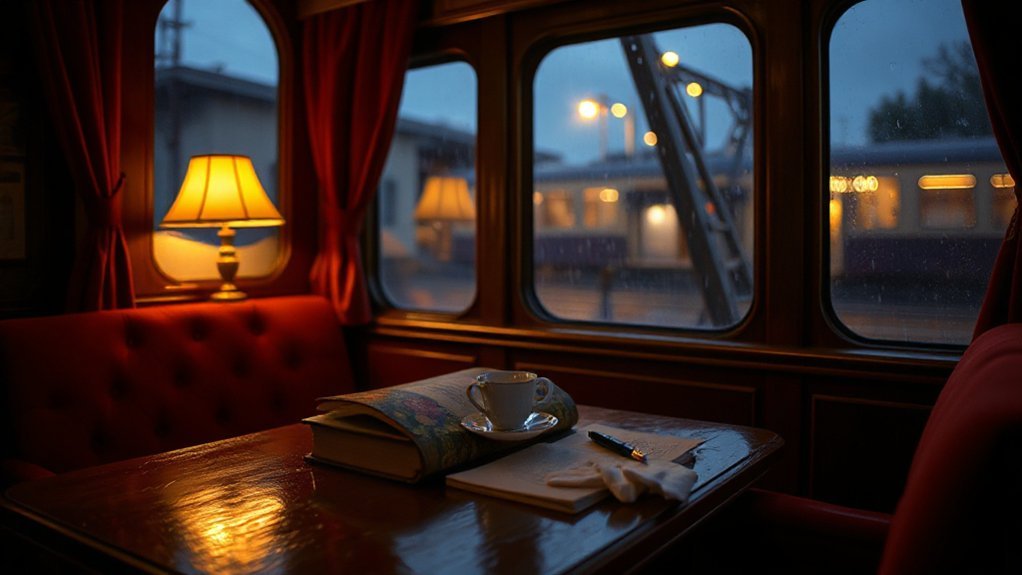
You liked Poirot at Styles—neat, fussy, brilliantly irritable—and now I’m shoving him into a rattling, smoke-streaked train, because why keep a genius confined to one country house?
You climb aboard a claustrophobic car, smell coal and perfume, hear boots on metal. Poirot studies faces, you watch him rearrange a moustache like a ritual.
A coal-scented carriage, polished boots, Poirot studying faces—moustache adjusted with ritual precision.
This train journey turns into a clever, uncomfortable experiment, with iconic characters clustered like suspects under a single lamp. I nudge you, whisper a theory, you roll your eyes, but you’re hooked.
The pacing snaps, the clues click, the confessions land with theatrical grace. It’s bold, tidy, surprising—classic Christie reimagined for readers who crave cunning, style, and a twist you didn’t see coming.
The Murder of Roger Ackroyd

You’re about to re-experience one of Christie’s boldest tricks, and I promise, the shock still tastes like cold tea on the tongue.
You watch Poirot wrestle with a choice that makes his little grey cells ache, while the village hums with gossip, sighs, and secrets tucked into linen closets.
Stay with me, I’ll point out the moral snag, the ripple of secrecy through tight streets, and how that final reveal smacks you awake.
Narrative Twist Impact
Because I love a good surprise, I still remember the exact chill that ran down my neck the first time I finished The Murder of Roger Ackroyd: rain ticking against the window, a mug gone lukewarm on the table, and my jaw doing that embarrassing little drop.
You’ll feel that jolt too, because Christie rewrites your expectations, plays with narrative structure, and then smiles while she rearranges the furniture.
Those twist endings aren’t cheap tricks, they’re bold storytelling techniques that reset reader expectations, and make surprise reveals land like a punchline.
You’ll rethink plot twists, examine clues differently, and admire the craft.
It’s daring, clever, slightly unfair, and utterly thrilling — in the best, most innovative way.
Poirot’s Moral Dilemma
Though Poirot’s little gray cells are famous for solving puzzles, in The Murder of Roger Ackroyd he hits a moral wall and you feel every brick.
You watch him pause, smell of pipe smoke and ink filling the room, and you sense the moral ambiguity sharpening like a knife.
I nudge you forward, whispering that Christie forces ethical choices onto a man known for order.
You’ll see Poirot weigh truth against peace, his hands twitch, his voice low.
You laugh, then wince—it’s uncanny.
Scene shifts snap: drawing-room hush, stormy night, a ledger slapped on a table.
Dialogue crackles, wit meets conscience, and you, reader, get complicit thrill and uneasy admiration for his choice.
Small-Town Secrets
If you step into King’s Abbot with me, you’ll hear gravel underfoot and the polite hiss of secrets sliding shut behind each cottage door.
I’ll point out the places where ordinary afternoons fray into something sharp. You wander lanes where small town gossip blooms like hedgerow flowers, bright and invasive, and you watch neighbors trade glances, not smiles.
I nudge you toward the vicarage, speak low, because hidden truths thrum under civility, and you’ll feel the hair on your arms stand up.
Poirot’s quiet method slices through that calm, he asks the wrong question, you laugh, then gasp.
You’ll love the twist, because it’s clever and mean in equal parts, and because Christie teaches you to distrust comfort, politely.
And Then There Were None

You’ll feel the tension tighten like a cold wire around the island as each guest is picked off, and I’ll admit I squealed at one chapter when the lights went out.
The plot’s a brilliant, closed-circle puzzle, so you can watch suspects pace the shore, whisper in corridors, and gesture with accusing tea cups while clues snap into place.
It’s clever, ruthless, and impossible to put down — and yes, I’ll smugly offer a few spoilers later, but only after you’ve gasped.
Tension That Builds
When the boat pulls you toward Soldier Island, you feel the air change—salt thick on your tongue, gulls squawking like old men arguing, and a chill that isn’t just sea breeze; I felt it in my knuckles as I gripped the rail.
You step ashore and Christie doesn’t rush—you get suspenseful pacing, a slow tightening rope that hums underfoot.
You notice small things, a glance, a clock, footsteps that refuse to match stories, and your skin answers like a cheap joke turned serious.
Stakes escalate, then escalate again, and you trade comfort for curiosity, willingly.
You’ll whisper, you’ll accuse, you’ll laugh nervously, then fall silent.
It feels modern, like a design experiment that suddenly bites, and you love it, even when you’re terrified.
Clever, Closed-Circle Plot
Soldier Island taught you to listen for small things; now let me show you the trap. You step onto that jagged shore, feel salt on your lips, hear a clock tick like a guilty heartbeat.
I point out the brilliance: closed circle dynamics squeeze space and options until one answer has to be true. You watch character interactions like they’re fingerprints, each gesture a clue, every whispered quarrel a confession in disguise.
Don’t expect trickery without logic, I warn, I’m smug about it but I’m right. Christie makes the island itself a character, doors that creak, tea that cools, footsteps that betray.
You’ll love how the rules force creativity, making deduction feel like a game you invented, and won.
The ABC Murders
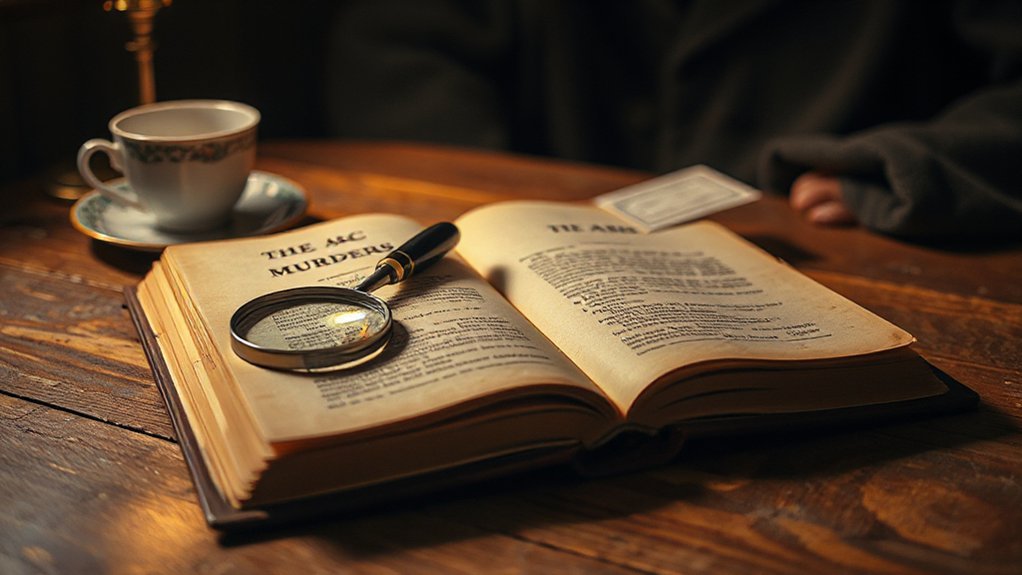
A train whistle, a little notebook, and a villain who likes telling you his timetable — that’s how The ABC Murders announces itself, and I’m still delightedly annoyed by it.
You’ll follow Hercule Poirot as he sifts through meticulous clue analysis, fingers tapping a cup, eyes narrowing, while the case morphs into a clever experiment in pattern, misdirection, and timing.
You’ll notice character dynamics that feel engineered yet intimate, each suspect a possible chess piece, each witness a twitching pawn.
I grin at Christie’s audacity, you’ll grin too, especially when she flips expectation with a crisp, satisfying move.
Read it if you want smart puzzles, sly irony, and a narrator who occasionally winks while admitting he’s been fooled.
Death on the Nile
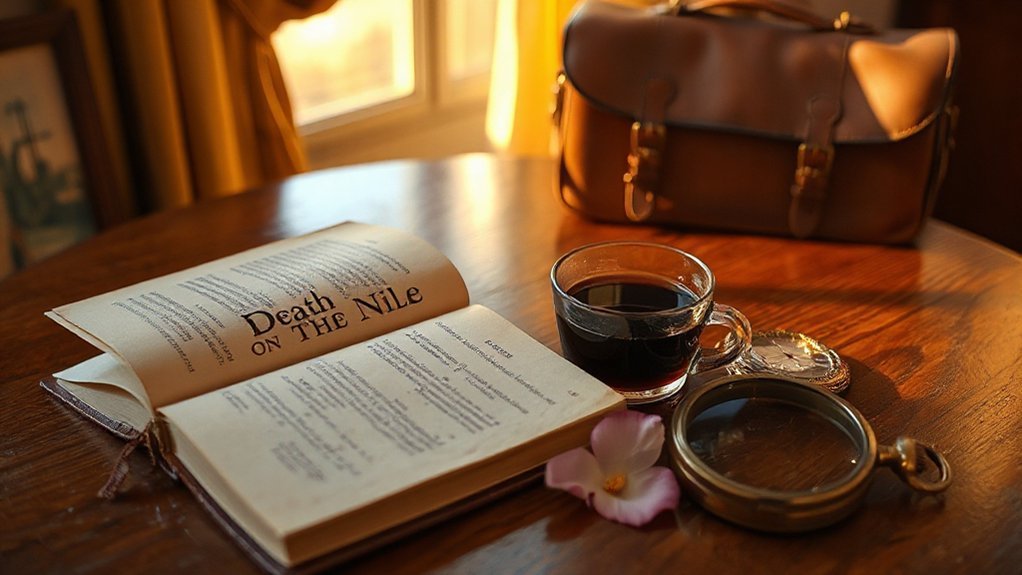
You’re about to peek at a tangled plot of jealousy and greed, where every motive smells faintly of perfume and hotel soap, and I’ll point out the clues that make you squint.
You’ll watch Poirot work—methodical, theatrical, tapping a cane, asking quiet questions that slice through alibis—while I nudge you to notice how his little grey cells catch the tiniest slip.
And all the while the Nile itself glows, the heat hums, the boat creaks, and I’ll show you how that setting turns suspicion into a deliciously claustrophobic stage.
Plot and Motives
Though Hercule Poirot’s hair stays perfectly in place, the lives around him don’t — and that’s where Death on the Nile really gets fun.
You’ll watch glitter and heat, feel river breezes, hear polite laughter collapse into sharp whispers. I point out character motivations, the jealousies and secrets that simmer under sun hats, and the plot intricacies that turn casual gossip into deadly plans.
You’ll sniff perfume, see clenched fists, witness small betrayals that ripple into catastrophe. I tease connections, drop a sardonic aside, then shove you into the next tense scene.
You won’t simply follow clues, you’ll sense why people act, how desire warps judgment. It’s clever, human, and oddly modern — murder with style and psychological bite.
Poirot’s Investigative Style
Listen: I’ve stood so close to Hercule Poirot’s gray eyes that I could’ve counted the tiny creases at the corners, and I’ll tell you right now—his method isn’t drama, it’s choreography.
You watch, you learn, you get surprised by how deliberate every pause is. I narrate, you follow, we both grin when a false lead unravels.
Poirot’s techniques feel innovative, spare, almost musical, and they hinge on deductive reasoning that’s tactile — he arranges facts like beads, finger by finger.
- You witness micro-observations turned revelations.
- You see emotional masks stripped, slowly, scientifically.
- You feel timing, cadence, the reveal as design.
I poke fun at my own impatience, you enjoy being smarter than you expected.
Setting’s Atmospheric Role
If Poirot arranges facts like beads, then the Nile arranges mood the same way—slow, inevitable, and a little glittering. You step aboard, you smell river reeds and warmed teak, and you know the boat itself is a player.
I watch you notice how sunlight slants across faces, how laughter thins at dusk, how a ripple can sound like a secret. That’s atmospheric tension: the river, the heat, the cramped cabins all press on choices, nudging motives into view.
Setting significance isn’t decoration here, it’s a conspirator. You feel suspicion in the clink of ice, in a curtain’s twitch. I’ll admit I thrill at that—call me biased—because Christie makes place do the sleuthing, too.
The Body in the Library
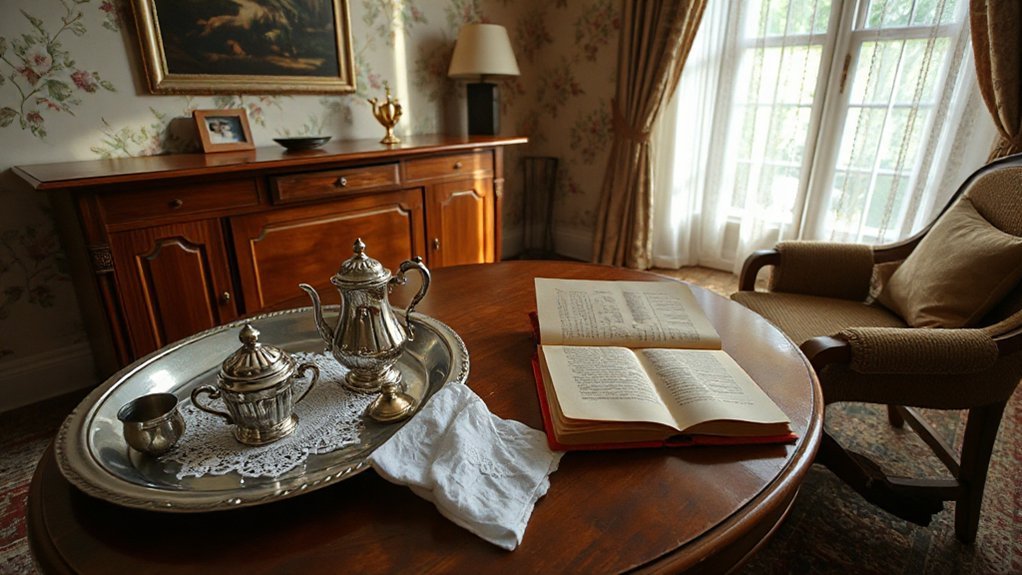
A body in the library — now that’s an opener that grabs you by the lapels and won’t let go. You step into the drawing room with me, you smell lavender and old paper, you see shock freezing faces, and you start a motive analysis almost against your will.
A body in the library — an immediate, deliciously theatrical invite to motive, manners, and quietly savage human truth.
I guide you through clever character dynamics, quick gestures, and a few awkward silences that say more than gossip.
- Innovation in clue placement, it toys with your expectations.
- Social theater as evidence, people perform their alibis.
- Quiet empathy, even suspects have textures and scents.
You’ll enjoy the pace, you’ll grin at Christie’s sly turns, and you’ll learn to read rooms, not just clues; that’s the fun, and I’m smugly pleased you came.
A Caribbean Mystery

Because you’re on holiday, you expect palms, punch, and gentle boredom — and that’s exactly how I lure you in, smiling while danger tiptoes behind the hibiscus.
You arrive, curious, and Christie hands you sunlit verandas, a Caribbean setting that smells of salt and citrus, yet hides a slow, steady chill.
I narrate with a wink, I point out gossip over rum, I notice small jealousies, and you follow, enthusiastic and suspicious.
The vibrant culture bustles around, music and color masking sharp motives.
Poirot shows up mostly offstage, observant and amused, letting island life reveal secrets.
You’ll laugh, you’ll squirm, you’ll admire the craft, then realize you’ve been cleverly trapped — pleasantly.
Five Little Pigs
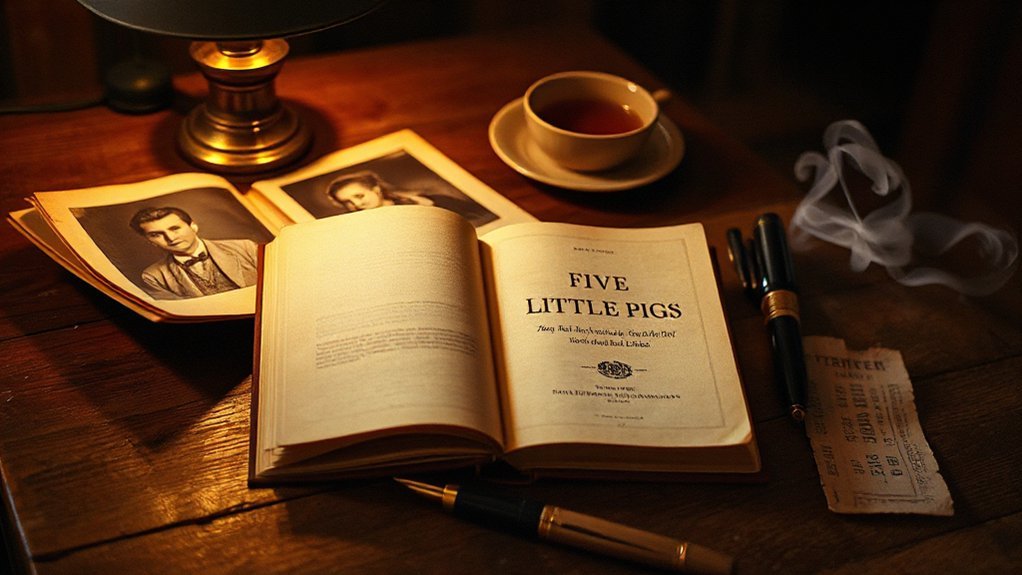
Six people sitting around a drawing-room table, and you immediately know trouble’s coming—at least I did, and I’ve read this one too many times to pretend surprise.
You step into Poirot’s quiet method, you touch careful character analysis, you taste ash of old guilt. The narrative structure is neat, retro, and oddly modern when you strip it down.
- Voices rewind the past, you listen for truth.
- Motives gleam like brass, you polish each one.
- Memory sticks, betrays, then offers the final hinge.
I narrate, I poke, I grin at clever clues.
You’ll admire the tight plotting, the sensory scenes, the courtroom of memory where truth grows, stubborn and small, until Poirot makes it roar.
Evil Under the Sun

Sunlight hits the pebbled beach like a spotlight, and you already know someone’s about to get exposed. I promise you’ll be hooked fast.
Sunlight strikes the pebbles like a spotlight—someone’s secret won’t stay hidden for long.
You wander a glamorous island, smell salt and suntan lotion, and overhear jealous whispers. Poirot strolls in, buttoned, amused, observing micro-expressions like a scientist with flair.
The mystery elements are tidy puzzles, but Christie spices them with human sting. You’ll admire crisp character development, motives that sting, and red herrings that feel clever not cheap.
I nudge you toward the twists, without spoiling the delicious unravelling. It’s playful, sly, a sunlit whodunit with crunch.
You’ll laugh, you’ll frown, you’ll guess wrong, and then you’ll tip your hat to Christie’s craft.
Leave a Reply