
You want to change, but you don’t want a sermon — fair. I’ll walk you through the smartest, most useful books on habits, show what actually works, what’s fluff, and how to use tiny actions to reshape your day. Picture swapping a midnight snack for a five-minute walk, smell of coffee, shoes by the door — small shifts, big results. Stick around and I’ll map the fastest route without the motivational guilt trip.
Key Takeaways
- Look for books that explain habit formation principles: cues, routines, rewards, and small incremental changes.
- Prioritize actionable frameworks with practical exercises, habit stacking, and tracking methods you can apply immediately.
- Choose authors who blend research with anecdotes, offering neuroscience, psychology, and real-world case studies.
- Prefer guides that address breaking bad habits, trigger identification, emotional regulation, and replacement strategies.
- Select books that emphasize environment design, accountability systems, and celebrating tiny wins for long-term sustainability.
Why Habits Matter: The Science Behind Lasting Change

If you want to change your life, start small and you’ll be amazed — I mean really amazed — at how tiny actions stack up.
You’ll feel the click in your chest when a cue becomes familiar, a routine becomes automatic. I watch people, and I’ve done this myself: habit formation is less drama, more repetition.
You’ll feel that click in your chest as cues settle and routines shift — habit isn’t drama, it’s repetition.
Behavior psychology shows your brain loves shortcuts, it files away wins like postcards. So you set up sights, sensory triggers, a physical object that hums promise when you touch it.
You’ll notice patterns, tweak context, and laugh at how predictable you are. I’ll poke fun, you’ll roll your eyes, then you’ll do one tiny thing again.
That’s where lasting change actually lives.
Building New Habits: Practical Strategies That Work

When you want a new habit to stick, start like a miser counting pennies: tiny, steady, almost annoyingly small, and you’ll be surprised how fast they pile up.
I tell you, innovation loves micro moves. Pick one clear cue trigger—smell of coffee, phone alarm, doorway—and attach a tiny action.
I call it habit stacking: you glue the new to the reliable, so momentum borrows familiarity. Do ten breaths after your coffee, five sentences after your alarm, one push-up at the door.
Use vivid cues, feel the steam, hear the click, notice the sunlight. Celebrate quietly, like a private jazz riff.
If you slip, shrug, reset, and start again. Small wins compound, and you’ll build forward, fast.
Breaking Bad Habits: Techniques to Stop Unwanted Behavior

Although you’ve loved certain comforts—chips in the couch, doom-scroll marathons, that comfort-smell of last-night takeout—you can leash those habits without turning your life into a drill sergeant’s boot camp.
I’ll walk you through trigger identification with blunt curiosity, cue exposure with gentle practice, and replacement strategies that don’t taste like punishment. Use self reflection techniques, jot sensations, note times, smell, mood.
Build emotional regulation skills, breathe, name the feeling. Try habit stacking, attach a new tiny win to something you already do. Strengthen impulse control, delay one minute, then five.
Design reward systems that feel real. Apply cognitive restructuring, reframe the inner critic. Draft behavioral contracts with yourself, sign them, laugh at the ceremony, then keep going.
Environment and Systems: Designing Spaces for Success
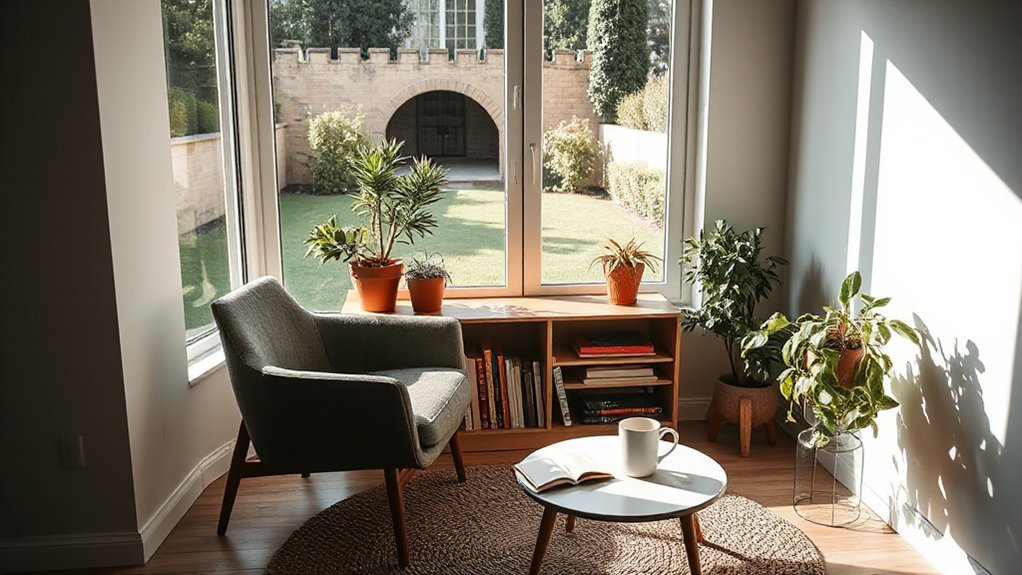
You can make habits almost effortless by tweaking your surroundings, so I’ll show you how to nudge yourself toward better choices without moralizing.
Clear a cluttered desk, swap sugary snacks for fruit within arm’s reach, and set up simple systems—like a 10-minute evening reset—that whisper reminders instead of yelling them.
Trust me, you’ll feel it in your shoulders and your brain, and you’ll laugh at how small changes do the heavy lifting.
Optimize Your Physical Space
Clutter is loud; I like quiet. You’ll start with physical decluttering, hands on, drawer by drawer, feeling the heft of stuff you didn’t remember buying. I nudge you to touch, sort, and decide fast—keep, donate, toss—because motion beats perfection.
Spatial organization matters: shelves, sightlines, and a clear desk change how you think. You’ll rearrange for light, for flow, for the tiny victories—an empty corner that smells like calm. I joke that my sock drawer is a TED talk about priorities.
You’ll set visible cues, remove friction, and let sensory calm do the nudging. Innovation loves order, so design a space that prompts your best moves, not excuses, and enjoy the quiet you earned.
Build Habit-Supporting Systems
When your room, desk, or brain feels like a messy roommate who never pays rent, build a system that gently outsources willpower and makes good choices the default.
I tell you, design your space so habit loops trigger joy, not friction. Light, touch, sound — cue a behavior, get a reward, repeat. Pair that with support networks and you’ve got compound interest for change.
- Put your running shoes by the door, like a polite guard, daring you to leave.
- Hide the snacks in a box you must open with a recipe, kill the lazy craving.
- Schedule micro-wins, tiny alarms that feel like confetti.
- Invite a friend, make failure public, make triumph loud.
You’ll innovate, iterate, and actually enjoy the process.
Motivation, Willpower, and Mindset: What Drives Change

If motivation were a coffee shop, it’d be the barista who hands you a steaming cup with a grin and then quietly judges your pastry choice; it’s warm, aromatic, and sometimes lifesaving, but it won’t drag you there at 6 a.m. on a Monday.
I tell you this because change needs more than buzz. You want intrinsic motivation, that internal spark, and a growth mindset, the belief you can get better.
So we design experiments, tiny rituals you can taste and measure, like sipping espresso after a two-minute habit win.
You’ll notice willpower dips, that’s normal. Rename resistance as data.
I’ll coach you to automate decisions, stack cues, and celebrate small wins. You’ll build momentum, not shame.
Social and Emotional Factors in Habit Formation

You’ve felt the spark of motivation, that little caffeine jolt that gets you out the door—now notice who’s standing beside you. I point out how social influences shape your choices, how emotional triggers pull you toward old habits, and how cultural norms whisper what’s “normal.”
You’ll want peer support, yes, but also self awareness, so you can name cravings, and calm them with stress management tactics.
- Warm praise from friends, a tiny reward systems nudge, makes change sticky.
- A shared joke in the gym, sensory: the squeak of shoes, lights blurring—instant bond.
- Quiet check-ins help you catch mood swings before they derail progress.
- Radical honesty, messy but effective, sparks intrinsic motivation.
Innovation-friendly, candid, practical.
Tracking Progress: Measurement, Accountability, and Habit Maintenance

You’ll want to measure what matters, not every tiny twitch—pick a few clear metrics and watch them like a hawk, or a slightly obsessive goldfish.
I’ll nudge you to build accountability systems—text reminders, a stern friend, or a progress board that makes you guilty in a charming way.
Keep momentum by celebrating small wins, adjusting when things stall, and treating habit maintenance like tending a stubborn houseplant rather than waiting for a miracle.
Measure What Matters
Numbers. You want clarity, and I do too — so we measure. For goal setting, pick crisp targets, then translate them into performance metrics you can see, touch, and tweak. I promise, numbers feel less scary than they sound.
- Track daily wins, even tiny ones; they smell like progress.
- Log failures fast, learn faster; bitterness turns to data.
- Visualize trends, not just points; patterns whisper strategy.
- Celebrate milestones with small rituals; your brain loves confetti.
I walk you through simple tools, sensors, timers, pens — whatever sparks joy.
You’ll measure, adjust, and keep momentum without becoming a spreadsheet hermit. It’s practical, slightly fun, and ruthlessly honest — the innovation you asked for, with heart.
Accountability Systems Built
Because habits don’t stick by accident, I help you build accountability systems that do the heavy lifting for your lazy brain.
You’ll create tangible rituals, log tiny wins, and set up accountability partners who call you out kindly, like a coach with a wicked sense of humor.
Picture a glowing app screen, a tick for each day, a satisfying click — gratifying, sensory, simple.
We schedule structured check ins, brief and brutal, where you report progress, recalibrate, and celebrate small victories.
I guide the tools, the prompts, the scripts, so you don’t invent excuses at midnight.
You get clear signals, fast feedback, and a compact plan that nudges behavior forward.
It’s smart, playful, and built to survive real life.
Sustain Long-Term Momentum
If you want habits to outlive enthusiasm, you’ve got to measure more than intentions — you need a system that talks back.
I’ll say it plain: sustaining motivation isn’t magic, it’s metrics plus ritual. You track, you tweak, you celebrate tiny wins, and you keep going when novelty fades.
Use long term strategies that feel like playful experiments, not grim chores.
- Feel the satisfaction of a checked box, that soft audible click.
- Notice patterns, smell the coffee of morning routines that stick.
- Share progress, let accountability sting a little, in a kind way.
- Automate friction, make relapse awkward, make success inevitable.
I guide you, joking and firm, toward steady momentum.
Leave a Reply