
You hold a print book and the paper smells like a tiny museum, edges soft under your thumb, the spine creaking just enough to sound lived-in, and you smile because screens never feel like that. I’ll tell you why that matters—how touch beats a backlit glow, how turning a page feels like progress, how a shelf says something about you—but first, picture finding a coffee-stained paperback on a rainy afternoon, and then…
Key Takeaways
- Print books provide rich sensory pleasure—smell, texture, and the weight of pages that enhance reading enjoyment and nostalgia.
- Physical books reduce screen fatigue and blue light exposure, supporting longer, focused reading sessions.
- Tangible progress—flipping pages and page-location cues—improves memory encoding and satisfaction while reading.
- Collecting and displaying books expresses identity, supports local bookstores, and sustains authors and publishers financially.
- Hunting vintage editions, signed copies, and unique bindings offers joy, community connection, and cultural preservation.
The Pleasure of Physical Sensory Experience
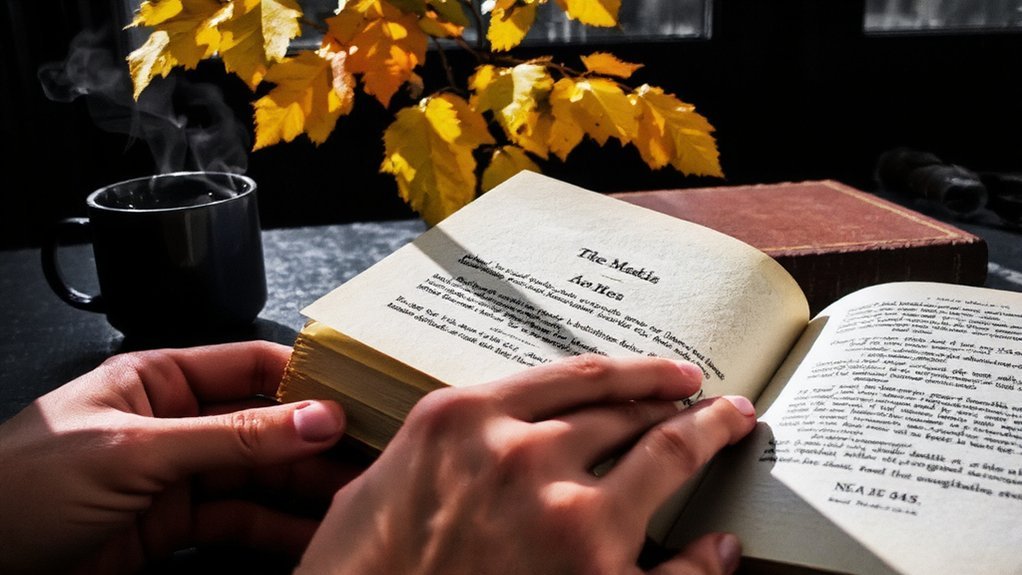
I always start by smelling the spine—yes, I know, that sounds weird, but hear me out: that crisp, paper-and-ink scent is a book’s handshake, and it says welcome.
I always smell the spine first—paper and ink’s quiet handshake that says, welcome home.
You pull a book toward you, feel the weight, the texture, the tiny give of a well-loved cover, and your fingers light up; tactile enjoyment isn’t fluff, it’s a design choice.
You flip pages, hear the soft whisper, see margins filled with your furious, hopeful scribbles.
That sensory nostalgia rewires how you value ideas, makes them feel owned, portable in a way pixels never quite become.
You’ll admit it: you like holding proof that thought has mass.
I tease myself, but you know this is why you keep buying print.
Reduced Screen Fatigue and Better Focus
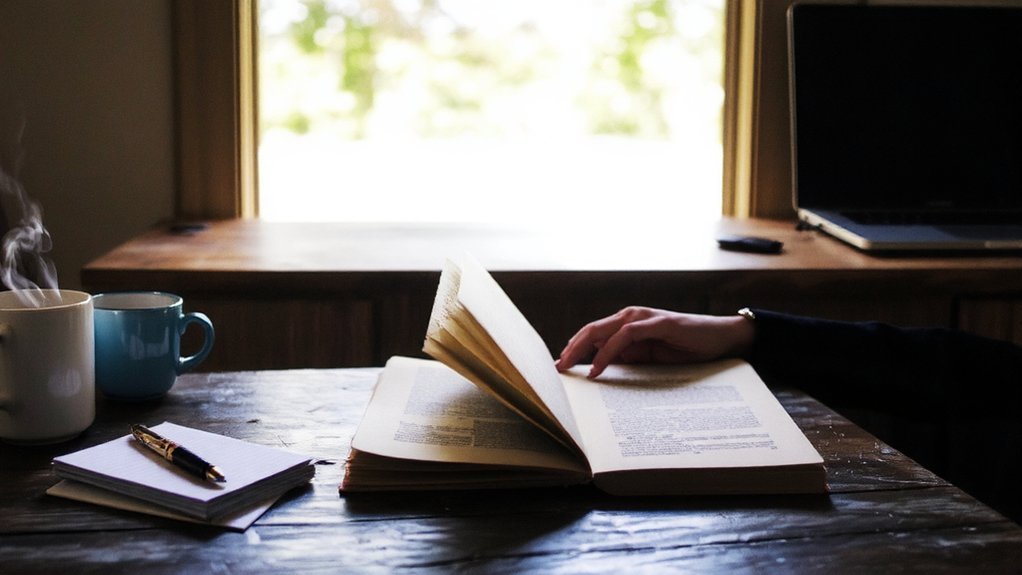
Put down your phone and feel the paper — no blue glow in your face, just the soft hush of pages turning, which lets your eyes relax and your brain stop pinging for notifications.
You’ll notice how tangible weight and the smell of ink keep you anchored, a little bookish anchor that says, “Focus, you brilliant distracted human.”
I promise, it’s not magic — just less screen fatigue, fewer interruptions, and a quieter headspace where actual reading happens.
Less Blue Light Exposure
On a rainy afternoon, you’ll notice it right away — your phone makes your eyes feel tired, like you’ve been squinting at a tiny sun. I’ll bet you reach for a book instead.
Paper doesn’t pulse blue light at you, so blue light reduction is automatic, no settings, no app updates. Your eyes relax, you blink more, and your focus sharpens. That quiet relief helps eye health, and yes, it feels like a small technological rebellion — charmingly analog.
You can track margins, smell ink, turn a page, and your brain rewards you with calm attention. Try it next time your screen nags; you might rediscover long stretches of reading, deeper thinking, and the simple joy of not-glowing.
Tangible, Distraction-Free Reading
After your eyes stop being assaulted by that tiny sun, something else happens: the world quiets down in a way a screen never lets it.
You close a book, and your hands know the weight, the paper scent, the little squeak of a turned page. You breathe easier, you focus, you don’t get zapped by notifications every two paragraphs.
I love that tactile pause, and you’ll too — it’s one of the tangible benefits of print. Reading becomes an immersive experience, not a tab with an agenda.
You sit, you turn pages, you fall into scenes with fewer interruptions. It’s simple, rebellious even: choose texture over pixels, calm over pinging chaos.
Try it, you’ll be surprised how quickly your mind follows.
Tangible Progress and Memory Encoding
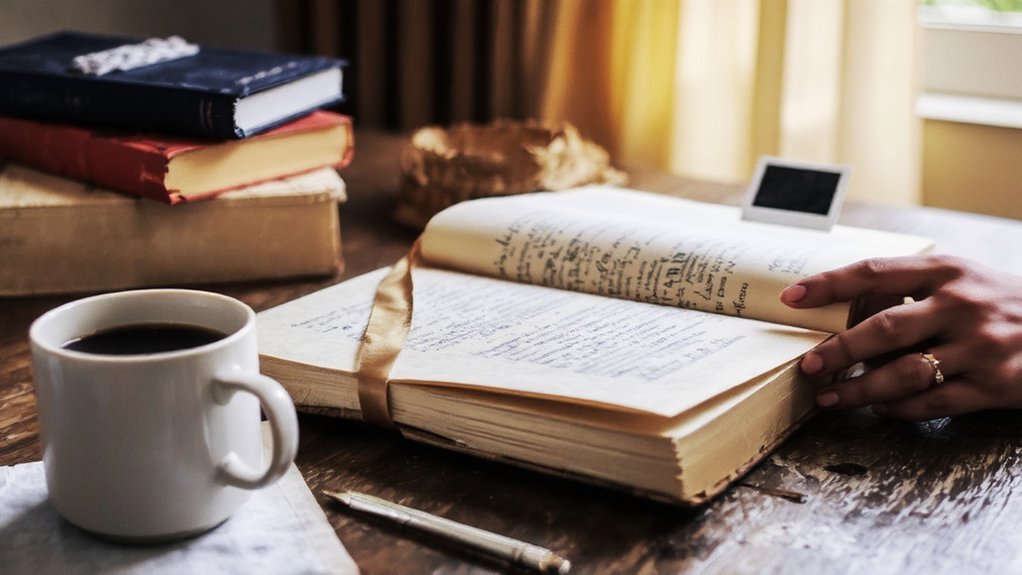
You can feel progress on your fingertips as you flip to a new page, the paper edge cool and familiar, and that little stack of turned pages whispers how far you’ve come.
I’ll bet those visual landmarks — a dog-eared corner, a sun-faded margin — sneak into your memory, so you don’t just remember facts, you remember where they lived on the page.
It’s oddly satisfying, like breadcrumbing your brain, and yes, I’m judging your neatness habit with a wink.
Physical Page Milestones
Seven pages in, you’ll already be petting the book like it’s a small animal, I promise — because those little tactile milestones do something weird to your brain.
You feel the grain of the paper, you hear the soft whisper of page turning, and your pulse ticks with each tiny victory. I watch my fingers find the corner, I mark spots with a bent edge, I savor the weight shifting as chapters pile up.
These are reading milestones you can touch, tangible proof you’re moving forward. They anchor focus, they reward effort, they make progress obvious without an app pinging you.
You’ll become oddly proud, slightly smug, and, yes, a little nostalgic — and that keeps you coming back.
Spatial Memory Cues
Because your eyes can triangulate where a chapter lives on the page, your brain files stories like real estate — corner apartment, sunny side, near the radiator.
I watch readers glide a finger along the margin, pause, and instantly recall a line, because tactile cues anchor ideas. You get better spatial navigation with paper; you flip, feel thickness, hear a soft shuffle — sensory GPS.
That tangible progress boosts memory retention, plain and simple. I admit I cheer for ink and spine, call it analog magic, and yes, I’m biased.
Still, you’ll notice mapping a plot to a physical spot makes recall crisp, like snapping a photo in your head.
Try it: close the book, point, and the scene pops.
Collecting, Display, and Home Aesthetics
When I moved into my first apartment, books were my awkward but lovable roommates—spines jutting from every flat surface, pages aroma mixing with instant coffee, a small rebellion against beige walls.
You’ll learn to treat them like curated artifacts, not clutter. You arrange by color, by subject, by emotional drama, then tweak for balance, because shelf organization is a tiny lab for your aesthetics.
You rotate titles, add a plant, a postcard, a quirky lamp. Decorative displays become statements, they whisper your taste to guests without shouting.
You’ll touch paper, feel bindings, adjust a stack until it sings. It’s playful, practical, and oddly ritualistic.
You’re designing a home that reads like you—innovative, warm, a little proud.
Emotional and Sentimental Value
If you open a box of old books, you don’t just get paper—you get time capsules with dog-eared maps to your past, and yes, I cry over the bookmarks sometimes.
You run fingers over cracked spines, smell the warm dust, and suddenly a sentence zaps you back to a kitchen table, a laugh, a rainy afternoon.
Fingers trace cracked spines, warm dust rises, and a single line snaps you back to a rain-splattered kitchen.
Those nostalgic connections are tactile proof that stories live in you, not just on screens. You build personal libraries like small altars to curiosity, stacking moments you can hold.
You keep, you revisit, you pass along an annotated margin like a wink. It’s practical sentiment, cunningly analog—comfort that doubles as a design choice, and yes, it makes you oddly brave.
Gifting and Social Rituals
Those dog-eared spines don’t just sit on your shelf like quiet trophies; they make excellent presents, and you know it.
You wrap a book, you tuck in a note, you watch someone’s face light up — scent of paper, weight in hand, a quiet gasp.
Holiday traditions get rebooted when you start gifting stories, and book exchanges become mini-revolutions.
You give sentimental gifts that double as design statements, they spark personal connections, and suddenly your couch is full of neighbors swapping pages and opinions.
Shared experiences grow from turned pages, from laughter over a line, from arguing about an ending.
You plan thoughtful surprises, you hide bookmarks, you call it charming, I call it sly social engineering — and it works, every time.
Accessibility and Ease of Use
Because you can grab a paperback faster than you can summon a password, print books win on plain, stubborn convenience — and I say that as someone who loves apps.
You touch spine, smell pages, flip. No booting, no updates, no battling file formats. You’ll find affordability options on shelves and library carts, so experimentation won’t cost you a panic attack.
You pass a book to a friend, the tactile handoff sparks community engagement, quick and human.
- You spot a cover across a café, you buy it.
- You leave a dog-eared note in the margin, someone laughs later.
- You share, swap, trade at meetups.
- You judge a book by its heft, and move on.
- You read without charging, glorious.
Supporting Authors, Publishers, and Local Bookstores
You can feel the difference when you buy a book in person — the weight in your hands, the little receipt folded into your pocket — and that same small act sends money right back into a living ecosystem.
When you choose print, you choose author support, you choose publishing diversity, you choose independent bookstores humming with people, coffee, and quiet conspiracies.
You see faces at author signings, you hear laughter at literary events, you join reading initiatives that ripple through schools.
You boost the local economy, you protect cultural preservation, you keep storytelling tradition alive.
I joke that I’m single-handedly funding someone’s dream, but really, you’re part of community engagement — tactile, loud, stubbornly human — and that feels like progress.
Secondhand Finds, Rarities, and Special Editions
One gleaming spine in a dusty bin can make your heart leap, and I’ll admit I get downright giddy when I spot a dog-eared classic or an out-of-print paperback with someone else’s margin notes.
You hunt, you flip, you inhale that old-paper smell, and suddenly a vintage treasures trove feels like a secret lab for ideas.
You’ll chase unique editions, signed copies, quirky bindings, anything that sparks curiosity and sparks conversation.
You tinker with displays at home, you swap finds with friends, you flex story cred.
- Scouting yard sales at dawn, adrenaline and coffee
- Bargain-bin archaeology in indie shops
- Online auctions for signed copies
- Limited-run presses with bold designs
- Custom bindings and artist collaborations
Educational and Annotative Benefits
When you actually hold a book, your brain behaves differently—pages rustling under your fingers, the smell of ink and glue, the little thunk when you close it after a good passage, all of that anchors attention in a way pixels usually don’t.
Holding a book rewires attention—the rustle, scent, and soft thunk anchor focus pixels rarely can.
I’m telling you, annotating on paper changes learning—your hand writes, you pause, you circle, you argue with the margin. That tactile loop boosts active learning, it makes memory stick.
You’ll sketch diagrams, dog-ear arguments, add questions in the margins that force critical thinking later. It’s an iterative lab, low-tech and stubbornly effective.
You can’t ctrl‑f curiosity. So keep a pen handy, make a mess, talk to the book, and watch ideas knit together, surprisingly fast and oddly satisfying.
Leave a Reply