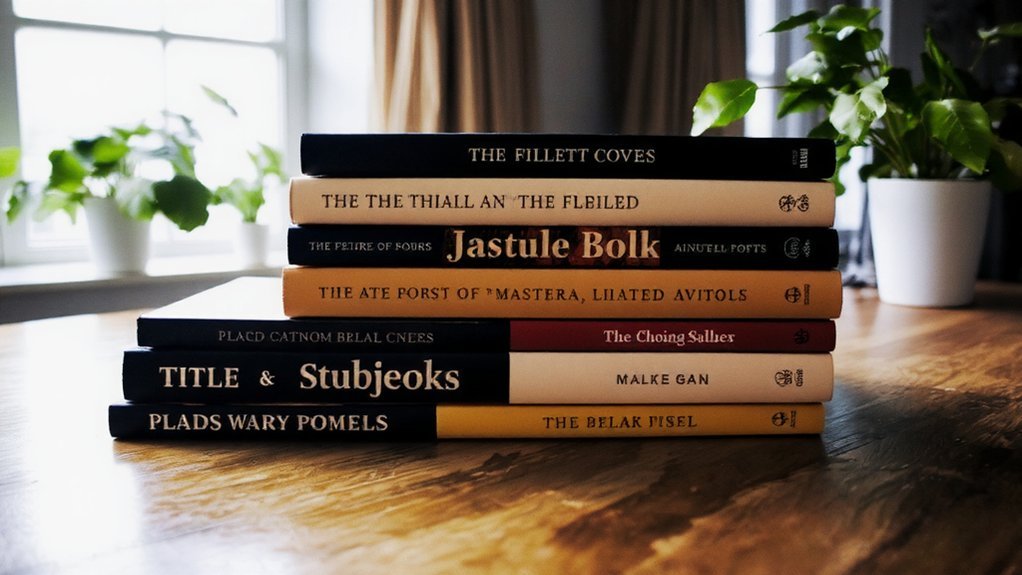
Quiet minimalism meets riotous color, and you’ll find yourself smiling and suspicious all at once. I’ll point out the covers that stopped me—those calm, textured jackets you want to touch, the illustrated spines that shout across a shelf—and tell you why they work, with a few rude jokes about my own bad taste. Picture slick foil, linen grain under your thumb, one perfect letterform that refuses to behave; stick around, there’s more.
Key Takeaways
- Quiet, minimalist covers with expressive typography and generous negative space dominated 2025’s most admired designs.
- Bold, vibrant jackets used saturated palettes, contrasting shapes, and playful illustrations to grab attention.
- Tactile innovations—soft-touch, embossing, and foil—elevated visual appeal into sensory experiences.
- Surreal, emotive landscapes and mood-lit portraits conveyed narrative and intrigue without relying on text.
- Reimagined classics fused nostalgic motifs with modern type, glitch collage, and unexpected color remixes.
Minimalist Mastery: Quiet Covers That Speak Volumes
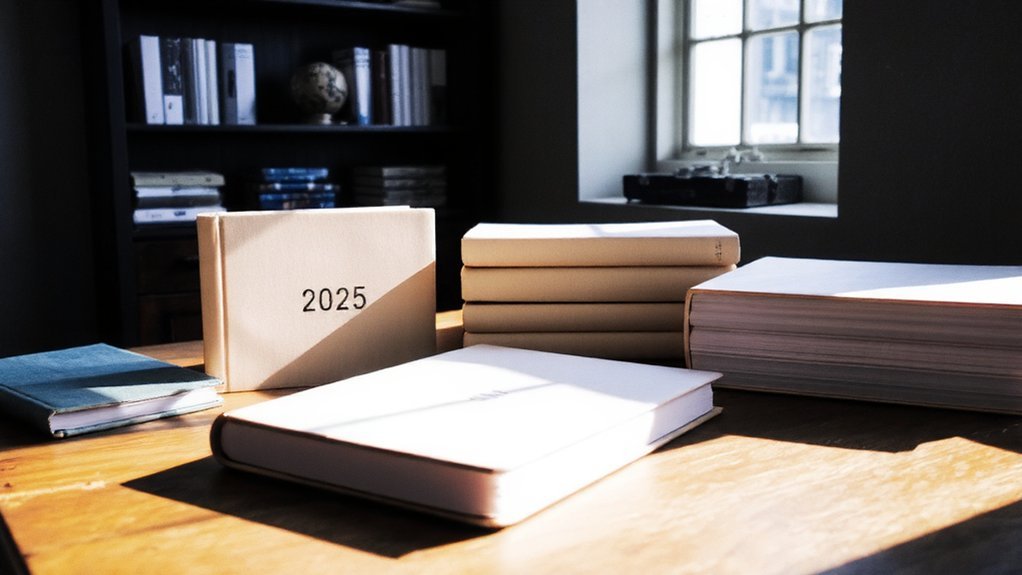
If you’ve ever judged a book by its cover—guilty as charged—then you know how quiet a whisper can shout; I want you to lean in.
You watch a pale jacket, you pause, you feel the calm. I point out the negative space like it’s deliberate breathing, the way a margin holds attention, creates meaning.
You linger on a pale jacket, sensing calm; negative space breathes, margins shape meaning.
You trace a thin line, you almost hear the paper, that subtle elegance that doesn’t brag, it beckons. I joke, I admit I’m easily won, but you know innovation when it’s pared down.
You flip the cover, you savor textures, tiny foil, a muted hue. We talk in glances, in tactile taps, in quick, approving nods—minimal designs that speak, loud in their quiet.
Riotous Color: Illustrated Jackets That Demand Attention

One handful of color can knock you off balance, and I mean that in the best way—watch how a jacket erupts like a street mural, neon and mustard and grape fighting for your eyeballs.
You pick it up, grin, and feel the zing. I love how designers push vibrant contrasts, they layer slick inks and rough textures, then dare you not to stare.
Playful illustrations pop—dizzying shapes, frank faces, tiny absurd details that wink when you tilt the book. You touch the cover, read the spine, imagine the author smiling.
These jackets don’t whisper, they shout inventive promises, they invite you to risk a glance, then a buy. Trust me, your shelf needs one loud friend.
Reimagined Classics: Modern Takes on Timeless Designs
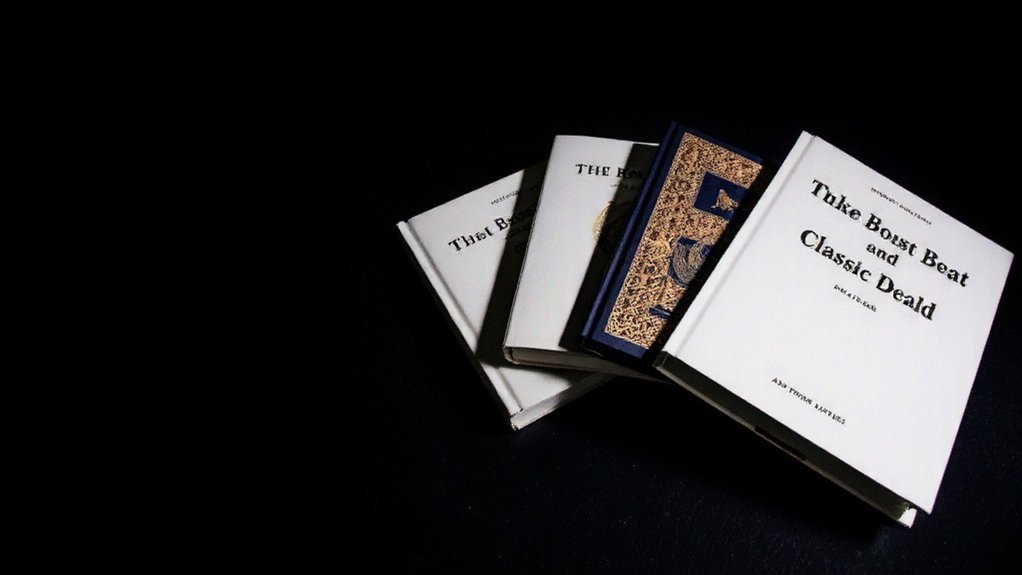
You’ll notice how minimalist typography winks at you from spare covers, bold and honest, like a friend who shows up with coffee and no small talk.
I’ll point out how classic motifs get remixed — fleur-de-lis traded for geometric leaves, vintage palettes warmed with mustard and rose, and modern shapes slicing through tradition like a clean knife.
Read on, I’ll show you covers that smell faintly of old paper but look shockingly of now, and you’ll probably want to steal a few ideas.
Minimalist Typography Revival
Remember those old hardbacks with titles that seemed to whisper instead of shout? You’ll love how minimalist typography revival takes that hush and turns it electric.
I point, you notice: clean aesthetics meet bold contrasts, thin serifs against heavy blocks, negative space that breathes. You trace a spine with your thumb, feel paper grain, see a single letter cascade like a drumbeat.
I joke that I’m hoarding fonts, but really I’m celebrating restraint — letters doing the heavy lifting, no flourishes to hide behind.
You’ll find covers that speak in pauses, not paragraphs, and layouts that slice through noise like a razor. We’re updating classics, not dressing them up; we’re stripping to essence, then smiling at the result.
Classic Motif Reinterpreted
If classic motifs could wink, they’d do it on these covers—so I wink back, tracing a gilt border with my thumb like I’m dusting off a family heirloom.
You lean in, and I point out how embossing meets neon slashes, how the fleur-de-lis gets moonlighting as a glitch logo; it’s playful, it’s sharp, it’s respectful but not reverent.
You feel the texture, the cool of foil, the slight catch under your nail. I promise timeless elegance without the museum silence.
My grin is obvious, I confess I’m biased toward reinvention. You’re invited to touch, to judge, to laugh at my terrible puns about rococo gone rogue.
This is artistic reinterpretation you can hold, modern and familiar, a tidy rebellion in your hands.
Vintage Palettes, Modern Shapes
When I lift a cover and the colors hit me—muted teal like an old dress, mustard like a coffee-stained postcard—I almost expect to find a pressed flower inside, but instead there’s a geometric cutout that feels like a sneaker sole trying on a Victorian brooch.
You lean closer, curious, and I tell you: this is vintage inspiration meeting modern aesthetics, and it’s deliberate, clever, a little cheeky.
You trace the raised ink, hear the tiny click of the die-cut, imagine a library lamp warming that faded palette. Designers borrow dust and memory, then snap it awake with hard edges, stark silhouettes, bold negative space.
You grin, surprised how nostalgia can feel futuristic; it’s familiar, but it keeps you guessing.
Typographic Statements: When Lettering Becomes Art
Type feels like texture under your fingertips — I say that because lettering on a cover isn’t just seen, it’s felt, even if you’re only skimming with your eyes.
I want you to notice how lettering experimentation turns letters into gestures, how artistic typography stakes a claim on the shelf. You’ll explore font exploration, creative lettering, and design integration that lift a concept into a statement.
I point out visual hierarchy, expressive typefaces, typographic balance, narrative lettering, and those irresistible bold statements that stop you cold.
- Letters as movement, not just marks
- Contrast that guides the eye like a map
- Unexpected proportions that whisper, then shout
- Color and spacing that compose mood
- Type that tells plot before page one
Trust your instincts; pick the brave option.
Tactile Innovations: Embossing, Foil, and Unexpected Textures
Because touch still cheats the eyes, I’m obsessed with covers you want to pick up — to press a thumb into the foil, feel the ridge of an emboss, trace a velvet patch like a tiny crime scene.
Because touch still trumps sight, I crave covers that beg to be picked up and examined.
You’ll find designers mixing textural contrasts, glossy metal against matte paper, sanded inks next to soft-touch varnish, and it feels like tech and craft finally shook hands.
You run a fingertip along a debossed title, grin at the cold bite of foil, then laugh because you’ve been outwitted by a book.
These sensory experiences turn reading into ritual, they make you pause, they nudge you to buy something just to own that moment.
I call that design with a wink, and I’m totally here for it.
Photographic Poetry: Covers That Tell a Story in a Single Frame
You’ll spot a whole story in one photo, a cigarette ember, a rain-slick street, a single torn letter, and you’ll feel the rest filling in like background music.
I’ll point out how light sculpts mood—warm golden edges for longing, hard blue shadows for cold truths—and how a single frame can act like a punchline or a whispered secret.
Stay with me, we’ll pull apart the scene, laugh at my overenthusiastic metaphors, and leave knowing exactly what that cover is trying to say.
One Frame Narratives
If a single picture can snag your gaze and refuse to let go, then I’m a goner—again—because One Frame Narratives do exactly that: they trap whole stories in a breath.
You lean in, you squint, you smell rain on pavement through pixels, and you feel the push of frame storytelling, the tug of narrative depth.
I point, you nod, we both chuckle at how much is stuffed into one frozen second.
These covers don’t babble, they imply. They dare you to invent dialogue, to finish a scene.
You’ll want to flip the book open, or just stare, which is fine, I admit.
- Minimal props, maximum implication
- A single subject, loaded with backstory
- Precise composition, emotional payoff
- Texture you can almost touch
- Ambiguous action, endless questions
Mood Through Light
Three kinds of light will make you stop scrolling: the kind that flatters, the kind that tells a secret, and the kind that makes you feel slightly guilty for eavesdropping—and I’m here for all of them.
You lean closer, because a cover uses mood lighting like a wink, it sculpts faces, brushes dust motes gold, hints at midnight rain.
I point out covers that whisper plot with a single beam, that balance color and shadow until you ache, that give emotional resonance without a sentence.
You’ll notice hands, a cigarette glow, a kitchen window at dawn—small scenes, big promise.
I joke I’m nosy, you admit you love being led.
Together we pick covers that make stories start before you even read.
Surreal Landscapes: Dreamlike Art That Pulls You In
When I walk into a cover like this, my brain trips over a stairway made of clouds and laughs, because these surreal landscapes refuse to behave—trees float, horizons bend, and somewhere a sun is sipping tea.
When a cover like this welcomes me, my mind trips over laughing cloud-stairs and a tea-sipping sun.
You step closer, you feel the hush, dreamy elements whispering, ethereal colors warming your skin like a remembered song.
I point to a tilted lake, you touch it, and the surface answers with a bell.
These covers nudge your curiosity, they’ll rewire your expectations, and they dare you to imagine beyond the page.
- Embrace scale shifts that surprise you
- Mix textures that invite touch
- Use unlikely juxtapositions for curiosity
- Favor subtlety over literal magic
- Let color guide emotional beats
Pattern Play: Repeating Motifs and Graphic Rhythms
You loved those dreamlike landscapes, didn’t you?
Now feel the pulse of pattern exploration, where covers clap a steady beat across the shelf. You watch repeating motifs march, they wink, they stagger, they hypnotize—texture under your fingertips, color like a catchy tune.
I point, you nod; we both grin when motif evolution flips a classic into something electric. The designs loop, break, echo, then surprise; rhythm becomes a character, not just decoration.
You trace a spiral, smell ink, tap a raised print, and a story starts before you read a line. I joke I’m biased toward clever repeats, you forgive me.
Together we celebrate smart repeats, bold shifts, and book art that keeps you turning—and tapping—for more.
Portraits Remade: Fresh Approaches to the Human Face
Because faces used to be safe territory, we leaned on familiar eyes and smiles—now designers are taking them apart, remixing cheekbones with collage, pixel blur, embroidery, and neon scribbles until the human face feels brand-new.
You watch a cover and feel something—raw, kinked, honest—emotional depth that hits like cold rain, but also warmth. I joke that I can’t draw a straight line, yet these covers do surgical mischief and poetic repair.
You touch the texture in your mind, hear thread, see offset halftone, sense cultural reflection without a lecture. They invite you close, then surprise you.
- Fragmented portraits that read like memory
- Hand-stitched features for tactile intimacy
- Glitch effects that humanize, not alienate
- Collage layers mixing era and ethnicity
- Minimal line work, maximal feeling
Palette Precision: Color-First Designs That Sing
Color is the loud friend who shows up early and takes over the conversation, and I’m delighted to let them. You’ll see covers that start with a single hue, then bloom — a neon pulse, a dusty rose wash, a midnight teal that makes you lean in.
I nudge palettes, test color harmony, watch how tones argue or clasp hands. You feel it immediately, a mood cue sent through pigment, that’s design psychology doing its quiet work. I pick, you react; we trade glances with paper and ink.
Sometimes I go bold and fail spectacularly, which is my favorite kind of lesson. Other times, a tiny shift — warmer yellow, cooler gray — turns a page into a small, loud miracle.
Leave a Reply